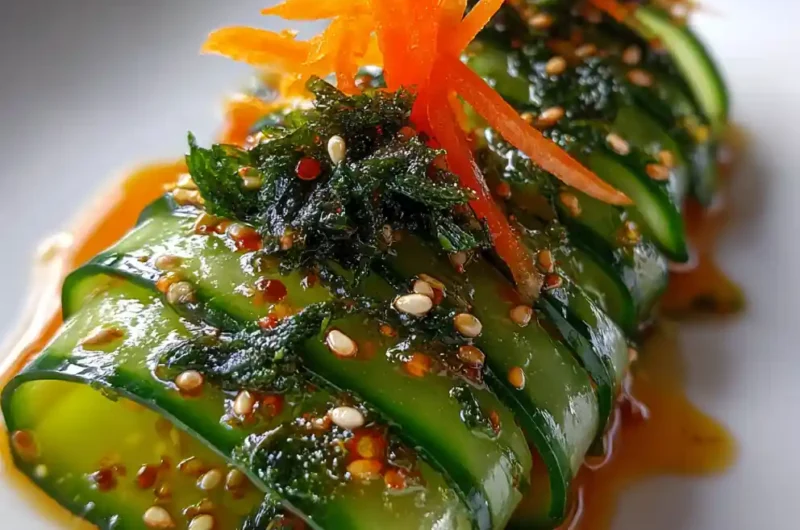
Sunomono, meaning “vinegared thing” in Japanese, is a classic and incredibly refreshing side dish. This Sunomono Cucumber Salad is a light, tangy, and slightly sweet treat that perfectly complements heavier Japanese meals or stands alone as a revitalizing snack. It’s surprisingly easy to make and requires minimal ingredients, making it a fantastic addition to your culinary repertoire. This recipe focuses on achieving that perfect balance of flavors and textures – crisp cucumber, a delicate vinegared dressing, and a beautiful presentation. Get ready to experience a taste of Japan in your own kitchen!
Ingredients
- 1 large English cucumber (≈300 g / 10 oz): English cucumbers, also known as seedless cucumbers, are ideal for sunomono because of their thin skin and minimal seeds. This means you don’t need to peel them, and they have a lovely crisp texture. If you can’t find English cucumbers, Persian cucumbers are a good substitute.
- ½ tsp (2.5 g / ½ tsp) sea salt: Sea salt is preferred for its cleaner flavor, but any fine salt will work. The salt is crucial for drawing out excess moisture from the cucumber, resulting in a crisper salad.
- 1 tbsp (15 ml / 1 tbsp) rice vinegar: Rice vinegar is the cornerstone of sunomono’s signature tangy flavor. It’s milder and less acidic than white vinegar, providing a delicate balance. Look for unseasoned rice vinegar to control the sweetness yourself.
- ½ tsp (2.5 ml / ½ tsp) low‑sodium soy sauce: Soy sauce adds umami and depth to the dressing. Using low-sodium soy sauce helps to control the overall saltiness of the dish, allowing the other flavors to shine.
- ½ tsp (2 g / ½ tsp) granulated sugar: Sugar balances the acidity of the rice vinegar and soy sauce, creating a harmonious flavor profile. You can adjust the amount of sugar to your preference.
- ½ tsp (2 ml / ½ tsp) toasted sesame oil: Toasted sesame oil adds a nutty aroma and rich flavor to the dressing. Be sure to use toasted sesame oil, as regular sesame oil lacks the same depth of flavor.
- 1 tsp (5 g / 1 tsp) toasted sesame seeds: These provide a delightful crunch and enhance the sesame flavor. Toasting the sesame seeds brings out their aroma and adds a more complex taste.
- 1 tsp (5 g / 1 tsp) dried wakame seaweed, rehydrated in warm water for 5 min then drained: Wakame adds a subtle ocean flavor and a slightly chewy texture. Rehydrating it in warm water softens it and brings out its natural flavor.
- Optional: a few thin strips of carrot or radish for color contrast: These are purely for aesthetic appeal, adding a pop of color to the salad. Radish provides a peppery bite, while carrot offers a mild sweetness.
Ingredient Substitutions
While this recipe is designed for authentic flavor, here are a few substitutions if you’re missing an ingredient:
- Rice Vinegar: If you don’t have rice vinegar, you can use white wine vinegar or apple cider vinegar, but use slightly less (about ¾ tbsp) as they are more acidic.
- Soy Sauce: Tamari can be used as a gluten-free alternative to soy sauce.
- Wakame Seaweed: If you can’t find wakame, you can omit it, but it does contribute to the authentic flavor.
Step-by-Step Instructions for Perfect Sunomono
- Prepare the Cucumber: Begin by trimming about ½ inch from both ends of the cucumber. Halve the cucumber lengthwise. This makes it easier to create consistent ribbons. Using a mandoline or vegetable peeler, carefully slice the cucumber halves into long, thin ribbons. A mandoline provides the most uniform results, but a peeler works well too – just aim for consistent thickness. Place the cucumber ribbons in a colander.
- Salt the Cucumber: Sprinkle the cucumber ribbons with ½ teaspoon of sea salt. Gently toss to ensure the salt is evenly distributed. This crucial step draws out excess moisture from the cucumber, preventing a soggy salad. Let the salted cucumber sit for 10 minutes. Don’t skip this step; it’s key to achieving that delightful crispness.
- Rinse and Dry: After 10 minutes, rinse the salted cucumber thoroughly under cold running water. This removes the excess salt. Then, and this is important, pat the cucumber ribbons *completely* dry with a clean kitchen towel or paper towels. Any remaining moisture will dilute the dressing and make the salad less crisp.
- Make the Dressing: In a small bowl, combine 1 tablespoon of rice vinegar, ½ teaspoon of low-sodium soy sauce, ½ teaspoon of granulated sugar, and ½ teaspoon of toasted sesame oil. Whisk vigorously until the sugar is fully dissolved. The dressing should be glossy and slightly sweet. Taste and adjust the sugar or soy sauce if needed to achieve your preferred balance.
- Rehydrate Wakame: If using dried wakame seaweed, place 1 teaspoon in a small bowl and cover with warm water. Let it sit for 5 minutes to rehydrate. Drain the wakame thoroughly, squeezing out any excess water. This step is essential for softening the wakame and bringing out its flavor.
- Combine Dressing and Wakame: Gently fold the rehydrated wakame seaweed into the prepared dressing. This allows the wakame to further soften and absorb the flavors of the dressing. Let it sit for a few minutes while you prepare the cucumber.
- Dress the Cucumber: Add the dried cucumber ribbons to the bowl with the dressing and wakame. Toss quickly and gently to ensure each ribbon is evenly coated. Be careful not to overmix, as this can bruise the cucumber.
- Chill and Marinate: Transfer the dressed cucumber salad to a serving dish. Cover the dish with plastic wrap and refrigerate for at least 15 minutes, or up to 1 hour. This allows the cucumber to absorb the vinaigrette and develop its flavor. Longer marination times will result in a more intensely flavored salad.
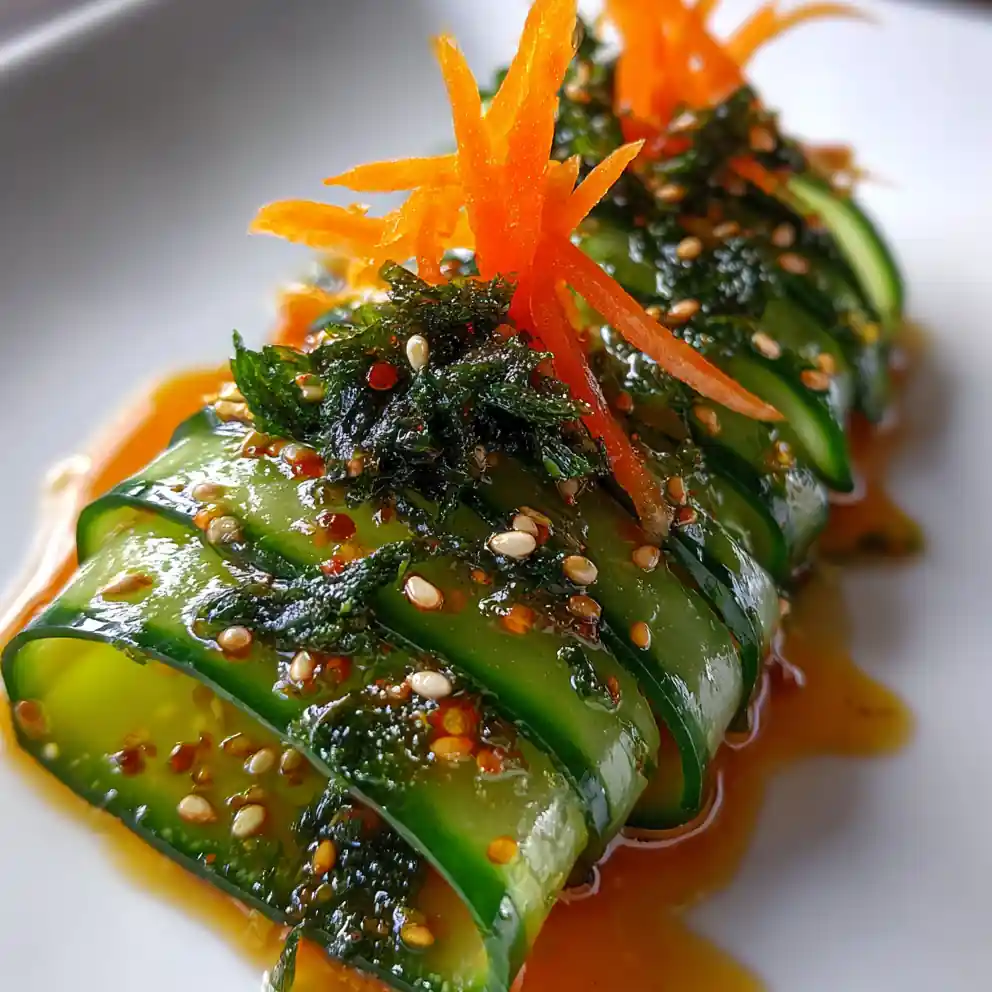
- Garnish and Serve: Before serving, plate the Sunomono Cucumber Salad on a shallow dish. Fan the cucumber ribbons in a semi-circle. Drizzle any remaining dressing in a thin line across the center. Scatter toasted sesame seeds and the rehydrated wakame in one corner. If using, arrange thin strips of carrot or radish at the edge for a pop of color. Finish with a very light drizzle of sesame oil for added sheen.
The Importance of Salting Cucumber
The salting step in Sunomono isn’t just about flavor; it’s about texture. Cucumbers are naturally high in water content. Salting draws out this excess moisture through osmosis, resulting in a much crisper and more refreshing salad. Without this step, the cucumber ribbons will release water into the dressing, diluting the flavor and creating a soggy texture. It’s a small step that makes a huge difference!Choosing the Right Cucumber
While any cucumber can technically be used, English cucumbers (also known as seedless cucumbers) are ideal for Sunomono. They have thinner skin, fewer seeds, and a milder flavor compared to traditional cucumbers. This means you don’t need to peel them, and the salad will have a more delicate taste. If you’re using a regular cucumber, you may want to peel it and remove some of the seeds.Variations and Additions
Sunomono is a wonderfully versatile salad. Feel free to experiment with different additions! Thinly sliced daikon radish adds a lovely peppery bite. You can also add a pinch of red pepper flakes for a touch of heat. For a more substantial salad, consider adding cooked shrimp or crab meat. A sprinkle of furikake (a Japanese seasoning blend) adds umami and texture.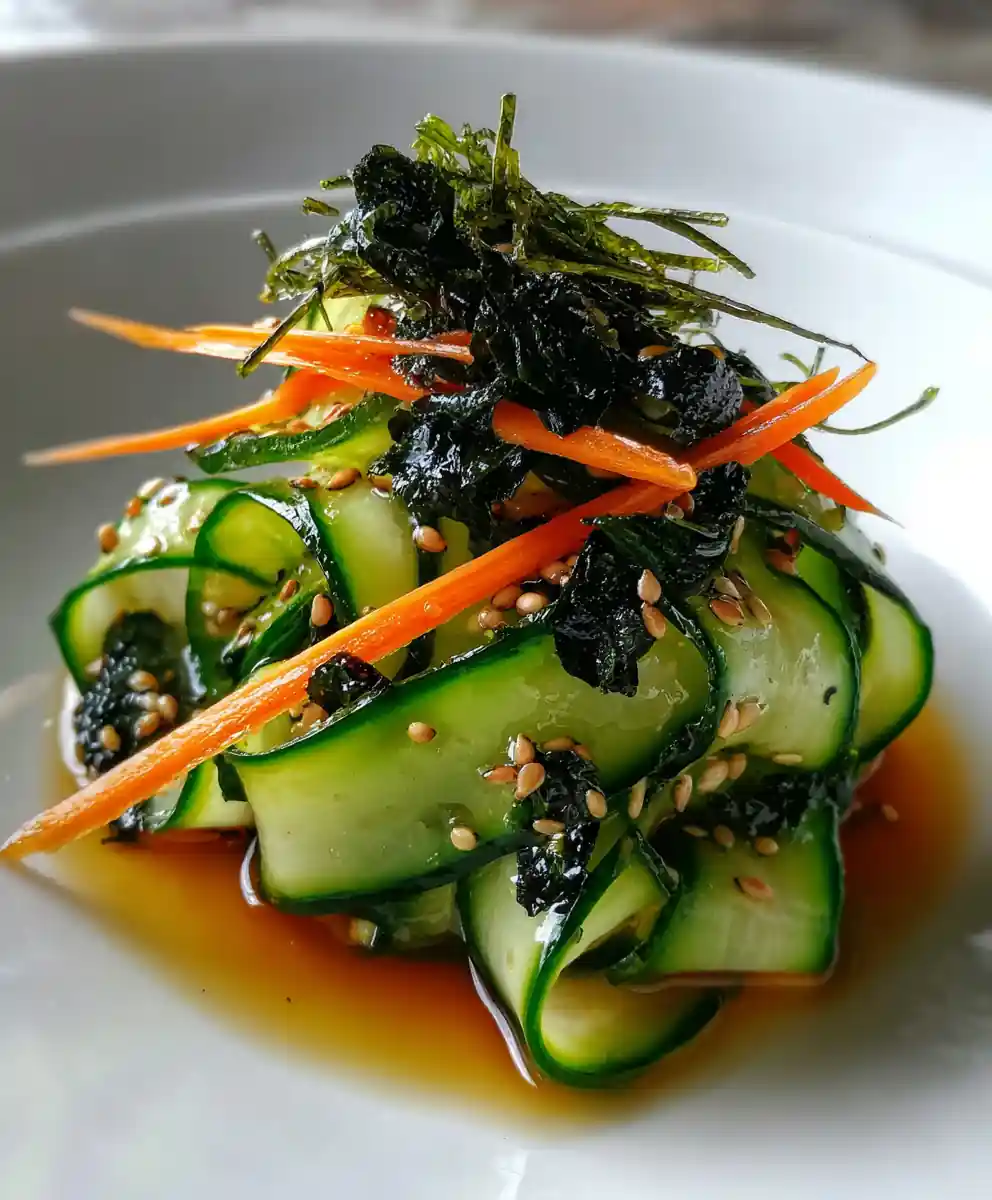
The History of Sunomono
Sunomono, meaning “vinegared thing,” has a long history in Japanese cuisine. It originated as a way to preserve vegetables before refrigeration was available. The vinegar acted as a natural preservative, while also imparting a delicious flavor. Over time, Sunomono evolved into a refreshing side dish and palate cleanser, often served with sushi or other Japanese meals. It remains a beloved part of Japanese culinary tradition.Serving Suggestions
Sunomono Cucumber Salad is a fantastic accompaniment to a variety of dishes. It pairs beautifully with grilled fish, sushi, tempura, or even a simple bowl of rice. Its light and refreshing flavor helps to balance richer dishes. It’s also a great option for a light lunch or snack.Frequently Asked Questions (FAQ)
Can I make Sunomono ahead of time?
Yes, you can make Sunomono a few hours ahead of time. However, the cucumber will become softer the longer it sits in the dressing. For the best texture, prepare it shortly before serving.What if I don’t have rice vinegar?
While rice vinegar is traditional, you can substitute with white wine vinegar or apple cider vinegar in a pinch. However, the flavor will be slightly different.Can I use other types of seaweed?
Yes, you can experiment with different types of seaweed, such as kombu or nori. Adjust the amount based on your preference.Enjoy this light, refreshing, and flavorful Sunomono Cucumber Salad! It’s the perfect way to add a touch of Japanese cuisine to your table. Don’t forget to save this recipe to Pinterest for later!
Print
Sunomono Cucumber Salad
- Total Time: 20 minutes
- Yield: 4 servings 1x
- Diet: Vegetarian
Description
Sunomono Cucumber Salad is a light, tangy, and refreshing Japanese side dish. It’s easy to make and perfect as a palate cleanser or a revitalizing snack.
Ingredients
- 1 cucumber (≈300g): sliced into ribbons
- ½ tsp (2.5g) sea salt: for drawing out moisture
- 1 tbsp (15ml) rice vinegar: for tangy flavor
- ½ tsp (2.5ml) low-sodium soy sauce: for umami
- ½ tsp (2g) granulated sugar: to balance acidity
- ½ tsp (2ml) toasted sesame oil: for nutty aroma
- 1 tsp (5g) toasted sesame seeds: for crunch
- 1 tsp (5g) dried wakame seaweed: rehydrated
- Optional: carrot/radish strips: for color
Instructions
- Prepare Cucumber: Slice cucumber into thin ribbons.
- Salt Cucumber: Toss with salt and let sit for 10 minutes.
- Rinse & Dry: Rinse and thoroughly dry the cucumber.
- Make Dressing: Whisk together vinegar, soy sauce, sugar, and sesame oil.
- Rehydrate Wakame: Soak wakame in warm water for 5 minutes, then drain.
- Combine & Dress: Toss cucumber, wakame, and dressing gently.
- Chill & Marinate: Refrigerate for at least 15 minutes.
- Garnish & Serve: Plate, drizzle with dressing, and garnish with sesame seeds.
Notes
Salting the cucumber is crucial for achieving a crisp texture. Adjust sugar to your preference. For best results, serve shortly after dressing.
- Prep Time: 15 minutes
- Cook Time: 5 minutes
- Category: Salad
- Method: Cold
- Cuisine: Japanese
Nutrition
- Serving Size: 1 cup
- Calories: 60 kcal
- Sugar: 5 g
- Sodium: 250 mg
- Fat: 3 g
- Saturated Fat: 0.5 g
- Unsaturated Fat: 2 g
- Trans Fat: 0 g
- Carbohydrates: 8 g
- Fiber: 1 g
- Protein: 1 g
- Cholesterol: 0 mg
Keywords: cucumber,sunomono,japanese,salad,vinegar,refreshing,side dish,wakame,sesame