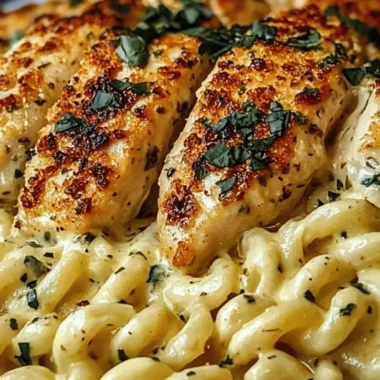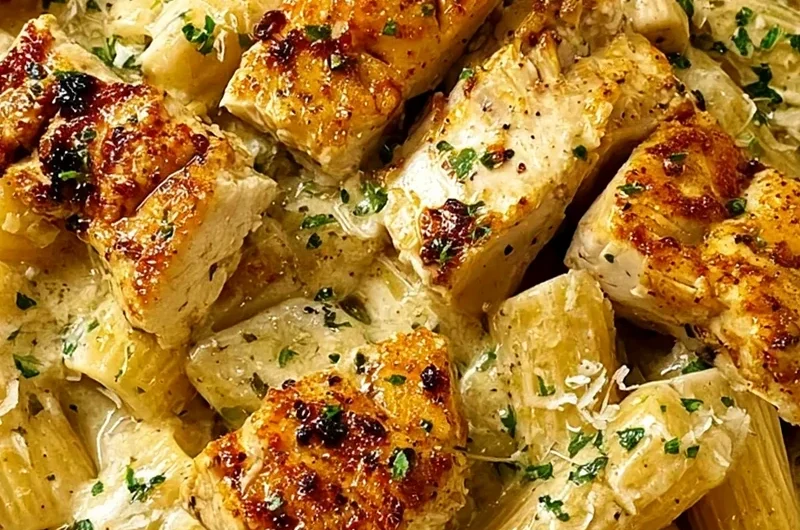
This creamy garlic parmesan chicken rigatoni is a rich and satisfying meal designed for quick assembly on busy evenings. It combines tender seared chicken and hearty pasta in a velvety cheese sauce for a gourmet-style dinner.
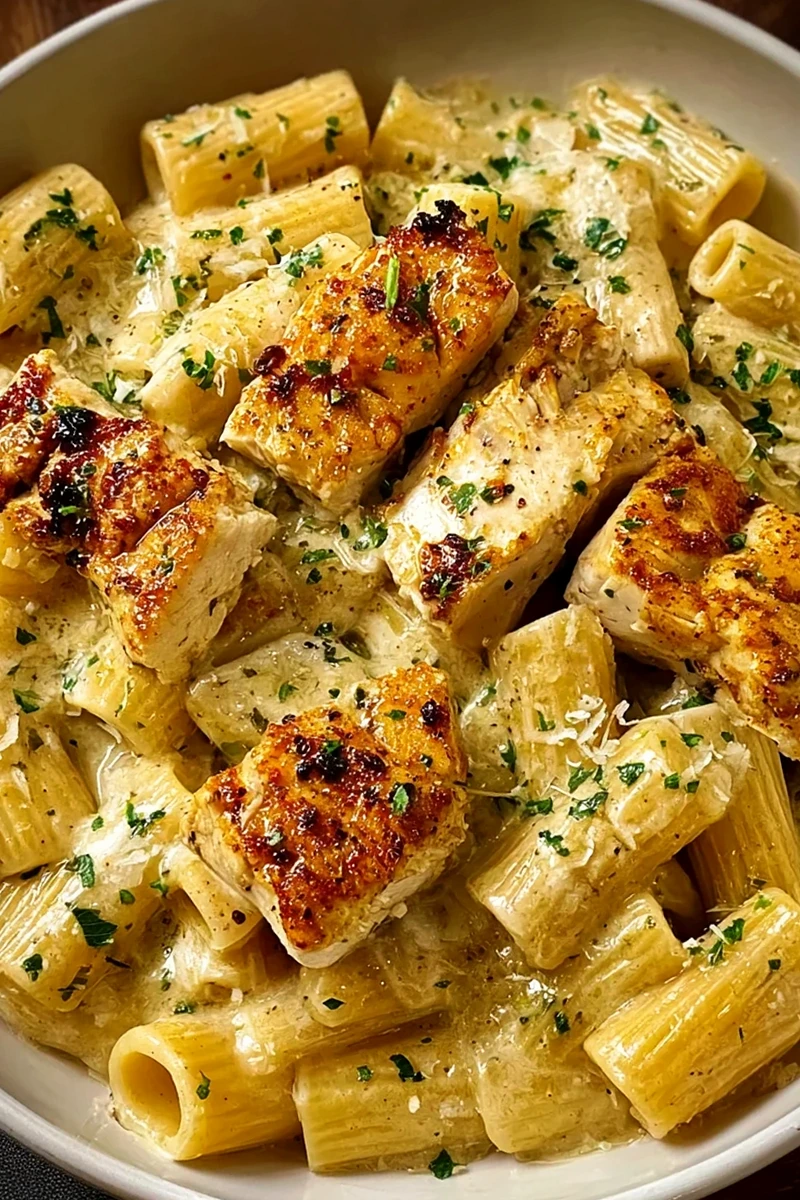
List of ingredients
- 1 pound boneless chicken breasts, cut into bite-sized pieces – ensure they are uniform for even cooking.
- 3 tablespoons butter – used for searing the chicken and sautéing garlic.
- 3 garlic cloves, minced – fresh garlic provides the best aromatic base.
- 1 cup chicken broth – adds depth and helps deglaze the pan.
- 1 cup heavy cream – creates the rich, thick texture of the sauce.
- 1 cup Parmesan cheese, freshly grated (microbial-rennet) – provides the primary savory flavor.
- 12 ounces rigatoni pasta – the ridges help the sauce cling to the pasta.
- 1 teaspoon Italian seasoning – a blend of dried herbs for classic flavor.
- 1/2 teaspoon salt – adjust based on the saltiness of your broth and cheese.
- 1/4 teaspoon black pepper – adds a subtle warmth to the dish.
- Fresh parsley, chopped, for garnish – adds a bright, fresh finish.
step-by-step instructions
- Prepare ingredients: Cut the chicken into bite-sized pieces, mince the garlic, grate the Parmesan, and chop the parsley. Cook the rigatoni pasta in a pot of salted boiling water until al dente, then drain.
- Cook chicken: Melt butter in a large skillet over medium-high heat. Add the chicken pieces, season them with salt and pepper, and cook until they are golden brown and reach an internal temperature of 165°F (74°C). Remove the chicken from the pan and set it aside on a plate.
- Build sauce base: Lower the skillet heat to medium and sauté the minced garlic for about 1 minute until fragrant. Pour in the chicken broth and scrape the browned bits from the bottom of the pan with a spoon. Simmer the mixture for 2 minutes.
- Finish sauce: Stir in the heavy cream and let it simmer for 3-5 minutes until the liquid thickens slightly. Mix in the grated Parmesan cheese until completely melted and smooth, then stir in the Italian seasoning.
- Combine and serve: Add the drained rigatoni and cooked chicken back into the skillet. Toss everything together until the pasta and chicken are evenly coated. Serve immediately and garnish with chopped fresh parsley.
Optimizing Chicken Preparation
Uniform Cutting for Even Cooking
Cut the chicken breasts into consistent 1-inch cubes. This prevents smaller pieces from overcooking and becoming dry while larger pieces remain undercooked. Uniform sizing ensures a consistent texture in every bite of the final dish.
Proper Searing Techniques
Avoid overcrowding the skillet when browning the chicken. If the pan is too full, the chicken will steam in its own juices rather than sear, resulting in a pale color and less flavor. Cook the meat in batches if necessary to achieve a deep golden brown crust.
Using a Digital Meat Thermometer
Rely on a meat thermometer rather than timing to determine when the chicken is done. Chicken breasts can dry out quickly if overcooked by even a few minutes. Remove the meat from the pan exactly when it hits 165°F (74°C) to maintain juiciness.
Sauce Development Techniques
Deglazing the Skillet for Depth
The browned bits left in the pan after searing the chicken are called fond and are packed with concentrated flavor. Adding chicken broth and scraping the bottom of the pan incorporates these bits into the sauce. This process creates a more complex and savory flavor profile.
Controlling the Reduction Process
Simmer the heavy cream on low to medium heat to avoid boiling it too vigorously. High heat can cause the cream to separate or break, which ruins the smooth texture. A gentle simmer allows the sauce to thicken slowly and maintain its emulsion.
Incorporating Cheese Without Clumping
Stir the freshly grated Parmesan into the sauce gradually. Adding it all at once can cause the cheese to clump together into a ball of protein. Constant stirring ensures the cheese melts evenly into the cream for a velvety finish.
Balancing the Seasoning
Always taste the sauce after adding the Parmesan cheese before adding more salt. Parmesan is naturally salty, and the chicken broth also contains sodium. Adjust the salt and pepper only at the final stage to avoid over-seasoning the dish.
Pasta Cooking Best Practices
Achieving the Perfect Al Dente Texture
Cook the rigatoni for 1-2 minutes less than the package directions for al dente. The pasta will continue to cook slightly when it is tossed in the hot sauce in the skillet. This prevents the pasta from becoming mushy and ensures it retains a firm bite.
The Role of Salt in Pasta Water
Generously salt the boiling water before adding the pasta. Salt is the only chance to season the pasta dough itself from the inside out. This enhances the overall flavor of the dish and complements the richness of the cheese sauce.
Timing the Pasta with the Sauce
Coordinate the boiling of the pasta so it finishes just as the sauce is completed. Adding hot, freshly drained pasta directly into the sauce helps the sauce adhere better to the noodles. It also ensures the meal is served at the ideal temperature.
Ingredient Substitutions
Using Alternative Pasta Shapes
If rigatoni is unavailable, use penne or ziti for a similar effect. These tubular shapes are ideal because they capture the creamy sauce inside the noodle. Avoid very thin pastas like spaghetti, as they may not support the weight of the chicken and thick sauce.
Substituting Chicken Breasts
Boneless, skinless chicken thighs can be used for a richer flavor and more moist meat. Thighs are more forgiving and less likely to dry out during the searing process. Ensure they are cut into similar bite-sized pieces as the breasts.
Dairy Alternatives for Creaminess
For a dairy-free version, replace heavy cream with full-fat coconut milk or a cashew-based cream. Use a vegan parmesan alternative made from nutritional yeast and nuts. Be aware that the flavor profile will shift slightly toward a nuttier taste.
Replacing Chicken Broth
Vegetable broth is an excellent substitute for chicken broth if you prefer a different base. For an even richer sauce, you can use a small amount of pasta water instead of broth. This adds starch to the sauce, which helps it thicken naturally.
Flavor Variations
Adding Sautéed Leafy Greens
Stir in two cups of fresh baby spinach or chopped kale during the final step of the sauce preparation. The residual heat will wilt the greens quickly without overcooking them. This adds a boost of color and nutrients to the meal.
Incorporating Roasted Vegetables
Add roasted red peppers or sautéed mushrooms to the skillet along with the chicken. These ingredients complement the garlic and parmesan flavors perfectly. Mushrooms, in particular, add an earthy depth that balances the richness of the cream.
Adding Heat with Red Pepper Flakes
For those who prefer a spicy kick, add a pinch of crushed red pepper flakes when sautéing the garlic. This infuses the oil with heat and cuts through the heaviness of the cheese. Start with a small amount and adjust to your heat tolerance.
Serving Suggestions
Pairing with Acidic Side Salads
Serve this pasta with a crisp green salad featuring a lemon-based vinaigrette. The acidity of the dressing cuts through the richness of the heavy cream and parmesan. This creates a balanced palate and prevents the meal from feeling too heavy.
Bread Options for Sauce Dipping
Warm garlic bread or a toasted baguette is a great accompaniment. The bread can be used to soak up the excess creamy sauce left on the plate. Brushing the bread with olive oil and parsley mirrors the flavors in the pasta.
Vegetable Side Dish Pairings
Steamed broccoli or roasted asparagus provides a healthy contrast to the pasta. The slight bitterness of these vegetables balances the savory notes of the garlic and cheese. Serve them on the side or mix them directly into the dish.
Storage and Preservation
Proper Refrigeration Methods
Store leftovers in an airtight container in the refrigerator for up to three to four days. Ensure the pasta has cooled slightly before sealing the lid to prevent excess condensation. This helps maintain the texture of the rigatoni.
Freezer Safety and Storage
While this dish can be frozen, the cream sauce may separate during the thawing process. If freezing, store it in a freezer-safe container for up to two months. Thaw the pasta in the refrigerator overnight before reheating.
Reheating for Original Texture
Reheat the pasta on the stovetop over low heat rather than in the microwave. This allows you to control the temperature and prevent the sauce from breaking. Stir gently to avoid breaking the pasta tubes.
Reviving a Thickened Sauce
Cream sauces often thicken significantly after being refrigerated. Add a splash of milk, cream, or chicken broth when reheating to loosen the sauce. Stir continuously until the sauce returns to its original velvety consistency.
Common Cooking Troubleshooting
Fixing a Separated Sauce
If the sauce separates and looks oily, it is likely due to excessive heat. Lower the temperature and whisk in a tablespoon of warm water or cream quickly. This helps re-emulsify the fats and liquids into a smooth sauce.
Correcting Over-Salted Dishes
If the dish tastes too salty, add a squeeze of fresh lemon juice or a teaspoon of unsalted butter. The acid from the lemon or the fat from the butter helps mask the intensity of the salt. Avoid adding more cream, as it may dilute the other flavors too much.
Managing Garlic Bitterness
If the garlic turns dark brown or black, it has burnt and will taste bitter. It is best to discard the garlic and start the sauce base over. To prevent this, keep the heat at medium and stir the garlic constantly for only one minute.
Frequently Asked Questions
Can I make this dish ahead of time?
Yes, you can prepare the chicken and the sauce separately and store them in the fridge. Cook the pasta fresh and combine everything just before serving. This prevents the pasta from absorbing too much sauce and becoming soft.
What is the best type of Parmesan cheese?
Freshly grated Parmigiano-Reggiano is the best choice for this recipe. Pre-shredded cheeses contain cellulose or anti-caking agents that prevent them from melting smoothly. Fresh cheese provides a superior melt and a sharper flavor.
Print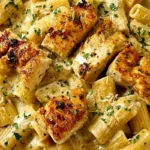
Creamy Garlic Parmesan Chicken Rigatoni
- Total Time: 40 minutes
- Yield: 4 servings 1x
- Diet: General
Description
A quick and delicious Garlic Parmesan Chicken Rigatoni, perfect for a simple weeknight meal.
Ingredients
- 1 pound boneless chicken breasts, cut into bite-sized pieces
- 3 tablespoons butter
- 3 garlic cloves, minced
- 1 cup chicken broth
- 1 cup heavy cream
- 1 cup Parmesan cheese, freshly grated
- 12 ounces rigatoni pasta
- 1 teaspoon Italian seasoning
- 1/2 teaspoon salt
- 1/4 teaspoon black pepper
- Fresh parsley, chopped, for garnish
Instructions
- Prepare ingredients: Cut chicken into bite-sized pieces, mince garlic, grate Parmesan, and chop parsley. Cook rigatoni pasta in salted boiling water until al dente according to package directions.
- Cook chicken: Melt butter in a large skillet over medium-high heat. Add chicken pieces, season with salt and pepper, and cook until golden brown and cooked through (165°F/74°C). Remove chicken and set aside.
- Build sauce base: Reduce skillet heat to medium. Sauté minced garlic for about 1 minute until fragrant. Pour in chicken broth, scraping up browned bits from the bottom. Simmer for 2 minutes.
- Finish sauce: Add heavy cream to the skillet and simmer for 3-5 minutes until slightly thickened. Stir in grated Parmesan cheese until melted and smooth. Add Italian seasoning.
- Combine and serve: Add drained rigatoni pasta and cooked chicken to the sauce. Toss to coat evenly. Serve immediately, garnished with fresh parsley.
Notes
For best results, use freshly grated Parmigiano-Reggiano. This dish pairs well with a crisp green salad or crusty garlic bread.
- Prep Time: 15 minutes
- Cook Time: 25 minutes
- Category: Dinner
- Method: Stovetop
- Cuisine: Italian-American
Nutrition
- Serving Size: 1 serving
- Calories: 820 kcal
- Sugar: 6 g
- Sodium: 980 mg
- Fat: 38 g
- Saturated Fat: 22 g
- Unsaturated Fat: 12 g
- Trans Fat: 0 g
- Carbohydrates: 58 g
- Fiber: 4 g
- Protein: 42 g
- Cholesterol: 145 mg
Keywords: garlic parmesan chicken rigatoni, creamy pasta, weeknight dinner, easy chicken recipe