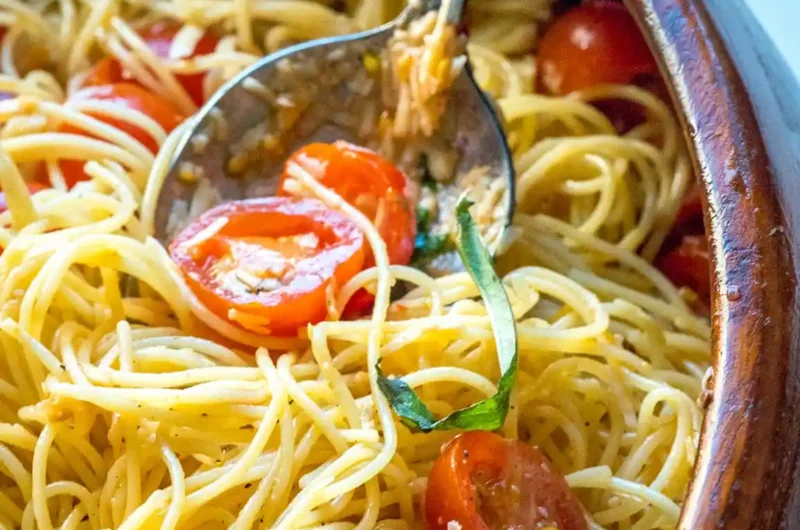
This recipe features a fresh, raw tomato marinade that creates a light sauce without the need for simmering. It is an efficient way to highlight seasonal produce with minimal active cooking time.
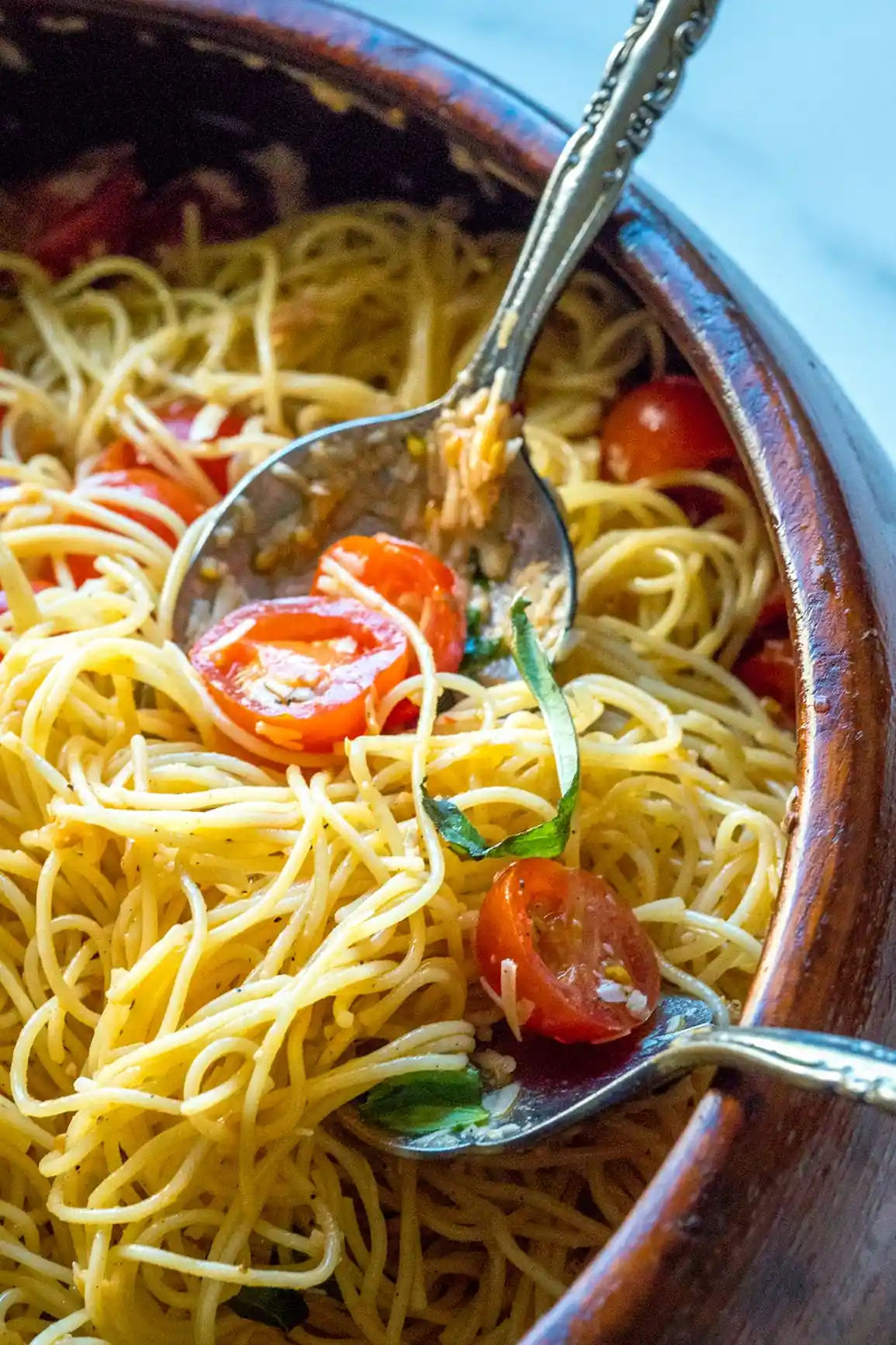
List of ingredients
- 4 pints cherry tomatoes, halved – ensure they are ripe and firm.
- Extra virgin olive oil, as needed – use a high-quality oil for the best flavor.
- 6 cloves garlic, minced – fresh garlic provides the most pungent aroma.
- 18 large basil leaves, julienned, plus more for serving – slice thinly into ribbons.
- 1/2 teaspoon crushed red pepper flake – adds a subtle heat to the marinade.
- Kosher salt, to taste – used for seasoning the vegetables and boiling the pasta.
- 1/2 teaspoon freshly ground black pepper – adds a woody depth of flavor.
- 1 lb angel hair pasta – a thin pasta that pairs well with light sauces.
- 1 1/2 cups freshly grated Parmesan cheese (made with microbial rennet), plus more for serving – provides a salty, nutty finish.
step-by-step instructions
- Marinate the vegetables: In a large bowl, stir together the halved cherry tomatoes, 1/2 cup olive oil, minced garlic, julienned basil, red pepper flake, 1 teaspoon of salt, and black pepper. Cover the bowl and let it sit at room temperature for 4 hours to allow the flavors to meld.
- Prepare the pasta water: Just before you are ready to serve, bring a large pot of salted water to a boil. Add a splash of olive oil to the water to prevent the thin pasta from sticking together.
- Cook the pasta: Add the angel hair pasta to the boiling water and cook according to the package directions until al dente.
- Combine components: Drain the pasta well using a colander. Immediately add the hot pasta to the bowl containing the marinated cherry tomatoes.
- Final toss: Add the grated Parmesan cheese and a few additional fresh basil leaves. Toss everything gently until the pasta is evenly coated in the tomato juices and oil.
- Serve: Plate the pasta immediately and top with extra Parmesan cheese and fresh basil for garnish.
Optimal Tomato Selection and Preparation
Choosing the Right Cherry Tomato Varieties
Standard red cherry tomatoes are the classic choice for this dish due to their balanced acidity and sweetness. For a more colorful presentation, use a mix of yellow and orange cherry tomatoes. Grape tomatoes also work well, though they have a slightly different shape and a more elongated texture.
Identifying Peak Ripeness
Select tomatoes that are bright in color and feel heavy for their size. Avoid any that are mushy or have deep cracks, as these will break down too quickly during the marination process. Firm but yielding tomatoes hold their shape better when tossed with the hot pasta.
Efficient Halving Techniques
To halve a large quantity of cherry tomatoes quickly, place a handful of them on a cutting board. Use a sharp paring knife to slice through several at once, or use kitchen shears to snip them in half for a faster process. Ensure the cuts are clean to allow the juices to release effectively into the oil.
Washing and Drying Process
Rinse tomatoes under cold running water and pat them dry with a paper towel before slicing. Excess water on the surface of the tomatoes can dilute the olive oil and weaken the emulsion of the marinade. Dry tomatoes ensure the oil adheres better to the skin and flesh.
Mastering the Marination Process
The Role of Room Temperature Marinating
Allowing the mixture to sit at room temperature for four hours is essential for flavor development. This period allows the salt to draw out the natural juices from the tomatoes, creating a raw sauce. At room temperature, the garlic and basil infuse into the oil more effectively than they would in a cold refrigerator.
Managing Garlic Infusion
Mincing the garlic finely increases the surface area, allowing the pungent oils to permeate the tomato mixture. If you prefer a milder garlic taste, you can thinly slice the cloves instead of mincing them. Ensure the garlic is evenly distributed so no single bite is overpowering.
Handling Fresh Basil Ribbons
Cutting basil into julienne ribbons prevents the leaves from bruising and turning black too quickly. Avoid chopping the basil too far in advance, as the edges can oxidize. Stirring the basil in during the marination phase allows its aromatic oils to blend with the olive oil.
Adjusting the Salt Balance
The salt in the marinade serves two purposes: seasoning and extraction. It breaks down the cell walls of the tomatoes, releasing the liquid that forms the base of the sauce. Taste the mixture after the four-hour mark and add a pinch more salt if the flavors seem muted.
Pasta Cooking and Textural Precision
Why Angel Hair is Preferred
Angel hair pasta is extremely thin, which means it cooks quickly and does not overwhelm the delicate raw tomato sauce. The high surface-area-to-volume ratio allows the pasta to be coated thoroughly by the olive oil and tomato juices. Heavier pastas might make the dish feel too dense for a summer meal.
Executing the Al Dente Finish
Because angel hair cooks so quickly, it can easily become overdone and mushy. Start tasting the pasta one minute before the package directions suggest. Remove it from the heat when it still has a slight resistance in the center, as it will continue to cook slightly when tossed with the marinated tomatoes.
The Purpose of Olive Oil in Boiling Water
Adding a splash of olive oil to the boiling water helps lubricate the thin strands of angel hair. This prevents the pasta from clumping together in the pot, ensuring that each strand remains separate. This step is particularly important for very thin pasta varieties.
Proper Draining Techniques
Drain the pasta thoroughly in a colander to remove as much excess water as possible. If the pasta is too wet, it will dilute the marinated tomato sauce and make the final dish watery. Avoid rinsing the pasta with cold water, as the surface starch helps the cheese and oil cling to the noodles.
Cheese and Garnish Enhancements
Selecting Microbial-Rennet Parmesan
Use a high-quality Parmesan cheese made with microbial rennet to maintain the clean flavor profile of the dish. Grating the cheese fresh from a block is superior to using pre-shredded options. Freshly grated cheese melts more smoothly and integrates better into the hot pasta.
Balancing the Nutty Saltiness
Parmesan adds a salty, umami depth that complements the acidity of the cherry tomatoes. Start with the recommended 1.5 cups and taste before adding more. The cheese acts as a thickener, helping the oil and tomato juices bind to the pasta.
Fresh Basil as a Finishing Touch
Adding a few fresh, whole or torn basil leaves at the very end provides a burst of bright, peppery flavor. This contrasts with the basil that has marinated for four hours, which has a deeper, more mellow taste. It also adds a visual pop of green to the finished plate.
Integrating Red Pepper Flakes
The red pepper flakes provide a subtle background heat that cuts through the richness of the olive oil and cheese. If you prefer a spicier dish, you can add an extra pinch during the final toss. For those sensitive to heat, the flakes can be reduced without affecting the overall structure of the recipe.
Storage and Make-Ahead Advice
Prepping the Tomato Mixture
You can prepare the tomato, garlic, and oil mixture up to 24 hours in advance. If you do this, store the mixture in the refrigerator to keep the ingredients fresh. Bring the bowl back to room temperature for 30 minutes before adding the hot pasta to ensure the oil is fluid.
Storing Leftover Pasta
Store any remaining pasta in an airtight container in the refrigerator for up to three days. Because the sauce is raw, the tomatoes may continue to release juice over time. This can make the pasta slightly softer upon reheating.
Best Reheating Methods
To reheat, place the pasta in a skillet over medium-low heat with a small splash of water or olive oil. Gently toss the noodles until heated through, avoiding high heat which could cook the fresh tomatoes too much. Finish with a fresh sprinkle of Parmesan and basil to refresh the flavor.
Preventing Pasta Clumping During Storage
If storing pasta without the sauce, toss the cooked noodles in a bit of olive oil before refrigerating. This creates a barrier that prevents the angel hair from sticking together into a single mass. When ready to eat, simply combine with the marinated tomato mixture.
Serving and Pairing Ideas
Complementary Protein Additions
While this dish is excellent on its own, it pairs well with grilled shrimp or seared scallops. These proteins mirror the lightness of the summer garden theme. Add the proteins on top of the plated pasta to keep them from overcooking.
Selecting a Side Salad
A simple arugula salad with a lemon vinaigrette provides a bitter contrast to the sweet tomatoes and rich cheese. Alternatively, a sliced cucumber salad with dill and white vinegar offers a refreshing crunch that cleanses the palate between bites.
Non-Alcoholic Beverage Pairings
Serve this pasta with a chilled sparkling water infused with lemon and mint. The carbonation and citrus notes cut through the olive oil and Parmesan, refreshing the palate. An iced green tea with a hint of honey is another excellent, light pairing.
Plating for Visual Appeal
Use wide, shallow bowls to allow the pasta to spread out and showcase the halved cherry tomatoes. Arrange the pasta in a nest shape and spoon extra marinated tomatoes over the top. Finish with a generous dusting of Parmesan and a few sprigs of fresh basil.
Troubleshooting Common Issues
Addressing a Watery Sauce
If the final dish seems too watery, it is likely due to under-drained pasta or overly juicy tomatoes. To fix this, toss in an extra tablespoon of grated Parmesan cheese, which helps absorb excess liquid. You can also let the pasta sit for two minutes before serving to allow the sauce to settle.
Fixing Overly Pungent Garlic
If the raw garlic taste is too strong, you can lightly sauté the minced garlic in the olive oil for 30 seconds before adding it to the tomatoes. This removes the sharp bite while retaining the garlic flavor. However, this deviates from the raw nature of the original recipe.
Managing Overcooked Angel Hair
If the pasta becomes too soft, avoid stirring it vigorously, as this will break the thin strands. Gently fold in the ingredients using a silicone spatula or large fork. In the future, reduce the boiling time by 60 seconds to ensure a firmer texture.
Correcting a Bland Flavor Profile
If the dish tastes flat, it usually needs more acidity or salt. Add a small squeeze of fresh lemon juice or an extra pinch of kosher salt. The acidity of the lemon enhances the natural sweetness of the cherry tomatoes and brightens the overall taste.
Frequently Asked Questions
Can I use a different type of pasta?
Yes, you can use spaghetti or linguine, but you may need to increase the marination time or add a bit more olive oil. Since these pastas are thicker, they require more sauce to be fully coated. Angel hair is recommended for its ability to integrate with light, raw sauces.
Is it necessary to let the tomatoes sit for 4 hours?
The four-hour window is important for the salt to draw out the tomato juices and for the garlic to infuse the oil. If you are short on time, you can let it sit for at least one hour, but the flavor will be less developed and the sauce less cohesive.
Can I substitute the Parmesan cheese?
Pecorino Romano is a great alternative if you prefer a saltier, sharper taste. For a dairy-free option, use a nutritional yeast-based Parmesan alternative or toasted breadcrumbs for texture. Ensure any substitute provides a similar salty, nutty element.
Should the tomato mixture be refrigerated during the 4 hours?
No, it is best kept at room temperature to maximize the infusion of flavors. However, if your kitchen is extremely hot (above 80 degrees Fahrenheit), you can refrigerate it and then let it sit on the counter for 30 minutes before serving.
Can I use dried basil instead of fresh?
Dried basil has a very different flavor profile and will not provide the same freshness. If you must use dried, use only one-third of the amount and add it at the start of the marination period. Fresh basil is highly recommended for this specific recipe.
Print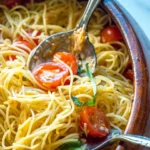
Fresh Summer Garden Pasta with Marinated Tomatoes
- Total Time: 4 hours 15 minutes
- Yield: 6 servings 1x
- Diet: Vegetarian
Description
Fresh, simple flavor and SO easy to make.
Ingredients
- 4 pints cherry tomatoes, halved
- Extra virgin olive oil, as needed
- 6 cloves garlic, minced
- 18 large basil leaves, julienned, plus more for serving
- 1/2 teaspoon crushed red pepper flake
- Kosher salt, to taste
- 1/2 teaspoon freshly ground black pepper
- 1 lb angel hair pasta
- 1 1/2 cups freshly grated Parmesan cheese, plus more for serving
Instructions
- Step 1: In a large bowl, stir together the cherry tomatoes, 1/2 cup olive oil, garlic, basil, red pepper flake, 1 teaspoon of salt, and pepper. Cover and set aside at room temperature for 4 hours.
- Step 2: Just before you’re ready to serve, bring a large pot of salted water to a boil. Add a splash of olive oil and pasta and cook according to package directions.
- Step 3: Drain pasta well and add to bowl with cherry tomatoes. Add parmesan and a few more fresh basil leaves and toss to combine.
- Step 4: Serve with more Parmesan and enjoy!
Notes
The magic of this dish is in the marinating process, which allows the tomato juices and olive oil to create a natural sauce without actual cooking.
- Prep Time: 4 hours 10 minutes
- Cook Time: 5 minutes
- Category: dinner
- Method: Marinating
- Cuisine: Italian-American
Nutrition
- Serving Size: 1 serving
- Calories: 560 kcal
- Sugar: 8 g
- Sodium: 620 mg
- Fat: 23 g
- Saturated Fat: 6 g
- Unsaturated Fat: 15 g
- Trans Fat: 0 g
- Carbohydrates: 41 g
- Fiber: 4 g
- Protein: 15 g
- Cholesterol: 35 mg
Keywords: summer garden pasta, cherry tomatoes, angel hair pasta, Barefoot Contessa, fresh pasta