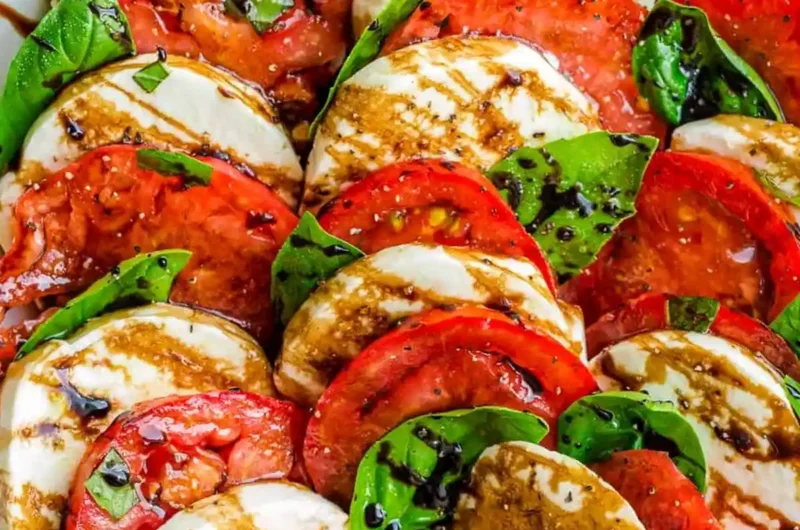
This fresh Italian dish combines juicy ripe tomatoes, creamy mozzarella, and aromatic basil for a light and healthy meal. It is a simple assembly that relies on high-quality ingredients to deliver an authentic flavor profile.
List of ingredients
- 1 1/2 lbs Ripe tomatoes (3-4 medium) sliced 1/4″ thick – Use firm but ripe varieties for best structure.
- 12-16 oz Fresh mozzarella sliced 1/4″ thick – Fresh whole milk mozzarella provides the most authentic creaminess.
- 1 bunch Fresh basil (1/3 cup leaves) – Use large, tender Genovese basil leaves.
- 3 Tbsp Extra virgin olive oil – Use a high-quality cold-pressed oil for drizzling.
- 1/2 tsp Sea salt – Flaky sea salt adds a pleasant crunch and enhances tomato flavor.
- 1/4 tsp Black pepper – Freshly cracked pepper provides a sharp, aromatic contrast.
- 2 Tbsp Balsamic glaze – This optional addition adds a sweet and tangy finish.
step-by-step instructions
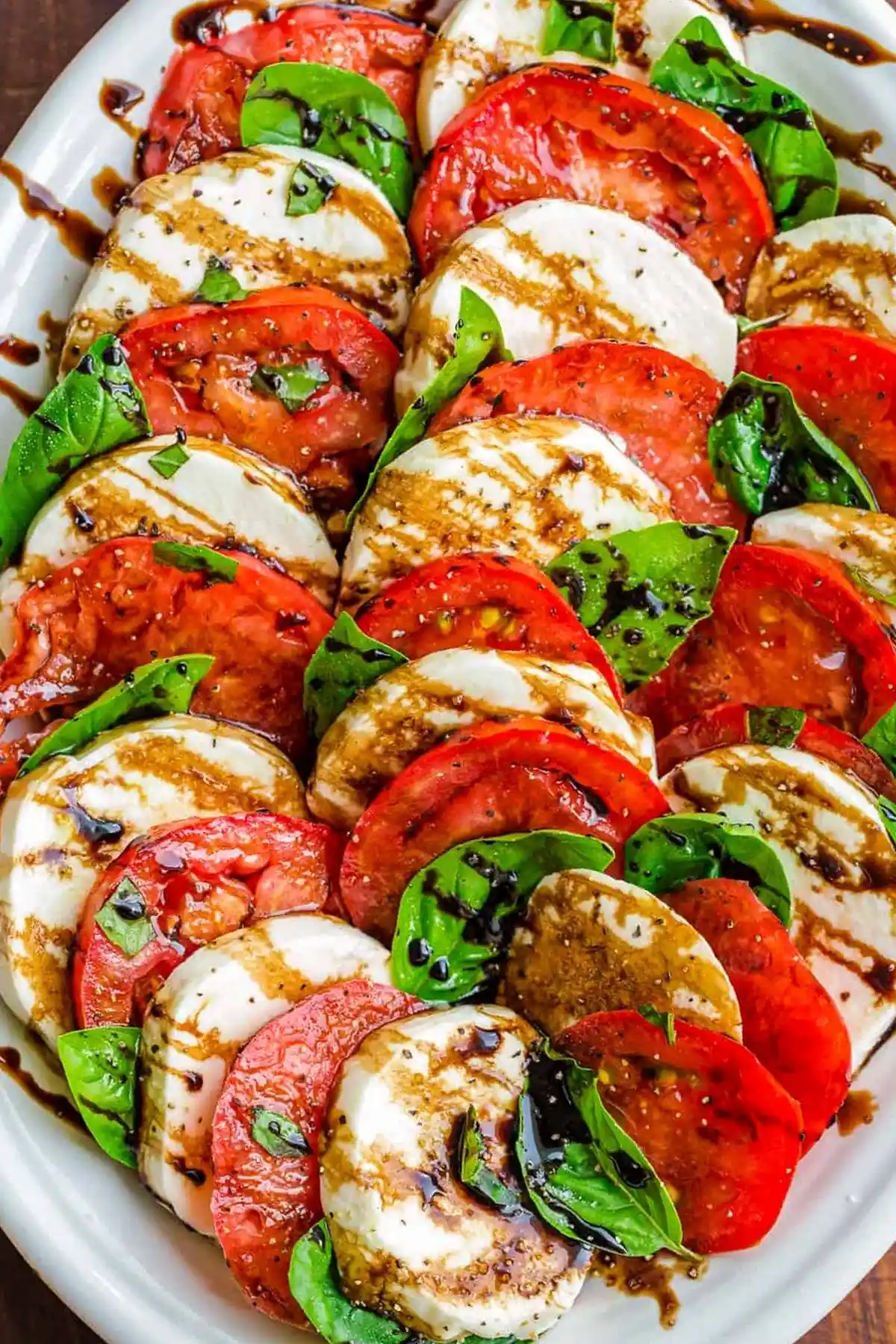
- Layer the base: Place the tomato slices on a serving platter in a slightly overlapping pattern.
- Add the cheese: Tuck the mozzarella slices between each tomato slice so that both ingredients are clearly visible.
- Insert the basil: Carefully place whole basil leaves between the cheese and tomato layers.
- Final arrangement: Adjust the slices to ensure every layer is visible and aesthetically balanced.
- Season: Just before serving, sprinkle the salad generously with sea salt and black pepper.
- Dress the salad: Drizzle the extra virgin olive oil and the balsamic glaze over the top to finish.
Optimal Produce Selection
Selecting the Right Tomato Varieties
Beefsteak and Heirloom tomatoes are the best choices for slicing because of their size and meaty texture. Heirloom varieties offer a wider range of colors and complex flavor profiles that enhance the visual appeal. Avoid overripe tomatoes, as they become too mushy once salt is added.
Choosing Fresh Mozzarella
Fresh whole milk mozzarella is the traditional standard for this dish. You can choose between the log form for easy slicing or Buffalo mozzarella for a richer, more tangy taste. For a more decadent version, Burrata can be used, though it will change the texture to be more creamy.
Evaluating Basil Quality
Genovese basil is preferred for its large, smooth leaves and sweet, peppery aroma. Ensure the leaves are bright green and free of brown spots or wilting. Avoid using dried basil, as it lacks the fresh, herbal punch required for an authentic Caprese.
Understanding Olive Oil Grades
Extra virgin olive oil is essential because it is unrefined and retains the most flavor. Look for oils that specify a cold-pressing method and a harvest date to ensure freshness. The oil acts as a bridge that connects the acidity of the tomatoes with the creaminess of the cheese.
Sourcing Quality Balsamic Glaze
A true balsamic glaze is a reduction of balsamic vinegar that is thicker and sweeter than standard vinegar. If buying store-bought, check the label for minimal additives to ensure a clean taste. The glaze should have a syrupy consistency that clings to the ingredients rather than running off.
Selecting the Best Finishing Salts
Flaky sea salts, such as Maldon, are ideal for finishing salads because they provide a textural contrast. Kosher salt is also a good option due to its coarse grains. Avoid fine table salt, which can dissolve too quickly and make the tomatoes overly watery.
Customizing Your Ingredients
Alternative Tomato Options
If large tomatoes are unavailable, halved cherry or Campari tomatoes work well for a bite-sized version. For a seasonal twist, you can replace some of the tomatoes with sliced ripe peaches or nectarines. The sweetness of the fruit complements the salty mozzarella perfectly.
Dairy-Free Cheese Substitutes
For those avoiding dairy, thick slices of ripe avocado provide a similar creamy texture and richness. Some plant-based mozzarella alternatives are available, though they may vary in melting point and flavor. Avocado adds a buttery note that pairs well with the acidity of the balsamic glaze.
Herbal Alternatives to Basil
While basil is traditional, baby arugula provides a peppery bite that cuts through the richness of the cheese. Fresh mint leaves can be added for a more refreshing, cooling effect. A combination of both arugula and basil creates a more complex flavor profile.
Substituting the Balsamic Glaze
If you prefer a different flavor, a spoonful of fresh basil pesto can be drizzled over the top instead of glaze. A simple reduction of white balsamic vinegar offers a lighter color and a milder sweetness. Some prefer only olive oil and salt to keep the flavor purely traditional.
Using Mini Mozzarella Balls
Bocconcini, or mini mozzarella balls, are an excellent substitute for slices when making skewers. They maintain their shape better and are easier to portion for guests. These small spheres provide a consistent ratio of cheese to tomato in every bite.
Adjusting the Pepper Profile
While black pepper is the standard, white pepper offers a more subtle, earthy heat. Red pepper flakes can be added if you prefer a slight spicy kick to contrast the creaminess of the cheese. Freshly cracked peppercorns always provide the best aromatic quality.
Presentation and Plating Methods
Creating a Visual Layered Effect
The most appealing Caprese salads are arranged in a circular or linear pattern where colors alternate. By tucking the basil and cheese between tomatoes, you create a rhythmic green, white, and red pattern. This arrangement ensures that every slice of tomato is paired with a slice of cheese.
Assembling Caprese Skewers
For appetizer-style serving, thread a cherry tomato, a folded basil leaf, and a mini mozzarella ball onto a toothpick. This portable version is ideal for parties and keeps the ingredients tightly grouped. Drizzle the glaze over the entire platter of skewers just before serving.
Choosing the Right Serving Platter
A large, flat ceramic platter allows the ingredients to spread out without crowding. White platters make the vibrant colors of the tomatoes and basil pop more intensely. Avoid deep bowls, as they can cause the layers to collapse and trap excess juices at the bottom.
Timing the Dressing Application
Apply the salt, oil, and glaze immediately before the dish hits the table. Adding salt too early draws moisture out of the tomatoes through osmosis, leading to a watery platter. Fresh dressing ensures the basil leaves remain crisp and vibrant.
Adding Garnish for Elegance
Small basil microgreens or a few whole peppercorns can be scattered on top for a professional look. A final light sprinkle of flaky salt just before serving adds a glistening effect. Ensure the glaze is applied in thin lines rather than large pools to maintain a clean look.
Managing Ingredient Proportions
Aim for an equal thickness of tomato and mozzarella slices, typically around 1/4 inch. This balance prevents one ingredient from dominating the palate. Consistent sizing also makes the salad easier to eat and more visually symmetrical.
Freshness and Preservation Guidelines
The Prep-Ahead Strategy
You can slice the tomatoes and mozzarella up to four hours in advance. Place them on the platter and cover them lightly with plastic wrap to prevent them from drying out. Ensure the wrap does not touch the cheese directly to avoid condensation buildup.
Preventing Basil Browning
Keep the basil leaves separate from the other ingredients until the final assembly. Basil oxidizes quickly once cut or bruised, leading to dark edges. Storing leaves in a cool area or lightly wrapping them in a damp paper towel keeps them green.
Controlling Excess Moisture
To prevent a pool of liquid on the platter, gently pat the tomato slices dry with a paper towel before layering. This removes surface moisture and allows the olive oil to adhere better to the tomato. It also helps the salt season the fruit without immediately liquefying it.
Cold Storage Temperatures
Store the prepped platter in the refrigerator at approximately 40°F (4°C). However, bring the salad to room temperature for about 15 minutes before dressing. This allows the flavors of the olive oil and tomatoes to be more pronounced.
Managing the Balsamic Glaze
Homemade balsamic glaze can be stored in an airtight glass jar in the refrigerator for several weeks. If it thickens too much in the cold, warm it slightly before drizzling. This ensures a smooth flow and consistent coverage across the salad.
Short-Term Storage Limits
Once the salad is dressed and salted, it should be consumed within 30 to 60 minutes. Beyond this window, the basil will begin to wilt and the tomatoes will release significant amounts of juice. The texture of the mozzarella may also soften excessively.
Complementary Food Pairings
Pairing with Lean Proteins
Grilled shrimp skewers with lemon and garlic complement the fresh tones of the Caprese salad. Tuscan-style grilled chicken provides a hearty protein balance without overpowering the salad. Pan-seared cod or other white fish offers a light pairing that maintains the meal’s freshness.
Selecting the Best Breads
Warm focaccia bread with rosemary and sea salt is the ideal accompaniment for soaking up the leftover oil and glaze. Toasted sourdough slices provide a crunchy texture that contrasts with the soft cheese. Garlic bread can also work, though it may compete with the basil’s aroma.
Integrating Grains and Pasta
A light serving of buttered homemade pasta or a creamy risotto makes the salad part of a full meal. Quinoa or farro salads can be served alongside to add more fiber and nutritional density. Ensure the grains are seasoned simply to let the Caprese flavors shine.
Wine-Free Beverage Pairings
Sparkling water with a squeeze of fresh lime or lemon cleanses the palate between bites. An iced herbal tea, such as peppermint or hibiscus, complements the herbal notes of the basil. Freshly squeezed lemonade provides a tart contrast to the creamy mozzarella.
Adding Nutty Elements
Toasted pine nuts can be sprinkled over the salad for an added layer of crunch and nuttiness. Sliced almonds also work well, adding a subtle sweetness. These elements introduce a new texture that breaks up the softness of the tomato and cheese.
Combining with Other Salads
A simple cucumber salad with a light vinaigrette pairs well for a comprehensive vegetable spread. A Panzanella salad, which uses toasted bread cubes, shares similar flavor profiles and extends the Italian theme. Keep the dressings distinct to avoid flavor overlap.
Common Preparation Challenges
Preventing Watery Tomatoes
The primary cause of wateriness is adding salt too early. Salt draws water out of the tomato cells, creating a pool of liquid on the plate. Always season immediately before serving to keep the salad structured and the flavors concentrated.
Stopping Basil from Wilting
Basil is highly sensitive to acid and salt. When the balsamic glaze and salt touch the leaves, they begin to break down and turn dark. By tucking the leaves between the cheese and tomato, you provide a small buffer that preserves their freshness.
Balancing the Acidity
If the balsamic glaze is too tart, you can balance it by adding a tiny pinch of sugar during the reduction process. Alternatively, increase the amount of extra virgin olive oil to mellow out the acidity. Tasting each component separately helps you find the right ratio.
Handling Sliced Mozzarella
Fresh mozzarella can be sticky and difficult to slice cleanly. Use a very sharp serrated knife or a thin wire cutter to achieve uniform 1/4 inch slices. This prevents the cheese from tearing and maintains a professional appearance on the platter.
Dealing with Over-Ripe Tomatoes
If your tomatoes are too soft to slice, dice them into chunks instead of slices. Transform the salad into a chopped Caprese by mixing chunks of tomato, mozzarella pearls, and torn basil. This preserves the flavor while adapting to the texture of the produce.
Fixing a Too-Thick Glaze
If your balsamic reduction becomes too thick or tacky, whisk in a teaspoon of warm water or a drop of olive oil. Heat the glaze gently on low heat to restore its flow. This ensures it drizzles elegantly rather than clumping on the cheese.
Frequently Asked Questions
Can I use cherry tomatoes?
Yes, cherry or grape tomatoes are excellent alternatives. They are best used for skewers or a chopped salad version where they are halved or kept whole.
Is balsamic glaze required?
No, balsamic glaze is optional. Many traditional versions use only extra virgin olive oil, salt, and pepper to highlight the natural taste of the ingredients.
How long does it stay fresh?
The salad is best consumed immediately after dressing. If prepped without dressing, it can stay in the fridge for up to 4 hours, but the basil should be added last.
Can I use different cheeses?
While mozzarella is traditional, Burrata or mild goat cheese can be used. Burrata adds a creamier center, while goat cheese adds a more distinct tang.
What is the best way to store leftover basil?
Store unused basil stems in a glass of water at room temperature, similar to a bouquet of flowers. Cover the top loosely with a plastic bag to maintain humidity without crushing the leaves.
Can I make this vegan?
Yes, you can substitute the mozzarella with sliced avocado or a high-quality plant-based mozzarella alternative. Ensure the balsamic glaze used is free of any animal-derived thickeners.
Print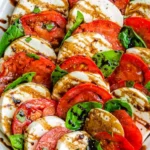
Classic Italian Caprese Salad
- Total Time: 15 minutes
- Yield: 6 servings 1x
- Diet: Vegetarian
Description
Caprese Salad is an easy classic Italian recipe featuring a winning combination of ripe tomatoes, fresh mozzarella cheese, and basil, topped with a homemade balsamic glaze.
Ingredients
- 1 1/2 lbs ripe tomatoes, sliced 1/4” thick
- 12–16 oz fresh mozzarella (microbial-rennet), sliced 1/4” thick
- 1 bunch fresh basil (1/3 cup leaves)
- 3 Tbsp extra virgin olive oil
- 1/2 tsp sea salt
- 1/4 tsp black pepper
- 2 Tbsp balsamic glaze (optional)
Instructions
- Step: Layer slices of tomatoes on a serving platter, tucking slices of cheese between each tomato and whole basil leaves between the cheese and tomatoes.
- Step: Just before serving, season generously with salt and pepper, then drizzle with extra virgin olive oil and balsamic glaze.
Notes
To keep the salad fresh and prevent tomatoes from releasing too much juice, add the salt and dressing immediately before serving.
- Prep Time: 15 minutes
- Cook Time: 0 minutes
- Category: Salad
- Method: Assembly
- Cuisine: Italian
Nutrition
- Serving Size: 1 serving
- Calories: 261 kcal
- Sugar: 5 g
- Sodium: 555 mg
- Fat: 20 g
- Saturated Fat: 8 g
- Unsaturated Fat: 12 g
- Trans Fat: 0 g
- Carbohydrates: 8 g
- Fiber: 1 g
- Protein: 14 g
- Cholesterol: 45 mg
Keywords: caprese salad, italian salad, fresh mozzarella, summer salad, gluten free, vegetarian