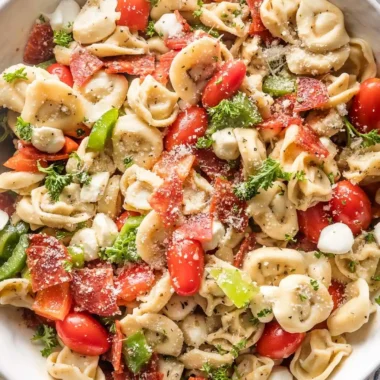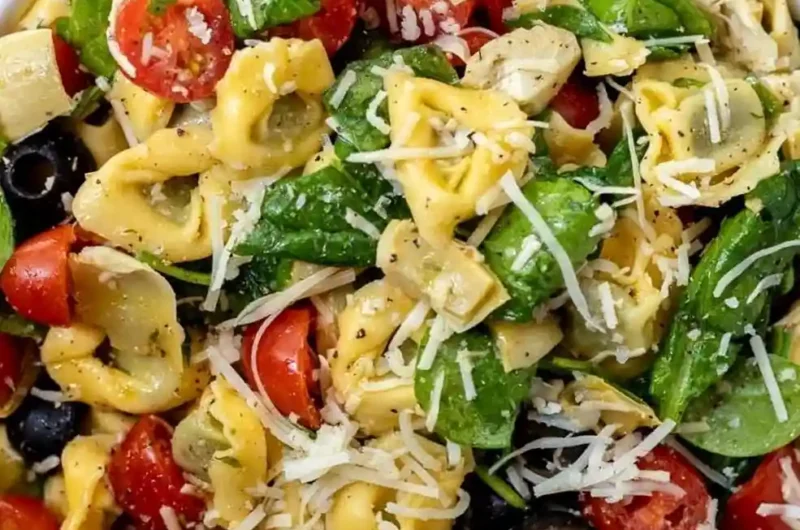
This refreshing pasta salad combines cheese-filled tortellini with crisp vegetables and a tangy vinaigrette. It is an ideal vegetarian side dish for outdoor gatherings or quick weekday lunches.
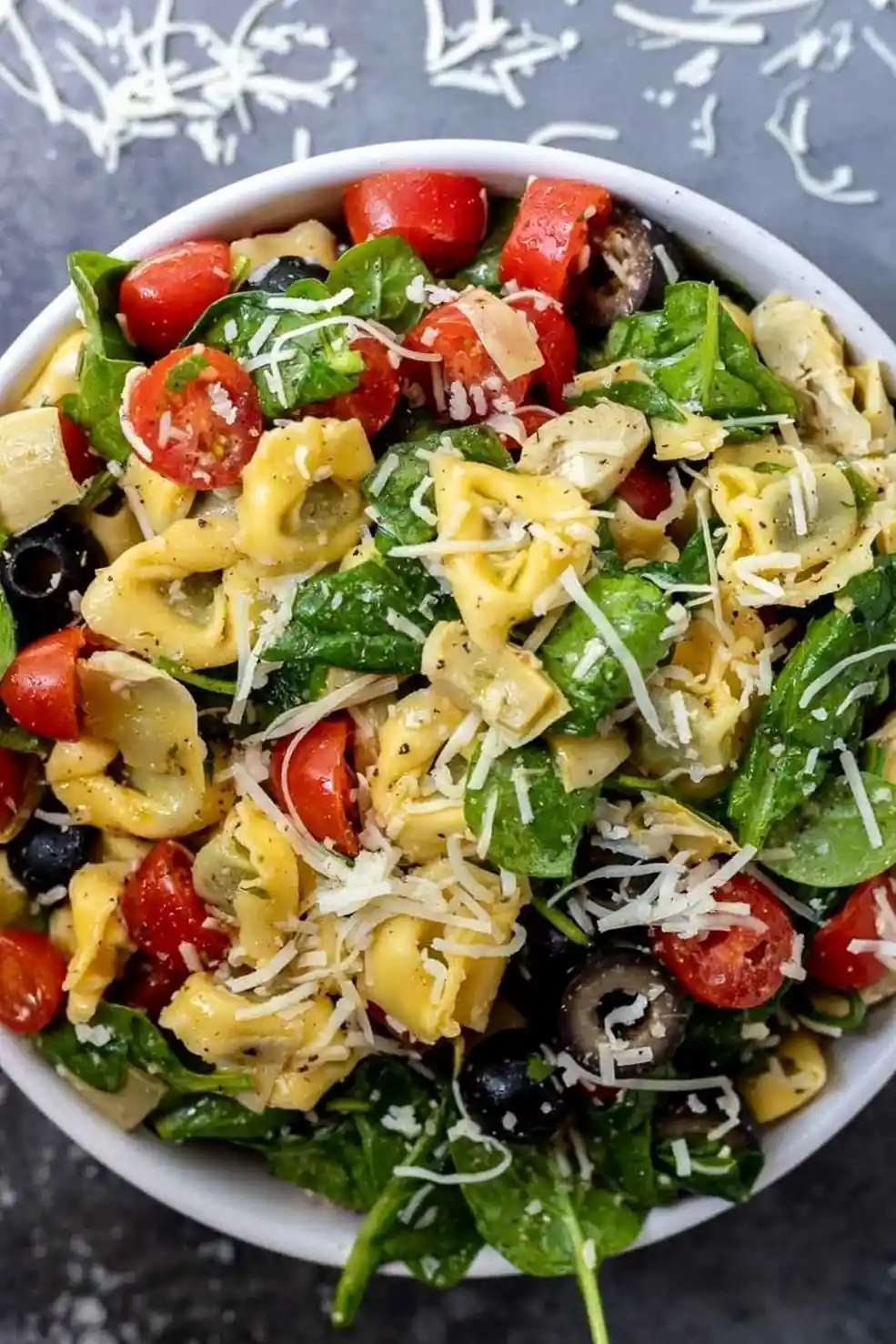
List of ingredients
- 10-12 ounces Spinach Tortellini – use microbial-rennet cheese versions.
- 2 Cups Baby Spinach – fresh and washed.
- 16 ounces Grape or Cherry Tomatoes – halved.
- 6 ounces Pitted Black Olives – drained and halved.
- 1 Cup Chopped Marinated Artichoke Hearts – drained.
- 1/2 Cup Shredded Parmesan Cheese – microbial-rennet based.
- 2 Tablespoons Olive Oil – extra virgin for best flavor.
- 1 Tablespoon Red Distilled Vinegar – as a clean alternative to wine vinegar.
- 1/2 teaspoon Garlic Powder – for consistent flavor.
- 1 teaspoon Dried Italian Seasoning – a blend of herbs.
- Salt/Pepper – to taste.
step-by-step instructions
- Prepare Spinach: Place baby spinach in a large mixing bowl.
- Cook Pasta: Boil the tortellini according to the package instructions. Drain the pasta and transfer it immediately to the bowl with the spinach.
- Wilt Greens: Pour the hot tortellini over the spinach and let it sit for 5 minutes to slightly wilt the leaves.
- Add Vegetables: Incorporate the halved tomatoes, olives, and marinated artichoke hearts into the bowl.
- Add Cheese: Once the tortellini has fully cooled to room temperature, stir in the shredded parmesan cheese.
- Make Dressing: In a separate small container, mix the olive oil, red distilled vinegar, garlic powder, Italian seasoning, salt, and pepper.
- Combine: Pour the dressing over the tortellini salad and toss everything until the ingredients are evenly coated.
- Serve: Serve the salad at room temperature or chilled.
Customizing Your Ingredients
Replace Salami with Sun-Dried Tomatoes
Instead of adding cured meats, use oil-packed sun-dried tomatoes for a concentrated burst of flavor. They provide a chewy texture and a sweet-tart contrast to the salty olives.
This keeps the dish strictly vegetarian while adding a depth of flavor similar to savory meats. Ensure you drain the oil before adding them to the mix.
Swap Fresh Spinach for Arugula
If you prefer a peppery taste, replace the baby spinach with fresh arugula. This adds a spicy note that complements the acidity of the vinegar dressing.
Arugula does not wilt as quickly as spinach, so you can add it at the end of the process instead of pouring hot pasta over it.
Alternative Cheese Choices
While parmesan is traditional, you can use crumbled feta or small mozzarella pearls for a different profile. Feta adds a salty, tangy punch, while mozzarella keeps the salad mild and creamy.
Always verify that the cheese is produced with microbial rennet to maintain a consistent vegetarian standard.
Using Different Tortellini Fillings
Spinach and ricotta filling is a classic choice, but cheese or pesto-filled tortellini also work well. Pesto filling adds an extra layer of basil and garlic to the overall dish.
Ensure the filling complements the Italian seasoning in the dressing to avoid clashing flavor profiles.
Pasta Texture and Preparation
Cooking Al Dente
Cook the tortellini exactly according to the package directions or remove it one minute early. This prevents the pasta from becoming too soft when tossed with the dressing.
Al dente pasta maintains its structural integrity, which is crucial for a salad that may sit for several hours. This ensures every bite has a satisfying chew.
The Wilting Technique
Pouring hot pasta over the spinach allows the leaves to soften without losing their bright green color. This creates a better integration of ingredients compared to using raw spinach.
Do not let the pasta sit on the spinach for more than five minutes. Excessive heat will overcook the greens and make them slimy.
The Importance of Cooling
Wait until the pasta is fully cooled before adding the shredded parmesan cheese. Adding cheese to hot pasta can cause it to melt into clumps rather than staying as distinct shreds.
Cooling the pasta also prevents the dressing from absorbing too quickly, which ensures a more even coating across all ingredients.
Dressing Optimization
Balancing the Vinegar
If the dressing feels too sharp, add a small pinch of sugar or a teaspoon of maple syrup. This balances the acidity of the red distilled vinegar without making the salad sweet.
Adjust the vinegar quantity based on your preference for tanginess. Start with a tablespoon and add more in small increments.
Using Fresh Garlic
While garlic powder provides a uniform taste, you can substitute it with one clove of finely minced fresh garlic. This adds a more pungent and aromatic quality to the vinaigrette.
Allow the fresh garlic to sit in the vinegar for ten minutes before adding the oil. This helps mellow the raw bite of the garlic.
Emulsifying the Vinaigrette
Whisk the oil and vinegar vigorously or use a small jar to shake the dressing. This creates an emulsion that prevents the oil from separating and pooling at the bottom of the bowl.
An emulsified dressing clings better to the smooth surface of the tortellini, ensuring every piece is seasoned.
Serving and Pairing
Platter Arrangement
For parties, spread the salad on a wide platter rather than serving it from a deep bowl. This prevents the tortellini from crushing under its own weight and showcases the colorful vegetables.
Garnish the top with extra parmesan shavings or a sprinkle of fresh parsley for a professional presentation.
Complementary Main Dishes
This salad pairs well with grilled vegetable skewers or lemon-herb roasted chicken. The acidity of the salad cuts through the richness of roasted meats.
It also serves as a great accompaniment to a crusty loaf of garlic bread or a platter of roasted peppers.
Temperature Control
While this salad can be eaten cold, serving it slightly chilled or at room temperature allows the flavors to be more pronounced. Extremely cold temperatures can dull the taste of the olive oil.
If serving outdoors in the heat, keep the platter on a bed of ice to maintain food safety and freshness.
Storage and Shelf Life
Choosing the Right Container
Store the leftover salad in an airtight glass container. Glass prevents the pasta from absorbing odors from the refrigerator and keeps the vegetables crisper for longer.
Avoid using thin plastic bags, as these can crush the tortellini and lead to a mushy texture.
Managing Moisture
Over time, the vegetables may release water, making the salad watery. To prevent this, ensure the olives and artichoke hearts are thoroughly drained before adding them.
If the salad becomes too watery, you can drain the excess liquid before serving the leftovers.
Maximum Storage Duration
This salad is best consumed within three to four days. After this point, the spinach may begin to break down and the pasta may lose its firmness.
Check for freshness by ensuring the vegetables still have a crisp snap and the dressing has not separated excessively.
Reviving the Salad
Adding Fresh Dressing
Pasta tends to absorb dressing as it sits in the refrigerator. If the salad looks dry when you pull it out, drizzle a small amount of extra olive oil and vinegar over it.
Toss the salad gently to redistribute the existing dressing before adding more. This prevents the salad from becoming over-seasoned.
Tossing Before Serving
Always give the salad a gentle toss right before serving. This brings the ingredients from the bottom to the top and ensures the dressing is evenly distributed.
Be careful not to over-mix, as this can break the delicate tortellini shells.
Adjusting Seasoning
The flavors of the salt and pepper may mellow after a night in the fridge. Taste the salad before serving and add a pinch more salt if the flavors seem muted.
A squeeze of fresh lemon juice can also brighten the salad and wake up the other ingredients.
Planning and Preparation
Prepping Vegetables
You can chop the tomatoes, olives, and artichokes several hours in advance. Store them in a combined container in the fridge until you are ready to boil the pasta.
Do not add the salt to the vegetables early, as this will draw out moisture and make them soggy.
Making Dressing Ahead
The vinaigrette can be prepared up to a week in advance and stored in a sealed jar in the refrigerator.
Shake the jar well before pouring it over the salad to re-emulsify the oil and vinegar.
Batch Cooking Tips
If making a double batch, use two separate bowls for mixing. This provides more room to toss the ingredients without crushing the pasta.
Increase the pasta water volume to ensure the tortellini have enough room to move and do not stick together during boiling.
Troubleshooting Common Issues
Preventing Soggy Pasta
Soggy pasta usually results from overcooking or failing to drain the water properly. Always use a colander and shake off excess water before adding the pasta to the spinach.
Ensure the pasta is not packed too tightly in the storage container, which can lead to compression and mushiness.
Fixing Dull Flavors
If the salad tastes bland, increase the amount of red distilled vinegar or add a splash of lemon juice. Acidity is the key to making the other flavors pop.
Adding a bit more Italian seasoning or a pinch of red pepper flakes can also add the necessary depth.
Reducing Saltiness
If the olives and artichokes make the salad too salty, add more fresh baby spinach or halved cherry tomatoes. These ingredients provide a fresh, neutral base that balances the salt.
Avoid adding extra salt to the dressing if you are using highly marinated artichokes.
Frequently Asked Questions
Can I use frozen tortellini?
Yes, you can use frozen tortellini. Boil them directly from frozen according to the package directions, ensuring they are fully cooked through before draining.
Is there a vegan substitute for Parmesan?
You can replace the parmesan with nutritional yeast or a vegan parmesan alternative. These provide a similar salty, nutty flavor without using animal-derived ingredients.
Can I add protein to this salad?
Yes, adding chickpeas or cannellini beans is a great way to increase the protein content while keeping the dish vegetarian. Simply rinse and drain the beans before stirring them in.
Print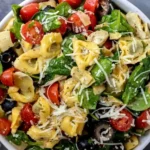
Zesty Italian Spinach Tortellini Salad
- Total Time: 20 minutes
- Yield: 6 servings 1x
- Diet: Vegetarian
Description
This Italian Tortellini Pasta Salad Recipe is great for summer barbecues, potlucks, picnics and parties. This no-mayo pasta salad is quick, easy, nutritious and vegetarian.
Ingredients
- 10–12 ounces Spinach Tortellini
- 2 Cups Baby Spinach
- 16 ounces Grape or Cherry Tomatoes – halved
- 6 ounces Pitted Black Olives – drained (halved)
- 1 Cup Chopped Marinated Artichoke Hearts
- 1/2 Cup Shredded Parmesan Cheese
- 2 Tablespoons Olive Oil
- 1 Tablespoon Red or White Wine Vinegar
- 1/2 teaspoon Garlic Powder
- 1 teaspoon Dried Italian Seasoning
- Salt/Pepper – to taste
Instructions
- Step: Place spinach in large bowl.
- Step: Boil the tortellini per package instructions. Drain then transfer tortellini to bowl with spinach. Pour the hot tortellini over the spinach and leave for 5 minutes to slightly wilt spinach.
- Step: Add in tomatoes, olives and artichoke hearts. Once tortellini is fully cooled, add in parmesan.
- Step: Mix dressing ingredients: oil, vinegar, garlic powder, Italian seasoning, salt and pepper. Pour over tortellini salad and toss until evenly coated.
- Step: Serve room temp or cold.
Notes
Optional add-ins: thinly sliced red onion, red bell pepper, etc.
- Prep Time: 10 minutes
- Cook Time: 10 minutes
- Category: Side Dishes
- Method: Boiling
- Cuisine: American
Nutrition
- Serving Size: 1 serving
- Calories: 241 kcal
- Sugar: 2 g
- Sodium: 357 mg
- Fat: 7 g
- Saturated Fat: 3 g
- Unsaturated Fat: 4 g
- Trans Fat: 0 g
- Carbohydrates: 36 g
- Fiber: 2 g
- Protein: 10 g
- Cholesterol: 30 mg
Keywords: pasta salad, side dish recipe, tortellini salad