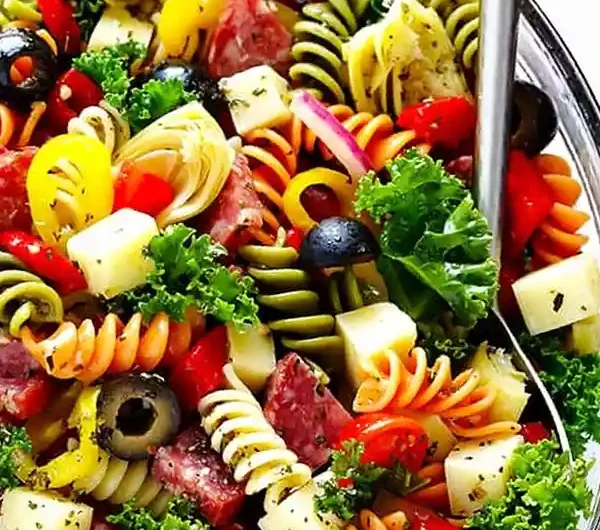
This vibrant pasta salad combines a variety of Mediterranean-style ingredients for a fresh and filling meal. It is an excellent way to utilize various marinated vegetables and cheeses in one colorful bowl.
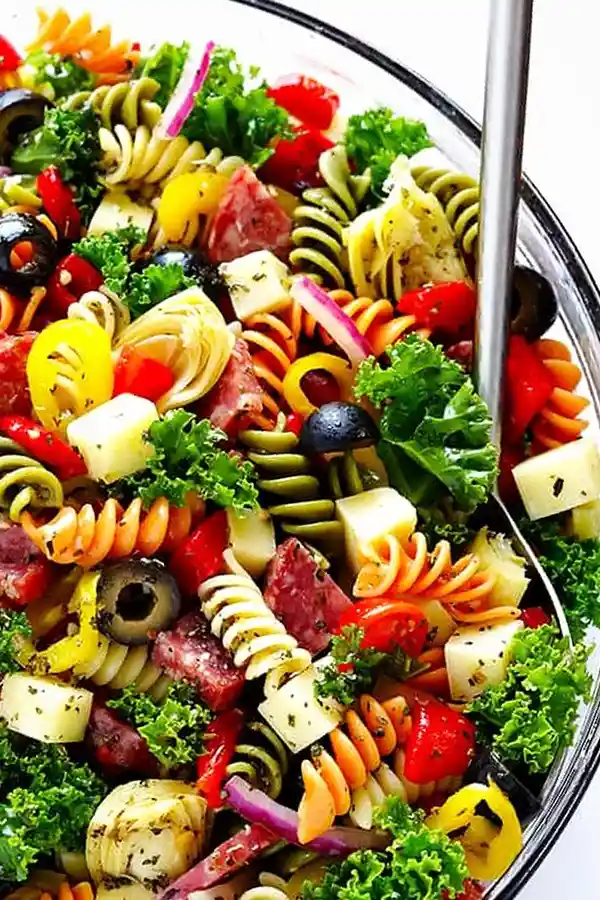
List of ingredients
- 1 pound dry pasta (tri-color rotini is recommended for color and texture)
- 4-6 cups chopped antipasto ingredients (such as diced turkey salami, mozzarella, cherry tomatoes, olives, artichoke hearts, pepperoncini, and roasted red peppers)
- 1 cup chopped fresh kale (massaged with dressing)
- 1/4 small red onion (peeled and thinly sliced)
- 1/3 cup extra-virgin olive oil – provides a rich base for the vinaigrette
- 1/4 cup red-wine vinegar – adds a sharp, tangy acidity
- 2 teaspoons Italian seasoning – adds classic herbal depth
- 1/2 teaspoon Kosher salt – enhances all the flavors
- 1/2 teaspoon freshly-cracked black pepper – adds a subtle heat
- 1/4 teaspoon garlic powder – provides a savory aromatic note
step-by-step instructions
- Prepare the Vinaigrette: Whisk together the extra-virgin olive oil, red-wine vinegar, Italian seasoning, salt, black pepper, and garlic powder in a small bowl until well combined.
- Cook the Pasta: Boil the pasta in a large pot of generously salted water until al dente according to the package instructions.
- Cool the Pasta: Drain the cooked pasta and immediately rinse it under cold water for 20-30 seconds to stop the cooking process and prevent sticking.
- Massage the Kale: Place the chopped kale in a large mixing bowl with 2 tablespoons of the prepared vinaigrette. Use your hands to massage the dressing into the leaves for about one minute until the kale is softened and dark green.
- Combine Ingredients: Add the cooled pasta, chopped antipasto ingredients, and sliced red onion to the bowl with the massaged kale.
- Dress and Serve: Drizzle the remaining vinaigrette over the mixture and toss thoroughly to ensure everything is evenly coated. Serve immediately or refrigerate for later.
Selecting the Best Pasta Shapes
Tri-Color Rotini for Visual Appeal
Rotini is an ideal choice because the spirals act as grooves that capture the vinaigrette and small bits of herbs. The tri-color variety adds a visual rainbow effect that complements the antipasto vegetables.
Farfalle for Texture
Bowtie pasta, or farfalle, provides a firmer bite and a sophisticated look. Its flat surfaces are excellent for holding onto larger pieces of cheese and diced turkey salami.
Fusilli for Sauce Adhesion
Fusilli is similar to rotini but often has a tighter twist. This shape is highly effective at trapping the red-wine vinegar dressing, ensuring every bite is seasoned.
Cavatappi for Heartiness
Cavatappi is a corkscrew-shaped pasta that is slightly thicker than rotini. It provides a more substantial mouthfeel, making the salad feel more like a main course than a side dish.
Choosing Your Antipasto Mix
Selecting High-Quality Turkey Salami
Use a cured turkey salami to maintain the traditional salty, savory profile of an antipasto salad without using pork. Dice it into small, uniform cubes to ensure it distributes evenly throughout the pasta.
Choosing the Right Mozzarella
Fresh mozzarella pearls are a great choice for a soft, creamy texture. Alternatively, use cubed low-moisture mozzarella for a firmer bite that holds its shape better during refrigeration.
Using Marinated Artichoke Hearts
Choose artichoke hearts that are marinated in oil and herbs. Drain them slightly before adding to the salad to prevent the vinaigrette from becoming too diluted.
Adding Roasted Red Peppers
Jarred roasted red peppers add a smoky sweetness and a bright red color. Pat them dry with a paper towel to remove excess brine before dicing.
Using Pepperoncini for Heat
Pepperoncini provide a mild, vinegary heat that cuts through the richness of the cheese. Slice them into rings to add a pop of yellow-green color.
Olive Varieties for Brine
Kalamata olives offer a deep, salty flavor, while Castelvetrano olives provide a buttery taste. A mix of both adds complexity to the salt profile of the dish.
Incorporating Cherry Tomatoes
Halve the cherry tomatoes to release some of their juices, which mingle with the vinaigrette. This adds a fresh, acidic sweetness that balances the salty cured meats.
Optimizing the Italian Herb Vinaigrette
Adjusting the Vinegar Ratio
If you prefer a sharper taste, increase the red-wine vinegar by one tablespoon. For a milder dressing, add a teaspoon of honey or maple syrup to balance the acidity.
Using Fresh vs Dry Herbs
While dried Italian seasoning is convenient, adding a tablespoon of fresh chopped parsley or basil can brighten the flavor. Always add fresh herbs at the very end to prevent them from wilting.
Balancing Salt and Pepper
Because the olives, turkey salami, and capers are already salty, taste the salad before adding extra salt. Adjust the black pepper based on your preference for a spicy finish.
Selecting the Right Olive Oil
Use a high-quality extra-virgin olive oil with a fruity or peppery note. Avoid refined oils, as the flavor of the oil is a primary component of the dressing.
Advanced Preparation Methods
The Kale Massage Technique
Massaging kale breaks down the tough cellulose structure of the leaves. This process makes the kale tender and easier to chew while intensifying its green color.
Cooling Pasta Efficiently
Rinsing pasta with cold water is essential for cold salads. It removes excess surface starch, which prevents the pasta from clumping together in the refrigerator.
Achieving a Consistent Dice
Aim to dice all antipasto ingredients into sizes similar to the pasta pieces. This ensures that you get a bit of every ingredient in every spoonful.
Storage and Preservation
Ideal Container Types
Store the salad in an airtight glass container to maintain freshness. Glass prevents the salad from absorbing odors from other foods in the refrigerator.
Maximum Refrigeration Duration
This salad remains fresh for up to three days. After this point, the pasta may begin to soften too much, and the vegetables may lose their crispness.
Preventing Pasta Starch Stickiness
If the pasta seems dry after a day in the fridge, drizzle a small amount of additional olive oil or vinaigrette over it. Toss gently to re-moisturize the noodles.
Serving and Presentation
Plating for Potlucks
Transfer the salad to a wide, shallow bowl rather than a deep one. This allows the colorful ingredients to be visible on the surface rather than buried at the bottom.
Pairing with Proteins
Serve this salad alongside grilled chicken breasts or baked fish for a complete meal. The acidity of the salad acts as a palate cleanser for heavier proteins.
Temperature Management
Keep the salad chilled until the moment of serving. If serving outdoors, place the serving bowl inside a larger bowl filled with ice to keep it food-safe.
Troubleshooting Common Issues
Fixing a Bland Salad
If the salad tastes flat, add a squeeze of fresh lemon juice or a splash more red-wine vinegar. Acidity is usually the missing component when flavors seem muted.
Addressing Watery Vegetables
If the salad becomes watery, it is often due to under-drained marinated vegetables. Strain the salad through a colander gently or add a bit more pasta to absorb the excess liquid.
Correcting Overcooked Pasta
If the pasta is too mushy, it cannot be undone, but you can mask it by adding more crunchy elements. Add diced cucumbers or celery to introduce a necessary textural contrast.
Frequently Asked Questions
Can I make this vegan?
Yes, replace the mozzarella with cubed firm tofu or vegan feta and use plant-based deli slices instead of turkey salami.
How do I keep it from getting soggy?
Dress the salad just before serving, or store the dressing separately and toss it in right before the meal.
What is the best way to transport it?
Use a leak-proof container and keep it in an insulated cooler bag with an ice pack to maintain the temperature and texture.
Can I use a different green instead of kale?
Baby spinach or arugula are good alternatives, though they do not require massaging and should be added just before serving to avoid wilting.
Which pasta is best for meal prep?
Rotini and Cavatappi hold up the best over several days without becoming mushy, making them the top choice for meal prepping.
Print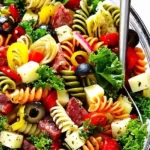
Rainbow Antipasto Pasta Salad
- Total Time: 30 minutes
- Yield: 6–8 servings 1x
- Diet: General
Description
This Rainbow Antipasto Pasta Salad is the perfect way to use up leftover antipasto ingredients! Plus, it’s easy to make, tossed with a zesty Italian herb vinaigrette, and absolutely delicious!
Ingredients
- 1 pound dry tri-color rotini pasta
- 4–6 cups chopped antipasto ingredients (diced beef salami, mozzarella, cherry tomatoes, olives, artichoke hearts, pepperoncini, roasted red peppers)
- 1 cup chopped fresh kale
- 1/4 small red onion, peeled and thinly-sliced
- 1/3 cup extra-virgin olive oil
- 1/4 cup red-wine vinegar
- 2 teaspoons Italian seasoning
- 1/2 teaspoon Kosher salt
- 1/2 teaspoon freshly-cracked black pepper
- 1/4 teaspoon garlic powder
Instructions
- Cook Pasta: Cook the pasta in a large stockpot of generously-salted water al dente according to package directions, then drain and rinse under cold water for 20-30 seconds.
- Make Vinaigrette: Whisk together the olive oil, red-wine vinegar, Italian seasoning, salt, pepper, and garlic powder until combined.
- Combine: In a large bowl, combine the cooked pasta, antipasto ingredients, kale, and onion.
- Toss: Drizzle the Italian Herb Vinaigrette on top, then toss to combine.
Notes
To soften the kale, place it in the mixing bowl first with 2 tablespoons of the vinaigrette and massage it with your hands for about 1 minute before adding other ingredients.
- Prep Time: 18 minutes
- Cook Time: 12 minutes
- Category: Salad
- Method: Mixing
- Cuisine: Italian
Nutrition
- Serving Size: 1 serving
- Calories: 450 kcal
- Sugar: 6 g
- Sodium: 620 mg
- Fat: 16 g
- Saturated Fat: 6 g
- Unsaturated Fat: 10 g
- Trans Fat: 0 g
- Carbohydrates: 35 g
- Fiber: 4 g
- Protein: 14 g
- Cholesterol: 30 mg
Keywords: antipasto, pasta salad, Italian, rainbow salad, potluck, rotini