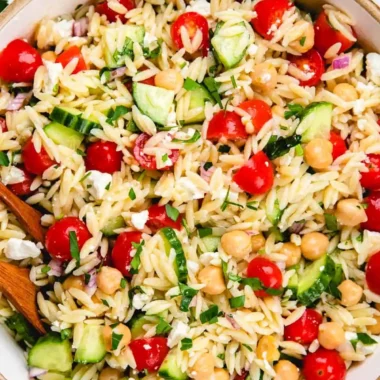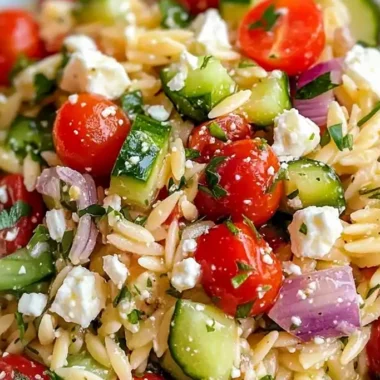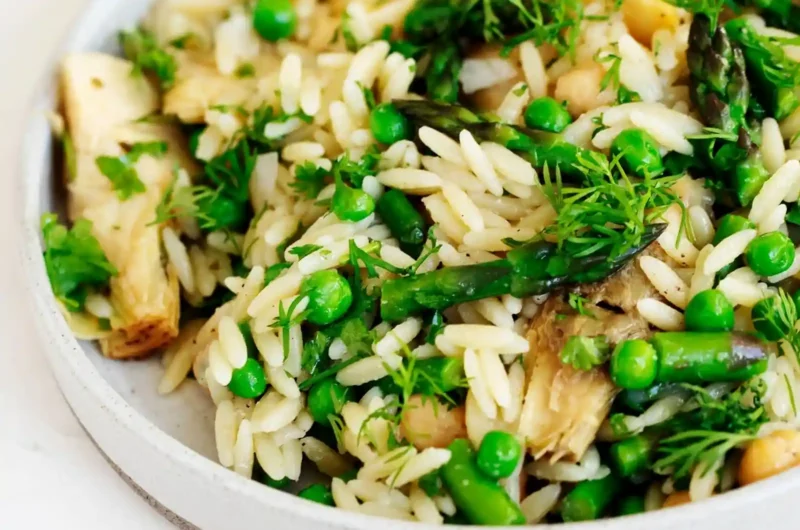
This bright and refreshing pasta salad combines tender orzo with seasonal greens and a zesty citrus dressing. It is an ideal choice for meal prep or outdoor gatherings due to its stability when chilled.
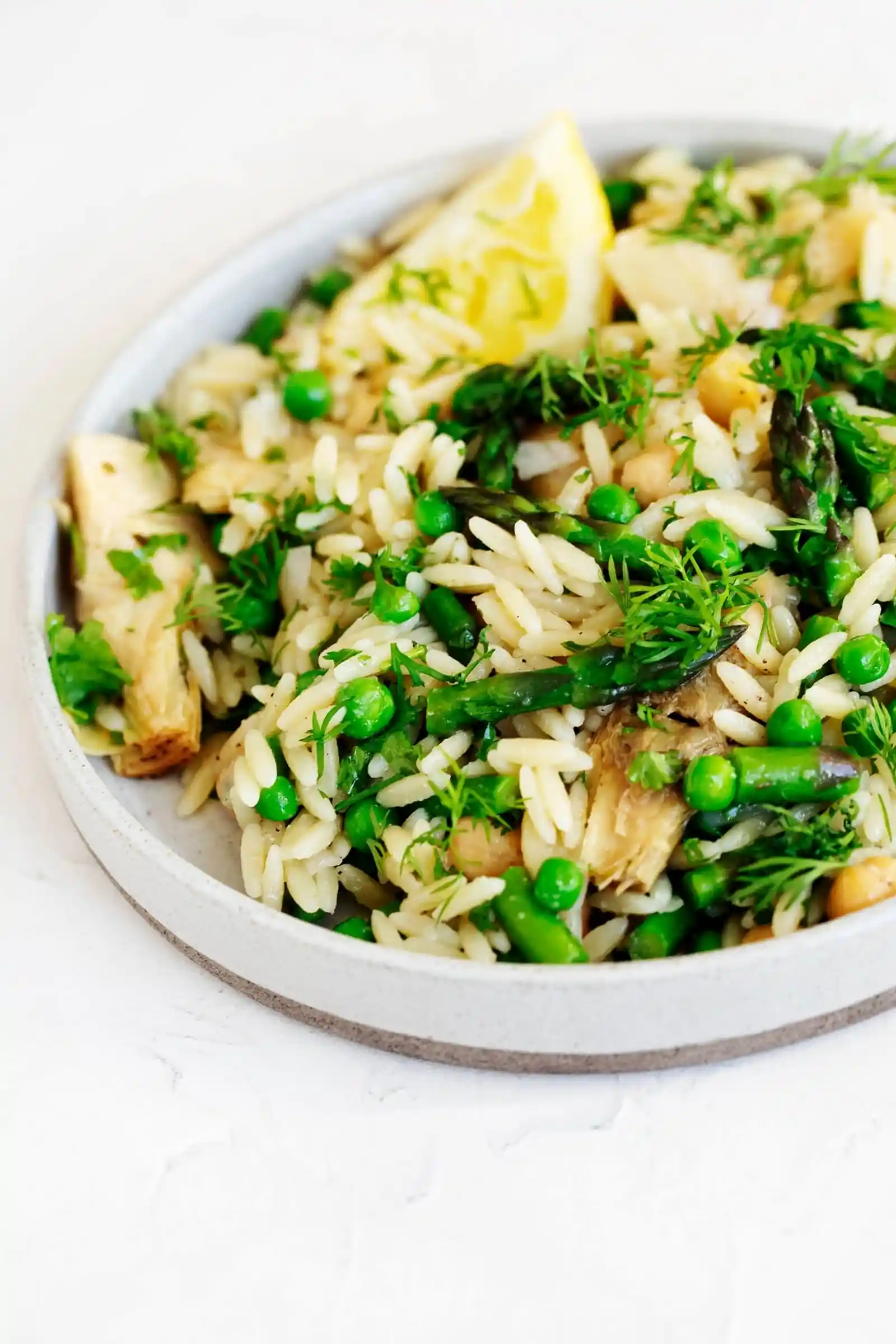
List of ingredients
- 12 ounces orzo (1 1/2 cups dry) – the small pasta base.
- 1 lb asparagus – ends trimmed and cut into 1 1/2-inch pieces.
- 1 cup green peas – fresh or frozen and thawed.
- 8 ounces marinated, quartered artichoke hearts – adds a tangy punch.
- 1 1/2 cups cooked chickpeas – 1 14.5-ounce can, drained and rinsed.
- 4-5 tablespoons olive oil – for the vinaigrette.
- 2 tablespoons freshly squeezed lemon juice – provides brightness.
- 1 tablespoon freshly grated lemon zest – enhances the citrus aroma.
- 2 tablespoons finely chopped shallot – for a mild onion flavor.
- 1 clove garlic, minced (optional) – adds aromatic depth.
- 1/2 teaspoon fine salt – adjust to taste.
- 1/8 teaspoon freshly ground black pepper – adjust to taste.
- 1/4 cup minced fresh dill – provides a signature herbal note.
- 1/2 cup finely chopped parsley – adds freshness.
- 1/4 cup cashew parmesan cheese (optional) – for a salty, savory finish.
step-by-step instructions
- Boil the pasta: Bring a large pot of salt water to a boil. Add the orzo and cook for about 8 minutes, or until the orzo is al dente and not quite ready.
- Blanch the vegetables: Add the asparagus pieces to the boiling orzo and cook for another 2 minutes. Finally, add the peas and cook for 1 more minute before draining the pasta and vegetables together.
- Prepare the dressing: While the pasta water is coming to a boil, whisk together 4 tablespoons of the olive oil, the lemon juice, zest, shallots, garlic (if using), salt, and pepper.
- Combine ingredients: Transfer the cooked orzo and vegetables to a large mixing bowl. Stir in the artichoke hearts and chickpeas.
- Toss and finish: Pour the dressing over the salad and toss well to combine. Fold in the chopped parsley and dill, along with the cashew parmesan if using.
- Final seasoning: Taste the salad and adjust the salt and pepper as needed. Add up to 1 extra tablespoon of olive oil if the salad seems too dry.
Vegetable Substitutions for Seasonal Variety
Swap Asparagus for Broccoli Florets
If asparagus is out of season, use small broccoli florets. Cut them into bite-sized pieces and add them to the boiling water for the same amount of time as the asparagus to ensure they are tender.
Use Zucchini instead of Peas
Diced zucchini is a great alternative to peas for a milder flavor. Sauté the zucchini lightly or blanch it with the pasta for about 2 minutes until just tender.
Substitute Artichokes with Roasted Red Peppers
If you prefer a sweeter profile, replace the artichoke hearts with jarred roasted red peppers. Slice them into strips to maintain a similar texture in the salad.
Incorporate Chopped Carrots
Finely diced carrots add a nice crunch and a pop of orange color. Blanch them for 3 minutes with the orzo or keep them raw for more texture.
Add Fresh Snap Peas
Snap peas provide a satisfying snap and sweetness. Add them at the very end of the boiling process for only 30 seconds to prevent them from losing their bright green color.
Try Sliced Baby Spinach
Stir in a handful of baby spinach leaves at the end. The residual heat from the pasta will slightly wilt the spinach without overcooking it.
Grain and Pasta Alternatives
Using Gluten-Free Orzo
You can easily substitute regular orzo with a gluten-free version. Check the package directions as cooking times for gluten-free pasta can vary slightly to avoid mushiness.
Substituting with Quinoa
For a protein-rich, grain-based version, use cooked quinoa instead of pasta. Simply follow the quinoa cooking instructions and mix it with the blanched vegetables and dressing.
Switching to Long-Grain White Rice
White rice works well as a base for this salad. Cook the rice separately and allow it to cool slightly before tossing it with the other ingredients.
Trying Pearl Couscous
Pearl couscous has a similar shape and texture to orzo. Boil it in salted water until tender, then proceed with the recipe as written.
Using Farro for a Nutty Flavor
Farro provides a chewier texture and a nutty taste. Note that farro takes significantly longer to cook than orzo, so prepare it in advance.
Barley as a Hearty Base
Pearl barley is another excellent alternative for those wanting a more filling meal. Like farro, barley requires a longer simmer time before mixing with the fresh vegetables.
Dressing Enhancements and Variations
Oil-Free Tahini Dressing
For a creamier, oil-free option, replace the olive oil with a mixture of tahini and water. Whisk tahini with lemon juice and a splash of water until smooth before adding the other aromatics.
Boosting the Garlic Profile
If you love bold flavors, double the amount of garlic or use roasted garlic cloves. Mash the roasted garlic into a paste for a mellower, sweeter taste.
Adding a Touch of Sweetness
A teaspoon of maple syrup or agave nectar can balance the acidity of the lemon. This is particularly helpful if your lemons are exceptionally tart.
Substituting Lemon with Apple Cider Vinegar
If you run out of lemons, apple cider vinegar is a suitable replacement. Use an equal amount to the lemon juice for a slightly different, fermented tang.
Using Dijon Mustard for Emulsion
Whisking in a teaspoon of Dijon mustard helps the oil and lemon juice emulsify better. This results in a thicker dressing that clings more effectively to the pasta.
Adjusting the Salt Levels
Depending on the saltiness of the marinated artichokes, you may need less salt in the dressing. Always taste the combined salad before adding extra salt.
Herb and Flavor Customizations
Replacing Dill with Fresh Basil
If dill is too strong for your preference, use freshly torn basil leaves. Basil pairs beautifully with lemon and adds a classic Mediterranean flavor profile.
Using Chives for a Subtle Onion Note
Freshly snipped chives can replace or augment the shallots. They provide a delicate onion flavor and a bright green appearance.
Adding Mint for Extra Freshness
A tablespoon of minced fresh mint adds a cooling element to the salad. This is especially refreshing when serving the dish on a hot summer day.
Incorporating Nutritional Yeast
If you do not have cashew parmesan, add two tablespoons of nutritional yeast. This provides the same savory, cheesy flavor without the need for nuts.
Using Dried Herbs for Pantry Staples
In a pinch, you can use dried dill and parsley. Use about one-third of the amount compared to fresh herbs, as dried herbs are more concentrated.
Adding Red Pepper Flakes for Heat
For a spicy kick, stir in a pinch of crushed red pepper flakes. This adds a subtle warmth that contrasts well with the cold pasta and lemon.
Storage and Meal Prep Advice
Refrigeration Guidelines
Store the finished salad in an airtight container in the refrigerator for up to four days. The flavors often meld and improve after a night in the fridge.
Maintaining Herb Freshness
To keep the herbs from wilting, prepare the salad but leave out the parsley and dill. Fold them in just before serving for maximum color and flavor.
Preventing Pasta from Drying Out
Pasta tends to absorb dressing over time. If the salad seems dry when reheating or serving the next day, stir in an extra tablespoon of olive oil or lemon juice.
Preparing Components in Advance
You can cook the orzo and blanch the vegetables up to two days ahead. Store them separately and mix with the dressing and fresh herbs on the day of serving.
Freezing Considerations
This salad is not recommended for freezing. The fresh vegetables and herbs lose their texture and flavor when frozen and thawed.
Optimal Serving Temperature
While this salad can be eaten at room temperature, it is best served chilled. Allow it to cool completely in the fridge for at least an hour before serving.
Serving Suggestions and Pairings
Pairing with Grilled Tofu
For a complete meal, serve the salad alongside slices of lemon-pepper grilled tofu. The smoky char of the tofu complements the brightness of the lemon orzo.
Serving as a Side for Roasted Vegetables
This salad pairs well with roasted cauliflower or carrots. The cold pasta provides a refreshing contrast to the warm, caramelized vegetables.
Adding Fresh Spinach for Volume
Toss the finished salad with a few handfuls of fresh baby spinach. This turns the salad into a more substantial meal and increases the nutrient density.
Combining with Vegan Chicken Alternatives
Serve the salad with grilled plant-based chicken strips. The lean protein makes the dish more filling for a main course lunch.
Accompaniments for a Picnic
Pair the orzo salad with hummus and sliced cucumbers. These additions create a full Mediterranean-style platter perfect for outdoor events.
Adding Toasted Pine Nuts
Sprinkle toasted pine nuts on top just before serving. The buttery crunch adds a luxurious texture and depth to the dish.
Troubleshooting Common Issues
Fixing Overcooked Orzo
If the orzo becomes too mushy, avoid over-mixing the salad. Gently fold in the ingredients instead of stirring vigorously to preserve the pasta shape.
Correcting a Bland Dressing
If the flavor feels flat, add a pinch more salt or an extra squeeze of lemon juice. Often, a lack of acidity is what makes a vinaigrette taste bland.
Managing a Watery Salad
Ensure that the chickpeas and artichokes are well-drained before adding them. If the salad is too watery, you can stir in a small amount of nutritional yeast to absorb excess moisture.
Reducing the Sharpness of Raw Shallots
If the shallots are too pungent, soak the chopped pieces in cold water for 5 minutes. Drain and pat them dry before adding them to the dressing.
Dealing with Clumping Pasta
If the orzo clumps together after chilling, gently break the clumps with a fork. Adding a small amount of olive oil during this process will help separate the grains.
Balancing Overly Tart Flavors
If the lemon is too overpowering, add a tiny pinch of sugar or maple syrup. This neutralizes the excess acid without making the salad taste sweet.
Frequently Asked Questions
Can I use frozen peas?
Yes, frozen peas work perfectly. You can either thaw them first or add them to the boiling pasta during the final minute of cooking.
How long does it last in the fridge?
The salad stays fresh for up to four days when kept in an airtight container. Be sure to stir it before serving to redistribute the dressing.
Can I make this without cashew parmesan?
Yes, the cashew parmesan is completely optional. The salad remains flavorful and creamy due to the olive oil and vegetable components.
Is it possible to use a different pasta shape?
You can use any small pasta, such as ditalini or acini di pepe. Just be mindful of the cooking times, as different shapes may require more or less time than orzo.
Can I use a food processor for the dressing?
Yes, you can pulse the shallots, garlic, and oil in a food processor for a smoother consistency. However, whisking by hand allows you to control the texture of the aromatics better.
Should I rinse the pasta after draining?
For a pasta salad, rinsing with cold water is helpful to stop the cooking process immediately. This prevents the orzo from overcooking and clumping as it cools.
Print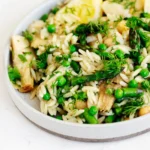
Zesty Lemon Orzo Salad with Spring Vegetables
- Total Time: 30 minutes
- Yield: 6 servings 1x
- Diet: Vegan
Description
Full of fresh vegetables such as asparagus and peas, herbs, and bright lemony flavor, this orzo lemon pasta salad is simple, amazingly delicious, and 100% plant based.
Ingredients
- 1 lb asparagus (ends trimmed and cut into 1 1/2-inch pieces)
- 1 cup green peas (fresh or frozen and thawed)
- 8 ounces marinated, quartered artichoke hearts
- 1 1/2 cups cooked chickpeas (1 14.5-ounce can, drained and rinsed)
- 12 ounces orzo (1 1/2 cups dry)
- 4–5 tablespoons olive oil
- 2 tablespoons freshly squeezed lemon juice
- 1 tablespoon freshly grated lemon zest
- 2 tablespoons finely chopped shallot
- 1 clove garlic, minced (optional)
- 1/2 teaspoon fine salt
- 1/8 teaspoon freshly ground black pepper
- 1/4 cup minced fresh dill
- 1/2 cup finely chopped parsley
- 1/4 cup cashew parmesan cheese (optional)
Instructions
- Step: Bring a large pot of salt water to boil. Add the orzo. Cook for about 8 minutes, or until the orzo is al dente and not quite ready. Add the asparagus pieces; cook for another 2 minutes. Add the peas and cook for 1 more minute. Drain the pasta and vegetables.
- Step: While the pasta water is coming to a boil, whisk together 4 tablespoons of the olive oil, the lemon juice and zest, shallots, garlic (if using), salt, and pepper.
- Step: When the pasta and vegetables are ready, transfer them to a large mixing bowl. Add the artichoke hearts and chickpeas. Next, add the dressing. Toss everything well to combine. Finally, fold in the chopped parsley and dill, along with the parmesan, if using. Taste the salad and adjust salt and pepper to taste. Add up to 1 extra tablespoon olive oil as needed. Serve.
Notes
Gluten free orzo can be used in place of regular orzo. The pasta will keep in an airtight container in the fridge for up to four days. For maximum freshness, fold in the fresh parsley right before serving.
- Prep Time: 10 minutes
- Cook Time: 20 minutes
- Category: Main Course, Side Dish
- Method: Boiling
- Cuisine: Greek, Mediterranean
Nutrition
- Serving Size: 1 serving
- Calories: 470 kcal
- Sugar: 7 g
- Sodium: 550 mg
- Fat: 15 g
- Saturated Fat: 2 g
- Unsaturated Fat: 13 g
- Trans Fat: 0 g
- Carbohydrates: 56 g
- Fiber: 9 g
- Protein: 11 g
- Cholesterol: 0 mg
Keywords: lemon orzo pasta salad, vegan pasta salad, Mediterranean, spring vegetables, meal prep