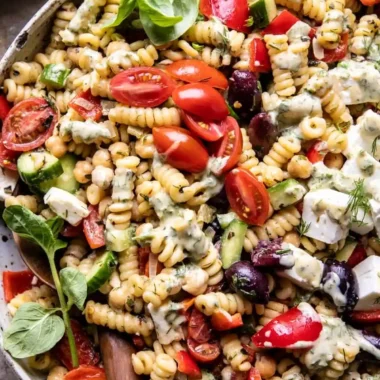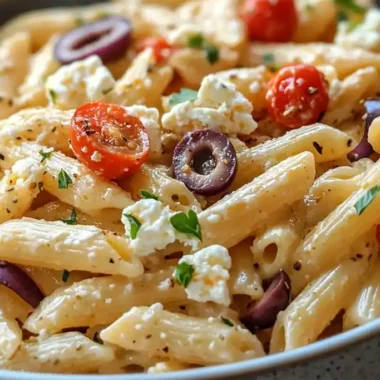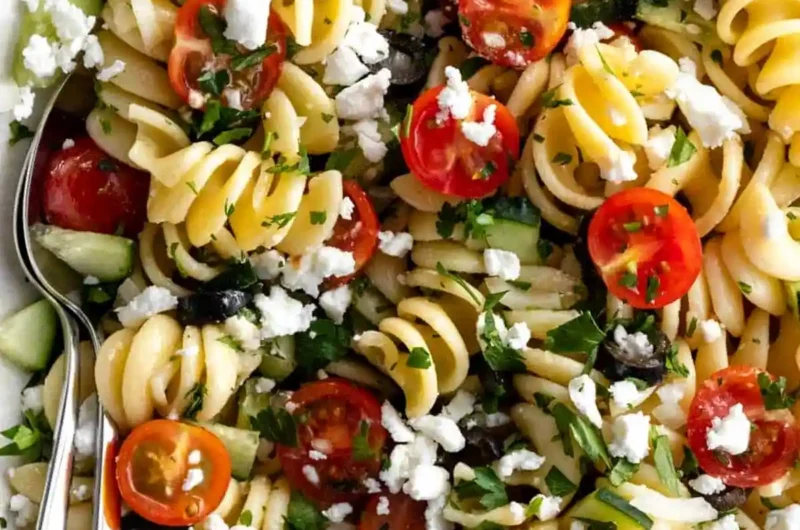
This Greek pasta salad combines fresh vegetables and a tangy vinaigrette for a nutrient-dense side dish. It is an efficient option for meal preparation or as a refreshing addition to a summer menu.
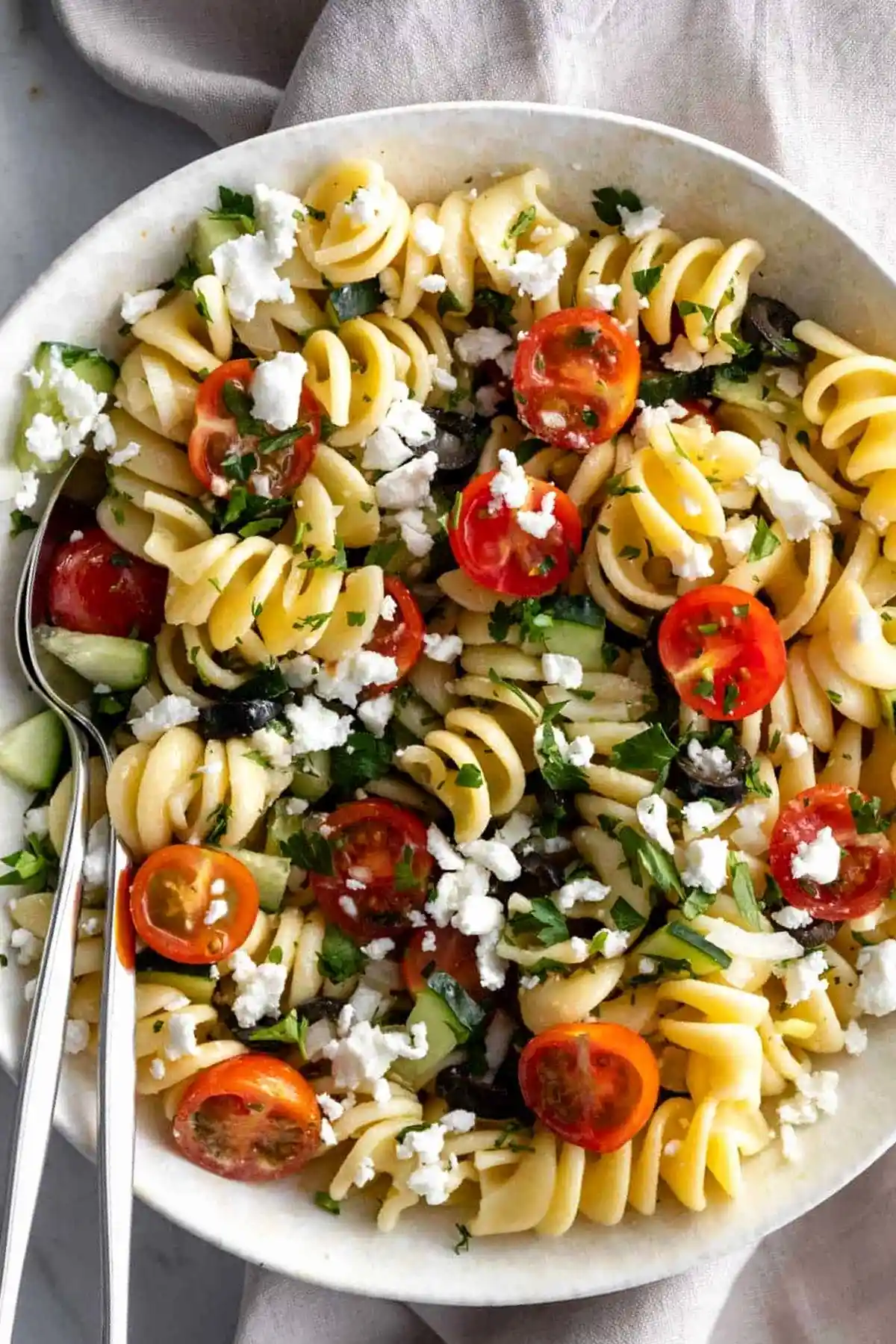
List of ingredients
- 14.81 oz cooked fusilli pasta (420 g) – provides the hearty base.
- 1 cup cherry tomatoes (sliced) – adds juicy sweetness.
- 1 small onion (chopped) – provides a sharp contrast.
- 1/4 cup pitted olives (40 g) – adds salty, briny depth.
- 1 small cucumber (chopped) – ensures a crisp texture.
- 1/4 cup crumbled feta cheese (microbial-rennet) – adds creamy saltiness.
- 1 handful parsley (chopped) – contributes fresh herbal notes.
- 4 tbsp olive oil – the primary fat for the dressing.
- 2 tbsp apple cider vinegar – provides a tangy acidity.
- 1 tsp salt – enhances all other flavors.
- 1 pinch black pepper – adds a subtle spicy warmth.
step-by-step instructions
- Cook the pasta: Boil the fusilli according to the package instructions. Once cooked, drain the water and rinse with cold water to stop the cooking process, then set aside to cool.
- Prepare the dressing: In a small mixing bowl, combine the olive oil, apple cider vinegar, salt, and black pepper. Whisk the ingredients thoroughly until they are well combined.
- Prep the vegetables: Slice the cherry tomatoes and chop the onion, cucumber, and parsley. Set these prepared vegetables aside for the final assembly.
- Assemble and serve: In a large mixing bowl, combine the cooled pasta, cherry tomatoes, onion, olives, cucumber, parsley, and crumbled feta. Pour the dressing over the mixture, toss everything together until evenly coated, and serve.
Guide to Choosing the Right Pasta
Fusilli for Maximum Sauce Grip
The spiral structure of fusilli pasta is technically advantageous for cold salads. These twists act as channels that capture the vinaigrette and small pieces of herbs. This ensures that every bite delivers a consistent balance of flavors.
Orzo for a Cohesive Texture
Orzo is a rice-shaped pasta that integrates more seamlessly with smaller vegetable pieces. It is an ideal choice for those who prefer a more uniform consistency in their salad. Because of its size, it absorbs the dressing quickly.
Farfalle for Structural Integrity
Bow-tie pasta, or farfalle, is thicker in the center than at the edges. This variation in thickness prevents the pasta from becoming mushy when chilled. It is a durable option for salads that will be stored for several days.
Vegetable Preparation Techniques
Dicing Cucumbers for Uniformity
To prevent the salad from becoming watery, remove the seeds from the center of the cucumber using a spoon before chopping. Cut the remaining flesh into uniform cubes. This ensures a consistent crunch in every spoonful.
Slicing Cherry Tomatoes for Flavor
Slicing cherry tomatoes into halves or quarters allows the vinaigrette to penetrate the inner flesh. This process releases the natural juices of the tomato into the pasta. It enhances the overall sweetness of the dish.
Taming Raw Onion Sharpness
To reduce the harshness of raw onions, soak the chopped pieces in ice water for 10 minutes. Drain them thoroughly before adding them to the salad. This technique removes the sulfurous compounds while keeping the crisp texture.
Customizing the Salad Dressing
Adding Dried Oregano for Authenticity
Stirring in one teaspoon of dried oregano provides a more traditional Mediterranean flavor profile. Rub the dried herbs between your palms before adding them to the bowl. This action releases the essential oils for a stronger aroma.
Adjusting Acidity with Lemon Juice
You can replace the apple cider vinegar with fresh lemon juice for a brighter, more citrusy acidity. Lemon juice pairs exceptionally well with the salty feta cheese. This substitution makes the salad feel lighter and more refreshing.
Balancing Salt and Brine
Since feta cheese and olives are naturally salty, add the dressing salt gradually. Taste the assembled salad before adding more seasoning. This prevents the dish from becoming over-salted due to the brined ingredients.
Protein Options for a Heartier Meal
Integrating Grilled Chicken Breast
For a complete meal, add grilled chicken breast seasoned with salt, pepper, and garlic powder. Ensure the chicken is cooked to an internal temperature of 165°F. Slice it into thin strips or cubes for easy mixing.
Using Flaked Salmon Fillets
Baked salmon fillets flaked into bite-sized pieces add a rich source of omega-3 fatty acids. The buttery texture of the salmon complements the acidity of the apple cider vinegar. Mix the salmon in gently to keep the pieces intact.
Adding Canned Tuna
Canned tuna packed in water is a convenient protein addition. Drain the tuna thoroughly to avoid adding excess liquid to the salad. Fold it in at the end to prevent the fish from breaking down into a paste.
Using Firm Tofu Cubes
For a plant-based protein, use extra-firm tofu that has been pressed for 30 minutes. Cube the tofu and sear it in a pan with a small amount of olive oil. This provides a chewy texture that holds up well in the salad.
Dietary Adjustments and Substitutions
Vegan Feta Alternatives
To make this recipe vegan, substitute the dairy feta with a tofu-based or almond-based feta alternative. These options mimic the crumbly texture and tangy flavor of traditional cheese. Ensure the substitute is well-drained.
Gluten-Free Pasta Selections
Use chickpea, lentil, or brown rice pasta for a gluten-free version of this salad. Be cautious not to overcook these varieties, as they can break more easily than wheat pasta. Rinse them thoroughly with cold water immediately after boiling.
Reducing the Oil Content
To lower the calorie density, replace half of the olive oil with a small amount of vegetable broth or water. This maintains the volume of the dressing while reducing fat. The vinegar will still provide the necessary tang.
Serving and Presentation Strategies
Optimizing Chilled Serving Temperatures
Refrigerate the assembled salad for at least 30 minutes before serving. This chilling period allows the pasta to absorb the flavors of the dressing. The cold temperature enhances the refreshing qualities of the cucumber and tomatoes.
Garnishing with Fresh Herbs
Add a final sprinkle of fresh parsley or mint just before the dish reaches the table. This provides a burst of color and a fresh scent. Fresh herbs lose their vibrancy if added too early and stored for long periods.
Platter Arrangement for Texture
Spread the salad on a wide, shallow platter rather than in a deep bowl. This prevents the ingredients at the bottom from being crushed by the weight of the pasta. It also allows the colors of the vegetables to be more visible.
Storage and Freshness Guidelines
Using Airtight Glass Containers
Store the salad in a glass container with a locking lid to maintain freshness. Glass is non-reactive and does not absorb odors from other refrigerated foods. This helps preserve the clean taste of the vinaigrette.
Separating Ingredients for Longevity
If you are meal prepping for the week, store the dressing in a separate small jar. Keep the chopped vegetables and pasta in another container. Combine them only when you are ready to eat to keep the vegetables crisp.
Maximum Refrigeration Timeframes
Consume the assembled salad within three to four days for optimal quality. Beyond this window, the salt in the dressing will draw too much moisture out of the cucumbers. This can lead to a watery consistency and soft vegetables.
Tips for Refreshing the Salad
Avoiding the Microwave
Do not heat this salad in a microwave or oven. Heating the feta cheese causes it to soften excessively, and the fresh vegetables will wilt. This dish is designed to be served cold or at room temperature.
Restoring the Dressing Coating
If the pasta absorbs all the dressing during storage, add one tablespoon of olive oil and a splash of vinegar. Toss the salad again to restore the glossy coating. This refreshes the flavor and improves the mouthfeel.
Room Temperature Adjustment
Let the salad sit at room temperature for 10 to 15 minutes before serving. This allows the fats in the olive oil to soften slightly. It brings out the full flavor profile of the ingredients.
Common Troubleshooting Solutions
Preventing Mushy Pasta
Boil the pasta for one to two minutes less than the package instructions suggest. This is known as cooking pasta al dente. Since the pasta will continue to soften as it absorbs the dressing, this ensures a firm bite.
Stopping Pasta from Sticking
After rinsing the cooked pasta with cold water, toss it with a teaspoon of olive oil. This creates a thin lipid barrier around the pasta. It prevents the spirals from clumping together before the dressing is added.
Managing Excess Water Release
If the salad becomes too watery, salt the chopped cucumbers separately in a colander for 15 minutes. Rinse and pat them dry before adding them to the bowl. This removes excess water that would otherwise dilute the dressing.
Frequently Asked Questions
Can I use a different type of vinegar?
Yes, red wine vinegar or white wine vinegar are excellent substitutes. Red wine vinegar offers a slightly more robust flavor that complements the olives and feta.
Which olives are best for this recipe?
Kalamata olives are the most traditional choice for Greek salads. They provide a deep purple color and a rich, salty flavor that balances the acidity of the dressing.
How do I keep the vegetables from getting soft?
The best way to maintain crispness is to store the dressing separately. Add the vinaigrette immediately before serving to prevent the osmotic process from breaking down the vegetable cell walls.
Is this salad suitable for freezing?
No, this salad is not freezer-friendly. The high water content in the cucumbers and tomatoes causes them to release liquid and lose their structure upon thawing.
Print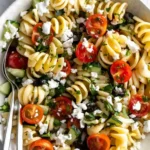
Refreshing Greek Pasta Salad
- Total Time: 20 minutes
- Yield: 2 servings 1x
- Diet: Vegetarian
Description
This Greek pasta salad is healthy, easy to make, and makes a great side dish to any meal! Turn this salad into a main dish by adding a source of protein!
Ingredients
- 14.81 oz cooked fusilli pasta (420 g)
- 1 cup cherry tomatoes (sliced)
- 1 small onion (chopped)
- 1/4 cup pitted olives (40 g)
- 1 small cucumber (chopped)
- 1/4 cup crumbled microbial-rennet feta cheese
- 1 handful parsley (chopped)
- 4 tbsp olive oil
- 2 tbsp apple cider vinegar
- 1 tsp salt
- 1 pinch black pepper
Instructions
- Step 1: First of all, cook the pasta according to package instructions. Once cooked, drain the water, rinse to stop the cooking process, and set aside to cool down.
- Step 2: Add the olive oil, vinegar, salt, black pepper, and mix all the ingredients into a small bowl.
- Step 3: Prep all the veggies and set them aside.
- Step 4: Add the pasta, cherry tomatoes, onion, olives, cucumber, chopped parsley, feta cheese, and salad dressing into a large bowl. Combine everything and serve!
Notes
Cook pasta al dente to prevent it from breaking apart. After draining and rinsing, toss the pasta with a bit of olive oil to prevent sticking. Cut vegetables into different shapes to add texture. For meal prep, store ingredients in separate containers and combine just before serving.
- Prep Time: 10 minutes
- Cook Time: 10 minutes
- Category: Side
- Method: Boiling, Mixing
- Cuisine: Greek
Nutrition
- Serving Size: 1 serving
- Calories: 687 kcal
- Sugar: 4 g
- Sodium: 1550 mg
- Fat: 34 g
- Saturated Fat: 2.5 g
- Unsaturated Fat: 31.5 g
- Trans Fat: 0 g
- Carbohydrates: 47.5 g
- Fiber: 3 g
- Protein: 10 g
- Cholesterol: 10 mg
Keywords: Greek pasta salad, healthy side dish, vegetarian, summer party dish, meal prep