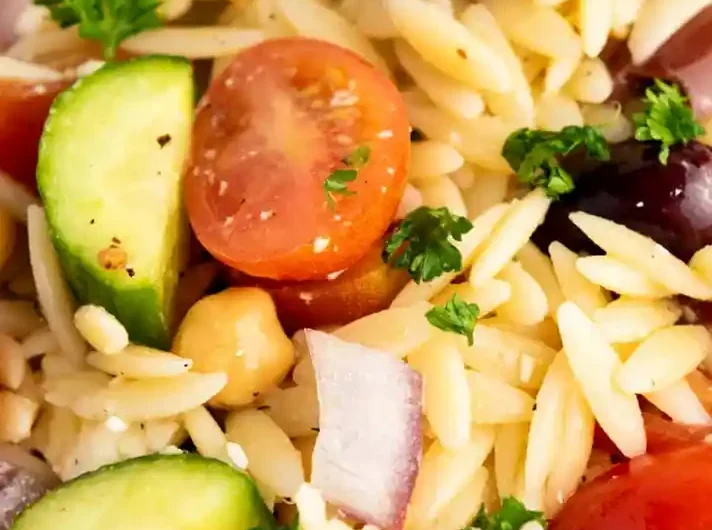
This refreshing Mediterranean Orzo Pasta Salad combines tender pasta with crisp vegetables and a tangy lemon vinaigrette. It is a versatile dish suitable for potlucks, meal prep, or as a light summer dinner.
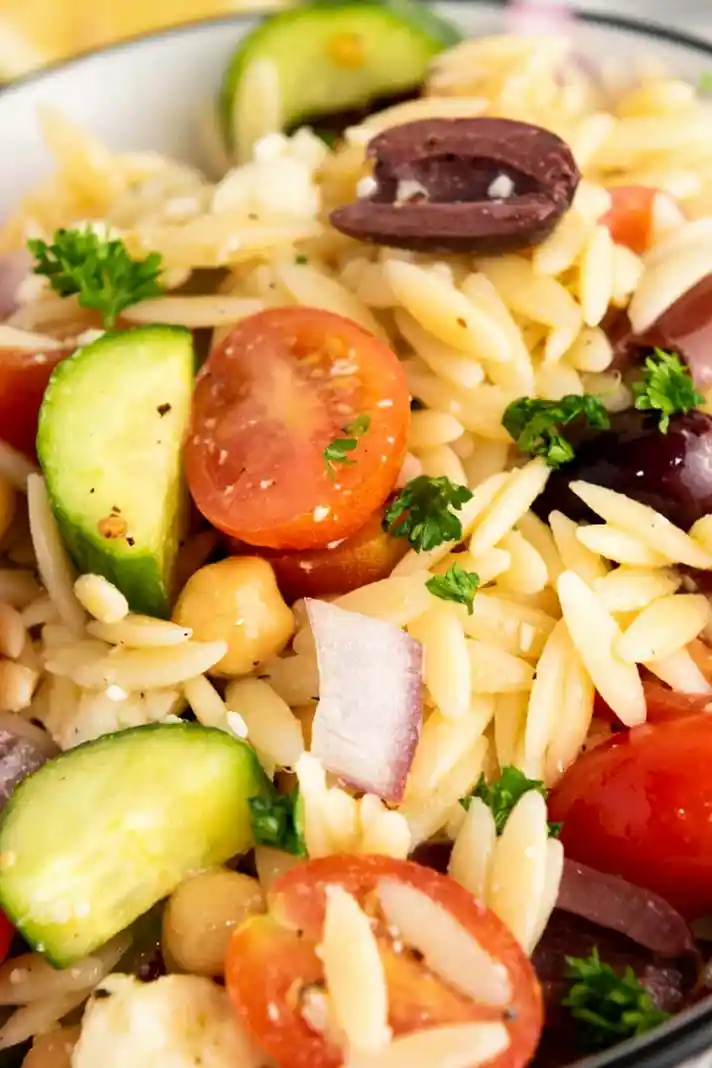
List of ingredients
- 1 ½ cups dry orzo pasta – small rice-shaped pasta.
- 2 cups cherry tomatoes – halved for better dressing distribution.
- 3 Persian cucumbers – diced into small, uniform pieces.
- ½ red onion – finely chopped to avoid overpowering the dish.
- ½ cup kalamata olives – pitted and sliced.
- 6 oz feta cheese – crumbled, use a microbial-rennet variety.
- ¼ cup fresh parsley – chopped finely.
- ¼ cup extra virgin olive oil – for a rich, fruity base.
- 2 tablespoons red wine vinegar – adds a sharp, tangy acidity.
- 1 lemon – freshly juiced.
- 1 garlic clove – minced into a fine paste.
- Salt and pepper – added to taste.
step-by-step instructions
- Cook the Pasta: Boil the orzo pasta following the package directions until it is al dente. Drain the pasta thoroughly and rinse it under cold water to stop the cooking process and prevent sticking.
- Combine Base Ingredients: In a large mixing bowl, combine the cooled orzo with the halved cherry tomatoes, diced Persian cucumbers, finely chopped red onion, sliced kalamata olives, and crumbled feta cheese.
- Add Herbs: Fold the chopped fresh parsley into the vegetable and pasta mixture.
- Prepare the Vinaigrette: In a separate small bowl, whisk together the extra virgin olive oil, red wine vinegar, fresh lemon juice, minced garlic, salt, and pepper until the dressing is well emulsified.
- Toss the Salad: Pour the prepared dressing over the salad ingredients and gently toss everything together until all components are evenly coated.
- Season and Chill: Taste the salad and adjust the seasoning by adding more salt, pepper, or lemon juice if needed. Place the bowl in the refrigerator for at least 30 minutes before serving to allow the flavors to meld.
Pasta Preparation Techniques
Preventing Orzo From Sticking
Orzo releases a significant amount of starch during the boiling process. Rinsing the pasta with cold water immediately after draining removes the excess surface starch, which prevents the grains from clumping together in the refrigerator.
Achieving the Perfect Al Dente Texture
Cook the pasta for one minute less than the package instructions suggest. Because the pasta will continue to absorb moisture from the dressing while chilling, undercooking it slightly ensures the salad maintains a firm bite.
Managing Pasta Temperature
Adding hot pasta directly to fresh vegetables can cause the cucumbers and tomatoes to soften or wilt. Always ensure the orzo is completely cooled to room temperature or chilled before mixing it with the raw produce.
Vegetable Preparation Tips
Dicing Persian Cucumbers for Uniformity
Persian cucumbers are preferred for their thin skins and lack of large seeds. Dice them into small cubes approximately the size of the orzo grains to ensure a balanced distribution of flavors in every bite.
Taming the Pungency of Raw Red Onion
If the raw red onion flavor is too sharp, soak the finely chopped pieces in cold water for 10 minutes. Drain and pat them dry before adding them to the salad to maintain a milder taste.
Halving Cherry Tomatoes Efficiently
Cut cherry tomatoes in half rather than quarters to keep them from releasing too much juice into the salad. This helps maintain the integrity of the vinaigrette and prevents the pasta from becoming soggy.
Dressing Optimization
Balancing Acidity and Fat
The ratio of olive oil to lemon juice and vinegar determines the brightness of the dish. If the dressing feels too oily, add an extra teaspoon of lemon juice; if it is too tart, whisk in a small amount of additional olive oil.
Enhancing Garlic Flavor
For a more potent garlic taste, press the minced garlic into the salt and pepper using the side of your knife before whisking. This breaks down the cell walls of the garlic and releases more aromatic oils into the oil base.
Emulsifying the Vinaigrette
Whisk the dressing vigorously or shake it in a sealed jar to create a temporary emulsion. This ensures the oil and acids are combined, providing a consistent coating over the pasta rather than pooling at the bottom.
Ingredient Substitutions
Using Alternative Pasta Shapes
If orzo is unavailable, you can use pearl couscous or small ditalini pasta. Ensure the pasta size remains small to maintain the traditional salad texture and ease of eating.
Replacing Feta Cheese
For a different flavor profile, substitute feta with crumbled goat cheese or halloumi cubes. Ensure any substitute is a microbial-rennet cheese to keep the recipe consistent with the safety guidelines.
Choosing Different Olive Varieties
While kalamata olives provide a salty, punchy flavor, you can use green Castelvetrano olives for a milder, buttery taste. Manzanilla olives are another option if you prefer a more traditional brine flavor.
Substituting Fresh Herbs
Fresh parsley is the standard, but a mix of mint and dill can add a more complex Mediterranean profile. Use a 1:1 ratio of parsley to mint for a refreshing, aromatic twist.
Serving and Pairing Ideas
Adding Protein for a Main Meal
Turn this side dish into a full meal by adding grilled chicken breast, chickpeas, or sautéed shrimp. Fold the protein into the salad after the pasta has been chilled and dressed.
Best Occasions for This Dish
This salad is ideal for outdoor gatherings because it does not contain mayonnaise and is more stable in warm weather than creamy salads. It works well as a side for grilled fish or roasted vegetables.
Plating for Visual Appeal
Serve the salad in a wide, shallow bowl to showcase the colors of the tomatoes and cucumbers. Garnish with a few whole parsley leaves and a sprinkle of extra feta on top for a professional look.
Storage and Preservation
Refrigerator Life and Containers
Store the salad in an airtight glass container to keep it fresh for up to two days. Glass is preferred over plastic to prevent the acidity of the lemon and vinegar from reacting with the container.
Preventing Sogginess Over Time
Pasta tends to absorb dressing as it sits. If you plan to serve the salad 24 hours later, reserve a quarter of the dressing and stir it in just before serving to restore the moisture.
Refreshing the Salad Before Serving
Before taking the salad out of the fridge, give it a gentle toss to redistribute the dressing. A final squeeze of fresh lemon juice can brighten the flavors that may have dulled during refrigeration.
Troubleshooting Common Issues
Fixing a Bland Flavor Profile
If the salad tastes flat, it usually needs more salt or acid. Add a pinch of flaky sea salt or a teaspoon of red wine vinegar to enhance the existing flavors of the vegetables.
Managing Excess Liquid
If the salad becomes too watery, it is often due to the cucumbers releasing moisture. You can strain the salad through a colander briefly or add a tablespoon of cooked orzo to absorb the excess liquid.
Preventing Feta From Clumping
Toss the feta cheese in with the vegetables before adding the dressing. This prevents the cheese from sticking together in large clumps and ensures a more even distribution of saltiness.
Frequently Asked Questions
Can I make this salad vegan?
Yes, you can make this salad vegan by omitting the feta cheese or replacing it with a plant-based feta alternative made from coconut oil or almonds.
How do I store the dressing separately?
Mix the dressing in a small mason jar and keep it in the fridge. Toss it with the pasta and vegetables no more than two hours before serving to maintain maximum vegetable crunch.
Can I use dried herbs instead of fresh?
Fresh parsley is highly recommended for the bright flavor, but you can use dried parsley or dried oregano if necessary. Use one teaspoon of dried herbs for every tablespoon of fresh herbs.
Why is my orzo mushy?
Mushy orzo usually results from overcooking or failing to rinse the pasta. Ensure you follow the al dente timing and rinse immediately with cold water to stop the cooking process.
Can I use different vinegars?
Apple cider vinegar or white wine vinegar are suitable replacements for red wine vinegar. Each will slightly change the flavor profile, with apple cider vinegar being slightly sweeter.
} Print
Mediterranean Orzo Pasta Salad with Zesty Lemon Vinaigrette
- Total Time: 25 minutes
- Yield: 6 servings 1x
- Diet: Vegetarian
Description
This easy Orzo Salad combines tender pasta with fresh veggies, salty olives, creamy feta, and a bright lemony dressing. It’s a quick, refreshing dish for lunch, dinner, or a side.
Ingredients
- 1 ½ cups dry orzo pasta
- 2 cups cherry tomatoes (halved)
- 3 Persian cucumbers (diced)
- ½ red onion (finely chopped)
- ½ cup kalamata olives (pitted and sliced)
- 6 oz feta cheese (crumbled)
- ¼ cup fresh parsley (chopped)
- ¼ cup extra virgin olive oil
- 2 tablespoons red wine vinegar
- 1 lemon (juiced)
- 1 garlic clove (minced)
- Salt and pepper (to taste)
Instructions
- Step 1: Cook the orzo pasta following the package directions until it’s al dente. Drain it well and rinse with cold water to cool.
- Step 2: In a large bowl, mix the cooked orzo with cherry tomatoes, diced Persian cucumbers, red onion, kalamata olives, and crumbled feta cheese.
- Step 3: Add the chopped parsley to the bowl.
- Step 4: In a small bowl, whisk together olive oil, red wine vinegar, lemon juice, minced garlic, salt, and pepper to make the dressing.
- Step 5: Pour the dressing over the salad and gently toss everything together until well combined.
- Step 6: Taste and adjust the seasoning, adding more salt, pepper, or lemon juice if you like. Refrigerate the salad for at least 30 minutes before serving to let the flavors blend.
Notes
Be sure to rinse the cooked orzo with cold water to stop the cooking and keep it from sticking. Use fresh vegetables for the best crunch and flavor. Chill the salad for at least 30 minutes so the flavors can blend nicely. This salad keeps well in the fridge for up to 2 days.
- Prep Time: 15 minutes
- Cook Time: 10 minutes
- Category: Side Dishes
- Method: Boiling, Mixing
- Cuisine: Mediterranean
Nutrition
- Serving Size: 1 serving
- Calories: 290 kcal
- Sugar: 6 g
- Sodium: 580 mg
- Fat: 16 g
- Saturated Fat: 6 g
- Unsaturated Fat: 10 g
- Trans Fat: 0 g
- Carbohydrates: 28 g
- Fiber: 4 g
- Protein: 8 g
- Cholesterol: 25 mg
Keywords: Mediterranean Orzo Pasta Salad, pasta salad, healthy side dish, vegetarian recipe, summer salad