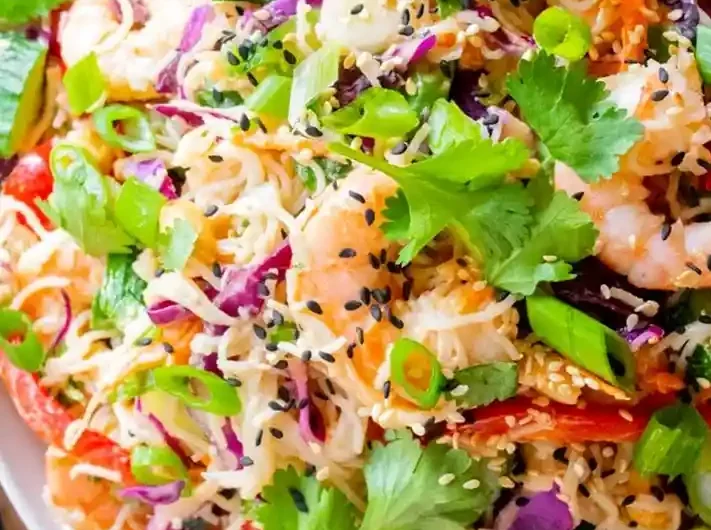
This refreshing Thai glass noodle salad combines crisp vegetables and tender shrimp with a savory, creamy peanut dressing. It is an ideal dish for quick weeknight dinners or healthy meal prep lunches due to its versatility and fresh ingredients.
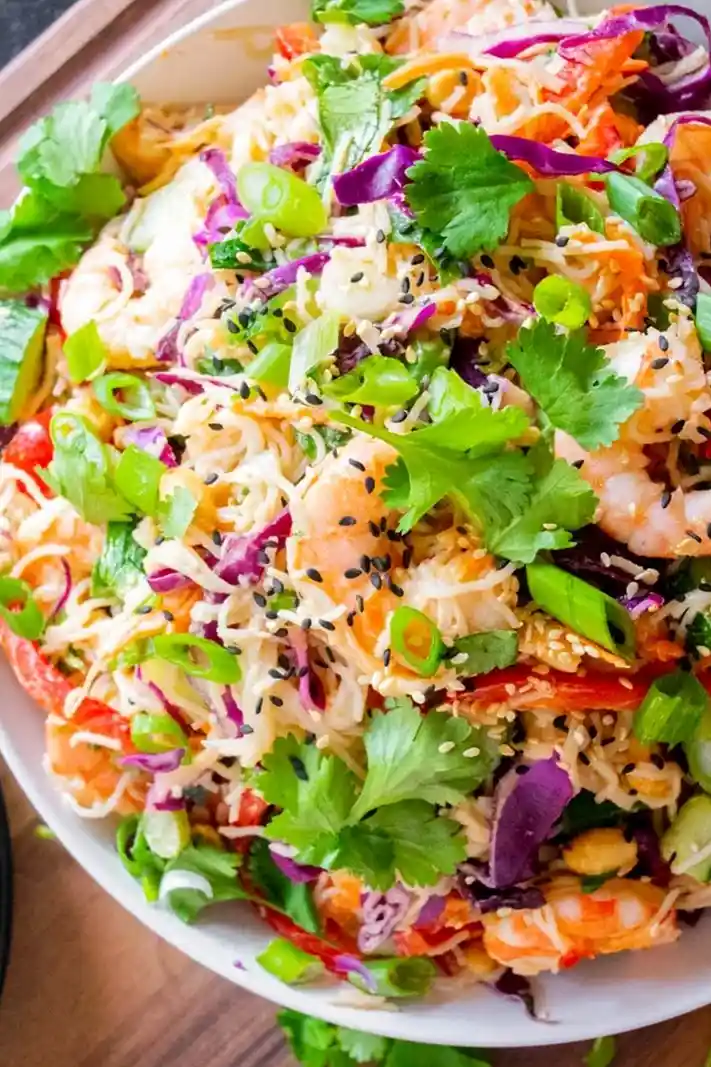
List of ingredients
- 8 oz cooked glass noodles or rice noodles – provides a light and chewy base.
- 1 lb large or jumbo shrimp, cooked, peeled and deveined – the primary protein source.
- 1/4 small red cabbage, shredded – adds crunch and vibrant color.
- 1 small red bell pepper, thinly sliced – contributes a mild sweetness.
- 1 small carrot, shredded – adds earthiness and texture.
- 1/2 medium jalapeño, diced (seeds removed) – provides a gentle heat.
- 1/2 large seedless English cucumber, cut into cubes – keeps the salad hydrating and fresh.
- 2 green onions (scallions), sliced thinly – adds a sharp, oniony finish.
- 1/2 cup roasted salted peanuts, chopped – introduces a nutty crunch.
- 1/4 cup fresh cilantro leaves – provides a bright, herbal note.
- Black and white sesame seeds – used for a decorative garnish.
- Sriracha sauce – optional for added spice during serving.
- 1/4 cup creamy peanut butter – the base for the rich dressing.
- 1 tbsp fresh lime juice – adds necessary acidity.
- 1 tbsp toasted sesame oil – provides a deep, nutty aroma.
- 1/2 tbsp fish sauce – adds savory umami depth.
- 2 tbsp rice vinegar – balances the richness of the peanut butter.
- 1 tbsp sweet chili sauce – adds a touch of sweetness and spice.
- 1/2 tbsp coconut aminos, or low sodium soy sauce – for salty balance.
- 1 tsp fresh ginger, grated – adds a zesty, pungent kick.
step-by-step instructions
- Prepare the dressing: Place the creamy peanut butter in a microwave-safe bowl or liquid measuring cup and heat on high for 30 seconds to soften.
- Whisk the sauce: Add the lime juice, toasted sesame oil, fish sauce, rice vinegar, sweet chili sauce, coconut aminos or soy sauce, and grated ginger to the peanut butter. Whisk until the mixture is completely smooth and set it aside.
- Cook the shrimp: Bring a pot of water to a boil and cook the shrimp for 2-3 minutes until they are pink and opaque. Use a slotted spoon to remove the shrimp and set them aside, then return the pot of water to the stove.
- Prepare the noodles: Cook the glass or rice noodles in the same boiling water according to the package instructions. Drain them well and let them cool for approximately 10 minutes.
- Assemble the salad: Combine the cooled noodles, cooked shrimp, shredded cabbage, sliced bell pepper, shredded carrot, diced jalapeño, cubed cucumber, sliced green onions, chopped peanuts, and fresh cilantro in a large mixing bowl.
- Toss and serve: Pour the prepared peanut dressing over the salad ingredients and toss until everything is evenly coated. Serve immediately with sriracha on the side if desired, either warm or chilled.
Professional Preparation Tips
Use a Slotted Spoon for Shrimp
Using a slotted spoon allows you to remove the shrimp efficiently without draining the pot. This keeps the water hot, which reduces the time needed to bring it back to a boil for the noodles.
Rinse Noodles with Cold Water
Once the noodles are drained, rinsing them under cold water stops the cooking process instantly. This prevents the noodles from overcooking and sticking together in a clump.
Shred Vegetables Uniformly
Use a mandoline or a sharp chef’s knife to ensure the cabbage and carrots are shredded to a similar thickness. Uniform cuts allow the dressing to coat every piece evenly.
Warm the Peanut Butter Thoroughly
Heating the peanut butter for 30 seconds makes it more pliable and liquid. This ensures the dressing emulsifies quickly and remains smooth without lumps.
Remove Jalapeño Seeds
Removing the seeds and white membranes from the jalapeño ensures you get the pepper flavor without excessive heat. This keeps the salad accessible for those with lower spice tolerances.
Protein Substitutions
Swap Shrimp for Chicken Breast
Cooked, diced chicken breast is an excellent alternative to shrimp. Ensure the chicken is poached or grilled and cooled before adding it to the salad.
Use Firm Tofu for a Plant-Based Option
Press extra-firm tofu to remove excess water, cube it, and pan-fry until golden brown. This provides a hearty texture that pairs perfectly with peanut sauce.
Incorporate Edamame
Shelled edamame adds extra protein and a bright green color. Steam the beans briefly and add them along with the other vegetables.
Try Smoked Tofu
Smoked tofu offers a deeper, more savory flavor profile than plain tofu. Simply cube the smoked tofu and fold it into the assembled salad.
Use Cooked Salmon
Flaked cooked salmon can be used for a richer taste. Be gentle when tossing the salad to avoid breaking the salmon pieces too much.
Flavor Variations
Increase the Heat Level
For a spicier salad, add a pinch of red pepper flakes or additional diced jalapeño. You can also stir a teaspoon of sriracha directly into the dressing.
Add Fresh Thai Basil
Thai basil provides a distinct anise-like flavor that complements the peanut sauce. Chop the leaves coarsely and mix them in with the cilantro.
Experiment with Different Nut Butters
Almond butter can be used as a substitute for peanut butter for a slightly different nuttiness. Cashew butter also works well and creates a creamier consistency.
Adjust the Acidity
If the salad feels too heavy, add an extra squeeze of fresh lime juice. This brightens the overall flavor and cuts through the richness of the peanut butter.
Add Sliced Radishes
Slicing thin rounds of red radish adds a peppery bite and a crisp texture. It pairs well with the sweetness of the carrots and bell peppers.
Noodle Alternatives
Using Brown Rice Noodles
Brown rice noodles offer a nuttier flavor and more fiber than white rice noodles. They generally require a slightly longer soaking or boiling time.
Try Soba Noodles
Buckwheat soba noodles add an earthy taste to the dish. Ensure you rinse them thoroughly in cold water to remove the surface starch.
Using Vermicelli
Thin rice vermicelli cooks very quickly and absorbs the dressing efficiently. Be careful not to overcook them, as they can become mushy.
Exploring Sweet Potato Noodles
Korean glass noodles made from sweet potato starch have a chewier texture. These are a great option for those seeking a more substantial bite.
Wheat-Based Pasta Options
While not traditional, thin spaghetti or angel hair pasta can work in a pinch. Cook them al dente to maintain a firm structure against the heavy sauce.
Storage and Freshness
Use Airtight Glass Containers
Store the salad in a glass container with a tight lid to keep the vegetables from oxidizing. This preserves the crunch of the cabbage and cucumber.
Store Dressing Separately
To prevent the noodles from absorbing all the sauce and becoming soggy, store the dressing in a separate jar. Toss the salad just before eating.
Refrigeration Time Limits
This salad is best consumed within three days of preparation. After this period, the vegetables may release too much water, affecting the texture.
Preventing Noodle Clumping
If storing noodles separately, toss them with a small amount of sesame oil. This creates a barrier that prevents them from sticking together in the fridge.
Handling Leftover Shrimp
Keep the cooked shrimp chilled at all times. If the salad has been sitting at room temperature for over two hours, it should be discarded for safety.
Serving and Plating Ideas
Serve Chilled for Summer
For a refreshing summer meal, refrigerate the assembled salad for two hours. This allows the flavors to meld while keeping the temperature low.
Platter Presentation
Arrange the noodles and vegetables on a large platter and drizzle the dressing over the top. Garnish with a concentrated pile of peanuts and sesame seeds in the center.
Individual Meal Prep Bowls
Divide the salad into four equal portions in bowls. Keep the dressing in small condiment containers on the side for freshness during the work week.
Using Lettuce Wraps
Spoon the noodle salad into large butter lettuce or romaine leaves. This turns the salad into a handheld appetizer or a light snack.
Garnishing for Visual Appeal
Sprinkle the black and white sesame seeds at the very end. Adding a few whole cilantro leaves on top adds a professional, restaurant-style look.
Meal Prep Strategies
Batch Prepping Vegetables
Shred the cabbage, carrots, and slice the peppers a day in advance. Store them in a combined container or separate bags to save time on assembly day.
Making Dressing in Bulk
The peanut dressing can be made in a larger batch and stored in the fridge for up to a week. Simply shake the jar before using as separation may occur.
Pre-Cooking Proteins
Boil the shrimp ahead of time and store them in a sealed container. This reduces the cooking time to just the noodle preparation phase.
Organizing Ingredients by Texture
Group your soft ingredients (noodles, shrimp) and hard ingredients (cabbage, carrots) separately. This helps in managing the tossing process without bruising the protein.
Portion Control for Lunches
Weight the noodle portions using a kitchen scale to ensure each meal prep container has the same amount. This helps maintain consistent calorie intake.
Troubleshooting Common Issues
Fixing Thick Dressing
If the dressing is too thick to pour, whisk in one tablespoon of warm water or extra rice vinegar. Add it one teaspoon at a time until the desired consistency is reached.
Managing Overcooked Noodles
If noodles become too soft, avoid over-mixing them with the vegetables. Gently fold the ingredients together to prevent the noodles from breaking apart.
Balancing Excess Saltiness
If the fish sauce or soy sauce makes the dish too salty, add a teaspoon of honey or maple syrup. The sweetness will neutralize the saltiness.
Preventing Watery Salad
If the cucumber releases too much water, seed the cucumber before cubing it. Scraping out the watery center keeps the salad crisp.
Addressing Bland Flavor
If the salad tastes flat, increase the lime juice or grated ginger. Acid and zing are usually the missing components in peanut-based sauces.
Frequently Asked Questions
Can I use brown rice noodles?
Yes, brown rice noodles are a great substitute. They offer a heartier texture and additional nutrients while remaining compatible with the dressing.
How do I peel shrimp quickly?
If using raw shrimp, peel them before boiling. For pre-cooked shrimp, simply rinse them under cold water to remove any remaining shell fragments.
What is the best substitute for coconut aminos?
Low-sodium soy sauce is the closest direct substitute. For a soy-free option, you can use a small amount of extra fish sauce or a pinch of salt.
Can this be made into a wrap?
Yes, this salad works perfectly as a filling for spring rolls or summer rolls. Simply wrap the mixture in rice paper sheets with extra mint leaves.
Can I use unsalted peanuts?
You can use unsalted peanuts, but you may need to add a pinch more salt to the dressing to compensate for the lack of salt in the nuts.
Print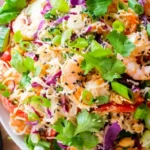
Thai Glass Noodle Salad with Peanut Dressing
- Total Time: 25 minutes
- Yield: 4 servings 1x
- Diet: General
Description
A light and satisfying Thai glass noodle salad featuring shrimp, crunchy fresh vegetables, and a creamy, spicy peanut dressing. Perfect as a weeknight dinner or a meal-prep lunch.
Ingredients
- 8 oz cooked glass noodles or rice noodles
- 1 lb large or jumbo shrimp, cooked, peeled and deveined
- 1/4 small red cabbage, shredded
- 1 small red bell pepper, thinly sliced
- 1 small carrot, shredded
- 1/2 medium jalapeño, diced (seeds removed)
- 1/2 large seedless English cucumber, cut into cubes
- 2 green onions (scallions), sliced thinly
- 1/2 cup roasted salted peanuts, chopped
- 1/4 cup fresh cilantro leaves
- black and white sesame seeds, for garnish
- sriracha sauce for serving, if desired
- 1/4 cup creamy peanut butter
- 1 tbsp fresh lime juice
- 1 tbsp toasted sesame oil
- 1/2 tbsp fish sauce
- 2 tbsp rice vinegar
- 1 tbsp sweet chili sauce
- 1/2 tbsp coconut aminos, or low sodium soy sauce
- 1 tsp fresh ginger, grated
Instructions
- Step: Add peanut butter to a microwave-safe liquid measuring cup or bowl and heat on high for 30 seconds.
- Step: Add remaining dressing ingredients and whisk until smooth; set aside.
- Step: Cook shrimp in boiling water until pink and opaque, about 2-3 minutes, then remove with a slotted spoon.
- Step: Cook noodles in the same pot according to package directions, then drain and cool for about 10 minutes.
- Step: Add all salad ingredients to a large bowl and toss well with the prepared dressing.
- Step: Serve with sriracha if desired; can be served warm or chilled.
Notes
This salad holds up well for meal prep and can be served warm, at room temperature, or chilled overnight.
- Prep Time: 15 minutes
- Cook Time: 10 minutes
- Category: Dinner
- Method: Boiling
- Cuisine: Thai
Nutrition
- Serving Size: 1 serving
- Calories: 420 kcal
- Sugar: 12 g
- Sodium: 850 mg
- Fat: 22 g
- Saturated Fat: 4 g
- Unsaturated Fat: 18 g
- Trans Fat: 0 g
- Carbohydrates: 32 g
- Fiber: 6 g
- Protein: 28 g
- Cholesterol: 140 mg
Keywords: appetizer, rice noodles, shrimp, side dish