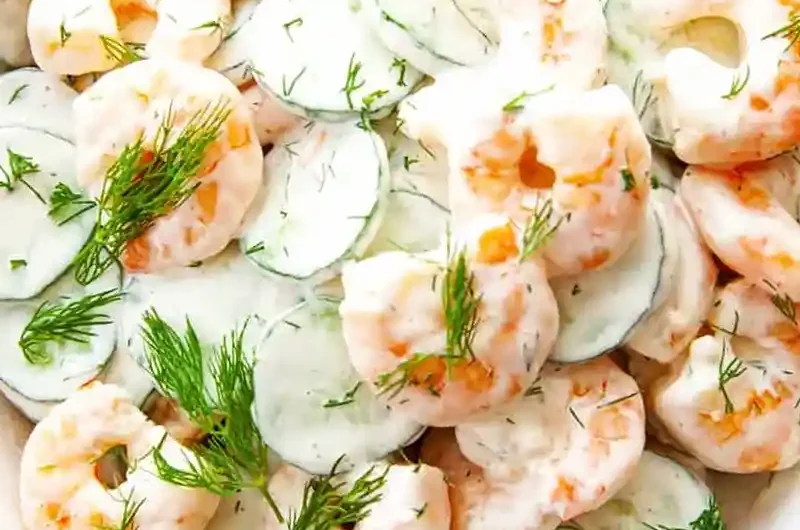
This chilled cucumber shrimp salad is a refreshing and healthy option for summer meals. It combines succulent seafood with crisp vegetables in a creamy, lemony dressing for a light yet satisfying dish.
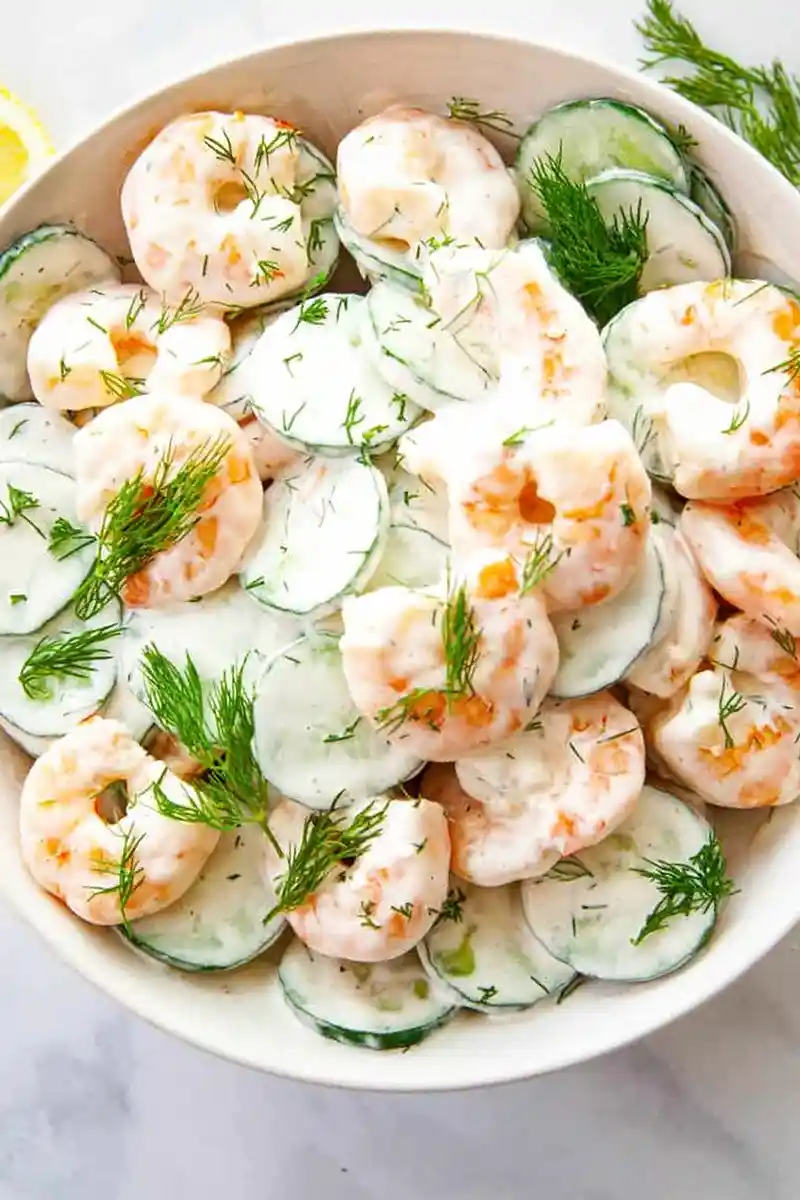
List of ingredients
- 2 pounds cooked shrimp, chilled (peeled and tails removed) – ensure they are fully cooled to maintain the salad’s temperature.
- 2 cups sliced cucumber (Persian cucumbers are recommended, sliced 1/4 to 1/2 inch thick) – these provide a crunchier texture and smaller seeds.
- 1/2 cup mayonnaise – provides the rich, creamy base for the dressing.
- 1/4 cup sour cream – adds a slight tang and lightens the texture of the mayo.
- 1 teaspoon Dijon mustard – adds a sharp, sophisticated depth of flavor.
- 2 tablespoons fresh lemon juice – provides the necessary acidity to balance the creaminess.
- 1/4 cup chopped fresh dill or chives – brings a fresh, herbaceous finish to the seafood.
- Salt and pepper to taste – used for final seasoning adjustments.
- Optional additions: celery and/or red onion – adds extra crunch and a piquant flavor.
step-by-step instructions
- Combine Main Ingredients: Place the chilled cooked shrimp and sliced cucumbers into a large serving bowl.
- Prepare the Dressing: In a separate smaller bowl, whisk together the mayonnaise, sour cream, Dijon mustard, fresh lemon juice, and chopped dill or chives until the mixture is smooth.
- Mix the Salad: Pour the creamy dressing over the shrimp and cucumbers, then mix gently to ensure every piece is evenly coated.
- Season: Add salt and pepper to your taste preferences and stir once more.
- Chill and Serve: Keep the salad in the refrigerator until ready to serve to ensure it remains crisp and cold.
Optimizing Shrimp Selection and Preparation
Choosing the Right Shrimp Size
Shrimp are sold by count per pound, which determines their size. For this salad, a 21/30 count is ideal because these shrimp are large enough to be satisfying but small enough to be eaten in one or two bites. If you prefer smaller pieces, look for 31/35 count shrimp.
Colossal shrimp, often labeled as U-10, are generally too large for a mixed salad. If you use these, you will need to cut them into smaller pieces after cooking to maintain a balanced ratio of seafood to cucumber in every spoonful.
Boiling Raw Shrimp from Scratch
To cook raw shrimp, bring 4 quarts of water to a gentle boil in a large pot. Reduce the heat to a simmer and carefully add the shrimp, boiling them gently for about 3 minutes or until they turn a bright pink or orange color.
Avoid overcooking the shrimp, as they can quickly become rubbery and tough. Once the color changes, remove them immediately from the pot using a slotted spoon to stop the process.
Using an Ice Bath for Texture
Immediately plunge the cooked shrimp into a bowl of ice water for one to two minutes. This rapid cooling process, known as shocking, prevents the shrimp from continuing to cook from internal heat.
After the shrimp are chilled, drain them well and pat them dry with paper towels. Removing excess moisture prevents the dressing from becoming watered down, which keeps the sauce thick and creamy.
Cucumber Preparation Techniques
The Benefits of Persian Cucumbers
Persian cucumbers are the preferred choice for this recipe because they have thinner skins and smaller, softer seeds than standard slicing cucumbers. This means you do not have to peel them, preserving more nutrients and adding a nice green color.
Their smaller diameter also makes it easier to achieve uniform slices. This ensures a consistent texture throughout the salad, allowing the dressing to adhere better to the vegetable surfaces.
Achieving the Perfect Slice Thickness
Aim for slices between 1/4 and 1/2 inch thick. Slices that are too thin can become limp and soggy quickly once they hit the acidic lemon juice and salt in the dressing.
Thicker slices maintain their structural integrity and provide a satisfying snap. Using a sharp chef’s knife or a mandoline slicer can help you achieve this consistency across the entire batch.
Reducing Excess Water Content
Cucumbers have a very high water content, which can lead to a watery salad after an hour in the fridge. To prevent this, you can lightly salt the sliced cucumbers in a colander for 10 minutes before mixing.
Rinse the salt off and pat them dry with a clean towel. This process draws out excess moisture and helps the creamy dressing cling to the cucumber slices for a longer period.
Dressing Customizations and Substitutions
Low-Fat Dressing Alternatives
If you want a lighter version, you can replace the mayonnaise with plain Greek yogurt. Greek yogurt provides a similar creaminess and a natural tang that complements the lemon juice and shrimp perfectly.
You can also substitute the sour cream with a plant-based alternative or more yogurt. This reduces the overall calorie count while maintaining the luxurious mouthfeel of the original recipe.
Herb Pairings for Different Profiles
Fresh dill is the classic choice for shrimp, offering a grassy, citrusy note. Chives provide a milder, onion-like flavor that adds depth without overpowering the delicate taste of the seafood.
For a different twist, try using a combination of both herbs, or add a tablespoon of chopped fresh parsley. Parsley adds a clean, peppery finish that brightens the overall flavor profile of the dish.
Balancing Acidity and Salt
The lemon juice provides the necessary brightness, but the level of acidity can vary depending on the lemon’s ripeness. Taste the dressing before adding it to the salad; if it is too tart, add a pinch of sugar or a tiny bit more mayonnaise.
Similarly, be cautious with the salt. Since some pre-cooked shrimp are brined in salt, always taste the assembled salad before adding more salt to avoid over-seasoning.
Serving and Pairing Recommendations
Serving as a Main Course
To turn this salad into a full meal, serve it over a bed of mixed spring greens or baby spinach. The crispness of the greens complements the creaminess of the shrimp salad.
Alternatively, pair the salad with a side of quinoa or wild rice. The nutty flavor of the grains provides a hearty contrast to the light and zesty nature of the cucumber and shrimp.
Creative Filling Ideas
This mixture works exceptionally well as a filling for wraps or sandwiches. Scoop the salad into a whole-grain wrap with sliced avocado and sprouts for a nutrient-dense lunch.
For a more traditional approach, serve it on toasted sourdough or a buttery croissant. The crunch of the toasted bread provides a great textural contrast to the soft shrimp and crisp cucumbers.
Appetizer Presentation Tips
For a party platter, instead of mixing everything in a bowl, spoon small amounts of the salad onto individual thick cucumber rounds. This creates a visually appealing bite-sized appetizer.
You can also serve the salad alongside a variety of crackers or toasted baguette slices. Garnish the platter with extra lemon wedges and sprigs of fresh dill for a professional look.
Storage and Food Safety Guidelines
Refrigeration and Shelf Life
This salad is best enjoyed fresh, but it can be stored in an airtight container in the refrigerator for up to three days. Keep it in the coldest part of the fridge, away from the door, to maintain a steady temperature.
Note that the cucumbers will release more water over time, so the dressing may thin out. Give the salad a quick stir before serving on the second or third day to redistribute the sauce.
Safe Transport for Outdoor Events
When taking this salad to a picnic or potluck, use an insulated cooler with plenty of ice packs. Keep the container sealed tightly to prevent any leaks and keep the cooler in the shade.
Avoid opening the cooler frequently, as this lets cold air escape and raises the internal temperature of the seafood, which can compromise safety.
The One-Hour Room Temperature Rule
Because this salad contains mayonnaise and seafood, it is highly perishable. Do not leave the salad sitting out at room temperature for more than one hour.
In extreme summer heat, this window may be even shorter. Always return leftovers to the refrigerator immediately to prevent the growth of harmful bacteria.
Troubleshooting Common Issues
Handling a Watery Salad
If you find that your salad has become too watery, do not add more salt, as this will draw out even more moisture from the cucumbers. Instead, stir in an extra tablespoon of mayonnaise or sour cream.
This helps thicken the emulsion and binds the dressing back to the ingredients. For future batches, remember to pat the shrimp and cucumbers very dry before mixing.
Fixing Rubbery Shrimp
Rubbery shrimp are usually a result of overcooking. While you cannot reverse the texture once it has happened, you can mask it by cutting the shrimp into smaller, bite-sized pieces.
Smaller pieces have less surface area for the rubbery texture to be noticed. Ensure that in the future, you use a thermometer or follow the color change closely to stop cooking the moment they turn pink.
Adjusting Bland Flavors
If the salad tastes bland, it usually lacks acidity or salt. Start by adding a small squeeze of fresh lemon juice to wake up the flavors of the shrimp and herbs.
If it still feels flat, add a pinch of salt or an extra half-teaspoon of Dijon mustard. The mustard provides an ‘umami’ element that enhances the other ingredients without making the salad taste like mustard.
Frequently Asked Questions
How long does raw shrimp last in the fridge?
Fresh, raw shrimp should be kept in the refrigerator for no more than two days before they are cooked. To extend their life, ensure they are stored on ice or in a very cold environment.
What is the best way to defrost frozen shrimp?
The safest and best method is to defrost shrimp in the refrigerator overnight. For faster results, place the sealed vacuum bag in a bowl of cold water, changing the water every 30 minutes.
How long does it take to cook raw shrimp?
Raw shrimp typically cook in 3 to 5 minutes depending on their size. Whether boiling, sautéing, or broiling, they are done as soon as they turn opaque and pink.
What is the best way to reheat cooked shrimp?
To avoid drying them out, reheat cooked shrimp gently in a pan over low heat with a teaspoon of butter or olive oil. Only heat them until they are warm, as further cooking will make them tough.
Can I use a different type of mustard?
While Dijon is recommended for its sharp tang, you can use whole-grain mustard for a more rustic texture. Avoid using yellow mustard, as its flavor is too sweet and mild for this specific seafood profile.
Can this salad be made a day in advance?
Yes, it can be made a day ahead, but it is recommended to slice the cucumbers and mix them with the shrimp just before adding the dressing. This keeps the vegetables crunchier for longer.
Print
Creamy Cucumber Shrimp Salad
- Total Time: 15 minutes
- Yield: 6 servings 1x
- Diet: General
Description
Chilled cucumber shrimp salad is perfect for summer! Just toss cold shrimp and sliced cucumber with a creamy, lemony dressing and fresh herbs.
Ingredients
- 2 pounds cooked shrimp, chilled (peeled, tails off)
- 2 cups sliced cucumber
- 1/2 cup mayonnaise
- 1/4 cup sour cream
- 1 teaspoon Dijon mustard
- 2 tablespoons fresh lemon juice
- 1/4 cup chopped fresh dill or chives
- Salt and pepper to taste
- Optional additions: celery and/or red onion
Instructions
- Step: In a large serving bowl, combine shrimp and cucumber.
- Step: In a smaller bowl, whisk together mayo, sour cream, dijon, lemon juice and dill or chives.
- Step: Pour the dressing over the shrimp and cucumber and mix well.
- Step: Add salt and pepper to taste.
- Step: Serve chilled.
Notes
This shrimp salad tastes best if eaten within 3 days. Keep in a covered container in the refrigerator. When serving at a picnic, do not leave it out for more than 1 hour.
- Prep Time: 15 minutes
- Cook Time: 0 minutes
- Category: Seafood
- Method: Mixing
- Cuisine: American
Nutrition
- Serving Size: 1 serving
- Calories: 475 kcal
- Sugar: 6 g
- Sodium: 850 mg
- Fat: 16 g
- Saturated Fat: 4 g
- Unsaturated Fat: 12 g
- Trans Fat: 0 g
- Carbohydrates: 7 g
- Fiber: 1 g
- Protein: 33 g
- Cholesterol: 180 mg
Keywords: cucumber shrimp salad, chilled seafood salad, summer salad, creamy shrimp salad