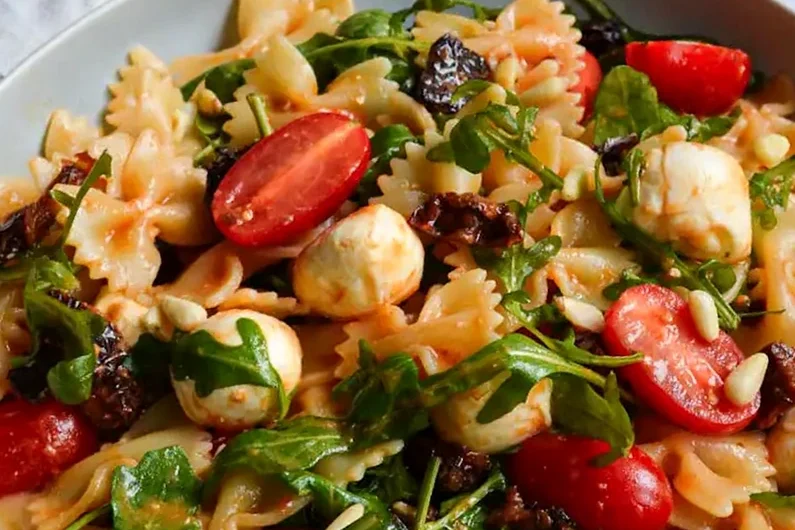
This refreshing pasta salad combines zesty pesto with fresh Mediterranean vegetables for a light yet filling meal. It works perfectly as a side dish for grilled meats or as a standalone vegetarian lunch.
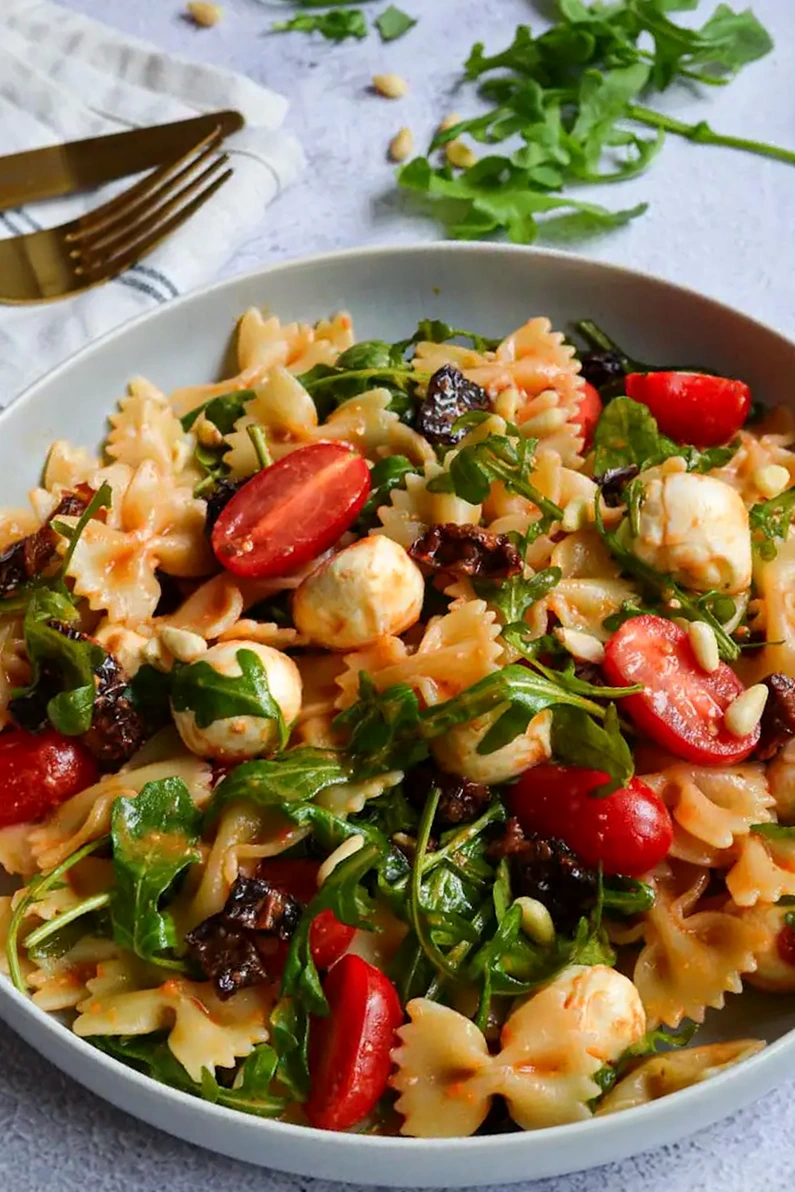
List of ingredients
- 120 g Farfalle or Penne – preferably al dente for better structure.
- 100 g Cherry tomatoes – washed and halved.
- 40 g Dried tomatoes – dry-packed, not in oil.
- 125 g Baby mozzarella light – use microbial-rennet cheese.
- 1 EL Pine nuts – for a nutty crunch.
- 2 handfuls Arugula – fresh and washed.
- 1 EL Pesto Rosso or Pesto Basilikum – depending on flavor preference.
- 2 EL White balsamic vinegar – for a balanced acidity.
- Salt & Pepper – to taste.
step-by-step instructions
- Cook and Prep: Boil the Farfalle in salted water according to the package instructions. While the pasta cooks, wash and halve the cherry tomatoes. Soak the dried tomatoes in boiling water for 10 minutes, then drain and slice them into thin strips. Wash the arugula.
- Make the Dressing: In a small cup or bowl, combine the pesto (Rosso or Basilikum), white balsamic vinegar, salt, and pepper. Mix thoroughly until the ingredients form a smooth, consistent mass.
- Assemble: Place all the prepared ingredients—cooked pasta, cherry tomatoes, sliced dried tomatoes, baby mozzarella, pine nuts, and arugula—into a large mixing bowl. Pour the dressing over the top and toss gently to combine. Serve immediately.
Optimizing Your Pasta Choice
Using Farfalle for Maximum Flavor
Farfalle, or bow-tie pasta, is highly recommended for this recipe because of its unique shape. The folds and pinched center create small pockets that trap the pesto and balsamic dressing more effectively than flat noodles. This ensures that every bite is evenly coated with flavor.
Penne as a Hearty Alternative
Penne is an excellent substitute if you prefer a more substantial texture. The hollow center of the tube allows the smaller ingredients, like bits of pesto and cherry tomato seeds, to settle inside. This creates a burst of flavor when you bite into the pasta.
Switching to Whole Grain Pasta
For a higher fiber content, you can use whole grain or whole wheat Farfalle. These varieties have a nuttier flavor and a firmer bite, which pairs well with the acidity of the white balsamic. Be aware that whole grain pasta may require a slightly longer boiling time.
Avoiding Overcooking
Always cook your pasta to ‘al dente’ for salads. Overcooked pasta becomes mushy and tends to break apart when you toss it with the other ingredients. Cooling the pasta slightly before mixing prevents the cheese from melting too much.
Vegetable Preparation Techniques
Rehydrating Dry-Packed Tomatoes
Using dried tomatoes without oil reduces unnecessary calories and allows the pesto to be the primary fat source. Soaking them in boiling water for 10 minutes restores their plumpness and removes excess salt. Pat them dry with a paper towel before slicing to prevent the salad from becoming watery.
Handling Cherry Tomatoes for Better Texture
Cutting cherry tomatoes in half rather than leaving them whole allows their natural juices to mingle with the dressing. This adds a fresh, acidic layer to the salad that balances the richness of the pesto. Use a sharp paring knife to ensure clean cuts without crushing the fruit.
Preparing Fresh Arugula
Wash arugula in cold water and spin it dry using a salad spinner. Any excess water remaining on the leaves will dilute the pesto dressing and prevent it from sticking to the pasta. Adding the arugula at the very end preserves its peppery crunch.
Adding Extra Fresh Herbs
While pesto provides a base of basil or sun-dried tomatoes, adding fresh chopped parsley or chives can enhance the flavor profile. Stir these in at the same time as the arugula. This adds a bright green color and a layer of aromatic freshness.
Dressing and Flavor Balancing
Choosing Between Pesto Rosso and Pesto Basilikum
Pesto Rosso, made from sun-dried tomatoes, offers a deeper, sweeter, and more intense savory flavor. Pesto Basilikum provides a fresher, more herbal taste that is lighter on the palate. Both work well, but Rosso complements the dried tomatoes in the recipe more closely.
The Role of White Balsamic Vinegar
White balsamic is preferred over red or dark balsamic to keep the colors of the salad bright and vibrant. It provides a softer, sweeter acidity that doesn’t overpower the delicate taste of the baby mozzarella. If unavailable, a mild apple cider vinegar is a suitable substitute.
Adjusting Salt and Pepper Levels
Pesto and dried tomatoes are naturally salty, so be cautious when adding extra salt. Taste the dressing first, then taste the assembled salad before adding more. Freshly cracked black pepper is recommended to provide a sharp contrast to the sweet tomatoes.
Adding an Olive Oil Emulsion
If you find the dressing too thick, whisk in one teaspoon of extra virgin olive oil. This helps the dressing coat the pasta more smoothly and adds a silky mouthfeel. This is particularly useful when using a very thick, store-bought pesto.
Cheese and Protein Variations
Substituting Mozzarella with Feta
Feta cheese is a great alternative for those who prefer a saltier and tangier taste. Since Feta is more intense than mozzarella, you can reduce the amount of added salt in the dressing. Crumble the Feta over the salad instead of using cubes to ensure a bit of cheese in every forkful.
Using Vegan Cheese Alternatives
For a plant-based version, replace the mozzarella with a tofu-based feta or a cashew-based mozzarella. Ensure the vegan cheese is firm so it doesn’t dissolve into the dressing. Pair this with a vegan pesto to keep the entire dish plant-based.
Adding Grilled Chicken or Tofu
To turn this side salad into a high-protein main meal, add sliced grilled chicken breast or smoked tofu. Season the protein simply with salt and pepper to avoid clashing with the pesto. Mix the protein in while it is still slightly warm to help it absorb some of the dressing.
Incorporating Chickpeas for Plant Protein
Canned chickpeas, rinsed and drained, add a creamy texture and extra protein. They pair perfectly with the Mediterranean theme and make the salad more filling. Add them during the final mixing step to avoid smashing them.
Enhancing Texture and Crunch
Toasting Pine Nuts for Better Aroma
Lightly toast the pine nuts in a dry pan over medium heat for 2-3 minutes until they turn golden brown. Toasting releases the natural oils and intensifies the nutty flavor. Be careful not to leave them unattended, as pine nuts burn very quickly.
Adding Sliced Almonds or Walnuts
If pine nuts are unavailable, slivered almonds or crushed walnuts are excellent substitutes. Walnuts provide a slightly more bitter contrast that works well with the sweetness of the dried tomatoes. Toast these similarly to the pine nuts for the best result.
Adding Seeded Crunch
Pumpkin seeds or sunflower seeds can be added for an earthy flavor and an extra boost of minerals. These are a great alternative for those with nut allergies. Ensure the seeds are unsalted to maintain control over the salad’s overall sodium level.
Storage and Preservation
Refrigeration Guidelines
Store the assembled pasta salad in an airtight glass container in the refrigerator. It will remain fresh for 3 to 4 days. Glass is preferred over plastic as it doesn’t absorb odors from the pesto or balsamic vinegar.
Preventing Arugula Wilting
If you plan to eat the salad over several days, store the arugula separately in a breathable bag. Mix the arugula into the salad only right before serving. Once dressed, the leaves will wilt within a few hours due to the acidity of the vinegar.
Avoiding Pasta Dryness
Pasta tends to absorb the dressing as it sits in the fridge, which can leave the salad feeling dry. To fix this, stir in a tablespoon of water or a drizzle of olive oil before serving. This restores the creaminess of the pesto dressing.
Make-Ahead Assembly
You can prepare the pasta, tomatoes, and dressing up to 24 hours in advance. Keep the dressing in a separate jar and the pasta in a sealed container. Toss everything together shortly before your event to ensure the textures remain distinct.
Serving and Presentation
Plating as a Party Side
When serving as a side dish at a barbecue, use a wide, shallow bowl rather than a deep one. This prevents the ingredients at the bottom from being crushed and allows the colorful tomatoes and mozzarella to be visible on top.
Main Course Presentation
For a main course, serve the salad on a large flat plate and garnish with a few extra whole basil leaves. Adding a side of toasted sourdough bread or a simple green salad helps create a complete, balanced meal.
Using Mason Jars for Portability
For a portable lunch, layer the ingredients in a mason jar. Put the dressing at the bottom, followed by the cherry tomatoes, then the pasta, cheese, and finally the arugula on top. Shake the jar vigorously before eating to distribute the dressing.
Troubleshooting Common Issues
Fixing an Overly Acidic Taste
If the white balsamic makes the salad too sour, add a pinch of sugar or a small amount of honey to the dressing. The sweetness will neutralize the sharp acidity of the vinegar without changing the overall flavor profile.
Managing a Watery Salad
If the salad becomes watery, it is usually due to excess moisture from the cherry tomatoes or poorly drained dried tomatoes. Strain the salad through a colander gently or pat the top with a clean paper towel to remove surface liquid.
Dealing with Clumpy Pesto
Store-bought pesto can sometimes be thick or clumpy. To smooth it out, whisk it with the balsamic vinegar and a teaspoon of warm water before adding it to the pasta. This creates a more fluid emulsion that coats the ingredients evenly.
Preventing Cheese from Sticking
If the baby mozzarella balls are sticking together, toss them in a tiny amount of olive oil before adding them to the bowl. This creates a thin barrier that keeps the cheese pieces separate and glossy.
Frequently Asked Questions
Can I make this salad ahead of time?
Yes, you can prepare the pasta and mix in the cheese and tomatoes a day in advance. However, you should add the arugula and the dressing just before serving to prevent the leaves from wilting and the pasta from absorbing all the sauce.
Can I use oil-packed dried tomatoes?
Yes, but you should drain them well and pat them dry. Be mindful that oil-packed tomatoes add more fat to the recipe, so you may want to reduce the amount of pesto or add a bit more balsamic vinegar to balance the richness.
Is this recipe suitable for meal prep?
It is very suitable for meal prep. If storing for several days, keep the arugula in a separate container and add a splash of olive oil when reheating or serving to refresh the dressing.
What is the best substitute for white balsamic?
The best substitute is apple cider vinegar or a mix of white wine vinegar and a pinch of sugar. Avoid using dark balsamic vinegar unless you don’t mind the pasta turning a brownish color.
Can I use a different pasta shape?
Yes, any short pasta like Fusilli, Rotini, or Cavatappi works well. These spiral shapes are particularly good at grabbing onto the pesto and small vegetable pieces.
Print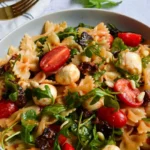
Mediterranean Pasta Salad with Pesto
- Total Time: 15 minutes
- Yield: 2 servings 1x
- Diet: Vegetarian
Description
A fresh and filling Mediterranean pasta salad with pesto, cherry tomatoes, dried tomatoes, arugula, pine nuts, and baby mozzarella. This dish is perfect as a side for grilling or as a light main meal on warm summer days.
Ingredients
- 120 g farfalle (or penne)
- 100 g cherry tomatoes
- 40 g dried tomatoes (not in oil)
- 125 g baby mozzarella light
- 1 tbsp pine nuts
- 2 handfuls arugula
- 1 tbsp pesto rosso (or basil pesto)
- 2 tbsp white balsamic vinegar
- Salt & pepper
Instructions
- Step: Cook farfalle according to package instructions in salted water. Wash and halve cherry tomatoes. Soak dried tomatoes in boiling water for 10 minutes, then cut into strips. Wash arugula.
- Step: Combine pesto (rosso or basil), white balsamic, salt, and pepper in a cup to mix the dressing.
- Step: Combine all ingredients in a bowl and mix together, then serve.
Notes
The nutritional values are based on one serving.
- Prep Time: 10 minutes
- Cook Time: 15 minutes
- Category: Salads
- Method: Boiling, Mixing
- Cuisine: Mediterranean
Nutrition
- Serving Size: 1 serving
- Calories: 497 kcal
- Sugar: 7 g
- Sodium: 650 mg
- Fat: 17 g
- Saturated Fat: 6 g
- Unsaturated Fat: 11 g
- Trans Fat: 0 g
- Carbohydrates: 54 g
- Fiber: 5 g
- Protein: 28 g
- Cholesterol: 45 mg
Keywords: Mediterranean pasta salad, pesto pasta, summer salad, healthy pasta salad, baby mozzarella