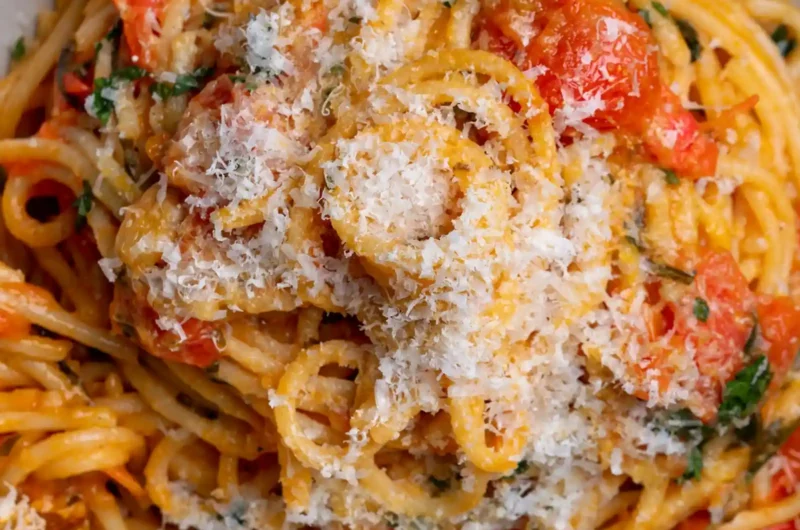
This quick pasta dish utilizes the natural sweetness of cherry tomatoes to create a rich, fresh sauce. It takes only 15 minutes from start to finish, making it an ideal solution for a fast weeknight dinner.
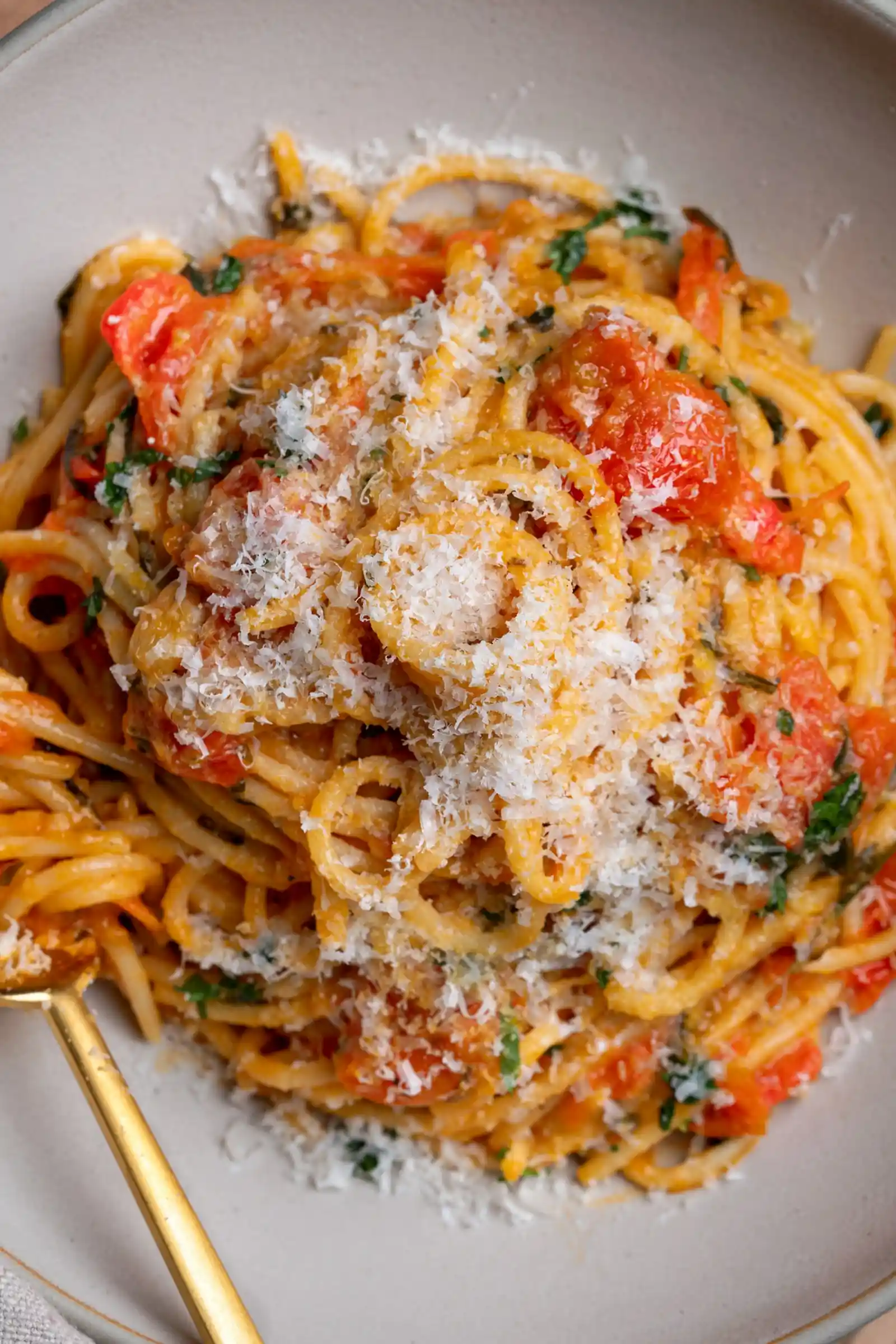
List of ingredients
- 2 pints cherry tomatoes – ensure they are ripe for maximum sweetness.
- 4 large garlic cloves, thinly sliced – provides a mellow, infused flavor.
- 1/2 lb dry pasta (spaghetti, bucatini, or penne rigate) – choose based on texture preference.
- 1 cup fresh basil, roughly chopped – adds a fresh, peppery finish.
- 1 cup Parmesan cheese, freshly grated (microbial-rennet) – provides saltiness and creaminess.
- 6 tbsp extra virgin olive oil – essential for the sauce emulsion.
- salt and pepper – used for seasoning to taste.
step-by-step instructions
- Boil Water: Bring a large pot of salted water to a boil.
- Infuse Oil: In a cold skillet, combine 4 tbsp of olive oil and the sliced garlic. Heat over medium heat for 2-3 minutes, stirring frequently to ensure the garlic does not brown.
- Cook Tomatoes: Add the cherry tomatoes to the skillet and cook over medium-low heat for approximately 8 minutes. Stir often and gently press down on the blistered tomatoes with a spatula to help release their juices.
- Prepare Pasta: While the tomatoes are simmering, cook the pasta until al dente according to the package instructions. Reserve about 1 cup of the starchy pasta water before draining the noodles.
- Season Sauce: Once the tomatoes have softened and released their juices, stir in the roughly chopped fresh basil and season with salt and pepper.
- Emulsify: Add the drained pasta and about 1/3 cup of the reserved pasta water to the skillet. Increase the heat to high and toss the pasta vigorously with the sauce until a creamy texture forms.
- Final Touch: Remove the skillet from the heat. Stir in the grated Parmesan cheese and the final 1 tbsp of extra virgin olive oil. Plate immediately and garnish with additional fresh basil and parmesan.
Pasta Selection and Texture
Spaghetti and Bucatini for Long Strands
Long pasta shapes like spaghetti or bucatini are ideal for this recipe because they provide a large surface area for the oil and tomato juices to cling to. Bucatini, which has a hole running through the center, allows a small amount of sauce to enter the noodle, enhancing the flavor in every bite.
Penne Rigate for Sauce Adhesion
Penne rigate is an excellent choice if you prefer a heartier bite. The ridges on the exterior of the pasta are designed to capture the small bits of softened tomato and garlic, ensuring that the sauce does not slide off the noodle.
Fusilli or Rotini for Maximum Texture
Spiral shapes like fusilli or rotini are highly effective for thick sauces. The twists create pockets where the grated parmesan and basil can settle, providing a more concentrated burst of flavor compared to smooth pasta shapes.
The Importance of Bronze-Cut Pasta
When selecting dry pasta, look for labels indicating it was bronze-cut. This process leaves the surface of the pasta rougher and more porous, which allows the starchy pasta water and olive oil emulsion to adhere much better than smooth, teflon-cut pasta.
Optimizing the Tomato Sauce
Selecting the Ripest Cherry Tomatoes
Choose cherry tomatoes that are deep red and slightly soft to the touch. Riper tomatoes contain more natural sugars and pectin, which helps the sauce thicken more quickly without the need for artificial thickeners or long simmering times.
Using Grape Tomatoes as an Alternative
Grape tomatoes can be used as a direct substitute for cherry tomatoes. They generally have a slightly lower water content and a more elongated shape, which may result in a slightly thicker sauce that takes a minute longer to burst.
Managing Natural Tomato Acidity
If your tomatoes are particularly acidic, you can balance the flavor by ensuring you use high-quality extra virgin olive oil. The fats in the oil neutralize the sharp acidity of the tomatoes, creating a smoother, more balanced taste profile.
The Role of Pectin in Thickening
Cherry tomatoes are naturally higher in pectin than larger slicing tomatoes. When heated, this pectin breaks down and acts as a natural thickening agent, which is why this sauce becomes creamy when tossed with pasta water.
Garlic Preparation and Infusion
Slicing Garlic for Better Infusion
Slicing garlic into thin slivers rather than mincing it allows the garlic to cook more evenly. Thin slices infuse the olive oil with a mellow sweetness and are less likely to burn quickly compared to small, minced pieces.
Controlling Heat to Avoid Bitterness
Start the garlic in a cold pan to allow the oil to heat up gradually. This slow infusion process ensures the garlic softens without browning, as burnt garlic introduces a bitter flavor that can overpower the sweetness of the tomatoes.
Using a Garlic Press for Stronger Flavor
If you prefer a more pungent garlic taste, you can use a garlic press. However, you must be extremely careful with the heat, as pressed garlic burns almost instantly, requiring constant stirring and a lower temperature.
The Science of the Sauce Emulsion
The Role of Starchy Pasta Water
Pasta water contains starch released from the wheat during the boiling process. When added to the skillet and tossed over high heat, this starch acts as an emulsifier, binding the olive oil and tomato juices into a cohesive, creamy sauce.
Emulsifying with Extra Virgin Olive Oil
The final tablespoon of olive oil added off the heat is a professional technique called ‘mounting.’ This adds a fresh, fruity gloss to the pasta and helps stabilize the emulsion, preventing the sauce from separating on the plate.
Achieving Creaminess Without Dairy
The creaminess of this dish comes from the mechanical action of tossing the pasta vigorously. This process, combined with the starch and the melted parmesan, creates a velvety texture without needing heavy cream or butter.
Cheese and Herb Variations
Using Pecorino Romano for Saltiness
For a sharper, saltier flavor, replace the Parmesan with Pecorino Romano. Since Pecorino is saltier, reduce the amount of added salt in the sauce to maintain a balanced flavor profile.
Adding Fresh Parsley for Brightness
While basil is the traditional choice, adding a tablespoon of finely chopped fresh parsley can add a bright, grassy note. Combine the parsley with the basil at the end of the cooking process to preserve its color.
Incorporating Red Pepper Flakes for Heat
To add a spicy element, stir in half a teaspoon of red pepper flakes when sautéing the garlic. This infuses the oil with heat, which complements the sweetness of the burst cherry tomatoes.
Using Vegan Cheese Alternatives
For a dairy-free version, use a nutritional yeast-based parmesan substitute or a vegan hard cheese made from microbial-rennet alternatives. These provide the necessary saltiness and umami to finish the dish.
Storage and Preservation
Refrigerating Leftover Pasta
Store leftover pasta in an airtight container in the refrigerator for up to three days. The pasta will absorb some of the sauce over time, which may make the dish seem drier when cold.
Freezing Tomato Sauce Components
While cooked pasta does not freeze well, you can freeze the tomato and garlic base. Simply omit the pasta and basil, freeze the cooked tomato mixture, and thaw it in a pan before adding fresh pasta and herbs.
Proper Containers for Freshness
Use glass containers with locking lids to prevent the pasta from absorbing odors from other foods in the fridge. This also helps maintain the integrity of the olive oil emulsion during storage.
Reheating for Best Results
Stovetop Reheating with Water
The best way to reheat this pasta is in a skillet over medium heat. Add a splash of water or vegetable broth to the pan to loosen the sauce and recreate the creamy emulsion as the pasta warms through.
Microwave Reheating Tips
If using a microwave, place the pasta in a bowl and add a teaspoon of water. Cover the bowl with a damp paper towel to trap the steam, which prevents the noodles from drying out.
Oven Warming for Texture
For a different texture, place the pasta in an oven-safe dish, top with extra parmesan, and broil for 2-3 minutes. This creates a toasted cheese crust while gently warming the pasta underneath.
Troubleshooting Common Issues
What to Do if Garlic Browns Too Quickly
If the garlic begins to turn dark brown, immediately remove the pan from the heat and add the cherry tomatoes. The moisture from the tomatoes will lower the pan’s temperature and stop the garlic from burning further.
Fixing a Sauce That Is Too Thin
If the sauce appears watery, increase the heat to high and continue tossing the pasta for another 60 seconds. The evaporation of excess water and the agitation of the starch will thicken the sauce quickly.
Adjusting Overly Acidic Tomatoes
If the final dish tastes too acidic, stir in a small pinch of sugar or a tiny bit more parmesan cheese. The sweetness of the sugar or the saltiness of the cheese helps neutralize the acid levels.
Frequently Asked Questions
Can I use canned tomatoes?
Canned cherry tomatoes can be used, but the flavor will be more concentrated and less fresh. You will need to reduce the cooking time for the tomatoes as they are already processed.
Which olive oil is best for this recipe?
Extra virgin olive oil is highly recommended because it provides a distinct fruity flavor that is central to the dish. Refined olive oils lack the flavor profiles needed to balance the tomatoes and garlic.
How do I prevent the basil from turning black?
Add the basil at the very end of the cooking process and avoid overcooking it. Basil is sensitive to heat; adding it just before removing the pan from the fire preserves its vibrant green color.
Can I make this dish vegan?
Yes, you can make this vegan by omitting the parmesan cheese. To replace the umami and saltiness, add a tablespoon of nutritional yeast or a sprinkle of vegan parmesan alternative.
Print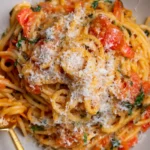
Simple Five-Ingredient Cherry Tomato Pasta
- Total Time: 15 minutes
- Yield: 2 servings 1x
- Diet: Vegetarian
Description
A quick and easy way to make tomato sauce from scratch using sweet ripe cherry tomatoes that burst with sweetness, coming together in just 15 minutes.
Ingredients
- 2 pints cherry tomatoes
- 4 large garlic cloves, thinly sliced
- 1/2 lb dry pasta (spaghetti, bucatini, or penne rigate)
- 1 cup fresh basil, roughly chopped
- 1 cup Parmesan cheese (microbial-rennet), freshly grated
- 6 tbsp extra virgin olive oil
- salt and pepper
Instructions
- Step 1: Bring a large pot of water to boil.
- Step 2: In a cold skillet, heat 4 tbsp of olive oil and garlic over medium heat. Watch the skillet and stir frequently so that the garlic doesn’t brown. This should take about 2-3 minutes. Then add the cherry tomatoes to the skillet and let it cook for about 8 minutes over medium-low heat. Stir the tomatoes frequently and press down on the blistered tomatoes to help release the juices.
- Step 3: While the cherry tomatoes are simmering, cook the pasta al dente according to package instructions. Make sure to reserve about a cup of pasta water and set aside.
- Step 4: Once the tomatoes have softened, add the fresh basil and season with salt and pepper.
- Step 5: Add the drained pasta to the sauce and about 1/3 cup of pasta water and increase the heat to high. Stir and toss the pasta with the sauce vigorously until you get a creamy texture to the sauce. Then remove the skillet from the heat and add the Parmesan and 1 tbsp of extra virgin olive oil. Plate and garnish with more fresh basil and parmesan. Serve immediately.
Notes
Cherry tomatoes are preferred because they are sweeter, riper, and higher in pectin than larger tomatoes, which helps thicken the sauce more quickly.
- Prep Time: 5 minutes
- Cook Time: 10 minutes
- Category: Dinner
- Method: Stovetop
- Cuisine: Italian
Nutrition
- Serving Size: 1 serving
- Calories: 530 kcal
- Sugar: 8 g
- Sodium: 650 mg
- Fat: 33 g
- Saturated Fat: 11 g
- Unsaturated Fat: 22 g
- Trans Fat: 0 g
- Carbohydrates: 48 g
- Fiber: 6 g
- Protein: 18 g
- Cholesterol: 30 mg
Keywords: 5 Ingredient Recipes, Cherry Tomatoes, Easy Dinners, Tomato Pasta