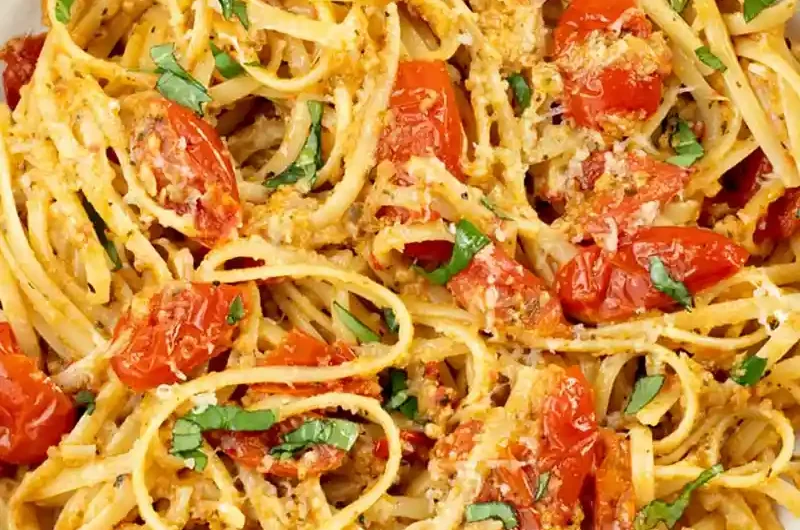
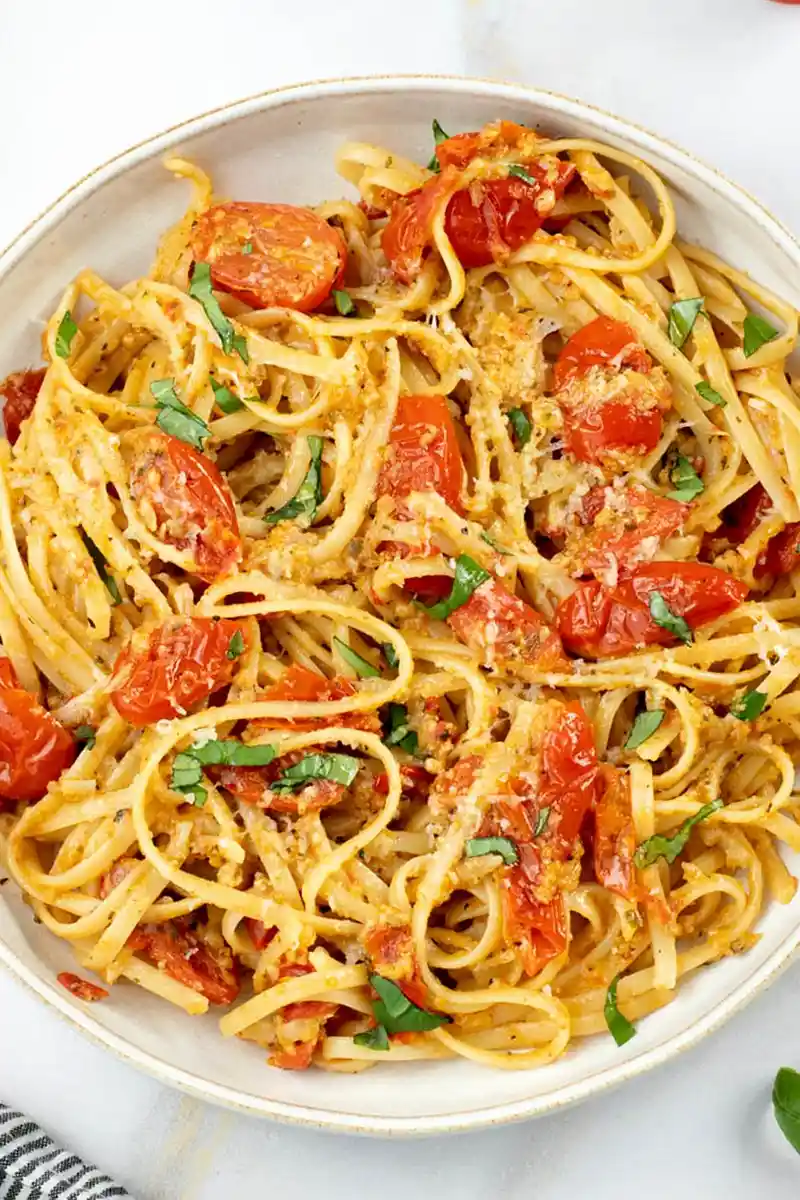
This quick Linguine Positano recipe delivers a restaurant-style experience in just 20 minutes. It combines bursting cherry tomatoes and savory Pecorino Romano for a light yet flavorful pasta meal.
List of ingredients
- 2 large garlic cloves, finely chopped – provides a pungent base.
- 1 onion, finely chopped – adds subtle sweetness.
- 1 tablespoon olive oil – used for sautéing.
- 1 pint cherry tomatoes, cut in halves – the primary sauce component.
- 1 cup Linguine – the traditional pasta choice.
- 1 tablespoon italian seasoning – for a blended herb flavor.
- 1 teaspoon oregano – adds earthy notes.
- 1 cup Pecorino Romano cheese, freshly grated (microbial-rennet) – provides a salty, sharp finish.
- 1/2 teaspoon salt (or to taste) – enhances all flavors.
- 1/2 teaspoon black pepper (or to taste) – adds a slight heat.
- 1 tablespoon fresh basil – used for a fresh aromatic garnish.
step-by-step instructions
- Sauté Aromatics: Heat olive oil in a pan and sauté the finely chopped garlic and onion until they become translucent.
- Cook Tomatoes: While sautéing, cut the cherry tomatoes in half. Add them to the pan, cover with a lid, and cook over high heat for 5 minutes.
- Prepare Pasta and Sauce: Boil Linguine in salted water according to the package directions. Stir one or two ladles of the starchy pasta cooking water into the tomato sauce, then add the Italian seasoning, oregano, and freshly grated Pecorino Romano cheese.
- Combine and Serve: Drain the pasta and toss it directly into the sauce pan. Mix well to coat the noodles, transfer to plates, and season with salt and black pepper before garnishing with fresh basil leaves.
Pasta Selection and Preparation Tips
Achieve the Perfect Al Dente Texture
Cook your linguine for one to two minutes less than the package instructions suggest. This ensures the pasta remains firm and does not overcook when it is tossed in the hot sauce. The residual heat from the pan completes the cooking process.
Utilize Starchy Pasta Water
Reserve a cup of the boiling pasta water before draining. The starch in the water acts as an emulsifier, helping the cheese and oil bind to the pasta. This creates a silkier sauce that clings to the linguine instead of pooling at the bottom of the plate.
Prevent Pasta from Sticking
Use a large pot with plenty of water to allow the pasta to move freely. Stir the linguine occasionally during the first few minutes of boiling to prevent the strands from clumping together. Avoid adding oil to the boiling water, as it can prevent the sauce from adhering.
Selecting Different Pasta Shapes
While linguine is traditional for this recipe, you can use spaghetti or vermicelli for a similar experience. For those who prefer a wider noodle, tagliatelle works well to catch the small tomato pieces. Farfalle is another option if you prefer a bite-sized shape.
Cheese and Flavor Enhancements
Use Microbial Rennet Pecorino
To keep the recipe suitable for all diets, ensure your Pecorino Romano is made with microbial rennet rather than animal rennet. This provides the same sharp, salty profile without the use of animal-derived enzymes. Always check the ingredient label on the packaging.
Substitute with Parmesan Cheese
If Pecorino Romano is unavailable, Parmesan is a suitable alternative. Parmesan is slightly nuttier and less salty than Pecorino, so you may need to slightly increase the added salt. Both cheeses provide the necessary creaminess to the sauce.
Grate Cheese Freshly
Avoid using pre-shredded cheese from a bag, as these often contain cellulose or cornstarch to prevent clumping. Freshly grated cheese melts more smoothly into the sauce. This results in a more cohesive texture without any graininess.
Balance the Saltiness
Pecorino Romano is naturally very salty, so taste the sauce before adding the final salt. Depending on the brand of cheese and the saltiness of your pasta water, you may need less than the recommended 1/2 teaspoon. Always season in stages.
Vegetable Variations and Additions
Incorporate Grape Tomatoes
Grape tomatoes can be used as a direct substitute for cherry tomatoes. They tend to be slightly sweeter and have a thicker skin, which helps them hold their shape longer during the cooking process. Halve them just as you would with cherry tomatoes.
Add Fresh Baby Spinach
Stir in a handful of fresh baby spinach during the final minute of cooking the sauce. The heat from the pan will wilt the spinach quickly without overcooking it. This adds a boost of iron and a vibrant green color to the dish.
Include Sliced Zucchini
Sauté thinly sliced zucchini along with the onions and garlic for extra volume. Ensure the zucchini is sliced thinly so it cooks through in the time it takes for the tomatoes to soften. This adds a mild, summery flavor to the pasta.
Add Sliced Mushrooms
Brown sliced cremini or white button mushrooms in the olive oil before adding the garlic. Mushrooms provide a savory umami depth that complements the sharpness of the Pecorino cheese. Ensure they are well-browned to maximize flavor.
Use Sun-Dried Tomatoes
For a more concentrated tomato flavor, add a tablespoon of chopped sun-dried tomatoes along with the fresh cherry tomatoes. The combination of fresh and dried tomatoes adds complexity to the sauce. If using oil-packed sun-dried tomatoes, you can use a bit of their oil for sautéing.
Dietary Adaptations
Making a Vegan Version
Replace the Pecorino Romano with a plant-based parmesan or a nutritional yeast-based sauce. Use a vegan-certified pasta to ensure the entire meal is dairy-free. You can add a squeeze of lemon juice to mimic the tanginess of the original cheese.
Using Gluten-Free Pasta
Substitute the linguine with a gluten-free alternative made from brown rice, chickpeas, or corn. Be careful not to overcook gluten-free pasta, as it can become mushy very quickly. Follow the package directions strictly and rinse if necessary.
Reducing the Sodium Content
To lower the salt, use a low-sodium vegetable broth instead of pasta water for the sauce. You can also use a salt-free Italian seasoning blend. Reduce the amount of Pecorino Romano and increase the amount of fresh basil to maintain flavor intensity.
Increasing Protein Levels
Add grilled chicken breast or sautéed shrimp to the final dish. For a plant-based protein, add cannellini beans or chickpeas after the tomatoes have cooked. This transforms the light pasta into a more filling main course.
Serving and Pairing Ideas
Pair with Garlic Bread
Serve the pasta alongside toasted baguette slices brushed with garlic butter and parsley. The crunch of the bread provides a contrast to the soft texture of the linguine. It also helps in soaking up the remaining tomato and cheese sauce.
Add a Fresh Side Salad
A simple arugula salad with a lemon vinaigrette balances the richness of the cheese. The peppery flavor of arugula cuts through the saltiness of the Pecorino. Toss in some shaved carrots or cucumber for added texture.
Selecting Non-Alcoholic Pairings
Pair this dish with a chilled sparkling water infused with a slice of lemon or lime. A white grape juice spritzer also complements the acidity of the cherry tomatoes. These options keep the meal refreshing and light.
Storage and Reheating Guide
Refrigerator Storage Times
Place leftover pasta in an airtight container and store it in the refrigerator for up to three days. Ensure the pasta is completely cooled before sealing the container to prevent excess moisture. The sauce may thicken as it cools.
Microwave Reheating Method
Heat the pasta in short intervals of 30 to 60 seconds, stirring in between. Add a teaspoon of water or olive oil before heating to restore the sauce’s creaminess. Avoid overheating, as the cheese can separate and become oily.
Stovetop Reheating Technique
Place the pasta in a saucepan over low heat with a splash of water. Stir gently and constantly to prevent the pasta from sticking to the pan. This method better preserves the texture of the linguine compared to the microwave.
Why Freezing is Not Recommended
Do not freeze this recipe because the cherry tomatoes lose their structural integrity. Upon thawing, the tomatoes often become watery and mushy, ruining the sauce’s consistency. The cheese may also separate from the sauce during the freezing and thawing process.
Troubleshooting Common Issues
Fixing a Sauce That is Too Thick
If the sauce becomes too dry or thick after adding the cheese, stir in an additional tablespoon of pasta water. Add the water one teaspoon at a time until the desired consistency is reached. This loosens the starches without diluting the flavor.
Preventing Burnt Garlic
Keep the heat at a medium level when sautéing the garlic and onions. Garlic burns quickly and can turn bitter if the pan is too hot. Add the tomatoes as soon as the garlic becomes fragrant to lower the pan’s temperature.
Managing Tomato Texture
If you prefer your tomatoes to be whole, do not cover the pan while cooking. Covering the pan traps steam, which breaks down the tomato walls faster and creates a saucier consistency. Leave the lid off for a firmer tomato bite.
Preventing Cheese Clumping
Ensure the pasta water is hot when you add the cheese to the sauce. Adding cheese to a cold or lukewarm pan can cause it to clump together in balls. Stir vigorously as you sprinkle the cheese in to ensure it melts evenly.
Frequently Asked Questions
Can I use dried basil instead of fresh?
You can use dried basil, but the flavor is more concentrated and less bright. Use about one-third of the amount of dried basil compared to fresh. For the best results, stir dried basil in during the sautéing phase rather than as a garnish.
Which type of onion works best?
White or yellow onions are recommended for their balanced and subtle flavor. Red onions can be used but may change the color of the sauce slightly. Shallots are an excellent alternative for a more delicate, gourmet taste.
Can I use a different oil?
Extra virgin olive oil is best for the authentic flavor, but avocado oil is a good neutral alternative. Avoid using butter for the initial sauté as it has a lower smoke point and can burn. Avoid using highly processed vegetable oils if you want a cleaner taste.
How do I know when the garlic is translucent?
The garlic is translucent when it loses its stark white color and becomes slightly see-through. It should be fragrant but not brown. This usually takes about 1 to 2 minutes over medium heat.
Is this recipe suitable for a quick weeknight meal?
Yes, because the total time from preparation to plating is only 20 minutes. Most of the work is done while the pasta is boiling. It is an efficient way to get a high-quality meal on the table quickly.
Print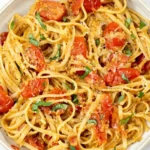
Linguine Positano
- Total Time: 20 minutes
- Yield: 2 servings 1x
- Diet: Vegetarian
Description
This Linguine Positano has such a flavorful sauce, made of delicious sun-drenched cherry tomatoes and freshly grated Pecorino Romano.
Ingredients
- 2 large garlic cloves, finely chopped
- 1 onion, finely chopped
- 1 tablespoon olive oil
- 1 pint cherry tomatoes, cut in halves
- 1 cup Linguine
- 1 tablespoon italian seasoning
- 1 teaspoon oregano
- 1 cup microbial-rennet Pecorino Romano cheese, freshly grated
- 1/2 teaspoon salt
- 1/2 teaspoon black pepper
- 1 tablespoon fresh basil
Instructions
- Step: Sauté the finely chopped garlic and onion in a hot pan with the olive oil.
- Step: Cut the cherry tomatoes in half. Once the garlic and onion are translucent, add the cherry tomato halves to the pan. Cover and cook over high heat for 5 minutes.
- Step: Cook the Linguine in a pan of boiling water for the time indicated on the packaging. Add one or two ladles of pasta cooking water to the sauce pan, along with the Italian seasoning, oregano and freshly grated Pecorino Romano cheese.
- Step: Drain the pasta, add them to the sauce pan and mix well. Transfer to plates, add salt, black pepper and serve with a few fresh basil leaves.
Notes
If you don’t find Pecorino Romano cheese, you can use Parmesan cheese instead. Store in an airtight container in the fridge for 2 to 3 days. Reheat in the microwave for 1-1.5 minutes or in a saucepan on low heat, stirring frequently.
- Prep Time: 5 minutes
- Cook Time: 15 minutes
- Category: Main Course, Pasta
- Method: Sautéing
- Cuisine: American
Nutrition
- Serving Size: 1 serving
- Calories: 796 kcal
- Sugar: 12 g
- Sodium: 633 mg
- Fat: 23 g
- Saturated Fat: 10 g
- Unsaturated Fat: 13 g
- Trans Fat: 0 g
- Carbohydrates: 113 g
- Fiber: 8 g
- Protein: 35 g
- Cholesterol: 52 mg
Keywords: delicious, easy, quick, simple, Carrabba’s copycat