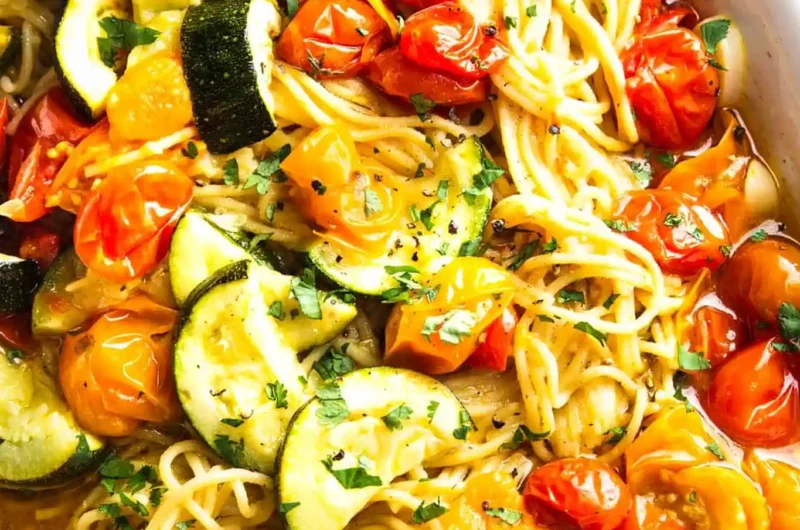
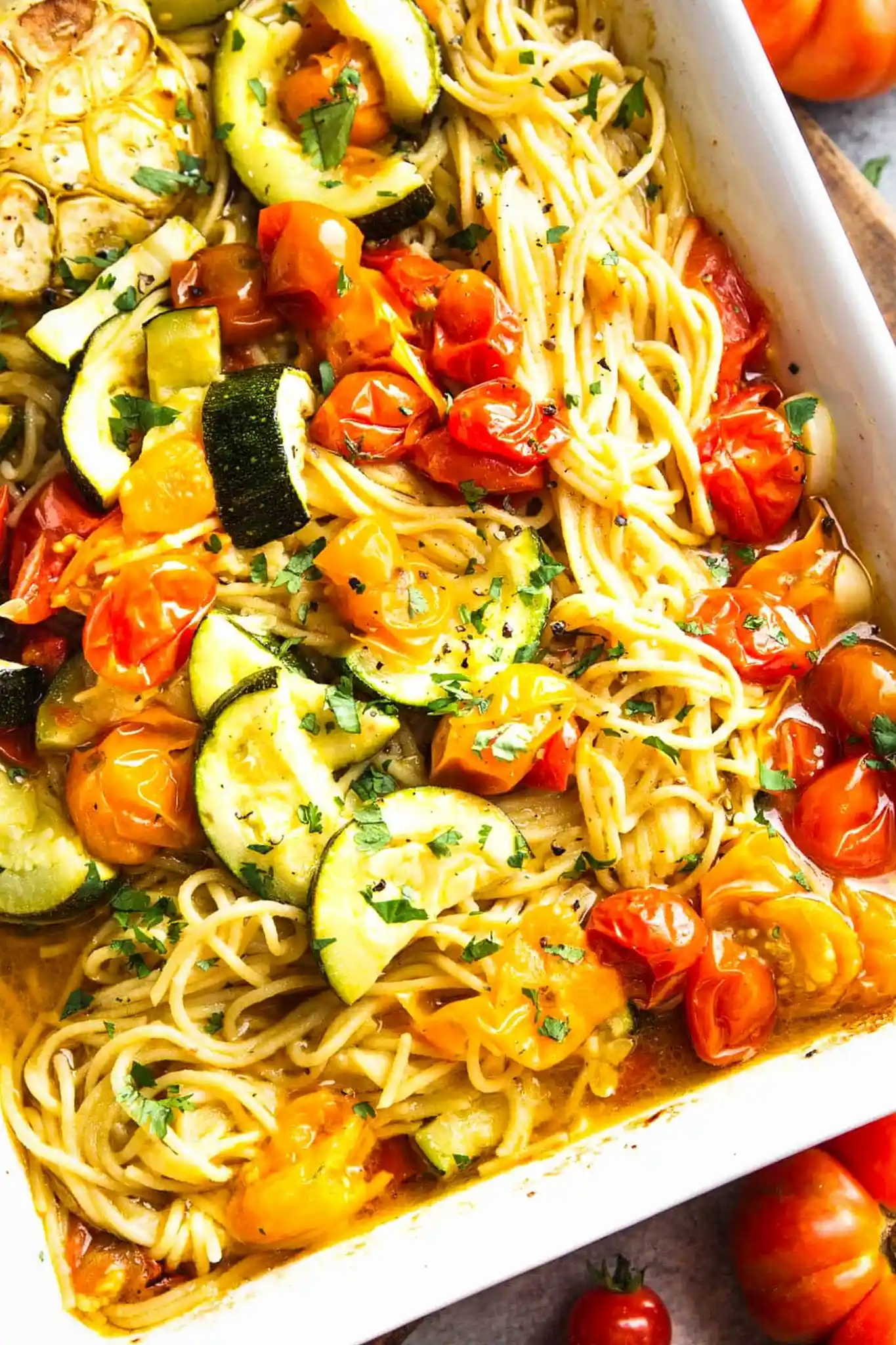
This roasted vegetable pasta combines oven-baked zucchini, tomatoes, and garlic for a simple weeknight meal. It uses gluten-free pasta to create a light yet satisfying dinner perfect for summer.
List of ingredients
- 8 oz gluten-free pasta (chickpea pasta is recommended)
- 2-3 cups whole cherry tomatoes or diced garden tomatoes
- 2 medium zucchini, sliced (peeled or unpeeled)
- 1 whole head of garlic, top trimmed to expose cloves
- 3/4 cup extra virgin olive oil – ensures the gluten-free noodles remain moist
- Fresh oregano sprigs, thyme, or rosemary – for aromatic roasting
- Salt and pepper to taste
- Fresh basil, cilantro, or parsley for garnish
step-by-step instructions
- Prepare the base: Place the tomatoes in a 9×5 baking dish to cover the bottom. Position the trimmed head of garlic among the tomatoes, ensuring the root side remains intact. Drizzle with a portion of the olive oil and season with salt and pepper.
- Layer and bake: Arrange zucchini slices over the tomatoes. Pour the remaining olive oil over the vegetables and top with fresh herb sprigs. Bake at 425F for 35-40 minutes.
- Cook the pasta: Boil the gluten-free pasta according to package instructions when the vegetables are halfway through roasting. Drain and rinse the pasta with cold water, reserving about one cup of the cooking water.
- Combine and serve: Toss the cooked pasta directly into the baking dish with the roasted vegetables. Squeeze out several roasted garlic cloves and mix them into the pasta. Garnish with fresh basil or preferred herbs before serving.
Alternative Vegetable Combinations
Using Summer Squash and Eggplant
Yellow summer squash can be swapped for zucchini or used in combination. Dice eggplant into small cubes and roast them alongside the tomatoes for a deeper, meatier texture.
Incorporating Bell Peppers and Carrots
Red, yellow, or orange bell peppers add sweetness and vibrant color. Slice carrots thinly into rounds to ensure they soften at the same rate as the zucchini.
Adding Broccoli and Cauliflower
Small broccoli or cauliflower florets provide a nutty flavor. Add these to the dish during the last 20 minutes of roasting to prevent them from overcooking.
Using Asparagus Tips
Fresh asparagus tips add a distinct snap to the dish. Place them on top of the zucchini layer for the final 15 minutes of the baking process.
Experimenting with Kale or Spinach
Hearty greens like kale can be tossed in for the last 5 minutes of roasting. Fresh spinach can be stirred in at the end, allowing the heat of the pasta to wilt it naturally.
Choosing the Right Gluten-Free Pasta
Chickpea Pasta for Added Protein
Chickpea pasta is a nutrient-dense option that provides more protein and fiber than grain-based versions. It has a slightly nuttier taste that complements roasted garlic.
Brown Rice Pasta for Texture
Brown rice pasta offers a texture closest to traditional wheat pasta. It is generally lighter in flavor and absorbs the vegetable juices efficiently.
Corn-Based Pasta for Firmness
Corn pasta tends to hold its shape better during reheating. It is a good choice if you plan to store leftovers for several days.
Quinoa Pasta for Nutrients
Quinoa pasta is naturally gluten-free and offers a complete amino acid profile. It has a slightly grainier texture that works well with chunky vegetable sauces.
Flavor Enhancements and Additions
Integrating Hard Cheeses
For a salty finish, sprinkle microbial-rennet parmesan or pecorino romano over the finished dish. These cheeses add a savory depth to the sweet roasted tomatoes.
Substituting with Pesto
Stir in two tablespoons of fresh basil pesto after tossing the pasta with the vegetables. This increases the herbal intensity and adds a creamy consistency.
Using Lemon Juice for Brightness
A squeeze of fresh lemon juice over the final dish cuts through the richness of the olive oil. This acidity balances the sweetness of the roasted zucchini.
Adding Red Pepper Flakes
Add a pinch of crushed red pepper flakes to the oil before roasting. This provides a subtle heat that complements the roasted garlic.
Adding Protein for Extra Heartiness
Incorporating Sliced Chicken Breast
Pre-cooked sliced chicken breast can be tossed in at the end. Alternatively, roast small chicken cubes with the vegetables for 20-25 minutes.
Using Plant-Based Meatballs
Roasted plant-based meatballs can be added to the baking dish. Bake them alongside the zucchini and tomatoes for a more filling meal.
Adding Canned Chickpeas
Drain and rinse canned chickpeas and roast them with the vegetables. They become slightly crisp and add a satisfying plant-based protein source.
Mixing in Toasted Pine Nuts
Toasted pine nuts add a buttery crunch to the soft vegetables. Sprinkle them on top just before serving to maintain their texture.
Storage and Reheating Guidelines
Refrigeration Procedures
Store leftover pasta in an airtight glass container in the refrigerator. The dish remains fresh and safe to eat for up to one week.
Stovetop Reheating Method
Heat the pasta over medium heat in a skillet. Add a splash of water or vegetable broth to loosen the sauce as the noodles warm through.
Microwave Reheating Tips
Place the pasta in a microwave-safe dish and cover it with a damp paper towel. Heat in 1-minute intervals, stirring in between to ensure even warming.
Reviving Dry Noodles
Gluten-free pasta often absorbs liquid during storage. Stir in a tablespoon of olive oil or reserved pasta water during reheating to restore the original juiciness.
Common Cooking Troubleshooting
What to do if the sauce is too watery?
If the tomatoes release too much liquid, simmer the mixture in a pan for a few minutes before adding the pasta. Alternatively, stir in a tablespoon of cornstarch slurry to thicken.
How to prevent mushy zucchini?
Ensure the zucchini is sliced into consistent thicknesses. Avoid overcrowding the pan, as this leads to steaming rather than roasting.
What if the garlic is burnt?
Check the garlic head halfway through roasting. If the top is browning too quickly, cover the head with a small piece of aluminum foil.
How to fix bland tasting pasta?
Increase the amount of salt and pepper during the roasting phase. A dash of nutritional yeast can also add a savory, cheesy flavor without using dairy.
Serving and Pairing Ideas
Pairing with Artisan Bread
Serve this dish with toasted sourdough or a crusty baguette. Use the bread to soak up the remaining garlic-infused olive oil from the bowl.
Complementary Fresh Salads
A side of arugula salad with a lemon vinaigrette balances the roasted flavors. A caprese salad with fresh mozzarella and basil also pairs well.
Non-Alcoholic Beverage Pairings
Sparkling water with a twist of lime provides a refreshing contrast. An iced herbal tea with mint is also a suitable choice for a summer dinner.
Frequently Asked Questions
Can I use dried herbs instead of fresh?
Yes, you can use dried oregano or thyme. Use about one-third of the amount of dried herbs compared to the fresh sprigs requested in the recipe.
Is this recipe suitable for vegan diets?
The base recipe is naturally vegan. Ensure the gluten-free pasta you choose does not contain eggs to keep the dish entirely plant-based.
Can I roast the vegetables in a sheet pan?
A sheet pan works well but may cause the liquids to evaporate faster. If using a sheet pan, you may need to add more olive oil or pasta water at the end.
Do I really need to rinse the gluten-free pasta?
Rinsing gluten-free pasta removes excess surface starch. This prevents the noodles from becoming gummy or sticking together in the dish.
Print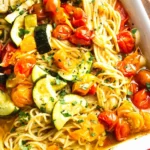
Roasted Vegetable Pasta
- Total Time: 60 minutes
- Yield: 4 servings 1x
- Diet: Gluten-Free
Description
This easy Roasted Vegetable Pasta screams summer! Tender roasted tomatoes, garlic, and zucchini are mixed with gluten free pasta to create a juicy, saucy, and herbaceous weeknight dinner
Ingredients
- 8 oz gluten-free pasta
- 2–3 cups whole cherry tomatoes, or garden tomatoes diced or sliced
- 2 medium zucchini, peeled or unpeeled
- 1 whole head of garlic, top trimmed
- 3/4 cup extra virgin olive oil
- Fresh oregano sprigs, thyme or rosemary
- Salt and pepper, to taste
- Fresh basil, cilantro or parsley for garnishing
Instructions
- Step 1: In a large baking dish 9×5 add the tomatoes to cover the bottom of the dish. Snuggle in a whole head of garlic, top removed (not the root side). Drizzle veggies with a generous amount of olive oil, a pinch of salt and pepper.
- Step 2: Top tomatoes with a layer of zucchini slices. Pour the remain olive oil and top veggies with your fresh herbs of choice. Bake at 425F degrees for 35-40 minutes.
- Step 3: Cook the pasta according to package instructions when the veggies are about half way through roasting. Drain and rinse pasta with cold water. Reserve about a cup of pasta water in case you need for the sauce.
- Step 4: Toss pasta in with the roasted vegetables. For extra flavor pull out a few garlic cloves and toss around with the pasta and veggies. Top with fresh basil or fresh herb of choice and serve.
Notes
You may use anywhere from 1/2 cup to 3/4 cup of olive oil. The tomatoes will release a good amount of liquids to create a tasty sauce. Optional: add a 1/2 cup of pasta water to the casserole if you need more liquids.
- Prep Time: 20 minutes
- Cook Time: 40 minutes
- Category: Dinner
- Method: Baking
- Cuisine: American
Nutrition
- Serving Size: 1 serving
- Calories: 591 kcal
- Sugar: 4 g
- Sodium: 12 mg
- Fat: 42 g
- Saturated Fat: 6 g
- Unsaturated Fat: 34 g
- Trans Fat: 0 g
- Carbohydrates: 52 g
- Fiber: 3 g
- Protein: 5 g
- Cholesterol: 0 mg
Keywords: Gluten-Free Pasta, Gluten-Free Recipes, Pasta, Roasted Vegetable Pasta, vegetables, Vegetarian