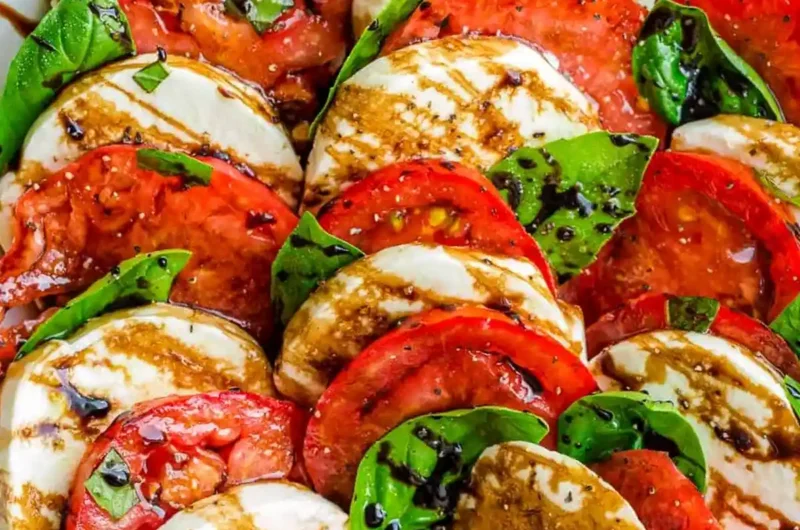
This classic Italian salad combines the freshness of ripe tomatoes, creamy mozzarella, and fragrant basil. It is a simple yet elegant dish that works perfectly as a side or a light summer appetizer.
List of ingredients
- 1 1/2 lbs Ripe tomatoes – 3-4 medium, sliced 1/4″ thick
- 12-16 oz Fresh mozzarella – sliced 1/4″ thick
- 1 bunch Fresh basil – approximately 1/3 cup of leaves
- 3 Tbsp Extra virgin olive oil – for drizzling
- 1/2 tsp Sea salt – or adjusted to taste
- 1/4 tsp Black pepper – or adjusted to taste
- 2 Tbsp Balsamic glaze – optional, added to taste
step-by-step instructions
- Layer the base: Arrange slices of tomatoes on a serving platter in an overlapping pattern.
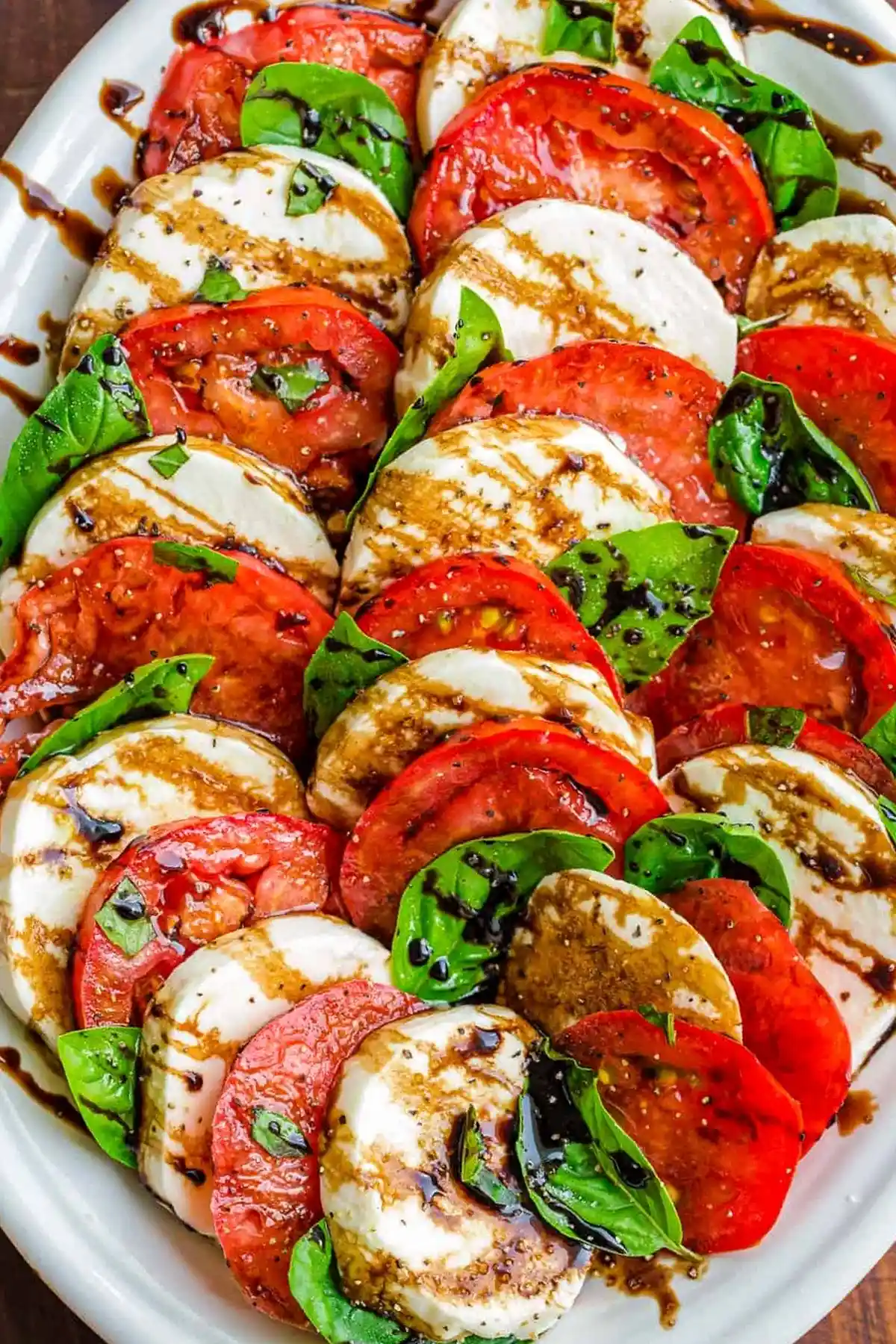
- Add cheese: Tuck slices of mozzarella cheese between each tomato slice so both ingredients remain visible.
- Insert basil: Place whole basil leaves carefully between the cheese and tomato slices.
- Final arrangement: Adjust the slices to ensure every layer of tomato, cheese, and basil is visible to the eye.
- Season and dress: Just before serving, season the salad generously with sea salt and black pepper.
- Finish with oil and glaze: Drizzle the extra virgin olive oil and 2 tablespoons of balsamic glaze over the top.
Optimizing Your Produce Selection
Choosing Beefsteak Tomatoes
Beefsteak tomatoes are ideal for this recipe because of their large size and meaty texture. They provide wide slices that create a stable base for the mozzarella and basil. Look for fruits that are deep red and feel heavy for their size.
Using Heirloom Tomato Varieties
Heirloom tomatoes offer a wider range of colors and complex flavors compared to standard varieties. Using a mix of yellow, purple, and red heirlooms makes the platter visually stunning. Ensure they are ripe but firm enough to be sliced without collapsing.
Selecting Fresh Mozzarella
Choose fresh mozzarella stored in water or brine to ensure maximum creaminess and moisture. Whole milk mozzarella provides the most traditional flavor profile for an authentic Caprese. If buying pre-sliced, check that the slices are uniform in thickness for a neat presentation.
Identifying High-Quality Basil
Genovese basil is the preferred choice due to its large, tender leaves and sweet aroma. Avoid leaves that have turned black or show signs of wilting. Fresh, bright green leaves provide the best contrast against the white cheese and red tomatoes.
Evaluating Tomato Ripeness
Avoid tomatoes that are overly soft or mushy, as they will release too much liquid once salted. The ideal tomato should give slightly under gentle pressure but spring back. Overripe tomatoes can make the entire platter watery and ruin the texture.
Ingredient Substitutions and Alternatives
Substituting Avocado for Cheese
For a dairy-free version, replace the mozzarella slices with ripe avocado slices. Avocado provides a similar creaminess and richness that complements the acidity of the tomatoes. Slice the avocado just before assembly to prevent browning.
Using Baby Arugula Instead of Basil
If fresh basil is unavailable, baby arugula is an excellent substitute. Arugula adds a peppery bite that cuts through the richness of the cheese and oil. Use small handfuls of greens tucked between the layers for a similar effect.
Replacing Tomatoes with Fresh Peaches
Sliced peaches can be used in place of tomatoes for a sweet and savory twist. Ensure the peaches are ripe but firm to maintain their structure. This variation is particularly refreshing during the peak of late summer.
Using Pesto Instead of Balsamic Glaze
If you prefer a more herbal flavor, swap the balsamic glaze for a few dollops of fresh basil pesto. Pesto adds concentrated garlic and pine nut flavors that enhance the overall dish. Drizzle it unevenly over the top for a rustic look.
Alternative Cheese Options
Burrata can be used instead of sliced mozzarella for a more indulgent experience. Place the burrata ball in the center and break it open so the creamy interior flows over the tomatoes. Alternatively, use mini mozzarella balls, known as Bocconcini, for a chunkier salad style.
Professional Plating Techniques
Creating the Overlapping Shingle Effect
Lay the tomato slices in a slightly overlapping row across the platter. This shingle effect prevents the ingredients from sliding around and ensures a compact look. It also allows the dressing to pool slightly in the gaps for better flavor distribution.
Assembling Caprese Skewers
For an appetizer version, thread a cherry tomato, a mini mozzarella ball, and a folded basil leaf onto a toothpick. This makes the salad portable and easier to eat at parties. Arrange the skewers on a flat tray and drizzle the dressing over them collectively.
Managing Platter Space
Use a wide, flat platter rather than a deep bowl to keep the layers visible. A large surface area prevents the ingredients from stacking too high, which would make the salad difficult to serve. Leave a small margin around the edge of the platter for a clean presentation.
Balancing the Colors
Ensure the green, white, and red colors are evenly distributed across the dish. This visual balance is a hallmark of the classic Italian presentation. Avoid crowding too many basil leaves in one area to maintain the color contrast.
Storage and Make-Ahead Guidance
Pre-Slicing and Chilling Ingredients
You can slice the tomatoes and mozzarella up to four hours before serving. Pat the slices dry with paper towels to remove excess moisture. Store them on a platter in the refrigerator, covered lightly with plastic wrap to avoid condensation.
Storing Basil Separately
Never store the basil leaves on the platter with the other ingredients if prepping in advance. Basil wilts quickly when exposed to moisture or cold temperatures. Keep the leaves in a dry container at room temperature until the final assembly.
Managing Water Release
Salt draws moisture out of tomatoes through osmosis, which can lead to a watery platter. To avoid this, wait to season the salad until the very last moment. This keeps the tomatoes firm and the dressing concentrated.
Ideal Window for Consumption
Once the salt, oil, and glaze are added, the salad should be eaten within 30 to 60 minutes. After this time, the basil will begin to darken and the tomatoes will soften. Serving immediately ensures the freshest taste and appearance.
Pairing and Serving Ideas
Adding Protein Side Dishes
Pair this salad with grilled chicken breasts or pan-seared cod for a full meal. The acidity of the tomatoes and balsamic glaze cuts through the richness of the proteins. Shrimp skewers grilled with lemon and garlic are also a complementary choice.
Choosing the Best Bread Accompaniments
Serve the salad with warm focaccia or toasted sourdough bread. The bread is perfect for soaking up the remaining olive oil and tomato juices left on the platter. Brush the bread with a little garlic butter before toasting for extra flavor.
Combining with Grain Dishes
This salad pairs exceptionally well with a creamy risotto or a hearty lasagna. The freshness of the raw vegetables balances the heavy, cheesy nature of baked pasta dishes. It serves as a palate cleanser between bites of rich food.
Light Lunch Combinations
For a light lunch, serve the Caprese salad alongside a bowl of clear vegetable broth. This combination provides a balance of temperature and texture. Add a few olives or marinated artichokes to the side for added depth.
Seasoning and Dressing Tips
The Role of Extra Virgin Olive Oil
Use the highest quality extra virgin olive oil available to enhance the flavor. A cold-pressed oil with a peppery finish complements the sweetness of the tomatoes. Avoid refined oils, as they lack the aromatic qualities needed for this raw preparation.
Using Flaky Sea Salt for Texture
Flaky sea salt, such as Maldon, provides a satisfying crunch and bursts of flavor. Regular table salt can dissolve too quickly and may over-salt the dish. Apply the salt from a height to ensure an even distribution across all slices.
Freshly Cracked Black Pepper
Use a pepper mill to grind black pepper immediately before serving. Freshly cracked pepper has a more pungent and complex aroma than pre-ground powder. It provides a subtle heat that balances the creamy mozzarella.
Applying Balsamic Glaze Precisely
Use a squeeze bottle to apply the balsamic glaze in thin, artistic lines. This prevents the glaze from overwhelming the other ingredients. Remember that the glaze is optional, so start with a small amount and add more based on preference.
Troubleshooting Common Issues
Preventing Sogginess
If your tomatoes are particularly juicy, slice them and let them sit on paper towels for five minutes before plating. This removes surface moisture that would otherwise dilute the dressing. Ensure the mozzarella is also patted dry if it was stored in liquid.
Fixing Bland Tomatoes
If the tomatoes lack flavor, increase the amount of sea salt slightly. Salt enhances the natural sugars and acidity of the fruit. You can also add a very small pinch of sugar to the tomatoes to mimic the sweetness of peak-summer produce.
Dealing with Brown Basil
To prevent basil from browning, avoid cutting the leaves with a metal knife. Tearing the leaves by hand or using them whole prevents the edges from oxidizing. If the leaves look dull, a light brush of olive oil can restore their shine.
Adjusting Glaze Consistency
If your store-bought balsamic glaze is too thick, whisk in a teaspoon of warm water or balsamic vinegar. This makes it easier to drizzle and prevents it from clumping on the cheese. Stir well until the consistency is smooth and pourable.
Frequently Asked Questions
Can I use cherry tomatoes?
Yes, you can use cherry or grape tomatoes by slicing them in half. Instead of layering slices, toss them in a bowl with mini mozzarella pearls and whole basil leaves for a chopped salad version.
What is the difference between balsamic vinegar and glaze?
Balsamic vinegar is a thin, acidic liquid, while balsamic glaze is a reduction that is thicker and sweeter. The glaze clings to the ingredients better and provides a more concentrated flavor.
How long does this salad stay fresh?
The assembled and dressed salad is best consumed within one hour. If stored undressed in the fridge, the sliced components can last for up to 24 hours, though the flavor is best on day one.
Do I have to use sea salt?
No, you can use kosher salt or standard table salt. However, sea salt is recommended for its crystalline structure and cleaner taste, which better complements fresh raw vegetables.
Can I make this vegan?
Yes, replace the mozzarella with slices of firm avocado or a plant-based mozzarella alternative. Ensure the balsamic glaze used does not contain any animal-derived thickeners.
Is this salad gluten-free?
Yes, the ingredients used in the Caprese salad are naturally gluten-free. Just ensure that any accompanying bread or side dishes are also gluten-free if required for dietary needs.
} Print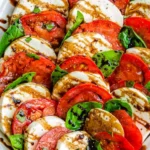
Fresh Caprese Salad with Balsamic Glaze
- Total Time: 15 minutes
- Yield: 6 servings 1x
- Diet: Vegetarian, Gluten Free
Description
Caprese Salad is an easy classic Italian recipe. The combination of ripe tomatoes, fresh mozzarella cheese, and basil are a winning combination, perfectly complemented by a drizzle of balsamic glaze.
Ingredients
- 1 1/2 lbs Ripe tomatoes, sliced 1/4” thick
- 12–16 oz Fresh microbial-rennet mozzarella, sliced 1/4” thick
- 1 bunch Fresh basil (1/3 cup basil leaves)
- 3 Tbsp Extra virgin olive oil
- 1/2 tsp Sea salt
- 1/4 tsp Black pepper
- 2 Tbsp Balsamic glaze (optional)
Instructions
- Step 1: Start by layering slices of tomatoes on a serving platter. Tuck slices of cheese between each tomato so both are visible then tuck whole basil leaves between the cheese and tomatoes. Arrange the slices so you can see every layer.
- Step 2: Just before serving, season generously with salt and pepper, drizzle all over with extra virgin olive oil, and drizzle with 2 Tbsp balsamic glaze or add it to taste.
Notes
To keep the salad fresh, add the salt and dressing just before serving to prevent the tomatoes from releasing too much juice. You can slice and arrange tomatoes and cheese up to 4 hours in advance, keeping them refrigerated and covered.
- Prep Time: 15 minutes
- Cook Time: 0 minutes
- Category: Salad
- Method: Assembly
- Cuisine: Italian
Nutrition
- Serving Size: 1 serving
- Calories: 261 kcal
- Sugar: 5 g
- Sodium: 555 mg
- Fat: 20 g
- Saturated Fat: 8 g
- Unsaturated Fat: 12 g
- Trans Fat: 0 g
- Carbohydrates: 8 g
- Fiber: 1 g
- Protein: 14 g
- Cholesterol: 45 mg
Keywords: caprese salad, Italian salad, tomato mozzarella basil, summer salad