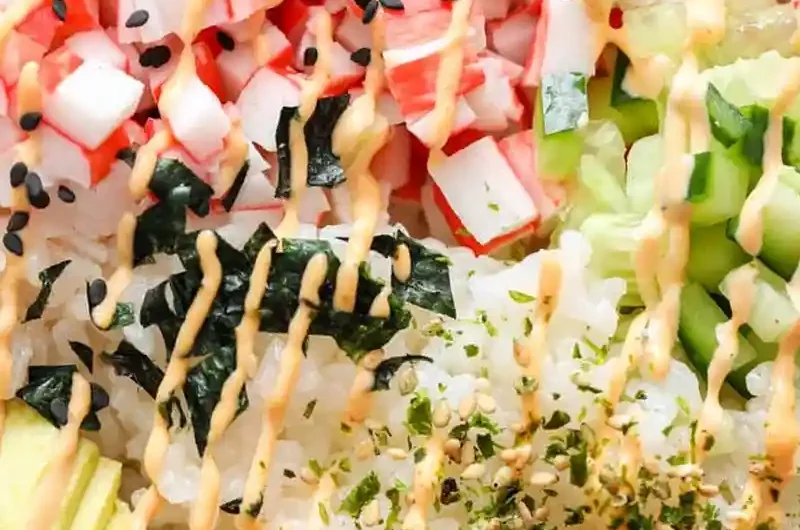
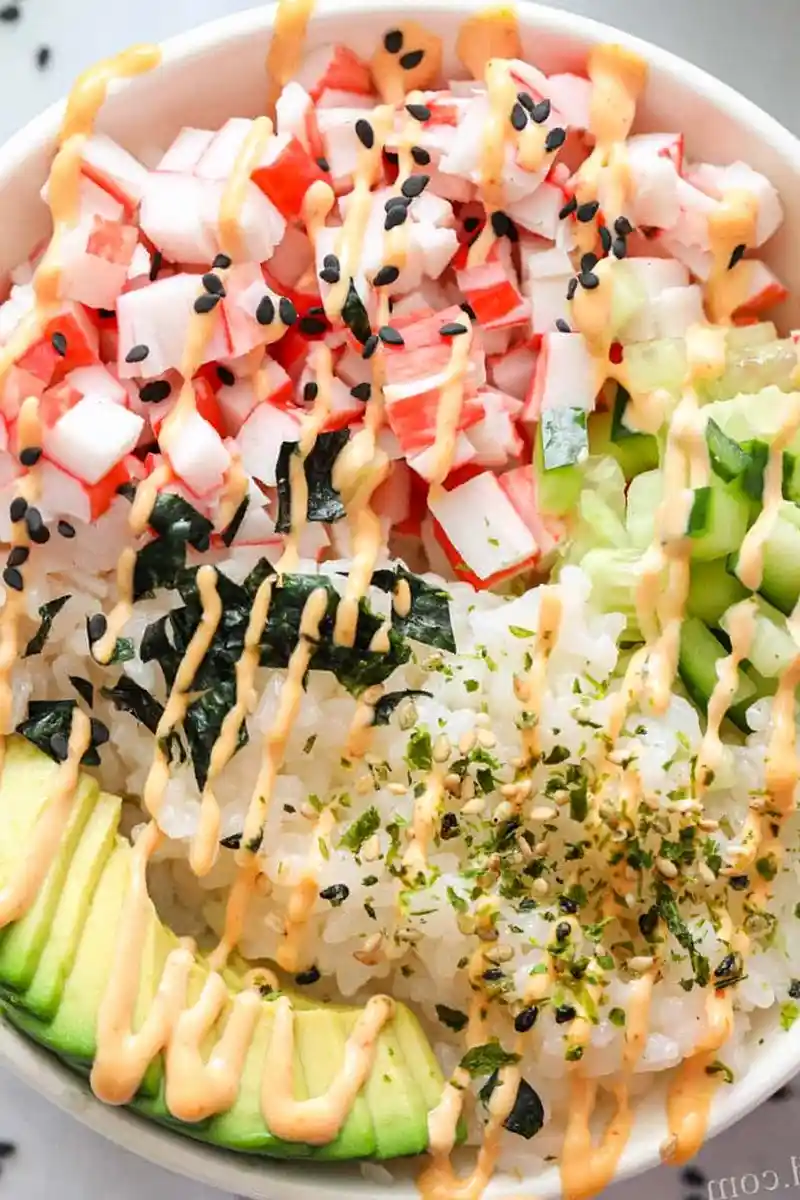
These California sushi bowls offer all the fresh, savory flavors of a classic sushi roll without the difficulty of rolling. It is a light, customizable meal that combines tangy rice, creamy avocado, and savory imitation crab.
List of ingredients
- 1 1/2 cups dry Calrose Sushi Rice – short grain for maximum stickiness.
- 2 cups water – for cooking the rice.
- 1/4 cup seasoned rice vinegar (Marukan) – adds essential tang and sweetness.
- 1/4 cup Japanese mayonnaise – richer and sweeter than standard mayo.
- 2 teaspoons sriracha – provides a spicy kick to the sauce.
- 8 oz imitation crab – chopped into small, bite-sized pieces.
- 1/2 cup diced English cucumber – for a crisp, fresh contrast.
- 1-2 nori sheets – chopped or crumbled into small pieces.
- 1 large avocado – peeled and sliced into thin wedges.
- Black and toasted sesame seeds – used for a nutty garnish.
- 1/4 cup low-sodium soy sauce – served on the side or drizzled over.
- Nori Furikake – a savory Japanese seasoning for extra flavor.
step-by-step instructions
- Cook the Rice: Rinse 1 1/2 cups of sushi rice in a mesh sifter until the water runs clear. Add the rinsed rice and 2 cups of water to a rice cooker and start the cooking cycle.
- Season the Grains: Once cooked, transfer the hot rice to a rimmed baking sheet. Pour 1/4 cup of seasoned rice vinegar over the rice and gently fold it in using a rice paddle to avoid mashing the grains. Allow the rice to cool completely.
- Prepare Spicy Mayo: In a small bowl, whisk together 1/4 cup Japanese mayonnaise and 2 teaspoons of sriracha until smooth. Set this sauce aside.
- Prep Fillings: Chop 8 ounces of imitation crab meat and 1/2 cup of English cucumber into small, uniform pieces. Crumble the nori sheets into small flakes.
- Assemble the Bowl: Divide the cooled sushi rice into bowls. Top the rice with the chopped crab, diced cucumber, and sliced avocado.
- Final Touches: Drizzle the spicy mayonnaise over the top. Garnish with crumbled nori, sesame seeds, and a sprinkle of furikake. Serve with soy sauce on the side.
Perfecting Your Sushi Rice Base
The Importance of Rinsing Your Rice
Rinsing the rice in a mesh sifter removes excess surface starch. This prevents the rice from becoming overly gummy or clumping into a single mass during the cooking process. Continue rinsing until the water flows clear for the best texture.
Using a Rice Paddle for Folding
A rice paddle is designed to slice through the grains rather than crush them. Use a gentle folding motion when adding the seasoned rice vinegar. This preserves the individual structure of each grain while ensuring even distribution of the vinegar.
Why You Must Cool the Rice
Adding toppings to hot rice can cause the mayonnaise to melt and the avocado to soften too quickly. Cooling the rice on a baking sheet allows heat to escape rapidly. This ensures the bowl maintains a refreshing temperature and a clean presentation.
Selecting the Right Rice Variety
Calrose or other short-grain sushi rice is necessary for the correct consistency. These varieties have a higher starch content than long-grain rice, which creates the characteristic stickiness. If you use medium or long-grain rice, the grains will remain separate and won’t hold the toppings as well.
Protein and Vegetable Alternatives
Substituting Fresh Salmon or Tuna
You can replace imitation crab with sushi-grade raw salmon or ahi tuna. Cut the fish into small cubes to match the size of the cucumber. This transforms the bowl into a more traditional sashimi-style dish.
Using Cooked Shrimp
Cooked, chilled shrimp is an excellent alternative for those who prefer a different seafood profile. Chop the shrimp into quarters or use small bay shrimp. This pairing works exceptionally well with the spicy mayo and avocado.
Adding Crunch with Carrots or Radish
If you want more texture, try adding julienned carrots or thinly sliced daikon radish. These vegetables provide an extra snap that complements the soft rice and crab. Ensure they are cut thinly to keep the bowl balanced.
Incorporating Sweet Mango Slices
Adding fresh diced mango provides a tropical sweetness that cuts through the richness of the mayonnaise. Mango pairs naturally with avocado and imitation crab. It adds a bright color and a refreshing flavor contrast to the savory elements.
Customizing Sauces and Garnishes
Making Homemade Japanese Mayo
If you do not have Kewpie or Japanese mayonnaise, you can make a substitute. Mix standard mayonnaise with a small amount of sugar and rice vinegar. This mimics the tangier and sweeter profile of the authentic version.
Adjusting the Heat Level
The amount of sriracha can be adjusted based on your spice preference. For a milder sauce, use one teaspoon; for more heat, increase it to a tablespoon. You can also add a drop of toasted sesame oil for deeper flavor.
Experimenting with Seaweed Types
While nori sheets are traditional, you can use shredded wakame seaweed salad for a different texture. Wakame is softer and has a saltier, more oceanic taste. It adds a vibrant green color to the bowl.
Toasting Sesame Seeds at Home
Toasting raw sesame seeds in a dry pan over medium heat enhances their nutty aroma. Stir them constantly for 2-3 minutes until they turn golden brown. This simple step significantly improves the overall flavor of the garnish.
Professional Assembly and Presentation
Uniform Cutting for Balanced Bites
Aim to chop the crab and cucumber into similar small dimensions. When ingredients are uniform in size, you get a bit of everything in every spoonful. This prevents one ingredient from dominating the taste and texture of the bite.
Preventing Avocado Oxidation
Avocados brown quickly once exposed to air. To prevent this, toss your avocado slices in a tiny amount of lemon or lime juice. This acidity keeps the fruit bright green until the bowl is served.
Layering for Better Texture
Place the rice at the bottom and arrange the toppings in distinct clusters on top rather than mixing them. This allows the eater to control the ratio of ingredients. It also makes the bowl more visually appealing for guests.
Storage and Meal Prep Strategies
Storing Rice for Future Use
Cooked sushi rice can be stored in an airtight container in the refrigerator for up to two days. To keep it from hardening, sprinkle a little water on the rice before reheating. This restores the moisture and stickiness.
Freezing Cooked Sushi Rice
For longer storage, freeze cooked rice in heavy-duty freezer bags for up to two months. Defrost the rice slowly in the refrigerator overnight before using. Avoid microwaving frozen rice directly to prevent uneven hot spots.
Prepping the Spicy Mayo in Advance
The spicy mayonnaise can be whisked together and stored in a squeeze bottle for up to two days. Keep it refrigerated to maintain freshness. Let it sit at room temperature for a few minutes before drizzling to ensure a smooth flow.
Assembling Bowls for Lunch
If prepping for work, store the rice and protein in the bowl but keep the avocado and sauce separate. Add the avocado and drizzle the sauce just before eating. This prevents the rice from becoming soggy and the avocado from browning.
Reheating and Maintaining Freshness
How to Reheat Rice Without Drying
If you are using leftover rice, sprinkle a tablespoon of water over the surface and cover it with a damp paper towel. Microwave in short 30-second bursts. This steams the rice, returning it to its original tender texture.
Keeping Toppings Cold
Always keep the imitation crab, cucumber, and mayo chilled until the moment of assembly. The contrast between the room-temperature rice and the cold toppings is key to the dish’s appeal. Never heat the toppings along with the rice.
Common Challenges and Solutions
Dealing with Mushy Rice
Mushy rice usually happens if too much water is used or if the rice is over-stirred. To avoid this, strictly follow the water ratio and use a folding motion with the paddle. If the rice is already mushy, spread it thin on a tray to let excess moisture evaporate.
Managing Overly Sticky Grains
If the rice is too sticky to handle, you may have over-mixed the vinegar or used too much starch. Use a wet rice paddle to move the grains without them clinging to the tool. Ensure the rice is fully cooled before trying to shape it in the bowl.
Fixing Bland Rice Flavor
If the rice tastes flat, it may not have absorbed enough vinegar. You can stir in an extra teaspoon of seasoned rice vinegar while the rice is still warm. Ensure the vinegar is seasoned with a bit of sugar and salt for the best result.
Frequently Asked Questions
What sauce is on the California sushi bowl?
The primary sauce is a spicy mayonnaise, created by blending Japanese mayonnaise with sriracha. This provides a creamy, tangy, and slightly spicy element that ties the seafood and vegetables together.
What are the best ingredients for a sushi bowl?
A great sushi bowl starts with a base of sticky sushi rice. Popular toppings include proteins like imitation crab, salmon, or shrimp, and vegetables like avocado, cucumber, and radish. Finishing touches like nori, sesame seeds, and soy sauce add the necessary umami and crunch.
Can I use brown rice instead of white sushi rice?
You can use brown rice, but it will not have the same sticky consistency as Calrose rice. To improve the texture, you can add a small amount of cornstarch or more rice vinegar. Note that brown rice requires more water and a longer cooking time.
How do I keep the imitation crab from tasting too salty?
If the imitation crab is too salty, rinse it briefly under cold water before chopping. You can also balance the saltiness by adding more unsalted cucumber or a squeeze of fresh lime juice to the bowl.
Print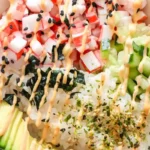
Deconstructed California Sushi Bowls
- Total Time: 23 minutes
- Yield: 4 bowls 1x
- Diet: General
Description
California Sushi Bowls are so easy to make & taste amazing. Enjoy tender crab, tangy sushi rice & fresh veggies in this light, flavorful dish.
Ingredients
- 1 1/2 cups dry Calrose Sushi Rice
- 2 cups water
- 1/4 cup seasoned rice vinegar
- 1/4 cup Japanese mayonnaise
- 2 teaspoons sriracha
- 8 oz imitation crab, chopped into small pieces
- 1/2 cup diced English cucumber
- 1–2 nori sheets, chopped or crumbled into small pieces
- 1 large avocado, peeled and sliced
- Black and toasted sesame seeds, for garnish
- 1/4 cup low-sodium soy sauce, for serving
- Nori Furikake
Instructions
- Step: Rinse 1 1/2 cups of sushi rice in a mesh sifter. Once well rinsed, add it to your rice cooker along with 2 cups of water and turn on the rice cooker.
- Step: Once the rice is cooked, transfer it to a rimmed baking sheet.
- Step: Pour 1/4 cup seasoned rice vinegar over the rice and fold it in gently using a rice paddle. Let the rice cool completely.
- Step: Combine 1/4 cup Japanese mayonnaise with 2 teaspoons sriracha to make the spicy mayo.
- Step: Chop 8 ounces of imitation crab meat and 1/2 cup of English cucumber, and break up the nori sheets.
- Step: Add the cooled sushi rice to a bowl, along with the chopped crab, cucumber, and sliced avocado. Drizzle on the spicy mayonnaise, and top with chopped nori, sesame seeds, and furikake.
Notes
Once assembled, the bowls can be stored in the refrigerator in an airtight container for about one day. Sushi rice can be made up to 2 days in advance and stored in the refrigerator.
- Prep Time: 8 minutes
- Cook Time: 15 minutes
- Category: Main Course
- Method: Rice Cooker
- Cuisine: Japanese
Nutrition
- Serving Size: 1 bowl
- Calories: 402 kcal
- Sugar: 3 g
- Sodium: 1007 mg
- Fat: 18 g
- Saturated Fat: 3 g
- Unsaturated Fat: 14 g
- Trans Fat: 1 g
- Carbohydrates: 73 g
- Fiber: 6 g
- Protein: 10 g
- Cholesterol: 12 mg
Keywords: California sushi bowl, deconstructed sushi, imitation crab, Japanese inspired, healthy Asian meal