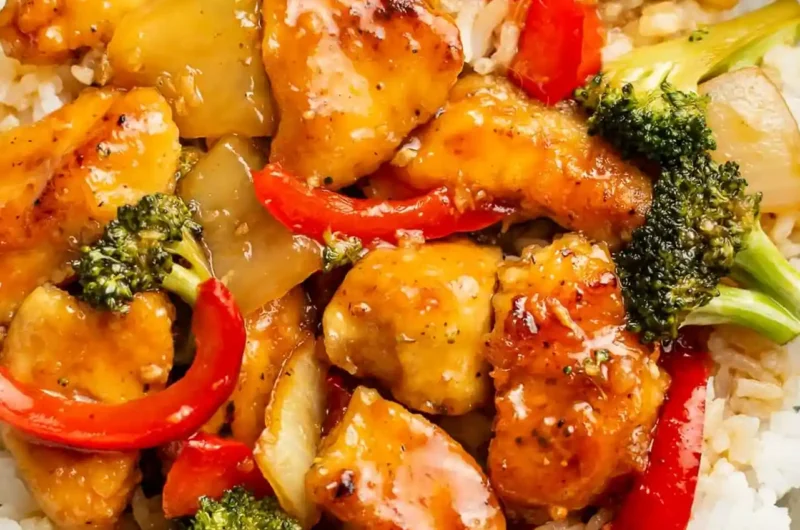
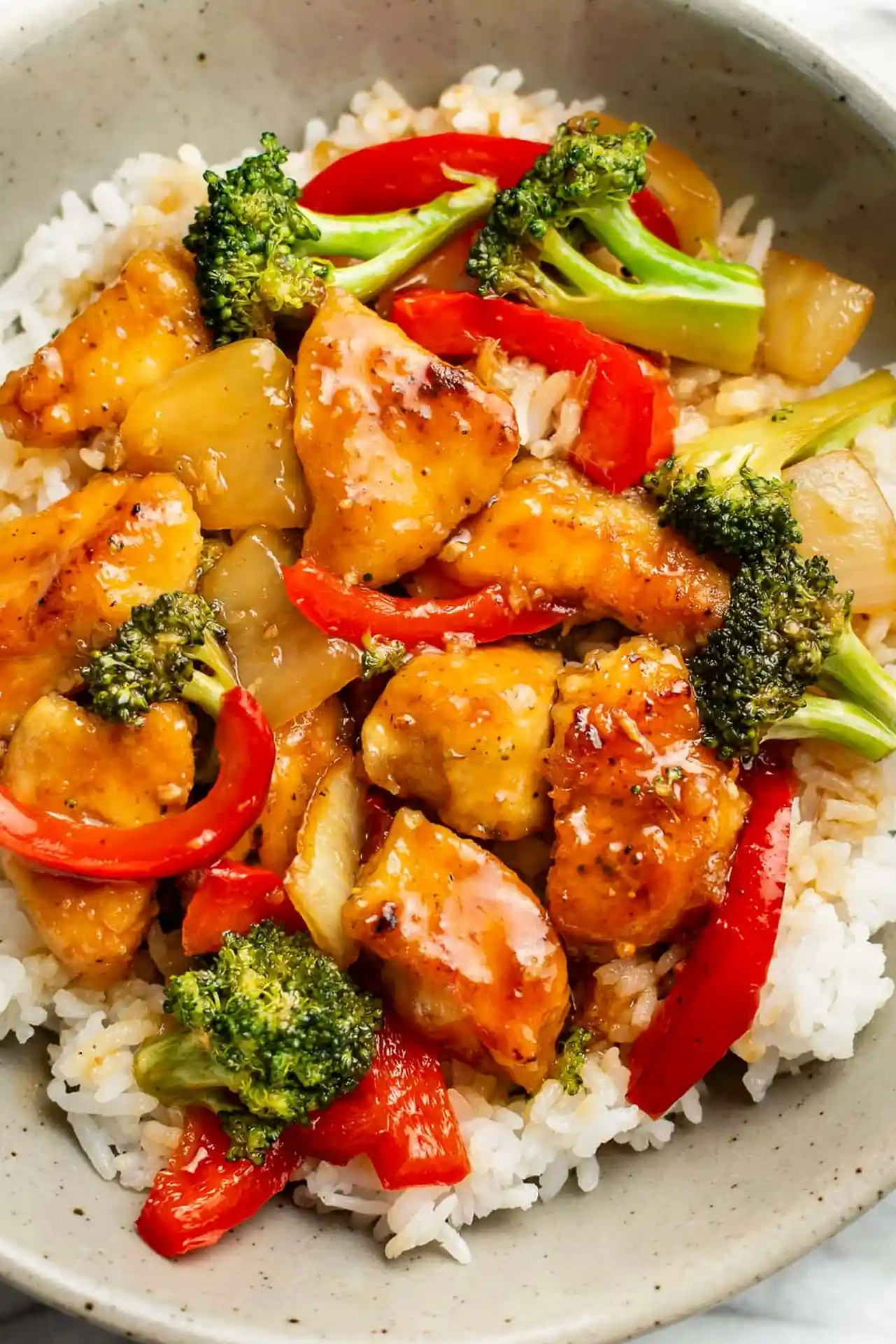
This quick teriyaki chicken stir fry combines tender chicken pieces with fresh broccoli and peppers in a savory, sweet glaze. It is a practical and nutritious meal perfect for busy weeknights.
List of ingredients
- 2 boneless skinless chicken breasts – cut into 1-inch pieces.
- 1/2 teaspoon garlic powder – for seasoning the meat.
- Pepper – added to taste.
- 3 tablespoons cornstarch – used for coating the chicken.
- 3 tablespoons olive oil – divided for frying in batches.
- 1/2 medium onion – sliced into bite-size pieces.
- 2 cups broccoli florets – cut into very small pieces for fast cooking.
- 1/2 red bell pepper – sliced into bite-size strips.
- 1/2 cup chicken broth – provides the savory base for the sauce.
- 2 tablespoons honey and 1 tablespoon water – as a sweet, alcohol-free substitute for mirin.
- 2 tablespoons soy sauce – for depth and saltiness.
- 1 teaspoon rice vinegar or apple cider vinegar – adds a necessary tang.
- 1/4 cup packed brown sugar – creates the sticky glaze.
- 1 tablespoon cornstarch – to thicken the final sauce.
- 1 teaspoon grated fresh ginger – for aromatic heat.
- 2 cloves garlic – minced finely.
step-by-step instructions
- Prepare the components: Chop all vegetables into bite-size pieces, ensuring the broccoli florets are quite small so they cook at the same rate as the peppers.
- Whisk the sauce: In a medium bowl, combine chicken broth, honey, water, soy sauce, rice vinegar, brown sugar, cornstarch, grated ginger, and minced garlic; whisk until smooth.
- Season the chicken: Place chicken pieces in a bowl, sprinkle with garlic powder and pepper, then stir in the cornstarch until every piece is evenly coated.
- Heat the pan: Add 2 tablespoons of olive oil to a deep skillet over medium-high heat and let it heat for several minutes until shimmering.
- Sear the chicken: Cook the chicken in two batches to avoid overcrowding; shake off excess cornstarch before adding to the pan. Cook for 4 minutes, flip using tongs, and cook for another 3-4 minutes until browned and cooked through, then transfer to a plate.
- Sauté the onions: Add the third tablespoon of olive oil to the pan if it is dry, then add the onions and cook for 1 minute while stirring.
- Cook the vegetables: Stir in the broccoli and red bell peppers and cook for 3 minutes, stirring often, until they are tender-crisp.
- Combine and thicken: Return the cooked chicken to the pan and pour in the sauce after giving it a final whisk. Stir constantly and let the sauce bubble for less than a minute until thickened and glossy, then remove from heat and serve immediately.
Professional Stir Fry Techniques
Implementing the Velveting Method
Coating the chicken in cornstarch before frying is a technique known as velveting. This creates a protective barrier that seals in juices and prevents the meat from toughening under high heat. It also provides a starchy surface that helps the teriyaki sauce cling to the chicken more effectively.
Mastering Batch Cooking for Protein
Cooking the chicken in two separate batches prevents the skillet temperature from dropping too low. If too much meat is added at once, the chicken will release moisture and steam rather than sear. Batch cooking ensures a golden-brown crust and a better overall texture.
Managing the Smoke Point of Cooking Oil
Olive oil is suitable for medium-high heat, but it is important to monitor the pan to ensure the oil does not reach its smoke point. If the oil begins to smoke excessively, reduce the heat slightly to prevent a burnt taste. Keeping the oil hot ensures the vegetables sear quickly without becoming mushy.
Achieving the Perfect Tender-Crisp Texture
The goal for stir fry vegetables is a texture that is tender on the inside but still has a slight snap. Avoid overcooking the broccoli and peppers, as they can lose their vibrant color and nutritional value. Constant stirring over high heat achieves this balance in just a few minutes.
Ingredient Alternatives and Swaps
Substituting Proteins for Variety
While chicken breasts are standard, you can use boneless skinless chicken thighs for a juicier result. For a different protein, shrimp or sliced flank steak work well with this teriyaki glaze. Ensure shrimp are cooked for a shorter time to avoid becoming rubbery.
Expanding the Vegetable Mix
You can customize the vegetable component by adding snap peas, sliced carrots, or water chestnuts. If using harder vegetables like carrots, slice them very thinly so they cook as quickly as the broccoli. Adding baby corn or bamboo shoots also adds an authentic stir fry feel.
Using Low-Sodium Soy Alternatives
To reduce the salt content, replace the soy sauce with coconut aminos or a low-sodium soy sauce. Coconut aminos provide a slightly sweeter taste and are a great alternative for those avoiding soy. Adjust the brown sugar slightly if the substitute is naturally sweeter.
Adjusting the Level of Sweetness
If you prefer a less sweet sauce, reduce the amount of brown sugar by a tablespoon. You can also substitute the brown sugar with maple syrup or honey for a different flavor profile. Ensure you maintain the cornstarch ratio to keep the sauce thick.
Optimal Serving Suggestions
Choosing the Best Rice Variety
Long-grain white rice or jasmine rice are the traditional pairings for this dish due to their ability to absorb the sauce. For a nuttier flavor and more fiber, brown rice is an excellent substitute. Start cooking the rice before you begin the stir fry so both are ready at once.
Serving with Stir Fry Noodles
If you prefer noodles over rice, use wide rice noodles or lo mein noodles. Toss the noodles directly into the pan during the final step with the chicken and sauce. This allows the noodles to soak up the flavors and become part of the dish.
Adding Fresh Garnishes for Texture
To elevate the presentation and taste, top the finished dish with toasted sesame seeds or sliced green onions. Fresh bean sprouts added at the very end provide a refreshing crunch. A squeeze of lime juice can also brighten the rich, sweet flavors of the teriyaki.
Complementary Side Dishes
Pair this stir fry with a side of steamed edamame or a fresh cucumber salad with rice vinegar. A simple miso soup also complements the savory notes of the chicken. These sides add nutritional balance and variety to the meal.
Storage and Longevity
Proper Refrigeration Techniques
Store any leftover stir fry in an airtight container in the refrigerator for 3 to 4 days. Ensure the dish has cooled slightly before sealing to prevent excess condensation. This prevents the vegetables from becoming too soggy during storage.
Freezing and Thawing the Dish
The stir fry can be frozen for up to two months, though the texture of the vegetables will soften upon thawing. To freeze, use freezer-safe bags and remove as much air as possible. Thaw the dish in the refrigerator overnight before reheating.
Maintaining Texture During Reheating
Reheat the stir fry in a saucepan over low to medium heat rather than using a microwave. Add a tablespoon of water or chicken broth to loosen the thickened sauce. Stir gently to avoid breaking the chicken pieces or mashing the vegetables.
Make-Ahead Strategies
Prepping Aromatics in Advance
Mince the garlic and grate the fresh ginger several hours before cooking and store them in small containers. This removes the tedious prep work during the actual cooking process. Freshly grated ginger is key, so keep the root in the freezer for easier grating.
Pre-mixing the Teriyaki Sauce
The sauce can be whisked together a day in advance and kept in a jar in the fridge. Since it contains cornstarch, be sure to shake the jar or whisk the sauce again right before pouring it into the pan. This ensures the thickening agent is fully incorporated.
Pre-cutting and Storing Vegetables
Cut the onions, peppers, and broccoli in the morning or the night before. Store them in separate containers or a large zip-top bag with a damp paper towel to keep them crisp. This allows you to move directly from the fridge to the skillet.
Troubleshooting Common Issues
Solving the Problem of Watery Sauce
If the sauce is too thin after bubbling, mix a small amount of cornstarch with cold water to create a slurry. Stir this slurry into the simmering sauce and cook for another 30 seconds. This will quickly thicken the glaze without changing the flavor.
Preventing Overcooked Chicken
Chicken breasts can dry out quickly if cooked too long. Use a meat thermometer to ensure the internal temperature reaches 165 degrees Fahrenheit. Remove the chicken from the pan as soon as it is cooked through and set it aside until the final step.
Avoiding Burnt Garlic and Ginger
Garlic and ginger can burn quickly over high heat, creating a bitter taste. This is why they are included in the sauce mixture rather than sautéed separately in oil. If you choose to sauté them, add them only in the last 30 seconds before adding the other ingredients.
Frequently Asked Questions
Can I use frozen broccoli instead of fresh?
Yes, you can use frozen broccoli, but it is important to thaw it completely and pat it dry before adding it to the pan. Frozen vegetables release more water, which can prevent them from searing and make the sauce thinner. If the sauce is too watery, simmer it for an extra minute.
Is a wok necessary for this recipe?
While a wok is traditional, a deep skillet or a large non-stick pan works perfectly. The main requirement is a pan with high sides and a flat bottom that can distribute heat evenly. A skillet allows you to toss the ingredients easily and manage the batch cooking of the chicken.
How do I make the sauce thicker?
The thickness comes from the cornstarch and the reduction of the sauce during the simmering process. Ensure you let the sauce bubble for at least 30 to 60 seconds while stirring constantly. If it is still too thin, a tiny bit more cornstarch slurry will fix it.
Can I use chicken thighs instead of breasts?
Yes, chicken thighs are a great substitute and are often more flavorful and tender. They are also more forgiving if you slightly overcook them. Follow the same coating and searing steps to ensure they get a nice brown crust.
Print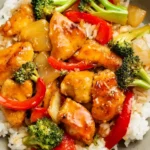
Easy Teriyaki Chicken and Vegetable Stir Fry
- Total Time: 35 minutes
- Yield: 4 servings 1x
- Diet: General
Description
This easy teriyaki chicken stir fry recipe has broccoli, bell peppers, onions, and tender chicken coated in a sweet and sticky sauce. It’s a delicious weeknight meal!
Ingredients
- 2 boneless skinless chicken breasts
- 1/2 teaspoon garlic powder
- Pepper to taste
- 3 tablespoons cornstarch
- 3 tablespoons olive oil (divided)
- 1/2 medium onion
- 2 cups broccoli florets
- 1/2 red bell pepper
- 1/2 cup chicken broth
- 3 tablespoons apple cider vinegar (alcohol-free substitute for mirin)
- 2 tablespoons soy sauce
- 1 teaspoon rice vinegar (or apple cider vinegar)
- 1/4 cup (packed) brown sugar
- 1 tablespoon cornstarch
- 1 teaspoon grated fresh ginger
- 2 cloves garlic (minced)
Instructions
- Step: Prep the ingredients before you start cooking. Cut the veggies into bite-size pieces (make sure that the broccoli is cut quite small) so they cook at a similar rate.
- Step: Add the sauce ingredients to a medium bowl and whisk everything together.
- Step: Cut the chicken into 1″ pieces and add them to a bowl. Sprinkle the pieces with the garlic powder and some pepper. Stir to combine. Add the cornstarch and stir until the chicken is coated.
- Step: In a deep skillet, over medium-high heat, add 2 tablespoons of the oil. Let the pan heat up for a few minutes.
- Step: Cook the chicken in two batches. Add half the chicken to the skillet, shaking off the excess cornstarch prior to adding it to the pan. Cook for 4 minutes and then flip and cook for another 3–4 minutes or so. Transfer to a plate. Repeat for the second batch, adding the third tablespoon of olive oil to the skillet.
- Step: If the pan is dry, add a small splash of olive oil, and then add the onions. Cook for 1 minute, stirring a few times.
- Step: Add in the broccoli and peppers, and cook for 3 minutes, stirring often until tender-crisp.
- Step: Add the chicken back to the pan and stir in the sauce. Let it bubble until thickened (less than a minute), stirring constantly so everything is coated. Take the pan off the heat and serve immediately.
Notes
I love to serve this recipe with rice, but that’s totally optional! Start the rice before the chicken so that it’s ready at the same time. Fresh ginger is much easier to grate if it’s frozen.
- Prep Time: 15 minutes
- Cook Time: 20 minutes
- Category: Main Course
- Method: Stir Fry
- Cuisine: Asian American
Nutrition
- Serving Size: 1 serving
- Calories: 360 kcal
- Sugar: 19 g
- Sodium: 860 mg
- Fat: 14 g
- Saturated Fat: 2 g
- Unsaturated Fat: 12 g
- Trans Fat: 0 g
- Carbohydrates: 33 g
- Fiber: 2 g
- Protein: 27 g
- Cholesterol: 72 mg
Keywords: teriyaki chicken, stir fry, easy dinner, chicken and broccoli, Asian American