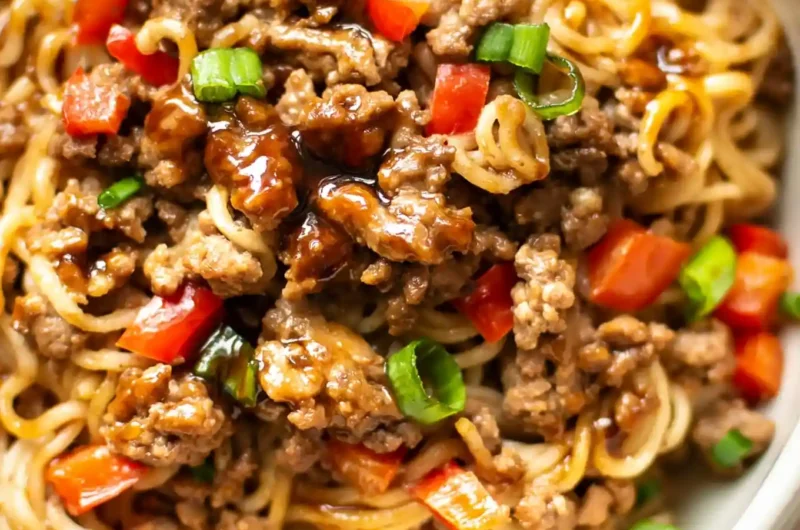
This quick stir-fry combines ground beef with a savory peanut sauce and ramen noodles for a fast meal. It is an excellent option for busy weeknights when you need a comforting dish in under 30 minutes.
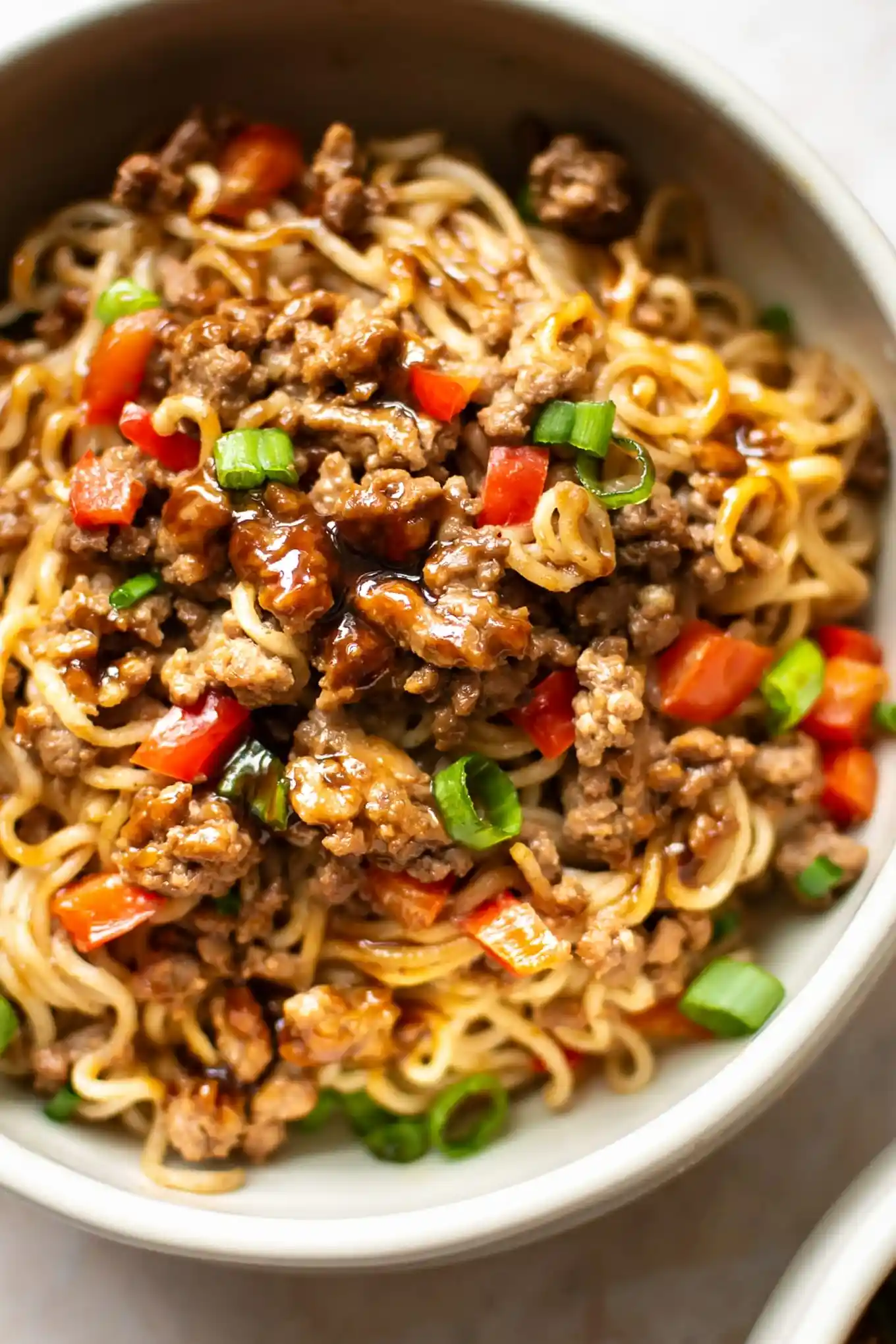
List of ingredients
- 1 pound extra lean ground beef – provides a lean protein base.
- 1/2 red bell pepper, chopped – adds color and a slight crunch.
- 3 heaping tablespoons creamy peanut butter – creates a thick, nutty sauce.
- 3 tablespoons hoisin sauce – adds sweetness and depth.
- 1/2 tablespoon sriracha sauce – adds a hint of heat, adjust to preference.
- 1 tablespoon soy sauce – provides salty, savory umami flavor.
- 1 teaspoon fresh ginger, grated – brings a fresh, zesty note.
- 2 cloves garlic, minced – adds aromatic pungency.
- 3 packages ramen noodles, seasoning packets discarded – the main starch.
- Salt and pepper – for basic seasoning.
- Chopped scallions – optional garnish for freshness.
step-by-step instructions
- Brown the Beef: Add the beef to a skillet over medium-high heat and cook, stirring occasionally, until browned, which takes about 8 minutes. If there is a lot of excess fat, spoon most of it out to keep the sauce from becoming too greasy.
- Prepare Water: Meanwhile, boil a pot of water to cook the ramen noodles.
- Mix the Sauce: Take the skillet off the heat and stir in the peanut butter, hoisin sauce, sriracha sauce, soy sauce, ginger, and garlic.
- Sauté Peppers: Return the skillet to the heat and add in the red pepper. Continue cooking for a few more minutes, stirring often, until the pepper is tender-crisp, turning the heat down if the sauce thickens too quickly.
- Cook Noodles: Add the noodles to the boiling water just as you add the red pepper into the skillet, as they only take about 3 minutes to cook.
- Combine Components: Once the noodles are done, add 4 tablespoons of the cooking water into the skillet prior to draining the noodles. Drain the noodles and add them directly to the skillet.
- Final Toss: Toss well to coat the noodles and season with extra salt and pepper if needed. Top with chopped scallions and serve immediately.
Professional Cooking Techniques for Better Results
Utilizing a Microplane for Frozen Ginger
Store your fresh ginger root in a freezer-safe bag or container. Grating the ginger while it is frozen using a Microplane grater creates a fine paste and prevents the skin from peeling away. This method ensures a more consistent distribution of flavor throughout the peanut sauce.
Managing Skillet Temperature for the Sauce
Removing the skillet from the heat before stirring in the peanut butter and hoisin prevents the sauce from scorching. This allows the ingredients to incorporate evenly without the peanut butter separating into oil. Once blended, returning it to medium-low heat ensures the sauce glazes the beef without burning.
Timing the Noodle Boil for Texture
To avoid mushy noodles, cook the ramen for one minute less than the package directions. The noodles will continue to cook slightly once they are tossed in the hot skillet with the sauce. This keeps them al dente and prevents them from breaking apart during the tossing process.
Proper Fat Drainage for Sauce Adherence
Excess fat from the ground beef can act as a barrier between the noodles and the sauce. By spooning out the rendered fat, you allow the peanut and hoisin mixture to cling better to the meat and noodles. This results in a richer, more concentrated flavor in every bite.
Ingredient Substitutions and Dietary Adjustments
Replacing Peanut Butter for Nut-Free Needs
Sunflower seed butter is an excellent one-to-one replacement for peanut butter to make this dish nut-free. Tahini also works well, though it provides a more bitter, earthy flavor that may require an extra teaspoon of honey or sugar. Both options maintain the creamy consistency of the original sauce.
Alternative Proteins for Leaner Options
Ground turkey or ground chicken can be used instead of beef for a lighter protein choice. When using turkey, you may need to add a small amount of oil to the skillet since it is leaner than beef. The savory peanut sauce complements these proteins just as well as it does the beef.
Soy-Free Seasoning Alternatives
To make this recipe soy-free, replace the soy sauce with coconut aminos or liquid aminos. Coconut aminos are slightly sweeter and less salty, so you may want to add a pinch more salt to the dish. This substitution maintains the depth of flavor while avoiding soy products.
Vegetable Swaps for Added Nutrition
If you do not have red bell peppers, sliced carrots, snap peas, or broccoli florets are great alternatives. Carrots and broccoli may require an extra minute of sautéing to reach the desired tenderness. Adding these vegetables increases the nutrient density and provides a varied texture.
Ways to Enhance Flavor and Presentation
Balancing the Heat with Sriracha
Adjust the amount of sriracha based on your heat tolerance. For those who prefer a mild dish, a small squeeze is sufficient. If you enjoy a spicy kick, add red pepper flakes or extra sriracha during the final tossing stage to intensify the heat.
Adding Umami with Toasted Sesame Oil
Drizzle a teaspoon of toasted sesame oil over the dish right before serving. Sesame oil has a low smoke point and is best used as a finishing oil rather than a cooking oil. It adds a professional, nutty aroma that enhances the overall Asian-inspired flavor profile.
Incorporating Fresh Greens at the Finish
Stir in a handful of baby spinach, kale, or shredded cabbage during the last minute of cooking. The residual heat from the noodles and beef will wilt the greens without overcooking them. This adds a boost of vitamins and a fresh, vibrant green color to the bowl.
Using Fresh Scallions for Contrast
Freshly chopped scallions provide a sharp, onion-like contrast to the sweet and creamy peanut sauce. For the best presentation, slice them thinly on a bias. Using both the white and green parts of the scallion ensures a balance of pungent and mild flavors.
Storage, Preservation, and Reheating
Airtight Container Storage for Freshness
Store leftovers in an airtight glass or plastic container in the refrigerator for up to three days. Keep the noodles and beef mixture together to allow the flavors to meld further. Ensure the food is cooled slightly before sealing the lid to prevent excessive condensation.
Rehydrating the Sauce During Reheating
Peanut sauce tends to thicken and absorb into the noodles as it cools in the fridge. When reheating, add a tablespoon of water or vegetable broth to the pan. This loosens the sauce and restores the creamy consistency without diluting the flavor.
Preventing Noodle Clumping in the Fridge
If you are prepping this as a meal for the week, toss the cooked noodles with a tiny amount of oil before adding the beef. This creates a barrier that prevents the noodles from sticking together into a single mass during refrigeration. It makes the reheating process much smoother.
Microwave versus Stovetop Reheating
Reheating in a skillet over medium heat is the best method for maintaining noodle texture. If using a microwave, cover the dish with a damp paper towel to trap steam. Heat in 30-second intervals, stirring in between, to avoid hot spots and overcooking the noodles.
Efficient Meal Prep Strategies
Preparing the Sauce Mixture in Advance
You can whisk the peanut butter, hoisin, sriracha, soy sauce, ginger, and garlic together in a jar a day before cooking. Store the mixture in the refrigerator and give it a good shake before adding it to the beef. This reduces the active cooking time to under 20 minutes.
Pre-chopping Vegetables for Faster Assembly
Chop the red bell pepper and scallions in advance and store them in separate containers. Having your mise en place ready allows you to focus on the timing of the noodles and the browning of the beef. This prevents the vegetables from overcooking while you search for ingredients.
Pre-browning the Beef for Weeknight Speed
Brown the ground beef in large batches and store it in the refrigerator. When you are ready to eat, simply add the pre-cooked beef to the skillet to warm through before adding the sauce. This eliminates the longest step of the cooking process on busy evenings.
Troubleshooting and Common Cooking Fixes
Fixing a Sauce That Is Too Thick
If the peanut sauce becomes too thick or sticky, gradually stir in the reserved noodle cooking water. Add one tablespoon at a time and toss the noodles until the sauce reaches a smooth, glossy consistency. The starch in the water helps emulsify the sauce.
Reducing Excessive Saltiness
If the dish tastes too salty, you can balance the flavor with a small amount of acidity or sweetness. A squeeze of fresh lime juice or a teaspoon of brown sugar can neutralize the salt. This creates a more balanced flavor profile without requiring you to add more bulk to the dish.
Correcting Overcooked Ramen Noodles
If the noodles become too soft during boiling, immediately drain them and rinse them under cold water. This stops the cooking process and removes excess surface starch. Once they are cooled, add them to the skillet quickly and toss them on high heat to firm them up.
Frequently Asked Questions
Can I use a different type of noodle?
Yes, you can use rice noodles, udon, or whole wheat spaghetti. If using rice noodles, be mindful that they cook much faster than ramen and may require different soaking or boiling times. Udon provides a thicker, chewier texture that pairs well with the heavy peanut sauce.
How do I make this recipe spicier?
To increase the heat, add crushed red pepper flakes to the beef while browning. You can also increase the amount of sriracha or add a teaspoon of chili garlic sauce to the peanut mixture. For extreme heat, garnish with sliced fresh bird’s eye chilies.
Is this recipe suitable for freezing?
This dish is not ideal for freezing because the noodles can become mushy and the peanut sauce may separate upon thawing. It is best enjoyed fresh or stored in the refrigerator for a few days. If you must freeze it, freeze the cooked beef and sauce separately from the noodles.
What can I use instead of hoisin sauce?
A mixture of soy sauce, honey, and a splash of rice vinegar is a good substitute for hoisin. This combination mimics the salty, sweet, and tangy profile of hoisin sauce. Adjust the honey amount to match your desired level of sweetness.
Print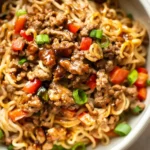
Quick Peanut Beef Ramen Stir Fry
- Total Time: 30 minutes
- Yield: 4 servings 1x
- Diet: General
Description
This beef ramen noodles recipe is super comforting and comes together fast! You’ll love the tender ground beef with an addictive sweet and savory peanut sauce.
Ingredients
- 1 pound extra lean ground beef
- 1/2 red bell pepper, chopped
- 3 heaping tablespoons creamy peanut butter
- 3 tablespoons hoisin sauce
- 1/2 tablespoon sriracha sauce
- 1 tablespoon soy sauce
- 1 teaspoon grated fresh ginger
- 2 cloves garlic, minced
- 3 packages ramen noodles (seasoning packets discarded)
- Salt & pepper, to taste
- Scallions, chopped (optional)
Instructions
- Brown Beef: Add the beef to a skillet over medium-high heat and cook, stirring occasionally, until browned (about 8 minutes). If there’s a lot of excess fat, spoon most of it out.
- Boil Water: Meanwhile, boil a pot of water for the ramen noodles.
- Mix Sauce: Take the skillet off the heat and stir in the sauce ingredients (peanut butter, hoisin sauce, sriracha sauce, soy sauce, ginger, and garlic).
- Cook Pepper: Return the skillet to the heat and add in the red pepper (you will probably need to turn the heat down a bit). Continue cooking for a few more minutes, stirring often, until the pepper is tender-crisp.
- Cook Noodles: The noodles only take about 3 minutes to cook, so I recommend adding the noodles to the boiling water just as you add the red pepper into the skillet.
- Combine: Once the noodles are done, add 4 tablespoons (or so) of the cooking water into the skillet prior to draining them. Drain the noodles and add them to the skillet.
- Finish: Toss well and season with extra salt & pepper if needed. Top with scallions if desired. Serve immediately.
Notes
I like to keep a piece of fresh ginger in the freezer (just in a ZipLoc bag or Tupperware container) so that I always have some on hand. It’s also much easier to grate when frozen. I use my Microplane grater to grate it.
- Prep Time: 10 minutes
- Cook Time: 20 minutes
- Category: Main Course
- Method: Stir-fry
- Cuisine: Asian American
Nutrition
- Serving Size: 1 serving
- Calories: 470 kcal
- Sugar: 4 g
- Sodium: 1865 mg
- Fat: 16 g
- Saturated Fat: 8 g
- Unsaturated Fat: 8 g
- Trans Fat: 0 g
- Carbohydrates: 47 g
- Fiber: 2 g
- Protein: 32 g
- Cholesterol: 71 mg
Keywords: beef ramen, ground beef, peanut sauce, quick dinner, Asian-inspired