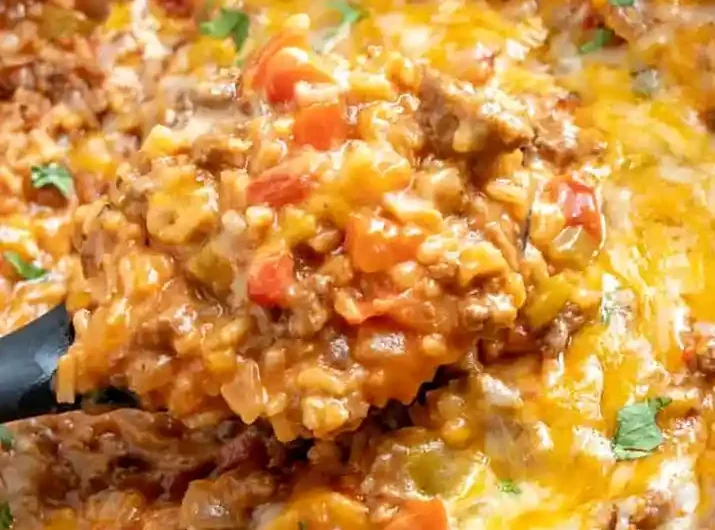
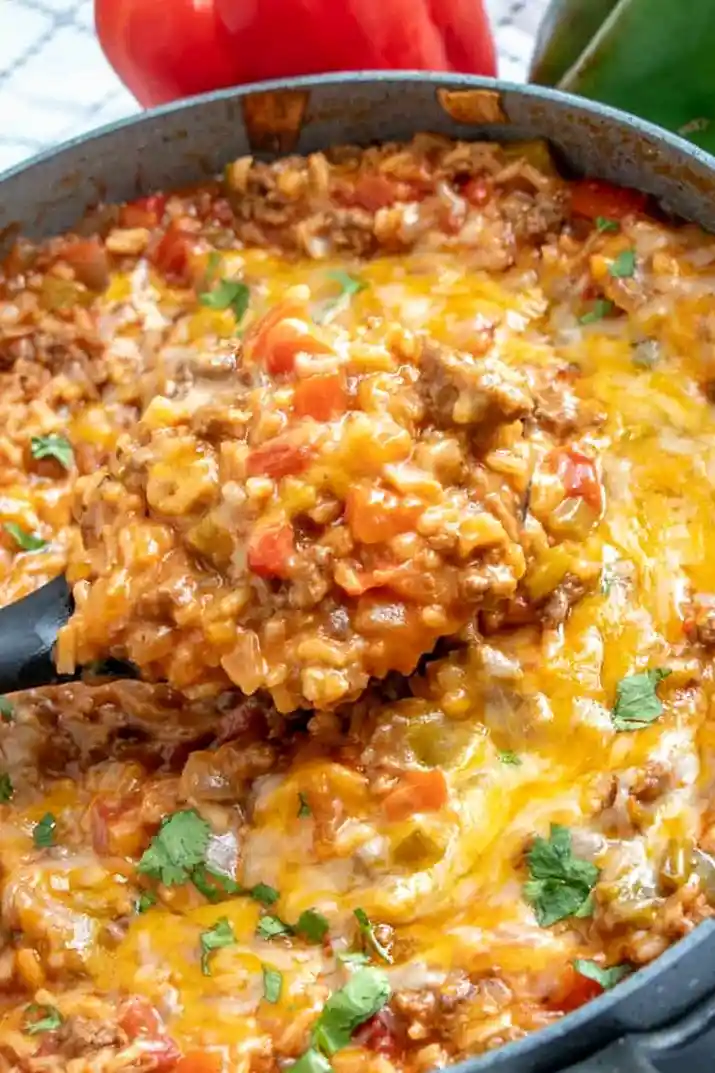
This efficient one-pan meal delivers all the savory flavors of traditional stuffed peppers without the labor of filling individual vegetables. It is a hearty, comforting dinner that combines ground beef, rice, and bell peppers in a single skillet.
List of ingredients
- 1 lb ground beef – lean or regular
- 1 green pepper – diced
- 1 red pepper – diced
- 1 medium onion – diced
- 1 tsp oregano – dried
- Salt & pepper – to taste
- 3 cloves garlic – minced
- 2 cups beef broth – low sodium recommended
- 1 15 oz can diced tomatoes – petite or regular
- 1 8 oz can tomato sauce – plain
- 1 Tbs balsamic vinegar – for acidity and depth
- 1 cup long grain white rice – uncooked
- 1-2 cups Colby Monterey Jack cheese – shredded
step-by-step instructions
- Brown the base: In a high sided pan, add ground beef, peppers, onion, oregano, salt, and pepper. Cook until the beef is no longer pink and the vegetables are tender.
- Sauté garlic: Add the minced garlic to the pan and cook for about 1 minute until it becomes aromatic.
- Simmer liquids: Stir in the beef broth, diced tomatoes, tomato sauce, and balsamic vinegar. Stir to combine and bring the mixture to a boil.
- Cook the rice: Add the long grain white rice and stir well. Cover the pan with a lid and simmer for 20-25 minutes until the rice is tender and the juices are mostly absorbed.
- Integrate cheese: Remove the pan from the heat and stir in 1 cup of the shredded cheese.
- Melt topping: Sprinkle the remaining cheese over the top of the casserole. Place the cover back on the pan for a few minutes until the cheese is completely melted.
- Final touch: Serve the dish with chopped parsley if desired for a fresh garnish.
Optimal Cooking Equipment
Using a High Sided Skillet
A pan with high sides is essential for this recipe to prevent the liquids from boiling over. This ensures that the beef broth and tomato sauce remain in the pan to properly hydrate the rice. A deep sauté pan or a Dutch oven works best for this purpose.
The Importance of a Tight Fitting Lid
The lid must seal tightly to trap steam during the simmering process. This steam is what cooks the rice through and ensures the grains become tender. If your lid is loose, you can place a piece of parchment paper between the pan and the lid to create a better seal.
Ingredient Substitutions
Alternative Bell Pepper Combinations
While red and green peppers provide a classic look, you can use orange or yellow peppers for a sweeter flavor profile. Using a mix of three different colors can also make the dish more visually appealing. The total volume of peppers should remain the same to maintain the texture.
Switching the Cheese Variety
Colby Monterey Jack is used for its superior melting qualities and mild taste. You can substitute this with sharp cheddar for a stronger flavor or mozzarella for a creamier, stretchier consistency. A blend of Italian cheeses also works well with the tomato base.
Rice Alternatives for Texture
Long grain white rice is recommended because it maintains its structure and does not become overly sticky. If you prefer a different white rice, avoid instant rice as it will cook too quickly and turn mushy. Arborio rice can be used, though it may result in a creamier, risotto-like consistency.
Replacing Balsamic Vinegar
Balsamic vinegar adds a necessary acidic balance to the richness of the beef and cheese. If you do not have balsamic vinegar, you can use a small amount of apple cider vinegar or red wine vinegar. A dash of soy sauce can also provide a similar depth of flavor.
Cooking Tips for Success
Properly Browning the Ground Beef
To achieve the best flavor, ensure the beef is browned thoroughly over medium-high heat. Searing the meat develops the Maillard reaction, which adds a savory depth to the entire casserole. Drain any excess fat after browning to prevent the final dish from feeling greasy.
Managing the Liquid Ratio
The balance of beef broth and tomato sauce is what allows the rice to cook without burning. If you notice the rice is still hard but the liquid is gone, add an extra 1/4 cup of broth. Avoid adding too much liquid at once, or the casserole will become soupy.
Preventing Mushy Rice
Avoid stirring the rice frequently once the simmering process has started. Constant stirring can release too much starch, leading to a gummy texture. Let the rice cook undisturbed under the lid for the full 20-25 minutes.
Incorporating Fresh Garlic at the Right Time
Adding garlic after the beef and vegetables are browned prevents the garlic from burning. Burnt garlic can introduce a bitter taste to the dish. Cooking it for just one minute until aromatic is sufficient for full flavor.
Serving Suggestions
Fresh Garnish Options
Finishing the dish with freshly chopped parsley adds a bright, herbaceous contrast to the heavy ingredients. Sliced green onions or a sprinkle of fresh chives are also excellent additions. For a bit of zing, a small dollop of sour cream on top can complement the tomato sauce.
Complementary Side Dishes
Since this casserole is quite filling, serve it with a light side dish. A crisp green salad with a lemon vinaigrette helps cut through the richness of the cheese. Steamed broccoli or roasted asparagus also provide a healthy nutritional balance.
Bread Pairings
Warm garlic bread or a toasted baguette is perfect for scooping up any remaining sauce. A side of corn tortillas can also be used to turn the casserole into a hybrid taco-style meal. Simple buttered toast is another quick and easy accompaniment.
Storage and Preservation
Refrigeration Guidelines
Allow the casserole to cool slightly before transferring it to an airtight container. Store it in the main body of the refrigerator, not the door, to maintain a consistent temperature. The dish will stay fresh and safe to eat for up to four days.
Freezing Instructions
This casserole freezes well if stored in freezer-safe containers. Portion the leftovers into individual servings to make reheating easier. Ensure the container is filled to the top to minimize air exposure and prevent freezer burn.
Thawing Process
The best way to thaw the casserole is to move it from the freezer to the refrigerator 24 hours before you plan to eat it. This slow thawing process preserves the texture of the rice. Avoid thawing it on the counter to prevent bacterial growth.
Reheating Methods
Stovetop Reheating
Place the leftovers in a small pan over low to medium heat. Add a tablespoon of water or beef broth to loosen the rice and restore the creamy consistency. Cover the pan and heat until the center is warmed through.
Microwave Reheating
Transfer a portion to a microwave-safe dish and cover it with a damp paper towel. The moisture from the towel prevents the rice from drying out during the heating process. Heat in 60-second intervals, stirring in between for even warmth.
Oven Reheating
Preheat the oven to 350°F and place the leftovers in a baking dish. Cover the dish tightly with aluminum foil to trap moisture. Bake for 15-20 minutes or until the cheese is bubbly and the interior is hot.
Customizing the Flavor Profile
Adding Heat and Spice
For those who prefer a spicier dish, add a pinch of crushed red pepper flakes during the browning stage. Diced jalapeños or a few dashes of hot sauce stirred in at the end can also provide a kick. Adjust the amount based on your heat tolerance.
Incorporating Additional Vegetables
You can increase the nutrient density by adding diced carrots or celery. Sauté these along with the onions and bell peppers at the beginning of the process. Spinach or kale can be stirred in at the very end until wilted.
Adjusting the Meat Type
While ground beef is traditional, ground turkey or ground chicken can be used. Since these meats are leaner, you may need to add a tablespoon of olive oil to the pan for browning. These alternatives offer a lighter version of the same flavor profile.
Troubleshooting Common Issues
What to do if the rice is undercooked?
If the rice is still firm after the simmer time, add a small amount of beef broth. Cover the pan again and simmer on low for an additional 5 minutes. Check the rice every few minutes to ensure it does not overcook.
How to fix a watery casserole?
If the mixture is too liquid, remove the lid and increase the heat to medium. Simmer the casserole uncovered for 3-5 minutes to allow the excess moisture to evaporate. This will thicken the sauce and concentrate the flavors.
What to do if the beef is too greasy?
If you see a layer of oil on top of the sauce, use a wide paper towel to blot the surface. Alternatively, you can carefully spoon off the excess fat before adding the broth and tomato sauce. This ensures a cleaner taste.
Frequently Asked Questions
Can I use brown rice instead of white rice?
Yes, but you must adjust the liquid and cooking time. Brown rice requires about 1/2 cup more beef broth and a longer simmering time, typically 45 to 50 minutes. Ensure the pan is tightly covered to prevent the liquid from evaporating too early.
Do I need to pre-cook the rice before adding it?
No, the rice should be added uncooked. Cooking the rice directly in the beef broth and tomato sauce allows the grains to absorb all the flavors of the dish. Pre-cooked rice would result in a mushy texture and less flavor.
Can I make this recipe in a slow cooker?
While this is a stovetop recipe, it can be adapted. Brown the beef and vegetables first, then add all other ingredients except the cheese to the crockpot. Cook on low for 6-8 hours or high for 3-4 hours, then stir in the cheese at the end.
How long does the casserole stay fresh in the fridge?
The casserole remains fresh for up to four days when stored in an airtight container. Beyond this window, the rice may begin to lose its texture and the flavors may fade. Always reheat it to an internal temperature of 165°F.
Print
One Pan Stuffed Pepper Casserole
- Total Time: 35 minutes
- Yield: 6 servings 1x
- Diet: General
Description
This Stuffed Pepper Casserole has all the delicious flavors of regular stuffed peppers but turned inside out and made in one pan, keeping the mess to a minimum!
Ingredients
- 1 lb ground beef
- 1 green pepper (diced)
- 1 red pepper (diced)
- 1 medium onion (diced)
- 1 tsp oregano
- Salt & pepper
- 3 cloves garlic (minced)
- 2 cups beef broth
- 1 15 oz can diced tomatoes
- 1 8 oz can tomato sauce
- 1 Tbs balsamic vinegar
- 1 cup long grain white rice
- 1–2 cups Colby Monterey Jack cheese
Instructions
- Step: In high sided pan add your ground beef, peppers, onion, oregano, salt and pepper and cook until beef is no longer pink and vegetables are tender.
- Step: Add in garlic and cook until aromatic, about 1 minutes.
- Step: Add in your beef broth, tomatoes, tomato sauce and balsamic vinegar, stir to combine then bring to a boil.
- Step: Add in your rice and stir to combine, cover and simmer for 20-25 minutes until rice is tender and juices are mainly soaked up.
- Step: Remove from heat and stir in 1 cup cheese.
- Step: Top with remaining cheese and place cover back on to melt.
- Step: Serve with chopped parsley if desired.
Notes
Use any color bell peppers you like. Use regular uncooked whole white rice, not instant rice. Balsamic vinegar can be substituted with Worcestershire sauce or soy sauce.
- Prep Time: 10 minutes
- Cook Time: 25 minutes
- Category: Main Course
- Method: One-pot
- Cuisine: American
Nutrition
- Serving Size: 1 serving
- Calories: 419 kcal
- Sugar: 3 g
- Sodium: 487 mg
- Fat: 23 g
- Saturated Fat: 10 g
- Unsaturated Fat: 13 g
- Trans Fat: 0 g
- Carbohydrates: 30 g
- Fiber: 2 g
- Protein: 22 g
- Cholesterol: 75 mg
Keywords: stuffed pepper casserole, ground beef, one pot meal, american dinner