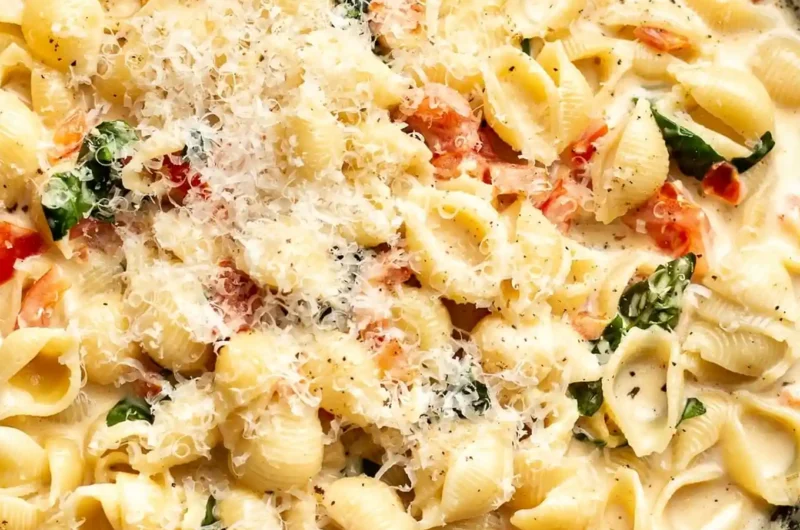
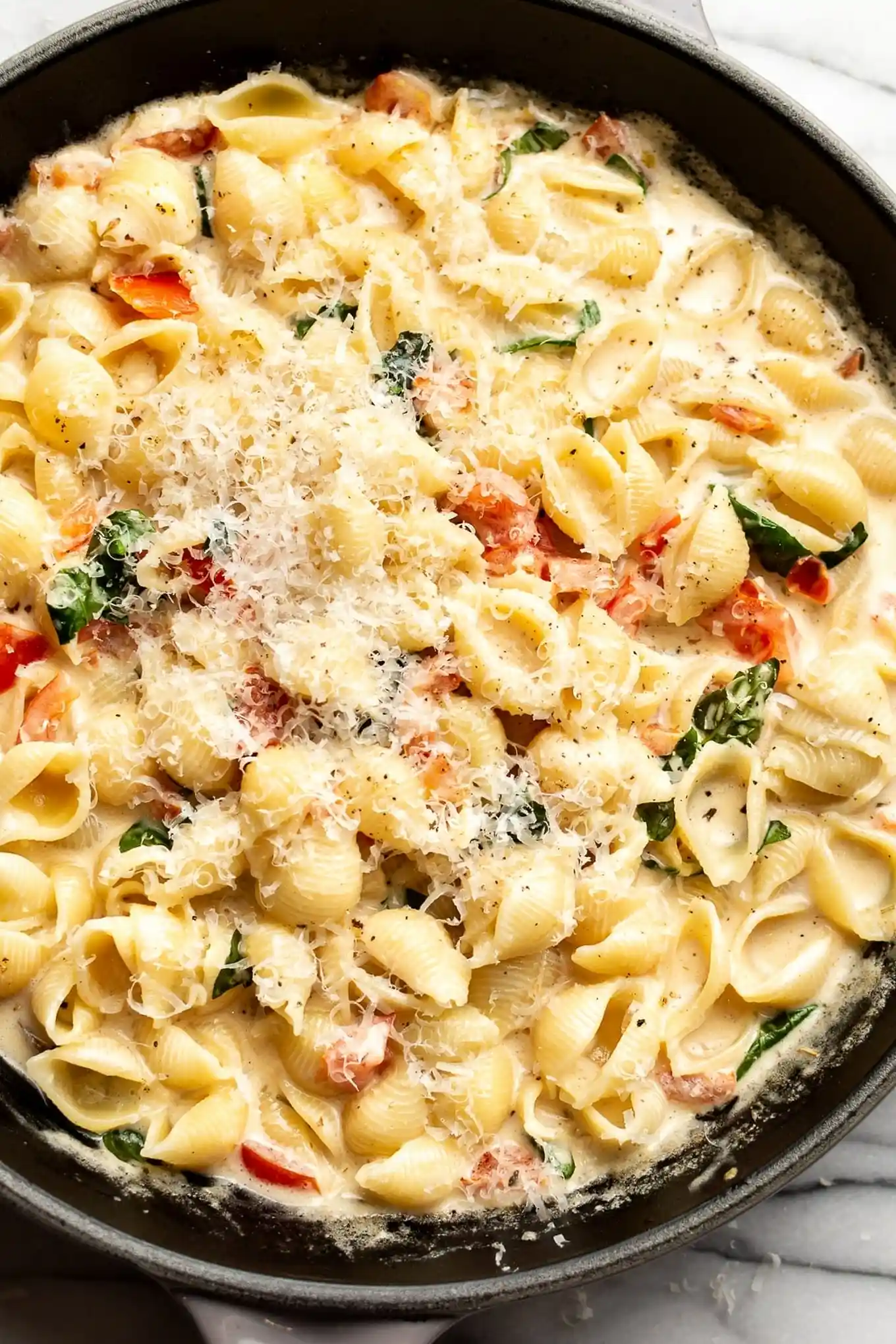
This creamy tomato basil pasta is a quick and satisfying meatless meal. It utilizes fresh summer tomatoes and basil to create a rich, decadent sauce in about 30 minutes.
List of ingredients
- 8 ounces uncooked pasta – any shape works well
- 2 tablespoons butter – for the roux
- 1/2 tablespoon flour – to thicken the sauce
- 3-4 cloves garlic (minced) – for aromatic base
- 1/4 cup chicken or vegetable broth – for deglazing
- 1 cup heavy/whipping cream – creates a rich texture
- 1/2 teaspoon Dijon mustard (optional) – adds a savory depth
- 1/4 teaspoon Italian seasoning – for classic herb flavor
- 2 medium tomatoes (chopped) – fresh summer tomatoes are best
- 1/2 cup freshly grated parmesan cheese – adds saltiness and thickness
- 1/2 cup basil (tear it up) – or more to taste
- Salt & pepper – to taste
step-by-step instructions
- Boil the Pasta: Cook the pasta in a salted pot of boiling water until it is al dente according to the package directions.
- Prepare the Roux: When the pasta is about 10 minutes from being finished, melt butter in a skillet over medium-high heat. Sprinkle in the flour and cook for about 1 minute, stirring frequently.
- Sauté and Deglaze: Stir in the minced garlic, then add the broth. Let the liquid bubble until it has reduced by half, which usually takes 30 seconds to 1 minute.
- Create the Cream Base: Whisk in the heavy cream, Dijon mustard, and Italian seasoning until the sauce is smooth.
- Simmer Tomatoes: Stir in the chopped tomatoes. Cook for another 5 minutes or until the sauce has thickened.
- Add Final Flavors: Remove the skillet from the heat. Stir in the freshly grated parmesan cheese and torn basil leaves.
- Combine and Serve: Add the drained pasta to the skillet and toss until fully coated. If the sauce is too thick, add a tablespoon of reserved pasta water before serving.
Selecting the Ideal Pasta Shape
Shell Pasta for Sauce Retention
Shells are an excellent choice for this recipe because their concave shape acts as a pocket. This allows the creamy sauce and small pieces of tomato to be trapped inside each piece of pasta. You get a concentrated burst of flavor in every bite.
Penne or Rigatoni for Texture
Tubes like penne or rigatoni provide a sturdier bite and a different textural experience. The hollow center allows some of the sauce to enter the pasta while the ridges on the outside hold the cream. These are ideal if you prefer a more substantial feel to your meal.
Tortellini for a Heartier Meal
If you want to turn this into a more filling dish, try using cheese-filled tortellini. The rich filling complements the creamy tomato sauce perfectly. Since tortellini cooks quickly, ensure you time the sauce preparation to match the shorter boiling time.
Maximizing Ingredient Quality
Using Freshly Grated Parmesan Cheese
Always grate your parmesan cheese from a wedge rather than using pre-shredded options. Pre-shredded cheeses are coated in cellulose or cornstarch to prevent clumping, which can make the sauce grainy. Freshly grated cheese melts smoothly into the cream.
Sourcing Ripe Summer Tomatoes
The quality of the tomatoes significantly impacts the brightness of the sauce. Use vine-ripened tomatoes that are fragrant and slightly soft to the touch. If you are out of season, high-quality Roma tomatoes provide a good balance of flesh and juice.
Fresh Basil vs Dried Herbs
While dried Italian seasoning provides a foundational flavor, fresh basil is essential for the finish. Fresh basil adds a peppery, sweet aroma that cannot be replicated by dried versions. Tearing the leaves by hand prevents bruising and preserves the essential oils.
Alternative Ingredient Options
Swapping Heavy Cream for Half-and-Half
If you prefer a lighter sauce, you can substitute heavy cream with half-and-half. However, you may need to add an extra half-teaspoon of flour to the roux to ensure the sauce thickens properly. Be cautious with heat, as lower-fat creams are more prone to curdling from the tomato acidity.
Replacing Garlic with Garlic Powder
If fresh garlic is unavailable, you can use garlic powder as a substitute. Use about 1/4 teaspoon of powder for every clove of fresh garlic. Add the powder during the cream whisking stage rather than the butter stage to prevent it from burning.
Gluten-Free Pasta Alternatives
This recipe works well with gluten-free pasta made from brown rice, chickpeas, or corn. Keep in mind that gluten-free pasta often releases more starch into the water. You may need to rinse the pasta slightly if it becomes too gummy, though the starch can also help thicken the sauce.
Achieving the Perfect Sauce Consistency
Preparing a Smooth Butter and Flour Roux
The roux is the secret to a stable sauce that won’t separate. Cooking the flour in butter for one minute removes the raw flour taste. This creates a thickening agent that binds the fats in the cream with the liquids in the broth.
Reducing the Broth for Concentrated Flavor
Reducing the broth by half before adding the cream is a critical step. This concentrates the savory notes and removes excess water that would otherwise dilute the sauce. It ensures the final result is rich and velvety rather than watery.
Utilizing Pasta Water for Emulsification
Pasta water contains starch that acts as a natural emulsifier. If your sauce seems too thick or tight after adding the cheese, a tablespoon of this water will loosen it. This creates a glossy finish that clings perfectly to the noodles.
Recommended Side Dish Pairings
Fresh Arugula Salad with Lemon Vinaigrette
The richness of the cream sauce benefits from a sharp, acidic contrast. A simple salad of baby arugula tossed with lemon juice and olive oil cleanses the palate. The peppery notes of the arugula mirror the flavor of the fresh basil.
Toasted Garlic Bread
Crunchy garlic bread is a classic accompaniment that helps soak up any remaining sauce on the plate. Use a French baguette brushed with melted butter, minced garlic, and a pinch of parsley. Toast it in the oven until the edges are golden brown.
Roasted Asparagus or Broccoli
To add more nutrients to the meal, serve the pasta alongside roasted green vegetables. Asparagus or broccoli florets roasted with olive oil and salt provide an earthy balance. The charred edges of the vegetables contrast well with the smooth texture of the pasta.
Storage and Reheating Guidelines
Proper Refrigeration Methods
Store leftover pasta in an airtight container in the refrigerator for up to 3-4 days. Be aware that the pasta will continue to absorb the sauce as it sits. This may result in the dish appearing drier when you open the container.
Best Stovetop Reheating Techniques
Reheating cream-based pasta is best done on the stovetop over low to medium heat. Avoid the microwave, as it can cause the fats to separate and the sauce to break. Add a splash of milk, cream, or broth to the pan to restore the original creaminess.
Reasons to Avoid Freezing Cream Sauces
It is not recommended to freeze this dish. Cream and cheese sauces often separate or become grainy upon thawing. To avoid a broken sauce, it is better to cook smaller batches or stick to refrigeration.
Solving Common Cooking Issues
Preventing the Sauce from Curdling
Curdling occurs when the acidity of the tomatoes reacts with the cream under high heat. To prevent this, ensure the sauce is simmered gently rather than boiled vigorously. Removing the pan from the heat before adding the cheese also helps maintain stability.
Fixing a Sauce That Is Too Thick
If the sauce becomes too thick during the simmering process, do not panic. Slowly whisk in a small amount of chicken or vegetable broth or milk. Do this a tablespoon at a time until you reach your desired consistency.
Avoiding Burnt Garlic
Garlic burns quickly and becomes bitter if exposed to high heat for too long. Add the garlic to the roux just before you pour in the broth. The liquid immediately drops the temperature of the pan, stopping the garlic from burning while still releasing its flavor.
Frequently Asked Questions
Can I use cherry tomatoes instead of medium tomatoes?
Yes, cherry tomatoes are a great substitute. Simply halve them or leave them whole if they are very small. They often provide a sweeter burst of flavor compared to larger tomatoes.
Is the Dijon mustard necessary for the flavor?
The Dijon mustard is optional and is used to add a subtle, savory depth. You won’t taste the mustard itself, but it enhances the overall richness. You can omit it without ruining the dish.
How do I stop the basil from turning brown?
Basil oxidizes and browns quickly when exposed to heat and air. To keep the basil vibrant green, stir it in at the very end after the pan has been removed from the heat. This preserves both the color and the fresh aroma.
Print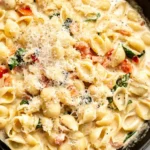
Creamy Tomato Basil Pasta
- Total Time: 30 minutes
- Yield: 4 servings 1x
- Diet: Vegetarian
Description
This creamy tomato basil pasta recipe is a delicious meatless meal that’s fast, simple to make, and is perfect for in-season summer tomatoes and fresh basil!
Ingredients
- 8 ounces uncooked pasta
- 2 tablespoons butter
- 1/2 tablespoon flour
- 3–4 cloves garlic, minced
- 1/4 cup vegetable broth
- 1 cup heavy cream
- 1/2 teaspoon Dijon mustard
- 1/4 teaspoon Italian seasoning
- 2 medium tomatoes, chopped
- 1/2 cup freshly grated parmesan cheese
- 1/2 cup fresh basil, torn
- Salt and pepper to taste
Instructions
- Step 1: Boil a salted pot of water for the pasta and cook it al dente according to package directions.
- Step 2: When the pasta is about 10 minutes away from being done, add the butter to a skillet over medium-high heat. Once it melts, make a quick roux by sprinkling the flour in and cook for about 1 minute, stirring fairly often.
- Step 3: Add in the garlic, followed by the vegetable broth. Let it bubble until it’s reduced by half (approx. 30 seconds to 1 minute).
- Step 4: Whisk in the cream, Dijon mustard, and Italian seasoning until you’ve got a smooth sauce.
- Step 5: Stir in the chopped tomatoes. Cook the sauce for another 5 minutes or until the sauce has thickened up a bit.
- Step 6: Take the skillet off the heat and stir in the parmesan cheese and basil.
- Step 7: Add the drained pasta to the skillet and toss until coated. Serve immediately with more freshly grated parmesan if desired.
Notes
Serves 2-4 depending on appetite. Avoid substituting the cream for a lower fat alternative as the acidity from the tomatoes could cause curdling. Use freshly grated parmesan for the best flavor.
- Prep Time: 10 minutes
- Cook Time: 20 minutes
- Category: Main Course
- Method: Stovetop
- Cuisine: American
Nutrition
- Serving Size: 1 serving
- Calories: 551 kcal
- Sugar: 4 g
- Sodium: 279 mg
- Fat: 32 g
- Saturated Fat: 20 g
- Unsaturated Fat: 11 g
- Trans Fat: 1 g
- Carbohydrates: 49 g
- Fiber: 3 g
- Protein: 14 g
- Cholesterol: 108 mg
Keywords: creamy tomato basil pasta, meatless pasta, summer recipes, quick dinner