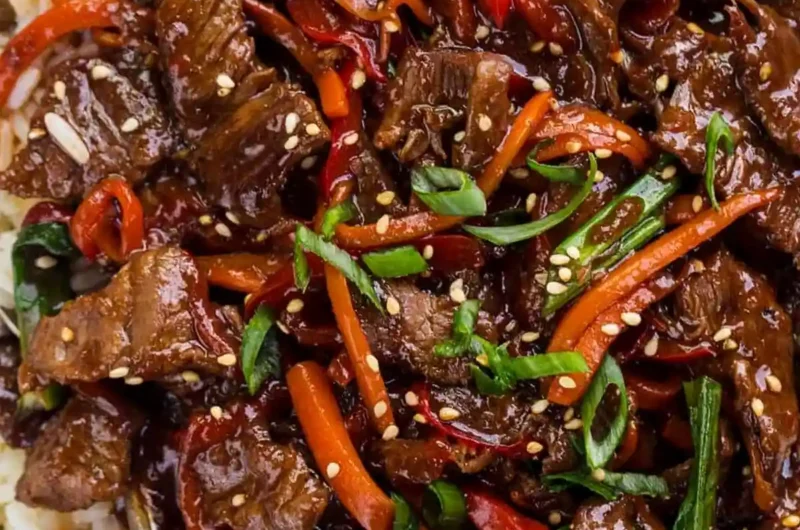
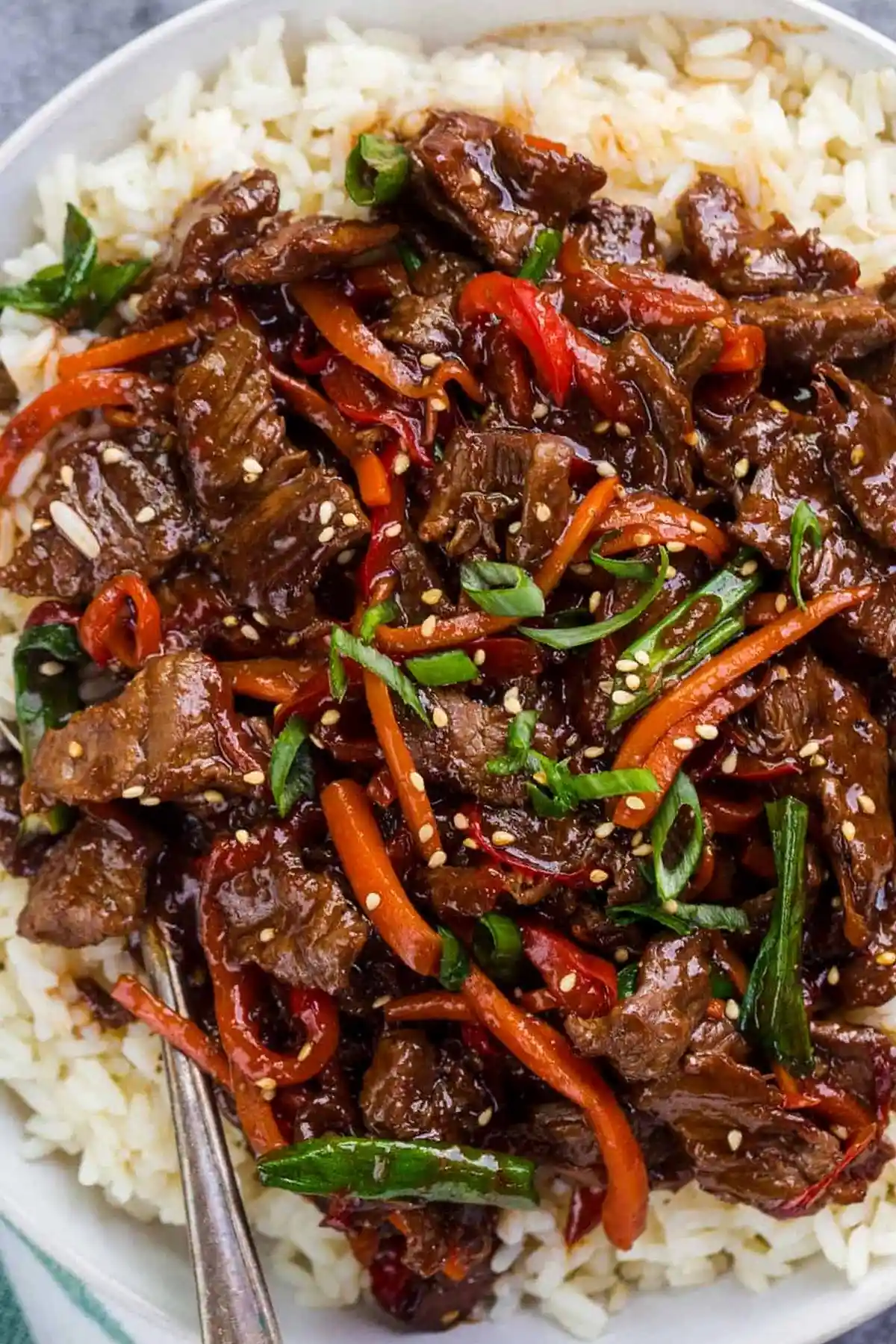
This quick Mongolian Beef stir-fry combines tender sliced beef with a sweet and savory garlic-ginger glaze. It is a practical 30-minute meal that pairs perfectly with steamed rice or noodles.
List of ingredients
- 1 carrot – peeled and julienned into thin matchsticks.
- 1 red bell pepper – sliced into thin strips.
- 1 Tbsp unsalted butter – for sautéing vegetables.
- 2 Tbsp neutral oil – divided for searing and sautéing.
- 1 lb flank steak – thinly sliced against the grain for tenderness.
- 1/4 cup corn starch – used to coat beef and thicken sauce.
- 1/3 cup green onions – thickly sliced from 4 stems.
- 1 tsp sesame seeds – used as an optional garnish.
- 1 tsp fresh ginger – peeled and grated finely.
- 4 garlic cloves – peeled and grated finely.
- 1/3 cup brown sugar – packed for sweetness.
- 1/3 cup water – to balance the sauce consistency.
- 1/3 cup low-sodium soy sauce – for the savory base.
- 1 tsp Sriracha – added for a hint of spice or adjusted to taste.
step-by-step instructions
- Coat the beef: Place beef slices in a bowl, add cornstarch, and stir until the meat is completely coated.
- Prepare the sauce: In a separate bowl, combine the grated ginger, grated garlic, brown sugar, water, low-sodium soy sauce, and Sriracha. Stir until well combined and set aside.
- Sauté vegetables: Heat 1 Tbsp oil and 1 Tbsp butter in a large skillet or wok over medium/high heat. Add the julienned carrot and sliced peppers, stir-frying until they are crisp-tender. Remove the vegetables to a separate plate.
- Sear the beef: Increase heat to high and add the remaining 1 Tbsp oil. Add beef slices in a single layer and sear for about 2 minutes per side to create a crispy exterior. Cook in batches if necessary to avoid overcrowding the pan.
- Combine and thicken: Return the sautéed vegetables and green onions to the skillet with the beef. Pour in the sauce and stir to combine.
- Simmer and serve: Turn the heat to medium/low and simmer for about 3 minutes until the sauce thickens. Garnish with sesame seeds if desired and serve immediately.
Beef Selection and Preparation
Choosing the Right Cut of Beef
Flank steak is the preferred choice because it is lean and takes well to the searing process. Its long fibers are ideal for thin slicing, which allows the cornstarch to adhere better. This results in a tender interior and a crisp exterior when cooked at high heat.
Alternative Beef Options
If flank steak is unavailable, top sirloin or skirt steak are excellent substitutes. Top round is a leaner, more budget-friendly option, while rib-eye provides more fat and a richer flavor. Regardless of the cut, ensure the meat is sliced very thin to maintain a quick cooking time.
Slicing Against the Grain
To prevent the beef from becoming chewy, identify the direction of the muscle fibers, known as the grain. Slice the meat perpendicular to these fibers. This process breaks down the tough muscle structures, making each bite significantly more tender.
The Freezer Method for Precision Slicing
Place the steak in the freezer for 30 minutes before slicing. This slightly firms up the meat without freezing it solid. Firm meat is much easier to cut into uniform, paper-thin strips, which ensures even cooking in the wok.
Optimal Cooking Equipment
Using a Traditional Wok
A wok is designed for high-heat stir-frying due to its curved sides and concentrated heat at the bottom. The shape allows you to toss ingredients quickly and efficiently. This prevents the beef from steaming and helps achieve a professional sear.
Heavy-Bottomed Skillet Advantages
A cast iron or heavy stainless steel skillet is a great alternative if you do not own a wok. These pans retain heat well, which is critical for searing the beef quickly. Ensure the skillet is large enough to prevent overcrowding the meat.
Managing Pan Surface Area
The amount of space in your pan directly affects the texture of the beef. If the pan is too small, the beef will release moisture and boil in its own juices. Use a wide pan to allow moisture to evaporate quickly for a better crust.
Professional Stir-Fry Techniques
Maintaining High Heat
Stir-frying requires a very hot pan to achieve the Maillard reaction, which browns the meat. If the temperature drops, the beef will leak juices and become grey and tough. Wait until the oil is shimmering or slightly smoking before adding the meat.
Preventing Pan Overcrowding
Cooking the beef in batches is essential if you are working with a standard-sized skillet. Adding too much meat at once lowers the pan temperature instantly. Searing in small groups ensures each piece of beef gets a crispy, browned coating.
The Role of Cornstarch Coating
Tossing the beef in cornstarch before cooking creates a protective barrier. This process, similar to velveting, keeps the meat moist inside while providing a surface for the sauce to cling to. It also assists in thickening the sauce during the final simmer.
Sauce Customization and Substitutions
Gluten-Free Soy Alternatives
For a gluten-free version of this recipe, replace low-sodium soy sauce with Tamari. Coconut aminos are another alternative, though they are slightly sweeter and less salty. If using coconut aminos, you may need to reduce the amount of brown sugar.
Adjusting Spice Levels
Sriracha provides a mild heat, but you can increase the spice by adding crushed red pepper flakes. For a different flavor profile, a teaspoon of chili garlic sauce or sambal oelek works well. Always taste the sauce at the end and add spice incrementally.
Sugar Substitutes for the Glaze
Brown sugar provides a deep, molasses-like sweetness and helps the sauce caramelize. Honey or maple syrup can be used as substitutes for a similar consistency. Note that these liquid sweeteners may require a slightly longer simmering time to thicken.
Choosing High Smoke Point Oils
Use neutral oils like canola, vegetable, avocado, or peanut oil for the searing process. Extra virgin olive oil is not recommended because it burns at lower temperatures. High smoke point oils remain stable under the intense heat required for stir-frying.
Serving and Pairing Ideas
Pairing with Fluffy Rice
Steamed jasmine rice is the classic choice as its floral aroma complements the savory sauce. Brown rice offers a nuttier flavor and more fiber for a heartier meal. For a more indulgent side, serve the beef over garlic fried rice.
Using Noodles for Variety
Udon noodles are excellent due to their thick, chewy texture that holds onto the sauce. Soba noodles provide an earthy taste, while lo mein noodles offer a traditional stir-fry experience. Toss the noodles in the pan for the last minute of cooking to coat them in the glaze.
Low-Carb Grain Alternatives
Cauliflower rice is a practical low-carb substitute that absorbs the sauce well. Quinoa is another nutrient-dense option that adds a slight crunch to the dish. These alternatives keep the meal light while maintaining the flavor profile.
Complementary Side Vegetables
While the recipe includes carrots and peppers, adding steamed broccoli or bok choy on the side adds freshness. Snow peas or snap peas can be added to the stir-fry for extra crunch. Steamed edamame is also a great high-protein side dish.
Storage and Preservation
Refrigeration Guidelines
Store leftover Mongolian Beef in an airtight container in the refrigerator. It will remain fresh and safe to eat for up to three days. Ensure the beef is completely cooled before sealing the container to prevent excess moisture buildup.
Freezing Leftovers
This dish can be frozen for up to two months, although the texture of the vegetables may soften. Store in a freezer-safe bag and squeeze out as much air as possible. Thaw the beef in the refrigerator overnight before reheating.
Maintaining Quality During Storage
The sauce may thicken significantly as it cools in the refrigerator. This is normal due to the cornstarch content. When you are ready to eat, a small amount of water will restore the original glossy consistency.
Reheating Methods
Stovetop Reheating for Texture
For the best results, reheat the beef in a skillet over medium heat. Add a tablespoon of water or beef broth to loosen the sauce. Stir frequently until the meat is heated through and the sauce is bubbling.
Quick Microwave Reheating
Place the beef in a microwave-safe dish and cover it with a damp paper towel. Heat in 30-second intervals, stirring in between to ensure even heating. This method is faster but may result in slightly softer vegetables.
Correcting Sauce Consistency
If the sauce becomes too sticky or dry during reheating, add a splash of water or low-sodium soy sauce. Stir well over heat to emulsify the sauce back into a smooth glaze. Avoid overcooking during reheating to prevent the beef from toughening.
Troubleshooting Common Issues
Solving Thin or Watery Sauce
If the sauce does not thicken after simmering, it may be due to insufficient heat or a lack of cornstarch. Mix one teaspoon of cornstarch with one teaspoon of water to create a slurry. Stir the slurry into the simmering sauce and cook for another minute.
Fixing Overly Thick Sauce
If the sauce becomes too thick or glues the beef together, add water one tablespoon at a time. Stir gently over medium heat until the desired consistency is reached. Be careful not to add too much water, as this will dilute the flavor.
Addressing Chewy or Tough Beef
Tough beef is usually caused by slicing with the grain or overcooking the meat. To fix this in the future, ensure you slice perpendicular to the muscle fibers. Also, remove the beef from the pan as soon as it is seared to avoid drying it out.
Preventing Mushy Vegetables
Vegetables become mushy when they are overcooked or crowded in the pan. Sauté them quickly over high heat and remove them from the skillet before searing the beef. Only return them to the pan at the very end of the process.
Frequently Asked Questions
Can I use a different protein?
Yes, chicken breast or shrimp are great alternatives. For chicken, slice into thin strips and follow the same cornstarch coating method. For shrimp, skip the cornstarch coating and sear them quickly for 2 minutes per side.
Is cornstarch necessary for this recipe?
Cornstarch serves two critical purposes: it creates a crispy sear on the meat and thickens the sauce. Without it, the beef will be less tender and the sauce will remain watery. You can use arrowroot powder as a substitute.
How do I prevent the garlic from burning?
Garlic burns quickly at high temperatures. In this recipe, the garlic is incorporated into the sauce and added after the high-heat searing of the beef. This ensures the garlic is cooked through without becoming bitter.
Can I make this dish ahead of time?
You can prep the sliced beef, chopped vegetables, and the sauce mixture up to 24 hours in advance. Store them in separate containers in the refrigerator. The actual cooking process must be done fresh to maintain the texture of the sear.
Print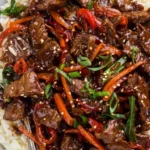
Easy Mongolian Beef Stir-Fry with Savory Glaze
- Total Time: 30 minutes
- Yield: 4 servings 1x
- Diet: General
Description
EASY Mongolian Beef recipe with the BEST sauce! Thinly sliced beef with vegetables in flavor-packed sauce ready in under 30 minutes!
Ingredients
- 1 carrot (peeled and julienned)
- 1 red bell pepper (sliced into strips)
- 1 Tbsp unsalted butter
- 2 Tbsp neutral oil
- 1 lb flank steak (thinly sliced against the grain)
- 1/4 cup corn starch
- 1/3 cup green onions (thickly sliced)
- 1 tsp sesame seeds (optional garnish)
- 1 tsp fresh ginger (peeled and grated)
- 4 garlic cloves (peeled and grated)
- 1/3 cup brown sugar (packed)
- 1/3 cup water
- 1/3 cup low-sodium soy sauce
- 1 tsp Sriracha
Instructions
- Coat the Beef: Place beef slices in a bowl, add cornstarch and stir to completely coat.
- Make the Sauce: In a bowl, combine the ingredients for the sauce and stir until well combined, set aside.
- Sautee Vegetables: In a large skillet or wok, heat 1 Tbsp oil with 1 Tbsp butter over medium/high heat. Once the skillet is hot, add the carrot and peppers and stir fry until crisp-tender or to your desired tenderness, stirring frequently. Remove the vegetables to a separate plate.
- Sear Beef: Increase to high heat and add 1 Tbsp oil. Once hot, add the beef and sear for about 2 minutes per side to create a crispy coating. Add more oil if the skillet seems dry. Do not crowd the pan and cook the beef in batches if needed.
- Combine and Simmer: Add the vegetables back into the skillet with the green onion. Add the sauce and stir to combine. Turn heat to medium/low and simmer until the sauce thickens, about 3 minutes. Garnish with sesame seeds if desired and serve.
Notes
Freeze the beef for 30 minutes to make thinly slicing easier. Slicing against the grain prevents the beef from becoming chewy. Use Tamari Sauce for a gluten-free version.
- Prep Time: 15 minutes
- Cook Time: 15 minutes
- Category: Main Course
- Method: Stir Fry
- Cuisine: Chinese
Nutrition
- Serving Size: 1 serving
- Calories: 377 kcal
- Sugar: 20 g
- Sodium: 816 mg
- Fat: 16 g
- Saturated Fat: 5 g
- Unsaturated Fat: 11 g
- Trans Fat: 0 g
- Carbohydrates: 32 g
- Fiber: 2 g
- Protein: 26 g
- Cholesterol: 76 mg
Keywords: mongolian beef, mongolian beef recipe, PF Changs Mongolian Beef