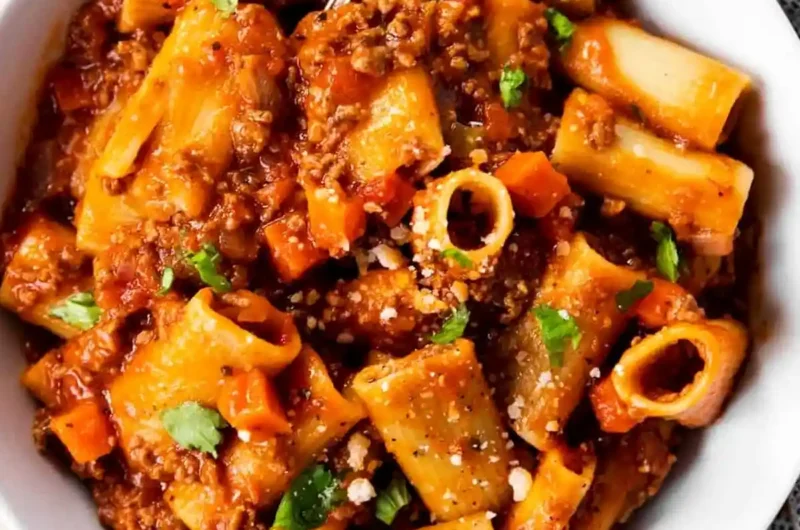
This one-pot meal simplifies dinner by cooking the pasta directly in the sauce. It reduces cleanup and concentrates the flavor into a single pan. The result is a rich, hearty pasta dish that is ready in about 30 minutes.
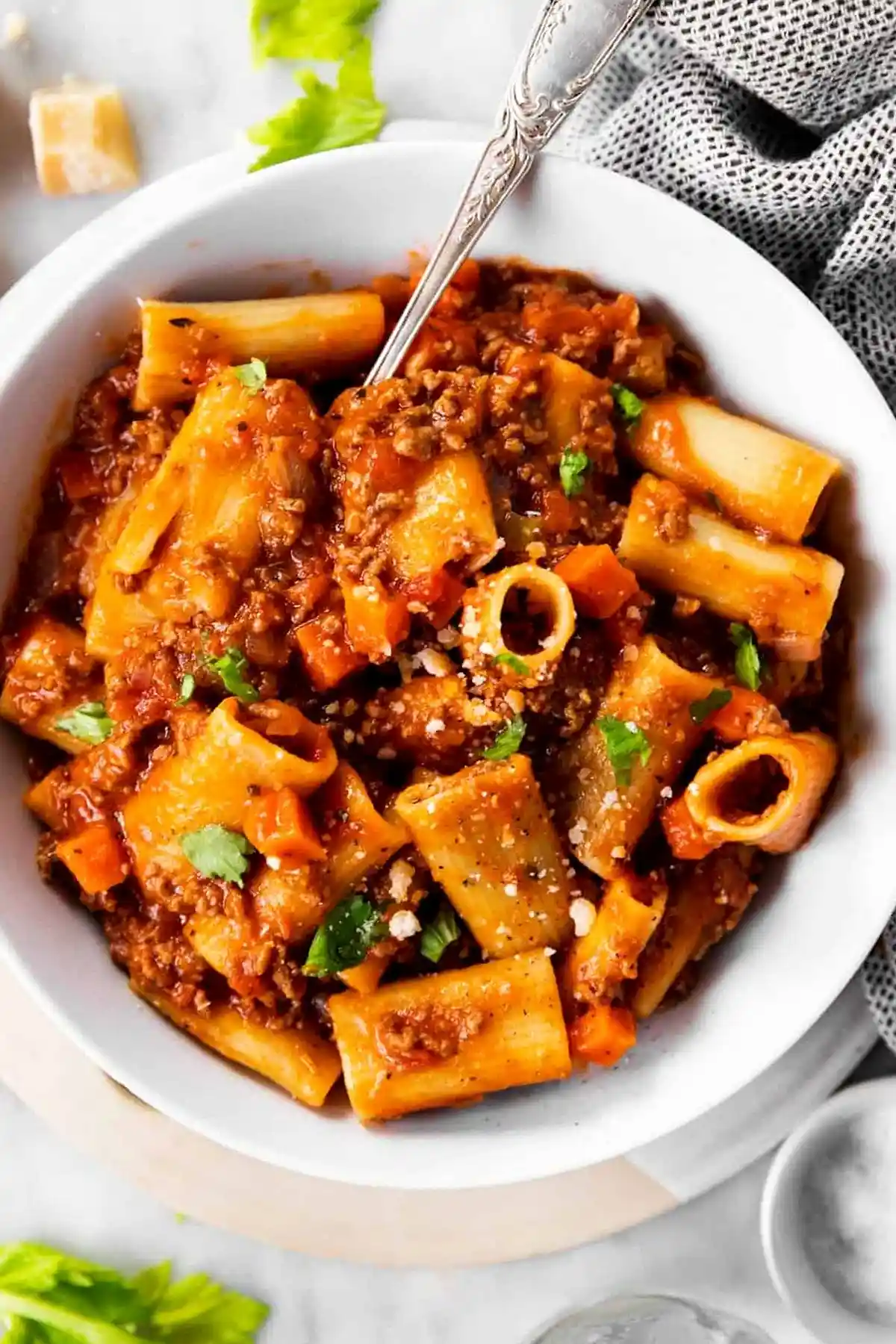
List of ingredients
- 1 tablespoon olive oil – used for sautéing.
- 1 lb ground beef – lean is recommended for better texture.
- 1 medium onion – finely chopped for uniform cooking.
- 1 carrot – finely chopped to blend into the sauce.
- 1 celery stalk – finely chopped to add aromatic depth.
- 1/4 teaspoon garlic powder – for a subtle pungent flavor.
- 2 teaspoons Italian seasoning – provides a blend of dried herbs.
- Salt & pepper – added to taste throughout the process.
- 1/4 cup tomato paste – thickens the sauce and adds richness.
- 3 cups beef broth – the primary cooking liquid for the pasta.
- 1 (28-oz) can diced tomatoes – adds bulk and acidity to the sauce.
- 1 (16-oz) box rigatoni pasta – uncooked, to be simmered in the pot.
- Grated parmesan – optional garnish for serving.
step-by-step instructions
- Brown the beef: Heat olive oil in a medium-large pan over medium-high heat. Add the ground beef, seasoning it with salt and pepper, and cook until browned and crumbled.
- Cook the vegetables: Stir in the finely chopped onion, carrot, and celery. Cook over medium heat for 2-3 minutes, stirring occasionally, until the vegetables have softened.
- Season and deglaze: Stir in the garlic powder, Italian seasoning, tomato paste, and a pinch of salt and pepper. Cook for one minute to roast the paste, then pour in 3 cups of beef broth, scraping the browned bits off the bottom of the pan with a wooden spoon.
- Cook the pasta: Add the diced tomatoes and the uncooked rigatoni. Stir to ensure all pasta is submerged in liquid. Bring the mixture to a boil, then reduce heat to a simmer and cook for about 15 minutes until the pasta is tender. Add up to one additional cup of broth if the liquid evaporates too quickly.
- Serve: Remove from heat and serve immediately with a sprinkle of grated parmesan.
Meat and Protein Options
Using Lean Ground Beef
Lean ground beef is the best choice for this recipe to prevent excess grease from pooling on top of the sauce. If you use a higher-fat beef, be sure to drain the rendered fat after the browning step. This ensures the sauce remains thick and savory rather than oily.
Substituting Ground Turkey
Ground turkey is a lighter alternative that works well with the Bolognese flavor profile. Since turkey is leaner than beef, you may need to add an extra teaspoon of olive oil to the pan. The final flavor will be milder, but it pairs perfectly with the Italian seasonings.
Using Beef-Based Italian Sausage
For a more complex flavor, replace the ground beef with crumbled beef-based Italian sausage. Ensure the sausage is beef or turkey-based to maintain the recipe’s dietary guidelines. This adds notes of fennel and paprika to the sauce without requiring extra spices.
Pasta Selection and Behavior
Why Rigatoni Works Best
Rigatoni is highly recommended because its large, hollow center and ridged exterior capture the chunky meat sauce. The sturdy shape holds up well during the simmering process. It prevents the pasta from becoming mushy while ensuring every bite is filled with sauce.
Avoiding Thin Pasta Shapes
Avoid using thin pastas like spaghetti, angel hair, or linguine for this one-pot method. Thin noodles release starch more quickly and overcook rapidly in a simmer. This often results in a gummy texture or a sauce that becomes too thick and sticky.
Using Penne or Ziti
Penne and ziti are the most suitable alternatives if rigatoni is unavailable. Both are tubular shapes that can withstand the 15-minute simmering time. They provide a similar mouthfeel and balance the ratio of pasta to sauce effectively.
Vegetable Preparation Techniques
Creating a Uniform Mirepoix
The combination of onion, carrot, and celery is known as a mirepoix. Chopping these vegetables into very small, uniform pieces ensures they soften at the same rate. This prevents large chunks of raw vegetables from remaining in the finished sauce.
Using a Food Processor for Efficiency
To save time on prep, you can pulse the onion, carrot, and celery in a food processor. Use the pulse setting to avoid turning the vegetables into a puree. This creates a consistent fine dice that integrates seamlessly into the meat.
The Importance of Sautéing Aromatics
Sautéing the vegetables until the onions are translucent is critical for flavor development. This process removes the harsh raw taste of the onion and caramelizes the natural sugars in the carrot. It creates a sweet and savory base for the tomato components.
Flavor Development Strategies
Sautéing Tomato Paste for Depth
Roasting the tomato paste in the pan for a minute before adding liquids is a key culinary step. This removes the raw, metallic taste associated with canned paste. It deepens the color of the sauce and adds a concentrated, savory richness.
Deglazing the Pan with Broth
When you pour the beef broth into the pan, use a spatula to scrape the browned bits, known as fond, from the bottom. These caramelized proteins are concentrated flavor bombs. Integrating them into the liquid prevents burning and enhances the overall taste of the Bolognese.
Balancing the Herb Profile
Italian seasoning usually contains oregano, basil, and thyme. If the sauce tastes too acidic from the tomatoes, adding a pinch more of these herbs can balance the flavor. Ensure the seasoning is stirred in before the broth to allow the oils in the dried herbs to release.
Managing Sauce Consistency
Preventing a Soupy Texture
To avoid a soupy result, do not pre-cook the pasta in a separate pot of water. The pasta must be added uncooked so it can absorb the broth and tomato juices. This process creates a natural thickening effect as the pasta starch binds with the liquid.
Adjusting Liquid During Simmering
Depending on the heat of your stove, liquid may evaporate at different rates. If the pasta is not yet tender but the sauce has thickened too much, stir in an additional half-cup of broth. Do this gradually to ensure the sauce remains creamy rather than watery.
The Role of Pasta Starch
Cooking the pasta directly in the sauce releases starches that act as a natural thickener. This creates a glossy, cohesive sauce that clings to the noodles. This is why one-pot pasta often tastes richer than pasta tossed in a separate sauce.
Storage and Preservation
Refrigeration Guidelines
Store any leftovers in an airtight container in the refrigerator for up to three days. Allow the pasta to cool slightly before sealing the container to prevent excessive condensation. This helps maintain the texture of the noodles during storage.
Air-Tight Container Selection
Use glass or high-quality BPA-free plastic containers with locking lids. This prevents the pasta from absorbing other odors in the fridge. It also keeps the sauce from drying out, which is common with starch-heavy dishes.
Cooling Before Storage
Do not place a boiling hot pot directly into the refrigerator. This can raise the internal temperature of the fridge and potentially spoil other foods. Let the pasta sit at room temperature for about 30 minutes before refrigerating.
Freezing and Long-Term Storage
Freezer-Safe Casserole Method
To freeze this meal, transfer it into a freezer-safe casserole dish. Cover the surface tightly with aluminum foil to prevent freezer burn. This method allows you to reheat the entire meal as a bake without needing to defrost it first.
Labeling and Rotation
Label your frozen containers with the date and the name of the dish. This rigatoni bolognese can be stored in the freezer for up to three months. Always use the oldest portions first to ensure the best quality and flavor.
Defrosting and Reheating from Frozen
For the best results, reheat the frozen casserole in the oven at 360°F while covered with foil. This takes approximately one hour. For the final 15 minutes, remove the foil and add cheese to the top to create a bubbly crust.
Reheating Leftovers
Oven Baking for Best Results
The best way to reheat leftovers is by turning them into a pasta bake. Place the pasta in a dish, sprinkle with mozzarella or parmesan, and bake at 400°F for 15-20 minutes. This restores the texture better than a microwave.
Microwave Reheating Tips
If using a microwave, add a tablespoon of water or tomato sauce to the pasta before heating. Cover the dish with a microwave-safe lid to trap steam. Heat in short intervals, stirring in between, to ensure even heating throughout.
Reviving Dry Pasta
Pasta tends to absorb more liquid as it sits in the fridge. If the leftovers seem dry, stir in a splash of beef broth or tomato sauce before reheating. This restores the saucy consistency and prevents the noodles from becoming rubbery.
Common Troubleshooting
Pasta Sticking to the Bottom
If the pasta sticks to the pan, it is usually due to insufficient stirring or too high a heat setting. Stir the pot every few minutes during the simmering process. If sticking occurs, add a small amount of broth and gently scrape the bottom.
Undercooked Pasta Centers
If the sauce is thick but the pasta is still hard in the middle, add a quarter-cup of liquid and cover the pan with a lid. The steam will help cook the interior of the rigatoni without overcooking the exterior. Simmer for another 3-5 minutes.
Overly Thick Sauce
If the sauce becomes too thick or paste-like, whisk in a small amount of warm water or broth. Do this slowly while stirring over low heat. This will loosen the sauce and return it to a creamy consistency without diluting the flavor.
Frequently Asked Questions
Can I pre-cook the pasta?
No, you should not pre-cook the pasta for this recipe. Pre-cooking the noodles removes the starch needed to thicken the sauce and often leads to a soupy consistency. The uncooked pasta is essential for the one-pot technique to work.
Can I use chicken broth instead of beef broth?
Yes, chicken broth is a suitable substitute if beef broth is unavailable. The flavor will be slightly lighter and less robust, but it still complements the tomatoes and beef well. The liquid ratio remains exactly the same.
What cheese is best for serving?
Grated parmesan or pecorino romano are the best choices for a traditional salty finish. For a gooey texture, you can stir in shredded mozzarella or provolone during the last two minutes of cooking. Ricotta can also be dolloped on top before serving.
How do I make this dish spicier?
To add heat, stir in a teaspoon of red pepper flakes during the vegetable sauté step. Alternatively, you can add a pinch of cayenne pepper along with the garlic powder. For a fresh kick, garnish the final dish with sliced fresh jalapeños.
Print
One Pot Rigatoni Bolognese
- Total Time: 30 minutes
- Yield: 6 servings 1x
- Diet: General
Description
Make dinner time quick and easy with this One Pot Rigatoni Bolognese! Everything cooks in one pot – even the pasta cooks right in the sauce.
Ingredients
- 1 tablespoon olive oil
- 1 lb ground beef
- 1 medium onion (finely chopped)
- 1 carrot (finely chopped)
- 1 celery stalk (finely chopped)
- 1/4 teaspoon garlic powder
- 2 teaspoons Italian seasoning
- salt & pepper (to taste)
- 1/4 cup tomato paste
- 3 cups beef broth
- 1 (28-oz) can diced tomatoes
- 1 (16-oz) box rigatoni pasta (uncooked)
- grated parmesan (optional)
Instructions
- Brown the beef: Heat oil in a medium-large pan. Brown the beef, seasoning with a few pinches of salt and pepper as it cooks.
- Cook the vegetables: Add the finely chopped vegetables to the pot with the beef and cook over medium heat, stirring often, until softened (about 2-3 minutes).
- Season and deglaze: Add garlic powder, Italian seasoning, a pinch of salt, pepper and tomato paste to the pan. Stir until mixed in well. Pour in 3 cups broth, scratching the browned bits off the bottom of the pan.
- Cook the pasta: Add the diced tomatoes and uncooked pasta to the skillet, making sure to stir everything in until the pasta is covered with liquid. Bring to a boil, then reduce the heat to a simmer and cook until the pasta is done, about 15 minutes. Add up to one more cup of broth during cooking, as needed. Serve with grated parmesan.
Notes
Use lean ground beef for best results. Do not pre-cook the pasta to avoid a soupy consistency. Sauté the tomato paste for a few minutes before adding broth for a richer flavor. For leftovers, bake in a casserole dish at 400°F for 15-20 minutes until bubbly.
- Prep Time: 15 minutes
- Cook Time: 15 minutes
- Category: Main Course
- Method: Stovetop
- Cuisine: Mediterranean
Nutrition
- Serving Size: 1 serving
- Calories: 459 kcal
- Sugar: 8 g
- Sodium: 790 mg
- Fat: 8 g
- Saturated Fat: 2 g
- Unsaturated Fat: 6 g
- Trans Fat: 0 g
- Carbohydrates: 67 g
- Fiber: 5 g
- Protein: 29 g
- Cholesterol: 47 mg
Keywords: one pot pasta, rigatoni bolognese, quick dinner, Mediterranean cuisine, easy beef pasta