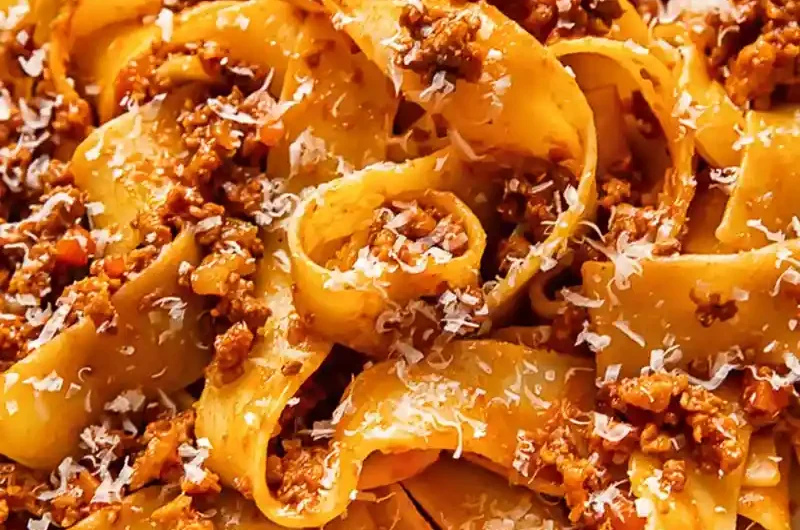
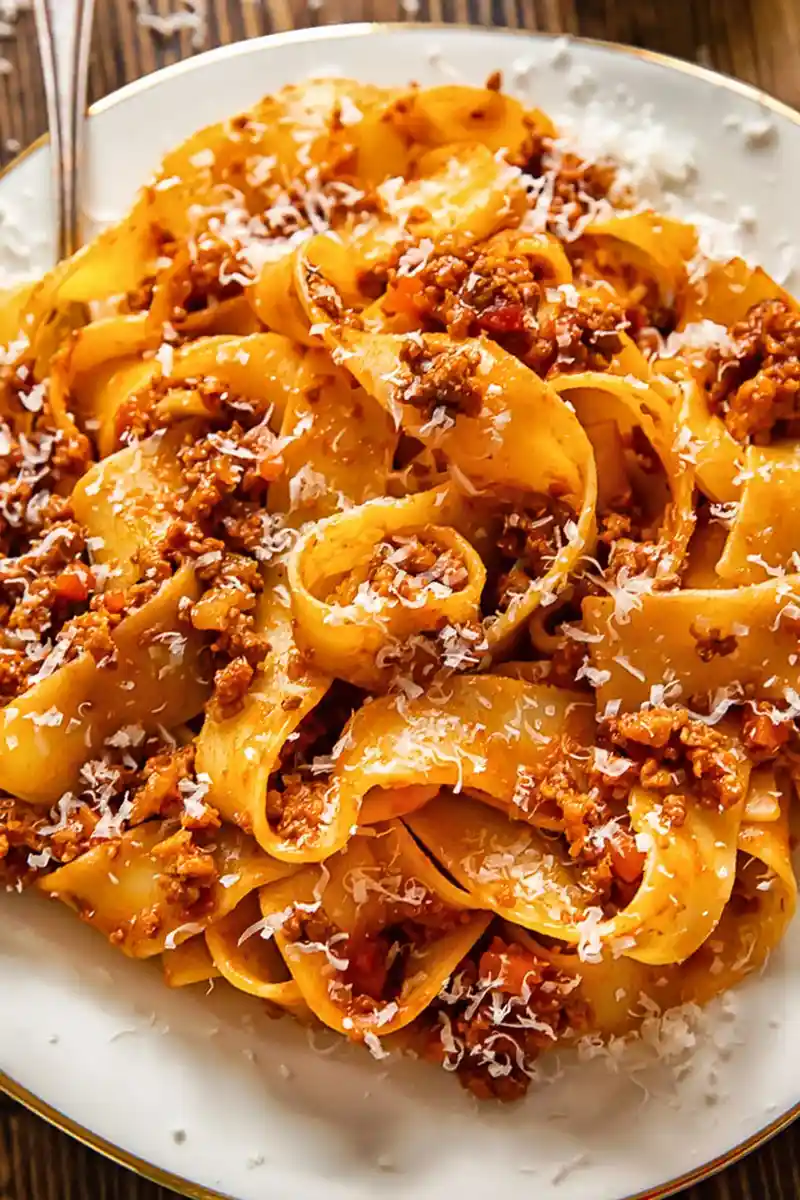
This Tuscan Ragu is a thick, meaty sauce designed for pairing with hearty pasta. It utilizes a slow-cooked vegetable base and a blend of meats to achieve a rich, concentrated flavor.
List of ingredients
- 1-2 tbsp olive oil – used for sautéing the vegetables.
- 1 onion, chopped – provides a sweet, aromatic base.
- 2 ribs celery, diced – adds an earthy depth to the sauce.
- 2 carrots, chopped – contributes natural sweetness and color.
- 2-3 cloves garlic – minced to add pungent flavor.
- 1 sprig rosemary, leaves only – provides a woody, herbal note.
- 900g / 2lbs beef mince – the primary protein for the ragu.
- 450g / 1lb beef sausage, casing removed – adds richness and extra flavor.
- 250ml / 1 cup beef stock – used to deglaze the pan and add liquid.
- 400g / 14oz canned chopped tomatoes – gives the sauce texture.
- 500ml / 17½ oz tomato passata or crushed tomatoes – creates a smooth consistency.
- 3 tbsp tomato paste – thickens the sauce and deepens the red color.
- salt to taste – enhances the overall flavor profile.
- 1/2 tsp black pepper – provides a mild heat.
step-by-step instructions
- Sauté Vegetables: Heat 1 tbsp of olive oil in a large deep frying pan or Dutch oven. Add chopped onions, carrots, celery, minced garlic, and rosemary leaves, cooking on low heat for 10 minutes without browning the vegetables.
- Brown the Meat: Add the ground beef and casing-removed beef sausage to the pan. Use a spatula to break up the meat and stir constantly until the meat is browned and no longer pink.
- Deglaze the Pan: Pour in the beef stock and cook over medium heat for approximately 10 minutes. This process helps incorporate the browned bits from the bottom of the pan into the sauce.
- Combine Tomato Ingredients: Stir in the canned chopped tomatoes, tomato passata, and tomato paste. Add a pinch of salt and black pepper to the mixture.
- Slow Simmer: Bring the sauce to a simmer, then lower the heat and cover with a lid. Cook the ragu for 1.5 hours on low heat, stirring occasionally to prevent the bottom from burning.
- Final Adjustments: If the sauce becomes too thick, stir in a small splash of water. Taste the final product and add more salt if needed before serving.
Pasta Pairing Suggestions
Use Wide Pappardelle Ribbons
Pappardelle is the ideal pasta choice because its wide surface area can support the heavy meat sauce. The ribbons hold onto the thick ragu, ensuring every bite is balanced. This is a classic pairing in Tuscan cuisine.
Try Traditional Pici Pasta
Pici is a hand-rolled, thick spaghetti-like pasta typical of the Tuscany region. Its dense texture provides a satisfying chew that complements the richness of the meat. If you cannot find pici, a thick spaghetti is a decent substitute.
Opt for Rigatoni
Rigatoni is excellent for ragu because the large tubes and ridges trap the sauce inside. This ensures a high ratio of meat to pasta in every mouthful. It is a great choice for those who prefer a heartier texture.
Select Tagliatelle
Tagliatelle is a long, flat ribbon pasta that works well with creamy or meaty sauces. It provides a more delicate mouthfeel than pappardelle while still maintaining enough structure to hold the ragu. It is a versatile and widely available option.
Cooking Techniques for Maximum Flavor
Sautéing the Soffritto Properly
The combination of onion, carrot, and celery is known as a soffritto. Sautéing these slowly for at least 10 minutes allows the vegetables to soften and release their natural sugars. Avoid high heat to prevent them from browning, which can change the flavor profile.
Achieving a Deep Meat Brown
Browning the beef and sausage creates a Maillard reaction, which is essential for a deep, savory taste. Ensure the meat is broken into small pieces and cooked until no longer pink. Do not overcrowd the pan, or the meat may steam instead of brown.
The Role of Low Heat Simmering
Simmering the sauce for 90 minutes breaks down the connective tissues in the beef. This process results in a tender meat texture and a more integrated flavor. High heat can cause the sauce to separate or burn, so maintain a gentle bubble.
Deglazing with Beef Stock
Adding beef stock to the browned meat lifts the caramelized bits, called fond, from the bottom of the pot. This step ensures that all the concentrated flavor is incorporated back into the sauce. Simmering the stock for a few minutes before adding tomatoes concentrates the taste.
Controlling Sauce Thickness
The ideal ragu should be thick and meaty rather than watery. If the sauce is too thin, simmer it uncovered for the final 20 minutes to allow excess moisture to evaporate. If it becomes too thick, a small amount of water or extra stock will loosen it.
Timing the Seasoning
Add salt and pepper in stages throughout the cooking process. This allows you to build layers of flavor rather than adding everything at once. Perform a final taste test at the end, as the reduction process intensifies the saltiness.
Ingredient Substitutions
Beef Sausage Alternatives
If you cannot find beef sausage, use additional ground beef mixed with a pinch of fennel seeds and crushed garlic. This replicates the flavor profile of traditional sausage. Ensure the meat has a moderate fat content for richness.
Tomato Passata Substitutes
If passata is unavailable, you can use canned crushed tomatoes or pureed canned tomatoes. For a smoother consistency, blend canned tomatoes in a food processor until no chunks remain. This maintains the necessary thickness of the sauce.
Herbal Swaps for Rosemary
While rosemary is traditional, fresh thyme or oregano can be used as alternatives. Thyme provides a more subtle, lemony note, while oregano adds a classic Mediterranean flavor. Use similar quantities to the original rosemary leaves.
Exploring Alternative Meats
For a different regional twist, you can replace some of the beef with diced rabbit or wild boar. These meats are common in Tuscan hunting traditions and provide a gamey depth. Adjust the simmering time slightly depending on the toughness of the meat.
Liquid Base Variations
If beef stock is not on hand, a strong vegetable broth can be used. This provides the necessary liquid for deglazing without altering the primary flavor significantly. Avoid using plain water, as it lacks the depth provided by a stock.
Selecting Cooking Oils
Extra virgin olive oil is preferred for its fruity flavor and health benefits. However, a neutral oil like avocado oil can be used if you prefer a less pronounced taste. Avoid using butter for the initial sauté as it may burn at higher temperatures.
Serving and Presentation Ideas
Complementary Hard Cheeses
Freshly grated Pecorino Romano adds a sharp, salty contrast to the rich ragu. Parmesan is another excellent choice for a more nutty and mild flavor. Sprinkle the cheese generously over the plated pasta just before serving.
Adding Leafy Greens
Serve the pasta alongside a side of sautéed Tuscan kale or cavolo nero. The bitterness of the greens cuts through the richness of the meat sauce. A simple arugula salad with lemon dressing also works well.
Garlic Bread Accompaniments
Toasted ciabatta or sourdough bread rubbed with a raw garlic clove is a perfect side. Use the bread to scoop up any remaining sauce left on the plate. This adds a crunchy texture to the meal.
Fresh Garnish Options
A sprinkle of chopped fresh parsley or a few basil leaves adds a pop of color and freshness. A final drizzle of high-quality extra virgin olive oil enhances the aroma. Avoid heavy garnishes that mask the flavor of the slow-cooked meat.
Storage and Preservation
Refrigeration Guidelines
Store leftover ragu in an airtight glass or plastic container in the refrigerator. The sauce will keep for 2 to 3 days. Many find that the flavor improves after a day as the ingredients continue to meld.
Freezing the Sauce
Ragu freezes exceptionally well for up to 6 months. Portion the sauce into freezer-safe bags or containers to make reheating easier. Leave a small amount of space at the top of the container to allow for expansion during freezing.
Safe Thawing Methods
The best way to defrost ragu is by placing it in the refrigerator overnight. This prevents the meat from spoiling and maintains the texture. In a hurry, you can use the defrost setting on a microwave or a gentle water bath.
Stovetop Reheating Process
Heat the sauce in a small pot over medium-low heat. Add a tablespoon of water or beef stock to loosen the sauce as it warms. Stir frequently to ensure the meat is heated evenly without burning the bottom.
Microwave Reheating Tips
Place the sauce in a microwave-safe bowl and cover it with a lid to retain moisture. Heat in 1-minute intervals, stirring between each session. This prevents hotspots and ensures the sauce reaches a consistent temperature.
Reviving Old Sauce
If the sauce has become very thick during storage, whisk in a small amount of pasta water during reheating. The starch in the water helps the sauce emulsify and cling to the pasta. A small knob of butter can also add a fresh gloss.
Troubleshooting the Ragu
Balancing High Acidity
If the tomatoes make the sauce too acidic, add a tiny pinch of sugar or a small piece of grated carrot. This neutralizes the sharp tang without making the sauce sweet. A small amount of butter also helps mellow the acidity.
Fixing a Thin Sauce
If the ragu is too liquid, simmer it without a lid for the last 30 minutes of cooking. This allows water to evaporate and thickens the consistency. You can also stir in an extra tablespoon of tomato paste.
Preventing Meat Clumping
To avoid large clumps of meat, use a sturdy spatula to break the beef apart during the browning phase. Stir frequently to ensure the meat is evenly distributed. Do not add the liquid until the meat is well-separated.
Avoiding Scorched Bottoms
Stir the sauce every 15 to 20 minutes during the long simmer. Use a wooden spoon to scrape the bottom and sides of the pot. If you notice burning, transfer the sauce to a clean pot immediately.
Frequently Asked Questions
Can I use a slow cooker?
Yes, you can adapt this recipe for a slow cooker. Brown the meat and sauté the vegetables in a pan first, then transfer everything to the slow cooker. Cook on low for 6 to 8 hours or on high for 4 hours.
Is this sauce suitable for meal prep?
This ragu is ideal for meal prep because it lasts several days in the fridge and months in the freezer. You can cook a large batch and pair it with different pastas or vegetables throughout the week.
What is the difference between ragu and bolognese?
Ragu is a general term for any meat-based sauce in Italy. Bolognese is a specific type of ragu from Bologna. Tuscan ragu often differs by the inclusion of specific meats like sausage or different herbs like rosemary.
Can I make this with leaner beef?
You can use lean beef, but the sauce may lack the depth and moisture of a fattier cut. If using lean beef, consider adding a tablespoon of olive oil or butter to the sauce to compensate for the missing fat.
Can I use fresh tomatoes instead of canned?
Fresh tomatoes can be used if they are very ripe, but you must peel and seed them first. Canned tomatoes are generally preferred for ragu because they provide a consistent acidity and thickness year-round.
How do I know when the ragu is done?
The ragu is finished when the meat is very tender and the sauce has thickened to a rich, jam-like consistency. The oil may slightly separate from the tomato base, which is a sign of a well-reduced sauce.
Meat Selection Guide
Ideal Beef Mince Fat Percentage
Choose beef with a fat content of approximately 15% to 20%. The fat renders during the slow cooking process, adding flavor and preventing the meat from becoming dry. Lean beef often requires more oil to avoid a grainy texture.
Choosing Beef Sausage Seasoning
Select a beef sausage that contains fennel, garlic, and black pepper. These flavors are traditional in Italian meat sauces and complement the rosemary. Avoid sausages with sweet glazes or non-traditional additives.
Evaluating Mince Quality
High-quality, coarsely ground beef provides a better texture for ragu than very finely ground meat. Coarse mince keeps its structure during the long simmer, providing a more satisfying bite. Always check that the meat is fresh and bright red.
Understanding the Browning Stages
Wait until the meat develops a deep brown crust before adding the stock. This crust is where the most intense flavor resides. If the meat releases too much water, drain some of the liquid before continuing to brown.
Make-Ahead Strategies
Prepping the Soffritto
You can chop the onion, carrot, and celery in advance and store them in a container. This reduces the active prep time on the day of cooking. Simply dump the mixed vegetables into the oil when ready to start.
Pre-Browning the Meat
Brown the beef and sausage a day before you plan to simmer the sauce. Store the browned meat in the refrigerator in a sealed container. This allows you to start the simmering process more quickly.
Chilling the Sauce for Flavor
Allow the sauce to cool completely and sit in the refrigerator overnight before serving. The flavors intensify and stabilize during the cooling process. Reheat gently on the stove before adding to pasta.
Batch Cooking for the Month
Double or triple the recipe to create a monthly supply of sauce. Divide the finished ragu into individual serving portions before freezing. This makes dinner preparation fast and consistent during busy weekdays.
Print
Tuscan Ragu
- Total Time: 140 minutes
- Yield: 10 servings 1x
- Diet: General
Description
Rich in tomato, magnificently meaty and the perfect pasta partner, create your own ragu sauce with this authentic recipe.
Ingredients
- 1–2 tbsp olive oil
- 1 onion, chopped
- 2 ribs celery, diced
- 2 carrots, chopped
- 2–3 cloves garlic
- 1 sprig rosemary, leaves only
- 900g beef mince
- 450g beef sausage, casing removed
- 250ml beef stock
- 400g canned chopped tomatoes
- 500ml tomato passata or crushed tomatoes
- 3 tbsp tomato paste
- salt to taste
- 1/2 tsp black pepper
Instructions
- Step 1: Heat 1 tbsp of olive oil in a large and deep frying pan or a Dutch Oven, then add diced onions, carrots, celery, minced garlic and chopped rosemary leaves and cook on low heat for 10 minutes without colouring the vegetables.
- Step 2: Add ground beef and beef sausages, break them up with a spatula and brown until the meat is no longer pink inside while stirring.
- Step 3: Pour in the beef stock and cook for about 10 minutes over medium heat.
- Step 4: Pour in both types of canned tomatoes and tomato paste with a pinch of salt and pepper.
- Step 5: Allow the sauce to come to a simmer, then lower the heat and cover with a lid, and cook the ragu for 1.5 hours over low heat.
- Step 6: Stir occasionally to prevent burning; if the sauce gets too thick, add a splash of water and continue cooking.
- Step 7: Taste and add more salt if needed.
Notes
Sauté the soffritto (onion, carrot, celery) for at least 10 minutes to develop a rich base. This sauce pairs perfectly with pici or pappardelle pasta. Store leftovers in an airtight container in the freezer for up to 6 months.
- Prep Time: 20 minutes
- Cook Time: 120 minutes
- Category: Main Course
- Method: Simmering
- Cuisine: Italian
Nutrition
- Serving Size: 1 serving
- Calories: 338 kcal
- Sugar: 5 g
- Sodium: 706 mg
- Fat: 18 g
- Saturated Fat: 6 g
- Unsaturated Fat: 10 g
- Trans Fat: 0.4 g
- Carbohydrates: 11 g
- Fiber: 2 g
- Protein: 28 g
- Cholesterol: 89 mg
Keywords: Tuscan ragu, Italian meat sauce, beef ragu, slow cooked sauce, pasta sauce