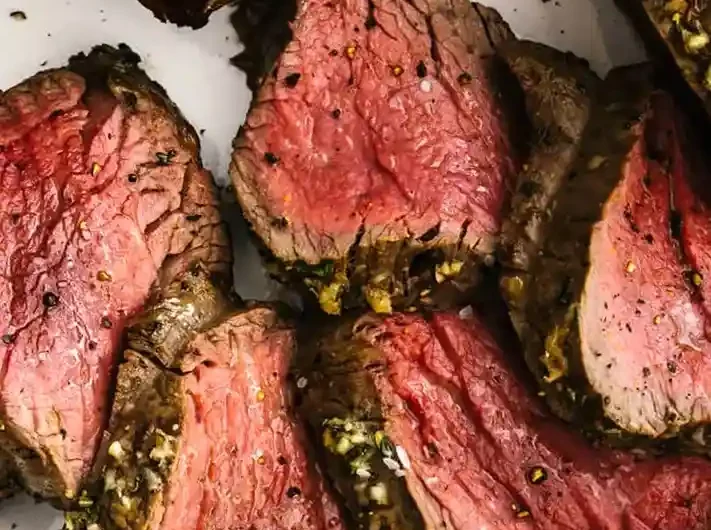
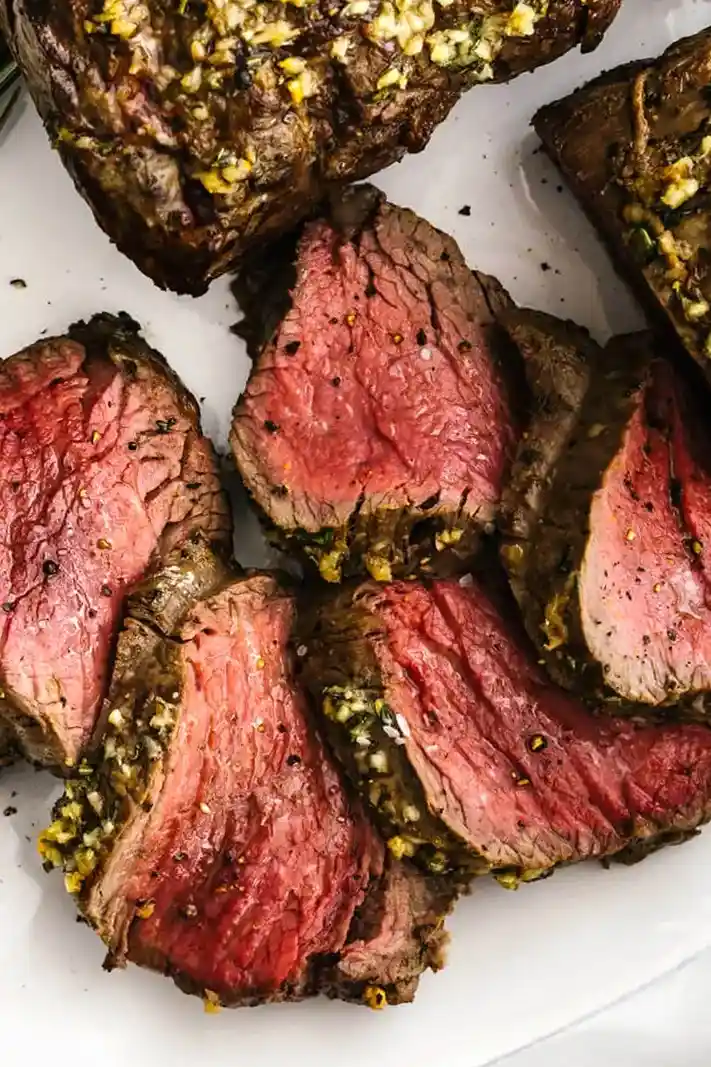
Prepare a luxurious and tender main course with this garlic herb beef tenderloin. This recipe uses a simple sear-and-roast method to ensure a flavorful crust and a juicy interior.
List of ingredients
- 1 center-cut beef tenderloin roast (4 to 4 ½ pounds) – trimmed and tied for even cooking.
- 2 teaspoons kosher salt – to enhance the natural beef flavor.
- 1 teaspoon freshly ground black pepper – for a subtle spicy kick.
- 2 tablespoons avocado oil – ideal for high-heat searing.
- 6 tablespoons softened butter – used as the base for the herb compound.
- 6 garlic cloves – minced finely to distribute flavor.
- 1 teaspoon finely chopped fresh rosemary leaves – adds an earthy aroma.
- 1 teaspoon finely chopped fresh thyme leaves – provides a delicate herbal note.
step-by-step instructions
- Prepare the meat: Remove the beef tenderloin from the fridge and let it come to room temperature for about 1 to 2 hours before cooking.
- Mix the herb butter: In a small bowl, combine the softened butter, minced garlic, rosemary, and thyme, then set the mixture aside.
- Ready the oven and meat: Preheat your oven to 425°F (220°C). Slice the beef tenderloin in half, then trim and tie it up if your butcher has not already done so.
- Season: Pat the beef tenderloin with paper towels to remove excess moisture, then season both sides generously with salt and pepper.
- Sear the beef: Heat avocado oil in a large cast-iron pan over medium-high heat until shimmering. Brown the tenderloin for a few minutes on all sides, totaling about 10 minutes, to create a golden crust.
- Roast: Slather the garlic herb butter mixture over the top side of the meat. Transfer the pan to the oven, inserting a probe thermometer if available, and roast for 15 to 20 minutes depending on your preferred doneness.
- Rest and slice: Move the beef to a cutting board and let it rest for 10 to 15 minutes to redistribute juices. Remove the twine and slice into 1-inch thick pieces.
Guidelines for Selecting the Best Beef
Understanding the Center-Cut Tenderloin
The center-cut beef tenderloin is the most prized part of the cow and is the source of filet mignon. It offers the most consistent shape and the highest level of tenderness. Using this specific cut ensures that the meat cooks uniformly without the thinner ends overcooking.
The Importance of Removing Silverskin
Silverskin is a tough, iridescent connective tissue that does not break down during cooking. If left on the meat, it can shrink and cause the roast to misshape or become chewy. Removing this layer ensures every bite is buttery and soft.
Why Tying the Meat is Necessary
Beef tenderloins are naturally oblong and tapered, meaning the thin end would overcook before the thick center is done. Tying the roast with kitchen twine forces the meat into a uniform cylinder. This allows the heat to penetrate the meat evenly from all sides.
Mastering Temperature and Doneness
Using a Reliable Meat Thermometer
Because every oven fluctuates in temperature, relying on a timer alone can be risky. A meat thermometer is the only way to guarantee the roast reaches the exact internal temperature you desire. Using a probe thermometer allows you to monitor the rise in heat in real-time.
Target Temperatures for Rare Beef
For a rare roast, remove the beef from the oven when the internal temperature reaches 110°F. After resting, the carryover cooking will bring the final temperature to between 115°F and 118°F. The center will remain bright red with a very thin pink edge.
Target Temperatures for Medium Rare Beef
Medium rare is often considered the ideal doneness for tenderloin. Remove the meat at 120°F so it can rest up to 125°F to 128°F. This results in a warm red center that transitions into pink towards the outer edges.
Target Temperatures for Medium Beef
If you prefer a medium roast, pull the meat from the oven at 130°F. The resting process will bring the final temperature to 135°F to 138°F. The center will be a warm pink, while the outer portions are fully brown.
Accounting for Carryover Cooking
Carryover cooking occurs when the internal temperature continues to rise even after the meat is removed from the heat source. This is why you must pull the roast a few degrees before it hits your target. Resting allows this process to complete while redistributing juices.
Essential Equipment for Success
The Benefits of a Cast-Iron Skillet
Cast iron is superior for this recipe because it retains heat exceptionally well. This allows for a professional-grade sear that creates a flavorful brown crust via the Maillard reaction. Since it is oven-safe, you can move the roast directly from the stove to the oven without losing heat.
Selecting the Right Kitchen Twine
Always use food-grade, unbleached cotton butcher’s twine to tie your roast. Avoid using synthetic strings that could melt or release chemicals under high oven heat. Ensure the knots are secure but not so tight that they cut into the meat.
Probe vs. Instant-Read Thermometers
A probe thermometer stays in the meat throughout the roasting process and alerts you when the target is hit. An instant-read thermometer is used to check specific spots manually. Both are useful, but the probe is more convenient for high-stakes holiday roasts.
Ingredient Substitutions and Variations
Alternative Oils for High-Heat Searing
Avocado oil is preferred due to its very high smoke point, preventing the oil from burning. If you do not have it, grapeseed oil or canola oil are excellent substitutes. Avoid using extra virgin olive oil for the sear, as it can smoke and turn bitter at 425°F.
Swapping Fresh Herbs for Dried
Fresh herbs provide a brighter, more aromatic flavor profile. If you must use dried rosemary and thyme, use only one-third of the amount listed in the recipe. Dried herbs are more concentrated and can become overpowering if used in equal quantities.
Using Different Types of Butter
Unsalted butter is recommended so you can control the total salt content of the dish. If you only have salted butter, simply reduce the amount of kosher salt used for the initial seasoning. Ensure the butter is truly softened to room temperature for easy mixing.
Serving and Pairing Suggestions
Creating a Creamy Horseradish Sauce
A pungent horseradish sauce provides a sharp contrast to the rich, fatty nature of the beef. Mix prepared horseradish with sour cream or Greek yogurt, a splash of lemon juice, and a pinch of salt. This cuts through the richness and cleanses the palate between bites.
Pairing with Root Vegetables
Creamy mashed potatoes are a classic accompaniment that absorbs the garlic butter juices. Alternatively, honey-glazed carrots or roasted parsnips add a touch of sweetness that complements the savory herbs. These sides mirror the elegance of the main course.
Adding Fresh Green Vegetables
To balance the meal, serve the roast with roasted broccoli or Brussels sprouts. Toss them in olive oil and salt, then roast them in the oven alongside the meat if space permits. The charred edges of the greens provide a great textural contrast.
Storage and Reheating Instructions
Refrigerating Leftover Beef
Store any remaining sliced beef in an airtight glass container in the refrigerator. It will remain fresh and flavorful for 4 to 5 days. Slicing the meat before storing makes it easier to reheat small portions without warming the entire roast.
Freezing Sliced Tenderloin
For long-term storage, place sliced beef in freezer-safe bags and squeeze out as much air as possible to prevent freezer burn. The meat will maintain its quality for up to three months. Thaw the slices in the refrigerator overnight before reheating.
Best Methods for Reheating
To prevent the beef from overcooking during reheating, use a microwave on medium power for 1 to 2 minutes. Alternatively, place slices in a low oven (250°F) with a splash of beef broth and cover with foil. This keeps the meat moist and prevents it from becoming tough.
Common Troubleshooting Tips
Preventing the Garlic Butter from Burning
Do not apply the herb butter during the initial searing process, as the milk solids in butter burn quickly at high temperatures. Only slather the butter on the meat once it is ready to move into the oven. The lower relative heat of roasting allows the butter to melt and baste the meat without scorching.
Fixing Uneven Browning
If the meat is not browning evenly, ensure your pan is sufficiently hot before adding the beef. You should see the oil shimmering or barely smoking. Use tongs to rotate the meat every few minutes to ensure every surface makes contact with the hot metal.
Managing Overcooked Meat
If the roast accidentally goes past medium and becomes well-done, do not panic. Slice the meat very thinly across the grain to maximize tenderness. Serving it with a generous amount of horseradish sauce or a red wine reduction can also help mask the dryness.
Frequently Asked Questions
Can I use a different cut of beef instead?
You can use a sirloin roast or a ribeye roast, but be aware that these cuts have different fat distributions and textures. They will not be as consistently tender as the tenderloin and may require different roasting times.
How long should the meat really rest?
Resting for 10 to 15 minutes is non-negotiable for a high-quality result. This allows the muscle fibers to relax and the juices to redistribute. If you slice too early, the juices will run out onto the board, leaving the meat dry.
Do I really have to sear the meat first?
While you can roast meat without searing, you will miss out on the deep flavor created by the Maillard reaction. Searing creates the savory, caramelized crust that defines a professional roast and adds a layer of complexity to the final taste.
Print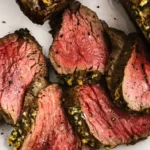
Garlic Herb Butter Beef Tenderloin Roast
- Total Time: 45 minutes
- Yield: 8 servings 1x
- Diet: General
Description
This garlic herb beef tenderloin roast gives your average steak a major (easy) upgrade! It also makes for stunning main for Christmas and the holidays.
Ingredients
- 1 center-cut beef tenderloin roast (4 to 4 ½ pounds), trimmed and tied
- 2 teaspoons kosher salt
- 1 teaspoon freshly ground black pepper
- 2 tablespoons avocado oil
- 6 tablespoons softened butter
- 6 garlic cloves, minced
- 1 teaspoon finely chopped fresh rosemary leaves
- 1 teaspoon finely chopped fresh thyme leaves
Instructions
- Step: Remove the beef tenderloin from the fridge and let it come to room temperature prior to cooking, about 1 to 2 hours.
- Step: In a small bowl, mix together the butter, garlic, rosemary, and thyme. Set aside.
- Step: Preheat the oven to 425°F (220°C). Slice the beef tenderloin in half, then trim and tie it up (if it hasn’t already been done by the butcher).
- Step: Use paper towels to pat any excess moisture from the beef tenderloin, then season both sides with salt and pepper.
- Step: Heat the oil in a large cast-iron pan over medium-high heat. Once the oil is shimmering, add the beef tenderloin and brown for a few minutes on all sides, about 10 minutes total, to create a golden brown crust.
- Step: Slather the butter herb mixture over the top side of the beef tenderloin, then transfer the entire pan to the oven. If using a probe thermometer, insert the probe before placing the tenderloin in the oven. Roast the beef tenderloin for 15 to 20 minutes, depending on how you like your meat cooked.
- Step: Remove the beef tenderloin from the oven and transfer to a cutting board. Let it rest for 10 to 15 minutes, to allow the juices to redistribute. Then remove the twine and slice into 1-inch thick pieces.
Notes
Serve with homemade horseradish sauce. Use a meat thermometer for precision: Rare (remove at 110°F), Medium Rare (remove at 120°F), or Medium (remove at 130°F).
- Prep Time: 15 minutes
- Cook Time: 30 minutes
- Category: Dinner
- Method: Searing and Roasting
- Cuisine: American
Nutrition
- Serving Size: 1 serving
- Calories: 732 kcal
- Sugar: 1 g
- Sodium: 768 mg
- Fat: 62 g
- Saturated Fat: 26 g
- Unsaturated Fat: 29 g
- Trans Fat: 1 g
- Carbohydrates: 1 g
- Fiber: 1 g
- Protein: 41 g
- Cholesterol: 181 mg
Keywords: beef tenderloin roast, garlic herb butter, Christmas dinner, holiday main, easy beef roast