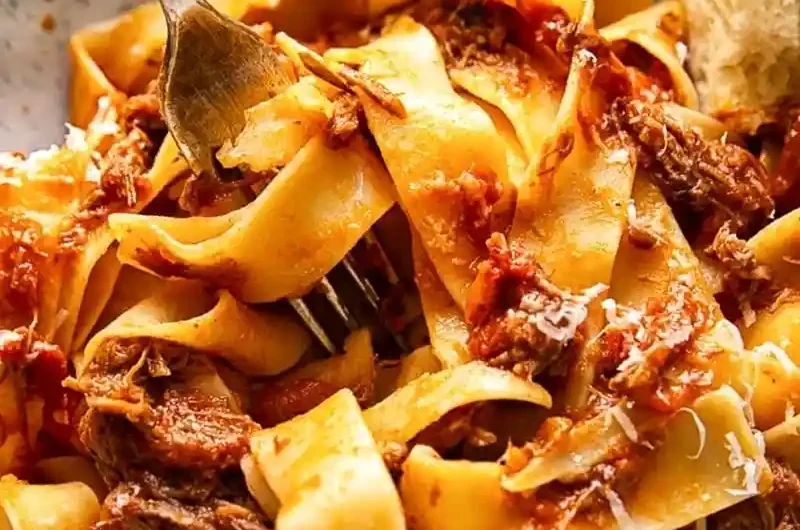
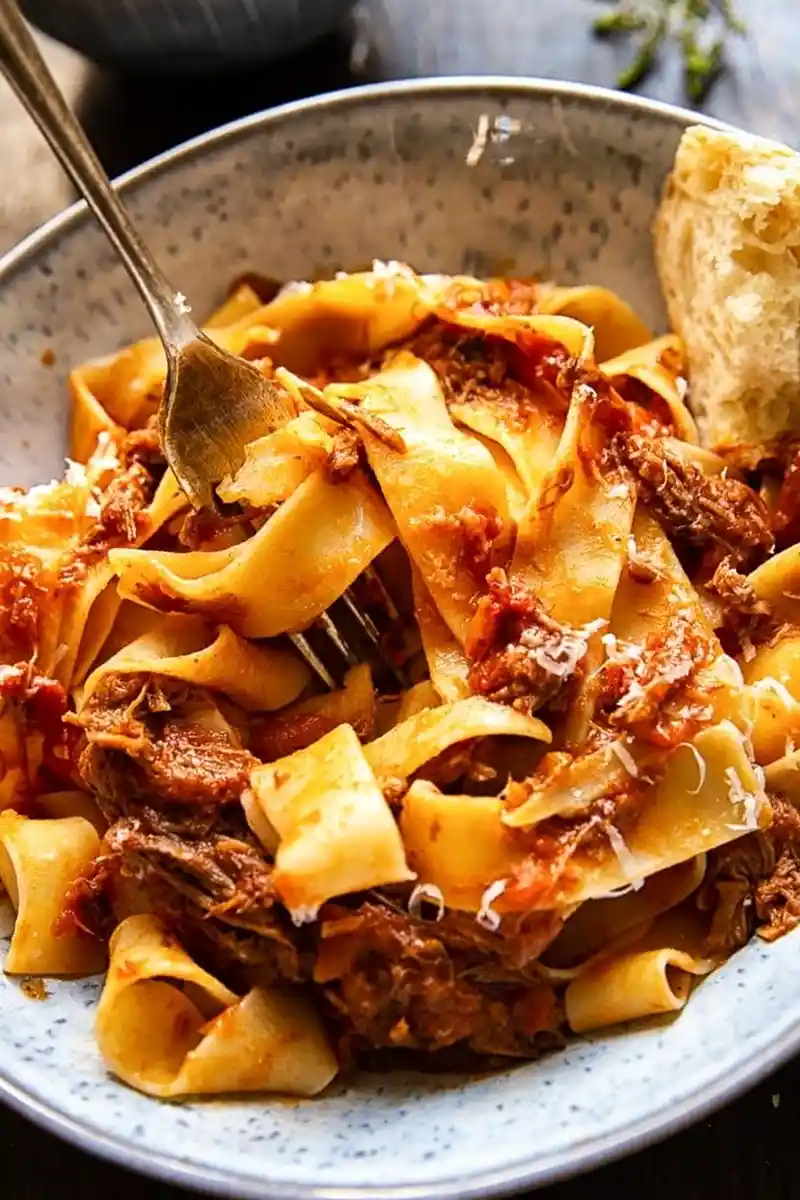
This hearty Italian beef ragu is designed for slow cooking to ensure the meat becomes tender and the flavors deepen over several hours. It is a versatile, chunky sauce that pairs perfectly with wide pasta noodles or serves as a robust base for lasagna.
List of ingredients
- 1.5-2kg (3-4lbs) beef roast – choose a budget-friendly cut like chuck or shoulder for better tenderness.
- 2 tbsp olive oil – used for searing the meat to develop a brown crust.
- 2-3 sprigs each of fresh rosemary and fresh thyme – discard stems and finely chop the leaves.
- 1 small red onion – peeled and finely chopped.
- 4 garlic cloves – peeled and finely chopped.
- 1 carrot – peeled and finely chopped.
- 1 celery stick – finely chopped.
- 375ml (1½ cups) beef broth – a savory replacement for wine to provide depth and liquid.
- 3x400g (14oz) cans chopped tomatoes – crushed tomatoes are a great alternative for a smoother texture.
- 2 tbsp pearl barley – optional, used to add thickness, nutrients, and a slight nuttiness.
- 1 tsp salt and freshly ground black pepper – for basic seasoning.
- 500g (1lb) fresh or dried pappardelle pasta – rigatoni is also a suitable sturdy alternative.
- 2 tbsp unsalted butter – stirred in at the end for a glossy finish and richer flavor.
- 2 handfuls grated Parmesan cheese – use a microbial-rennet variety, plus extra for garnish.
step-by-step instructions
- Prepare the aromatics: Chop the onion, carrot, and celery into small pieces. Mince the garlic and finely chop the fresh rosemary and thyme leaves, then place all these vegetables and herbs at the bottom of your crock pot.
- Brown the beef: Cut the beef roast into 2-3 inch cubes. Heat olive oil in a frying pan over high heat and brown the meat in several batches to avoid overcrowding, which ensures a proper sear. Transfer the browned beef into the crock pot on top of the vegetables.
- Deglaze the pan: Remove the frying pan from the heat and pour in the beef broth. Use a wooden spoon to scrape up all the browned bits (fond) from the bottom of the pan, as this contains concentrated flavor. Pour the liquid from the pan into the crock pot and add the canned tomatoes.
- Slow cook the ragu: Sprinkle the pearl barley over the top if using. Add the salt and freshly ground black pepper. Cover and cook on the low setting for 10 to 12 hours.
- Shred and finish: During the final hour of cooking, remove the lid and shred the beef using two forks. Stir in one additional tablespoon of chopped fresh rosemary and thyme. Add a small splash of water or broth if the sauce appears too thick, then cook for one more hour.
- Add the final touch: Once the cooking time is complete, stir in the unsalted butter. This incorporates a professional gloss and rounds out the savory flavors of the meat.
- Serve with pasta: Boil a large pot of salted water and cook your chosen pasta according to the package instructions. Combine approximately one-third of the beef ragu with the hot pasta and finish with a generous sprinkle of grated Parmesan cheese.
Optimal Beef Selection for Slow Cooking
Choosing Chuck Roast
Chuck roast is widely considered the best cut for ragu because it contains a high amount of connective tissue and collagen. During the long slow-cooking process, this collagen breaks down into gelatin, which naturally thickens the sauce and creates a melt-in-your-mouth texture.
Using Beef Shoulder
Beef shoulder is another excellent budget-friendly option that handles long simmer times without drying out. It offers a similar fat content to chuck, ensuring the meat remains moist even after 12 hours in the crock pot.
Considering Beef Brisket
Brisket is a leaner alternative but still possesses the toughness required for slow cooking. If using brisket, ensure you leave some of the fat cap intact during the browning process to maintain moisture in the final dish.
Maximizing Flavor through Preparation
The Importance of the Mirepoix
The combination of onion, carrot, and celery forms a classic mirepoix, providing a sweet and earthy base. Finely chopping these vegetables ensures they integrate into the sauce, creating a thick consistency rather than leaving large chunks.
Properly Searing the Meat
Searing the beef in batches is critical to trigger the Maillard reaction, which creates complex savory flavors. Overcrowding the pan drops the temperature, causing the meat to steam in its own juices rather than brown.
Effective Deglazing Techniques
Deglazing the pan with beef broth captures the fond, which are the caramelized protein particles stuck to the pan. This step transfers an intense amount of savory depth directly into the slow cooker that cannot be achieved by simmering alone.
Understanding the Role of Barley
Texture and Thickness
Pearl barley acts as a natural thickening agent by releasing starches into the sauce as it simmers. This results in a creamier, more cohesive ragu that clings better to the pasta noodles.
Nutritional Benefits
Adding barley increases the fiber and nutrient content of the meal. It provides a subtle, nutty undertone that complements the richness of the beef and the acidity of the tomatoes.
Substituting Barley
If you prefer not to use barley, you can substitute it with a tablespoon of cornstarch mixed with water at the end or simply simmer the ragu with the lid off for the final hour to reduce the liquid.
Selecting the Right Pasta
Wide Ribbon Pasta
Pappardelle or tagliatelle are ideal because their wide surface area can support the weight of the chunky beef pieces. These noodles provide a balanced ratio of pasta to sauce in every bite.
Ridged Tube Pasta
Rigatoni or penne are excellent choices because the holes and ridges trap the ragu inside and on the surface. This makes them a more practical choice for those who prefer a sturdier bite.
Avoiding Delicate Noodles
Avoid using thin pastas like capellini or standard spaghetti. The heavy, rustic nature of a beef ragu will overwhelm thin noodles, causing them to break or become lost in the sauce.
Serving and Pairing Suggestions
Fresh Side Salads
Pair the rich beef ragu with a light, acidic side such as a Caprese salad with fresh mozzarella, tomatoes, and basil. The acidity of the vinegar or lemon dressing cuts through the richness of the beef and butter.
Garlic Bread Accompaniments
Toasted garlic bread is highly recommended for soaking up the remaining sauce from the plate. Use a crusty baguette brushed with garlic butter and toasted until golden brown.
Alternative Bases
While pasta is traditional, this ragu is versatile enough to be served over creamy polenta or mashed potatoes. It can also be used as a filling for savory crepes or served inside a toasted ciabatta roll.
Storage and Preservation
Refrigeration Guidelines
Store leftover ragu in airtight glass containers in the refrigerator for up to four days. Ensure the food is cooled slightly before sealing to prevent excessive condensation from affecting the texture.
Freezing for Long-Term Use
Beef ragu freezes exceptionally well because of its high fat and tomato content. Portion the sauce into freezer-safe bags or containers and store for up to three months for a quick meal.
Thawing Process
The best way to thaw frozen ragu is to place the container in the refrigerator overnight. This slow thawing process preserves the integrity of the meat fibers and prevents the sauce from separating.
Reheating Instructions
Stovetop Method
Place the ragu in a saucepan over medium-low heat. Add a splash of beef broth or water to loosen the sauce, stirring occasionally until heated through to avoid scorching the bottom.
Microwave Method
Transfer the ragu to a microwave-safe bowl and cover with a lid or damp paper towel. Heat in short intervals, stirring between each session to ensure the heat is distributed evenly.
Integrating with Fresh Pasta
For the best results, reheat the sauce separately and then toss it with freshly cooked pasta. Adding pre-cooked pasta to the sauce during reheating can lead to overcooked, mushy noodles.
Common Troubleshooting and FAQs
Why is my beef still tough after 12 hours?
Beef toughness is usually caused by using a cut that is too lean or not cooking it long enough on the low setting. Ensure you use a cut with visible marbling and maintain a consistent low temperature.
How can I make the sauce thicker?
If the ragu is too liquid, remove the lid for the last two hours of cooking to allow moisture to evaporate. You can also mash a few of the cooked carrots and celery into the sauce to increase thickness.
What if the sauce tastes too acidic?
If the canned tomatoes make the sauce too tart, stir in a pinch of sugar or a small amount of grated carrot during the final hour. The natural sugars will balance the acidity of the tomatoes.
Can I use dried herbs instead of fresh?
Yes, you can use dried rosemary and thyme, but use only one-third of the amount specified. Dried herbs are more concentrated than fresh and can become overpowering if used in equal quantities.
Is it necessary to brown the meat first?
While you can put raw meat in the slow cooker, browning it first adds a layer of depth and savory flavor that cannot be replicated. It also helps the meat hold its shape better during the shredding process.
Print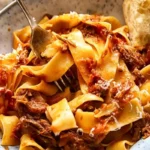
Slow Cooker Italian Beef Ragu
- Total Time: 12 hours 20 minutes
- Yield: 10 servings 1x
- Diet: General
Description
Rich Italian beef ragu slowly simmered in your slow cooker for maximum flavour. Use this delicious sauce on any pasta you love!
Ingredients
- 1.5–2kg beef roast
- 2 tbsp olive oil
- 2–3 sprigs each fresh rosemary and fresh thyme, leaves finely chopped
- 1 small red onion, peeled and finely chopped
- 4 garlic cloves, peeled and finely chopped
- 1 carrot, peeled and finely chopped
- 1 celery stick, finely chopped
- 375ml beef stock
- 3x400g cans chopped tomatoes
- 2 tbsp pearl barley (optional)
- 1 tsp salt and freshly ground black pepper
- 500g pappardelle pasta or rigatoni
- 2 tbsp unsalted butter
- 2 handfuls grated Parmesan cheese
Instructions
- Step: Chop onion, carrot and celery, mince garlic and chop rosemary and thyme and put everything on the bottom of a crock pot.
- Step: Cut roast into 2″-3″ cubes and brown them in olive oil in a frying pan over high heat in stages, don’t overcrowd the meat so it browns nicely. Add it to the vegetables.
- Step: Taking the frying pan off the heat, pour beef stock into the pan and use wooden spoon to loosen all the delicious bits from the bottom of the pan. Pour the beef stock into the crock pot along with canned tomatoes.
- Step: Sprinkle barley all over. Add a teaspoon of salt and freshly ground pepper. Cook on low for 10-12 hours.
- Step: In the last hour take the lid off and shred the beef with two forks, add one more tablespoon of fresh rosemary and thyme and a splash of water if the meat is too dry. Cook for one hour longer.
- Step: At the end of cooking time stir in butter for more flavour and to add a gloss to your ragu.
- Step: Before serving cook your pasta in a large pot of salted water according to package directions. Combine 1/3 of beef ragu with hot pasta and sprinkle with freshly grated Parmesan cheese.
Notes
The red wine has been replaced with beef stock as a suitable alcohol-free alternative. Barley is optional but adds texture and nutrition. Use a sturdy pasta like pappardelle or rigatoni to match the robust sauce.
- Prep Time: 20 minutes
- Cook Time: 12 hours
- Category: Main
- Method: Slow Cooking
- Cuisine: Italian
Nutrition
- Serving Size: 1 serving
- Calories: 571 kcal
- Sugar: 8 g
- Sodium: 310 mg
- Fat: 22 g
- Saturated Fat: 9 g
- Unsaturated Fat: 13 g
- Trans Fat: 1 g
- Carbohydrates: 51 g
- Fiber: 5 g
- Protein: 36 g
- Cholesterol: 101 mg
Keywords: Italian beef ragu, slow cooker, crock pot, beef roast, pasta sauce