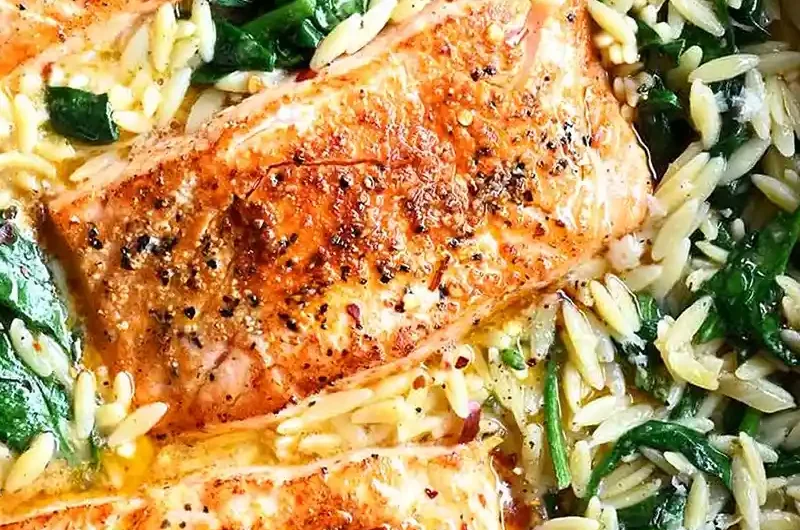
This one-pan meal combines pan-seared salmon with a creamy lemon orzo and fresh baby spinach. It is a fast, nutrient-dense dinner option that minimizes cleanup while delivering a sophisticated flavor profile.
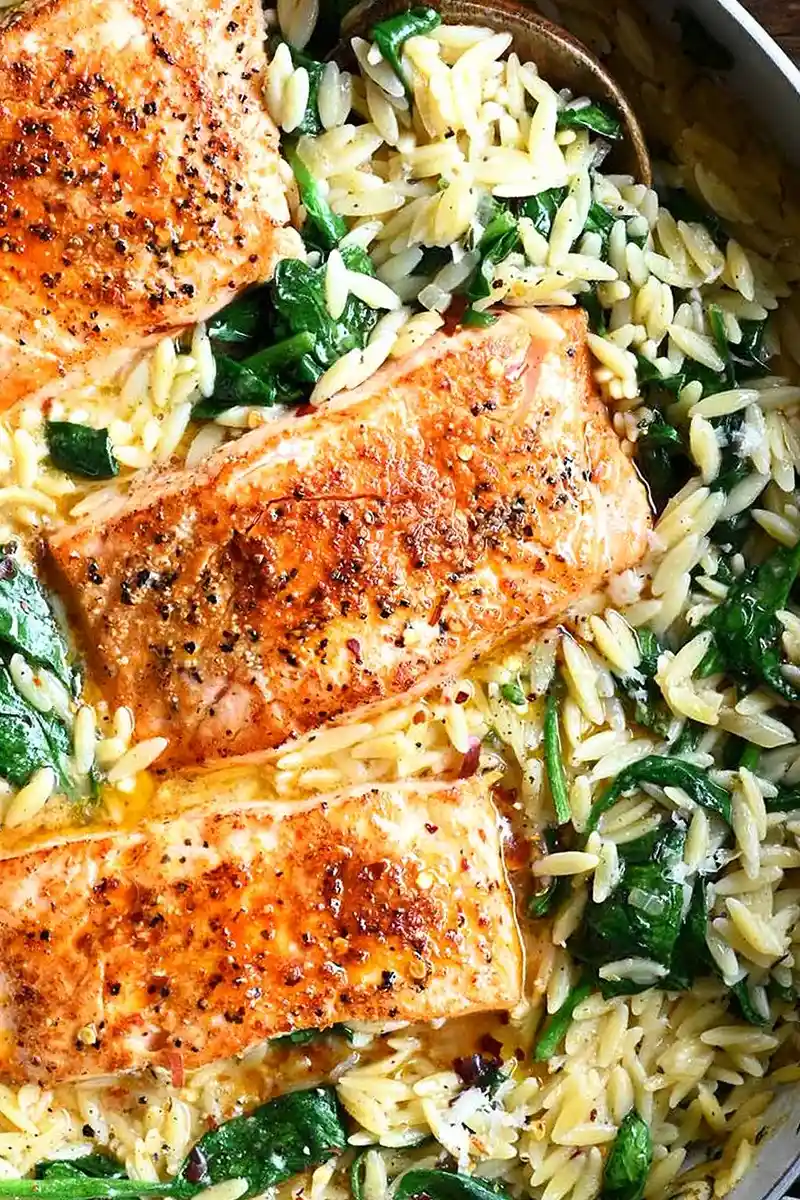
List of ingredients
- 4 skinless salmon fillets – use fillets of similar size for even cooking.
- 1 tsp salt – divided between the salmon and the orzo.
- 1 tsp coarsely ground black pepper – divided between the salmon and the orzo.
- 1 tsp sweet paprika – for color and mild sweetness.
- 1 tsp garlic powder – to create a savory crust.
- 1 tbsp olive oil – for searing at a high temperature.
- 1 tsp unsalted butter – for added flavor and richness.
- 1 yellow onion – finely chopped.
- 3 garlic cloves – minced.
- 1 cup dry orzo pasta – a small rice-shaped pasta.
- 1 tsp dried thyme – for an earthy, aromatic quality.
- 3 cups low sodium chicken broth – used to simmer the pasta.
- 5 ounces baby spinach – for color and nutrition.
- Juice from 1/2 lemon – to add brightness and acidity.
- 1/2 cup grated Parmesan – for a creamy, salty finish.
- Freshly ground black pepper – for final seasoning.
- Chili flakes – for an optional spicy garnish.
step-by-step instructions
- Prepare ingredients: Grate the Parmesan cheese, finely chop the yellow onion, and mince the garlic cloves. Pat the salmon fillets dry with a paper towel to ensure a better sear. Season both sides of the fillets with garlic powder, sweet paprika, and half of the salt and black pepper.
- Sear the salmon: Heat the olive oil and butter in a large nonstick skillet over medium-high heat. Add the salmon fillets and sear for 3-4 minutes per side until golden brown. Remove the fillets from the pan and set them aside on a plate.
- Sauté aromatics: Reduce the heat to medium and add the chopped onion and minced garlic to the remaining fat in the skillet. Cook for about 2 minutes until they are soft and fragrant. Stir in the dried thyme and the remaining salt and pepper.
- Toast the orzo: Add the dry orzo pasta to the skillet. Stir constantly for 1 minute to toast the grains, which enhances the flavor and prevents them from becoming too mushy.
- Simmer the pasta: Pour in the chicken broth and bring the liquid to a boil. Immediately reduce the heat to medium-low to maintain a gentle simmer. Cook uncovered for about 8 minutes, stirring occasionally to prevent sticking, until the liquid is mostly absorbed and the orzo is almost al dente.
- Incorporate greens and cheese: Stir in the baby spinach and simmer for about 2 minutes until the leaves have wilted. Stir in the lemon juice and grated Parmesan cheese. If the sauce is too thick, add a small amount of extra broth. Taste and adjust the salt if necessary.
- Combine and serve: Return the seared salmon fillets to the skillet. Simmer for 2-3 minutes until the fish is heated through. Top the dish with freshly ground black pepper and chili flakes before serving.
Cooking Techniques for Optimal Results
Patting Salmon Dry for a Better Crust
Moisture on the surface of the fish creates steam when it hits the hot pan, which prevents the Maillard reaction. By using a paper towel to remove all surface water, the fish makes direct contact with the oil and butter. This results in a golden-brown crust and a better texture.
Toasting Orzo for Depth of Flavor
Toasting the dry pasta in fat before adding the broth cooks the exterior of the grain. This process creates a nuttier flavor and helps the pasta maintain its structure during the simmering phase. It prevents the orzo from releasing too much starch too quickly, which keeps the texture distinct.
Preventing Orzo from Sticking to the Pan
Orzo is high in starch and can easily cling to the bottom of the skillet. Frequent stirring during the first few minutes of simmering ensures that the grains are evenly coated in liquid. Using a high-quality nonstick pan further reduces the risk of scorching the pasta.
Adding Lemon Juice at the End
Cooking lemon juice for an extended period can cause the bright, citrusy notes to dissipate or become bitter. Stirring the juice in at the final stage preserves the fresh acidity. This acidity cuts through the richness of the salmon and Parmesan, balancing the overall dish.
Ingredient Substitutions and Variations
Using Vegetable Broth instead of Chicken Broth
Vegetable broth is an excellent alternative for those avoiding meat-based stocks. To ensure the flavor remains robust, choose a low-sodium broth with a strong celery and carrot base. The taste difference is minimal, as the Parmesan and lemon provide most of the seasoning.
Swapping Baby Spinach for Other Greens
If baby spinach is unavailable, kale or Swiss chard are viable alternatives. Since these greens are heartier, add them to the pan 2-3 minutes earlier than spinach. Broccoli florets can also be used; however, they should be sautéed with the onions to ensure they are tender.
Replacing Salmon with Other Fish Fillets
Trout or Arctic char work well as they have a similar fat content and cooking time to salmon. For leaner white fish like cod or halibut, reduce the searing time to 2-3 minutes per side to avoid drying out the meat. Ensure the fillets are cut to a similar thickness for consistent results.
Alternative Cheese Options for the Sauce
Pecorino Romano can replace Parmesan for a saltier, sharper flavor. For a dairy-free version, use nutritional yeast or a vegan Parmesan alternative. Note that non-dairy cheeses may not emulsify as creamily, so you may need a tablespoon of cornstarch mixed with water to thicken the sauce.
Serving and Pairing Suggestions
Fresh Herb Garnishes for Added Aroma
Adding fresh herbs just before serving elevates the visual appeal and scent of the dish. Freshly chopped parsley or dill complements the lemon and salmon perfectly. Chives add a mild onion flavor that pairs well with the creaminess of the Parmesan.
Complementary Side Dish Pairings
Since this is a complete meal, a light side is best. A simple arugula salad with a lemon-olive oil vinaigrette provides a peppery contrast to the rich orzo. Roasted asparagus or steamed snap peas also offer a fresh, crunchy texture that balances the soft pasta.
Plating for Professional Presentation
To plate this dish, spoon a generous portion of the lemon orzo and spinach into a shallow bowl. Place a salmon fillet centered on top of the pasta. Garnish with a fresh lemon wedge and a sprinkle of chili flakes for a pop of color.
Storage and Reheating Instructions
Proper Refrigeration Methods
Store any leftover salmon and orzo in an airtight container in the refrigerator. This dish is best consumed within 24 hours, as the salmon can lose its texture over time. Ensure the food is cooled slightly before sealing the container to prevent excess condensation.
Freezing the Orzo Base
The orzo and spinach mixture can be frozen for up to three months, but it is recommended to freeze the salmon separately. Wrap the pasta tightly in foil or store it in a freezer-safe bag. Thaw in the refrigerator overnight before reheating.
Reheating Without Overcooking the Fish
Avoid using a high-power microwave setting, as this can make the salmon rubbery. Instead, reheat the mixture in a skillet over low heat. Add a splash of broth or water to loosen the orzo and cover the pan with a lid to steam the salmon gently.
Troubleshooting Common Issues
Orzo Remaining Too Hard After Simmering
If the liquid is absorbed but the orzo is still too firm, add an additional 1/4 cup of broth. Cover the pan with a lid and simmer on low for another 2-3 minutes. The trapped steam will help the pasta finish cooking without burning the bottom.
Salmon Becoming Too Dry
Dry salmon usually occurs when the fish is seared for too long or reheated at too high a temperature. Use a meat thermometer to check for an internal temperature of 145F (63C). When reheating, use a low flame and a small amount of liquid to keep the fish moist.
Sauce Being Too Thick or Clumpy
If the Parmesan causes the sauce to clump, it may be due to the heat being too high during the stirring process. Stir in a tablespoon of hot broth or warm water to emulsify the cheese. Constant stirring while adding the cheese helps create a smooth, glossy texture.
Frequently Asked Questions
Can I use a different type of pasta instead of orzo?
You can use other small pasta shapes like acini di pepe or very small shells. However, orzo is preferred because its shape and starch content create a risotto-like consistency that binds the ingredients together.
Should I leave the skin on the salmon?
Leaving the skin on is optional. If you keep the skin, sear it first for 4-5 minutes to get it crispy before flipping. This adds a textural contrast, although skinless fillets allow the seasonings to cover more of the fish surface.
How do I prevent the garlic from burning?
Garlic burns quickly at high temperatures. Always add the garlic after the onions have softened slightly, and ensure the heat is reduced to medium. If the pan seems too hot, add a teaspoon of oil or butter to lower the surface temperature.
Can this recipe be made in a cast iron skillet?
Yes, a cast iron skillet is excellent for searing salmon due to its heat retention. However, be more mindful of the simmering stage, as cast iron holds heat longer and may cause the orzo to cook faster or stick if not stirred frequently.
Print
One Skillet Salmon with Lemon Orzo
- Total Time: 30 minutes
- Yield: 4 servings 1x
- Diet: General
Description
A fuss-free meal with pan-seared salmon and lemony orzo cooked together with spinach and Parmesan for a quick and easy dinner.
Ingredients
- 4 skinless salmon fillets
- 1 tsp salt (divided)
- 1 tsp coarsely ground black pepper (divided)
- 1 tsp sweet paprika
- 1 tsp garlic powder
- 1 tbsp olive oil
- 1 tsp unsalted butter
- 1 yellow onion (finely chopped)
- 3 garlic cloves (minced)
- 1 cup dry orzo pasta
- 1 tsp dried thyme
- 3 cups low sodium chicken broth
- 5 ounces baby spinach
- juice from ½ lemon
- ½ cup grated Parmesan (microbial-rennet)
- freshly ground black pepper (for serving)
- chili flakes (for serving)
Instructions
- Step: Grate the Parmesan cheese, finely chop the onion and mince the garlic cloves. Pat the salmon fillets dry with a paper towel. Season both sides with garlic powder, sweet paprika and ½ teaspoon salt and pepper.
- Step: Heat oil and butter over medium high in a large nonstick pan or skillet. Add salmon fillets and sear, 3-4 minutes per side. Remove from skillet and set aside.
- Step: Reduce heat to medium, add garlic and onion. Cook until soft and fragrant for about 2 minutes. Stir in thyme and the remaining salt and pepper. Add orzo and toast for 1 minute.
- Step: Pour in broth and bring to a boil. To maintain a simmer, reduce the heat to medium-low. Cook uncovered while stirring occasionally to prevent the orzo from sticking, until almost al dente and most of the liquid is absorbed, about 8 minutes.
- Step: Add spinach, stir and simmer until wilted for about 2 minutes. Stir in lemon juice and Parmesan. Add more broth, if needed. Taste and adjust salt.
- Step: Return salmon to the skillet and simmer for 2-3 minutes, or until the salmon is heated through.
- Step: Top with freshly ground black pepper and chili flakes.
Notes
Try substituting salmon with shrimp or chicken. You can replace spinach with broccoli florets, kale, or green peas.
- Prep Time: 10 minutes
- Cook Time: 20 minutes
- Category: Main Course
- Method: Pan-searing
- Cuisine: Mediterranean
Nutrition
- Serving Size: 1 serving
- Calories: 391 kcal
- Sugar: 2 g
- Sodium: 959 mg
- Fat: 20 g
- Saturated Fat: 5 g
- Unsaturated Fat: 13 g
- Trans Fat: 0.04 g
- Carbohydrates: 10 g
- Fiber: 2 g
- Protein: 43 g
- Cholesterol: 107 mg
Keywords: salmon, orzo, lemon, one skillet, seafood, dinner, quick meals