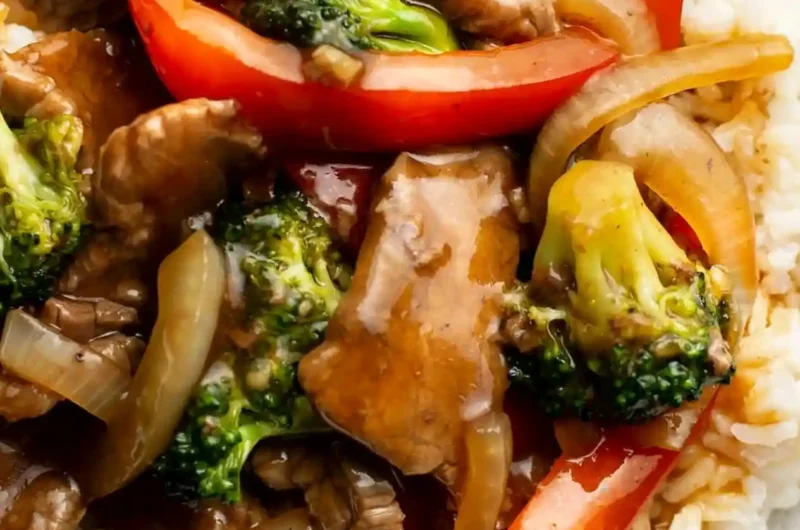
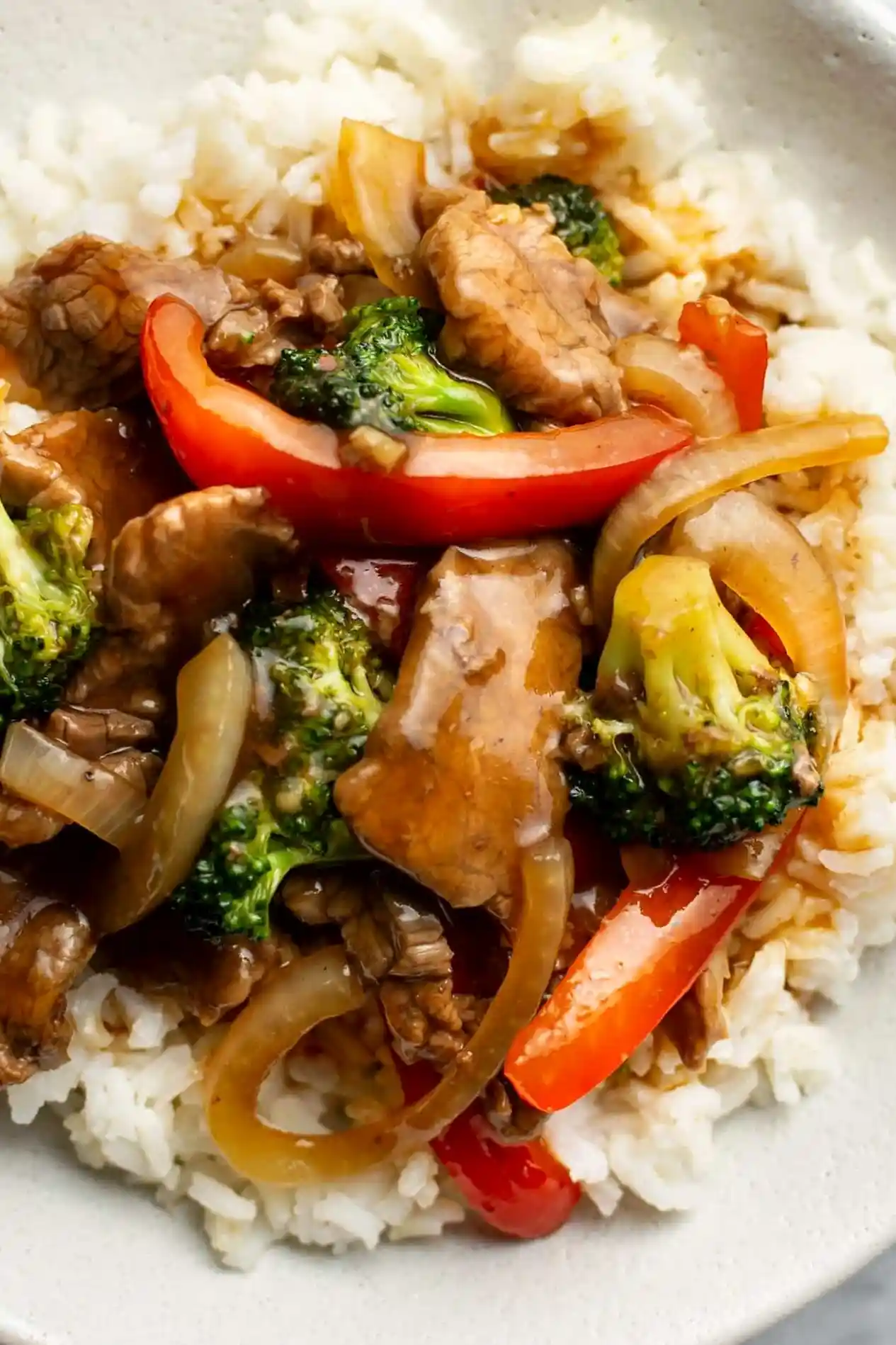
This quick and efficient beef stir fry provides a high-protein meal using common pantry ingredients. It is designed for rapid cooking to ensure the steak remains tender and the vegetables stay crisp.
List of ingredients
- 1 pound flank steak – trimmed of fat and sliced thin
- 2 tablespoons olive oil – divided for searing and sautéing
- 1 medium onion – sliced into strips
- 2 cups broccoli – cut into small, uniform florets
- 1 red bell pepper – sliced into small pieces
- 1/2 cup low-sodium soy sauce – for the savory base
- 1/2 cup water – to dilute the sauce
- 1/4 cup honey – provides a balanced sweetness
- 1 teaspoon grated fresh ginger – adds zesty flavor
- 3-4 cloves garlic – minced finely
- 1/2 teaspoon apple cider vinegar – or rice vinegar for acidity
- 1/4 teaspoon crushed red pepper flakes – adjusted for desired heat
- 3 tablespoons cornstarch – used as a thickening agent
step-by-step instructions
- Prepare Components: Start cooking rice or noodles first if serving them on the side. Slice the flank steak across the grain into very thin, bite-sized pieces. Whisk together all sauce ingredients in a bowl until the cornstarch is fully dissolved.
- Sauté Vegetables: Heat one tablespoon of olive oil in a large skillet over high heat until it shimmers. Add the sliced onion, broccoli florets, and red bell pepper. Stir frequently for 4-5 minutes until tender-crisp, then transfer the vegetables to a separate plate.
- Sear the Beef: Add the remaining tablespoon of olive oil to the hot skillet. Spread the beef strips in a single layer without overcrowding. Let the meat sear untouched for one minute, then flip and cook for another minute. Remove from heat while the beef is still slightly rare to prevent toughness.
- Combine and Thicken: Return the cooked vegetables to the skillet with the beef. Pour the prepared sauce over the mixture and toss constantly for 1-3 minutes. Once the sauce has thickened and coated all ingredients, remove the pan from the heat and serve immediately.
Meat Selection and Preparation
Selecting the Ideal Beef Cut
Flank steak is recommended because it offers a balance of affordability and flavor. It has a distinct grain that, when sliced correctly, results in very tender pieces. Sirloin or tenderloin are viable alternatives if a more premium cut is preferred.
The Technique of Slicing Against the Grain
To ensure tenderness, locate the muscle fibers running through the meat and cut perpendicular to them. Slicing across the grain shortens the fibers, making the meat much easier to chew. This is the most critical step in preventing a rubbery texture in stir fry.
Managing Meat Temperature for Searing
Searing the beef quickly over high heat creates a brown crust through the Maillard reaction. Avoid cooking the steak fully during the initial sear, as it will continue to cook when the sauce is added. Overcooking at this stage leads to tough, dry meat.
Vegetable Preparation and Cooking
Choosing Complementary Vegetables
While broccoli and red bell pepper are classic, you can use snap peas, carrots, or bok choy. Ensure all vegetables have similar water content to prevent the pan from steaming. Mix and match based on seasonal availability to maintain freshness.
Ensuring Uniform Cutting Sizes
Cut all vegetables into similar dimensions so they cook at the same rate. For example, slice carrots into matchsticks or very thin rounds if adding them to the mix. Uniformity prevents some pieces from being overcooked while others remain raw.
Handling Frozen Vegetable Alternatives
If using frozen broccoli, thaw it completely and pat it dry before adding it to the skillet. Frozen vegetables release more moisture, which can lower the pan temperature. Reduce the cooking time for frozen options as they are often blanched before freezing.
Sauce Composition and Thickening
The Role of Cornstarch in Stir Fry
Cornstarch acts as a stabilizer and thickening agent that creates a glossy glaze. It binds the liquid ingredients together, allowing the sauce to cling to the meat and vegetables. Always whisk it thoroughly into the cold liquid to avoid lumps during cooking.
Balancing Sweet and Savory Profiles
The combination of honey and soy sauce creates the classic sweet-savory profile typical of takeout dishes. Honey provides a thicker consistency and a deeper sweetness than granulated sugar. You can increase the honey by one tablespoon if a sweeter glaze is preferred.
Managing Sodium Levels in Soy Sauce
Low-sodium soy sauce is used to allow for better control over the saltiness of the dish. Because the sauce reduces and thickens in the pan, the salt concentration increases. Using low-sodium versions prevents the final result from becoming overly salty.
Cooking Hardware and Heat Control
Benefits of Using a Cast Iron Skillet
Cast iron retains heat exceptionally well, which is essential for maintaining high temperatures when adding cold ingredients. This prevents the pan temperature from dropping, ensuring the meat sears rather than steams. It provides a consistent heat surface across the entire pan.
Proper Use of a High-Heat Wok
A wok is ideal for stir frying due to its curved sides, which allow for easy tossing and rapid movement of food. The concentrated heat at the bottom enables a quick sear, while the higher sides prevent ingredients from splashing out. Use a high-smoke point oil when using a wok.
Preventing Pan Overcrowding
Cooking the beef in a single layer is necessary to avoid overcrowding the pan. When too much meat is added at once, moisture is released and the temperature drops, causing the beef to boil in its own juices. If cooking for a large group, sear the meat in batches.
Serving and Presentation
Choosing the Right Rice Base
Jasmine rice is a preferred choice for this dish because its aromatic quality complements the ginger and garlic. Brown rice is a healthier alternative that provides more fiber and a nuttier taste. Ensure the rice is steamed and fluffy before plating the stir fry on top.
Noodle Alternatives for Stir Fry
For a different texture, serve the beef and vegetables over Udon, ramen, or rice noodles. Toss the noodles directly into the pan during the final thickening stage if you prefer them coated in sauce. This integrates the flavors more deeply into the meal.
Adding Final Garnishes for Texture
Fresh bean sprouts can be added at the very end for an extra crunch. Toasted sesame seeds provide a subtle nuttiness and a professional visual finish. Sliced green onions offer a fresh, sharp contrast to the rich, sweet sauce.
Long-Term Storage and Reheating
Refrigeration and Container Choice
Store leftover stir fry in an airtight glass or plastic container in the refrigerator for 3 to 4 days. Keeping the container sealed prevents the beef from absorbing other fridge odors. This helps maintain the integrity of the sauce and the texture of the meat.
Freezing and Thawing Process
While the beef and sauce freeze well, the vegetables will lose their crispness and become softer upon thawing. If freezing, let the dish cool completely before sealing it in a freezer-safe bag. Thaw overnight in the refrigerator before reheating.
Optimal Reheating Methods
The best way to reheat is in a covered saucepan over low to medium heat with a splash of water. This restores the sauce’s consistency without overcooking the beef. A microwave is faster, but heat in short bursts to avoid making the steak tough.
Common Stir Fry Troubleshooting
Solving Sauce Consistency Issues
If the sauce remains too thin after 3 minutes, mix a small amount of additional cornstarch with water to create a slurry. Pour this into the simmering sauce and stir until it reaches the desired thickness. Avoid adding too much, as the sauce can become gelatinous.
Preventing Tough or Chewy Beef
Tough beef is usually a result of overcooking or slicing with the grain. Ensure the pan is shimmering hot before adding the meat and remove it as soon as the exterior is browned. The residual heat will finish cooking the inside without toughening the fibers.
Avoiding Burnt Garlic and Ginger
Garlic and ginger can burn quickly over high heat, becoming bitter. In this recipe, they are integrated into the sauce and added at the end to protect them from direct high heat. If sautéing them separately, add them only in the last 30 seconds before adding other liquids.
Frequently Asked Questions
Can I use sirloin instead of flank steak?
Yes, sirloin is an excellent substitute and is often more tender than flank steak. However, it is more expensive, so use the same thin-slicing technique to ensure it cooks quickly and evenly.
How do I stop the vegetables from getting mushy?
Cook the vegetables over high heat and remove them from the pan as soon as they are tender-crisp. Do not leave them in the pan while searing the beef, as the extended heat will cause them to lose their structure.
What is the best substitute for honey in the sauce?
Maple syrup or brown sugar are the best substitutes for honey. Maple syrup provides a similar viscosity and sweetness, while brown sugar adds a slight molasses depth to the savory soy base.
Print
Easy Beef Stir Fry
- Total Time: 30 minutes
- Yield: 4 servings 1x
- Diet: General
Description
Making this tasty beef stir fry recipe is simple in your own kitchen! The homemade sweet and savory sauce rivals even the best takeout.
Ingredients
- 1 pound flank steak
- 2 tablespoons olive oil (divided)
- 1 medium onion (sliced)
- 2 cups broccoli (cut into small florets)
- 1 red bell pepper (cut into small pieces)
- 1/2 cup low-sodium soy sauce
- 1/2 cup water
- 1/4 cup honey
- 1 teaspoon grated fresh ginger
- 3–4 cloves garlic (minced)
- 1/2 teaspoon apple cider vinegar (or rice vinegar)
- 1/4 teaspoon crushed red pepper flakes (or more to taste)
- 3 tablespoons cornstarch
Instructions
- Preparation: If making rice or noodles to serve with this stir fry, get that started.
- Mise en Place: Prep all stir fry ingredients ahead of time as the actual cooking part goes very quickly.
- Prep Steak: To prep the steak, trim off any fat and slice it across the grain into very thin bite-size pieces.
- Make Sauce: Add the sauce ingredients to a bowl and whisk together thoroughly.
- Heat Pan: Add one tablespoon of the olive oil to a large skillet over high heat. Let the pan heat up for a few minutes (oil should be shimmering).
- Cook Vegetables: Add the onion, broccoli, and bell pepper and cook for 4-5 minutes, tossing/stirring often (they will end up tender-crisp). Transfer veggies to a plate.
- Sear Beef: Add the other tablespoon of olive oil to the skillet. Add the beef in a single layer (just “sprinkle” it into the pan ensuring it’s spread out a bit) and don’t touch it for a minute.
- Finish Beef: Stir/flip it (cooking tongs are helpful) and cook it for another minute or so.
- Combine: Add the veggies back to the skillet and pour the sauce in.
- Thicken Sauce: Stir/toss until coated and the sauce has thickened (about 1-3 minutes).
- Serve: Take the skillet off the heat and serve immediately over rice or noodles.
Notes
Cut the flank steak very thinly and slice against the grain to ensure tenderness. High heat is key for a proper stir fry; a cast iron skillet works well.
- Prep Time: 15 minutes
- Cook Time: 15 minutes
- Category: Main Course
- Method: Stir Fry
- Cuisine: Asian American
Nutrition
- Serving Size: 1 serving
- Calories: 353 kcal
- Sugar: 20 g
- Sodium: 1229 mg
- Fat: 13 g
- Saturated Fat: 3 g
- Unsaturated Fat: 10 g
- Trans Fat: 0 g
- Carbohydrates: 31 g
- Fiber: 2 g
- Protein: 29 g
- Cholesterol: 68 mg
Keywords: beef stir fry, flank steak, Asian-inspired, quick dinner, takeout style