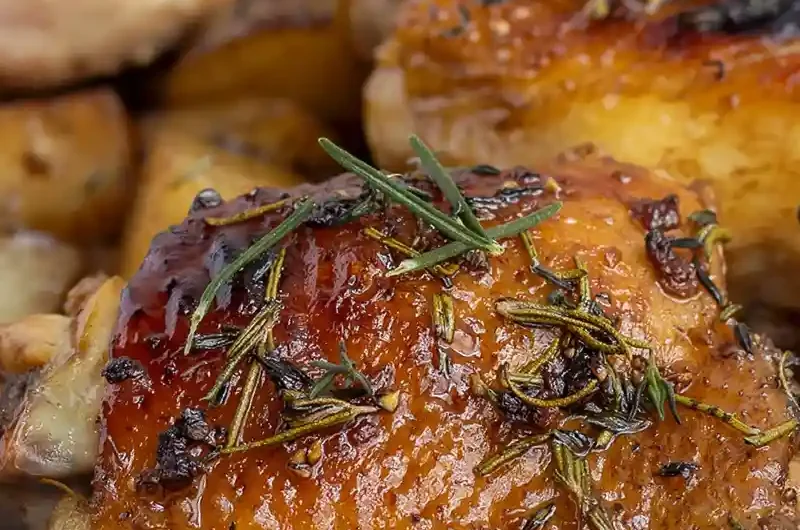
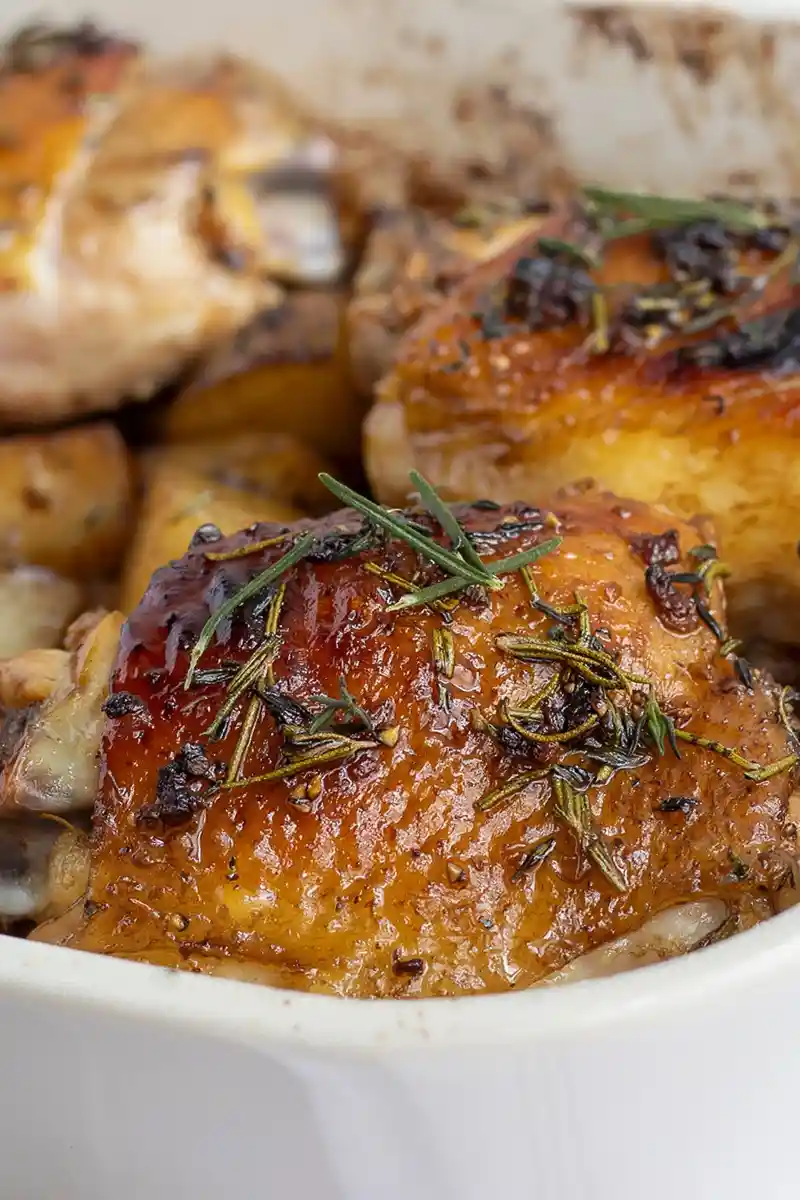
This one-pan meal combines juicy chicken thighs and tender roasted potatoes coated in a savory balsamic herb glaze. It is a practical dinner solution that minimizes preparation time and cleanup while delivering rich flavors.
List of ingredients
- 4 chicken thighs (bone-in, skin-on) – essential for moisture and deeper flavor during roasting.
- 4 russet potatoes (cut into 1/2 inch cubes) – smaller cuts ensure they cook through at the same rate as the chicken.
- 1/4 cup olive oil – acts as the fat base for the sauce and helps brown the potatoes.
- 1/4 cup high-quality balsamic vinegar – provides the characteristic tang and sweetness.
- 2 tablespoons honey – adds a touch of sweetness to caramelize the glaze.
- 1 tablespoon garlic (minced) – adds a sharp, aromatic savory element.
- 1 1/2 tablespoons fresh rosemary (chopped) – provides a woody, pine-like aroma.
- 1 1/2 tablespoons fresh thyme (chopped) – adds a subtle earthy and lemony note.
- Salt – used to taste for seasoning the meat and vegetables.
- Black pepper – used to taste for adding a slight spicy heat.
step-by-step instructions
- Set up the Oven: Preheat your oven to 425°F. Lightly coat a 9×13 inch baking dish with oil to prevent sticking.
- Prepare the Chicken: Clip any excess skin from the bottom and sides of the chicken thighs. Pat the skin completely dry with paper towels, season with salt and black pepper, and place them in the baking dish.
- Position the Potatoes: Arrange the 1/2 inch diced russet potatoes in a single layer around the chicken thighs.
- Mix the Glaze: In a bowl, whisk together the olive oil, balsamic vinegar, honey, minced garlic, chopped rosemary, and chopped thyme. As an optional step, refrigerate the sauce for one hour to allow the flavors to meld.
- Coat the Ingredients: Use a pastry brush to thoroughly slather the balsamic herb sauce over the chicken thighs and the potato cubes.
- Roast and Finish: Bake for 35 to 45 minutes until the chicken reaches an internal temperature of 165°F and the potatoes are fork-tender. Remove from the oven and let the chicken rest for 10 minutes. For extra crispy skin, you may broil on low for a few minutes before resting.
- Serve: Plate the chicken and potatoes, serving them with a side salad or a vegetable dish.
Optimal Roasting Techniques
Bring Chicken to Room Temperature
Allow the chicken thighs to sit at room temperature for about 15 to 20 minutes before cooking. This removes the chill and ensures the meat cooks evenly from the center to the surface. It prevents the outside from overcooking while the inside remains underdone.
Dry the Skin Thoroughly
Use paper towels to remove all surface moisture from the chicken skin before applying oil or sauce. Moisture on the skin creates steam during the roasting process, which prevents the skin from crisping. A dry surface promotes the Maillard reaction for a golden-brown finish.
Maintain High Oven Temperatures
Using a high heat setting of 425°F is critical for bone-in chicken. High heat renders the fat in the skin quickly and sears the outside of the meat. This process locks in the internal juices, resulting in a more tender and succulent thigh.
Allow Adequate Resting Time
Rest the chicken for at least 10 minutes after removing it from the oven. During cooking, juices migrate toward the center of the meat. Resting allows these juices to redistribute throughout the thigh, ensuring the meat stays moist when sliced.
Alternative Ingredient Options
Using Different Potato Varieties
While russet potatoes provide a fluffy texture, Yukon Gold potatoes offer a buttery flavor and hold their shape better. Red potatoes are a great alternative for a waxier, firmer bite. If using sweet potatoes, be aware that they may caramelize faster due to higher sugar content.
Substituting Honey for Other Sweeteners
Maple syrup is an excellent substitute for honey, offering a slightly more woody flavor that pairs well with rosemary. Agave nectar can be used for a more neutral sweetness. If you prefer a lower-sugar option, a small amount of brown sugar can work, though the viscosity will differ.
Replacing Fresh Herbs with Dried Versions
If fresh herbs are unavailable, you can use dried rosemary and thyme, though the flavor is less vibrant. Use a ratio of 1 teaspoon of dried herbs for every tablespoon of fresh herbs. Dried herbs are more concentrated and can become bitter if overused.
Choosing Different Chicken Cuts
Drumsticks and chicken quarters can be used in place of thighs. Because these cuts vary in size, you may need to adjust the roasting time. Use a meat thermometer to ensure every piece reaches an internal temperature of 165°F regardless of the cut.
Customizing Your Meal
Adding Root Vegetables to the Pan
Carrots, parsnips, and turnips can be added to the baking dish alongside the potatoes. Cut them into similar 1/2 inch sizes to ensure they cook in the same timeframe. Toss them in the balsamic glaze to integrate the flavors.
Incorporating Green Vegetables
Brussels sprouts or asparagus can be added to the pan, but they require less cooking time than potatoes. Add these vegetables during the last 15 to 20 minutes of the roasting process to avoid overcooking them into a mushy consistency.
Adjusting the Glaze Flavor Profile
For a sharper taste, whisk in a teaspoon of Dijon mustard to the balsamic mixture. A squeeze of fresh lemon juice added after roasting can brighten the rich flavors of the honey and balsamic. Adding a pinch of red pepper flakes provides a subtle heat.
Serving and Pairing Suggestions
Complementary Side Salads
A fresh arugula salad with a lemon vinaigrette balances the richness of the balsamic glaze. A mixed green salad with cucumbers and radishes adds a necessary crunch and acidity to the plate. Keep the dressing light to avoid overshadowing the herb chicken.
Best Grain Pairings
Wild rice or quinoa provides a nutty contrast to the sweet and tangy glaze. For a more traditional approach, steamed brown rice can absorb the excess sauce from the baking dish. Polenta or creamy grits also pair well with the roasted flavors.
Suggested Vegetable Sides
Steamed broccoli or sautéed spinach adds a vibrant green color and nutritional balance to the meal. Roasted cauliflower can also be prepared in the oven at the same time as the chicken. Glazed carrots provide a sweetness that mirrors the honey in the sauce.
Storage and Preservation
Proper Refrigeration Methods
Place leftover chicken and potatoes in an airtight container once they have cooled to room temperature. Store them in the main body of the refrigerator, avoiding the door where temperatures fluctuate. The meal will remain safe and flavorful for up to four days.
Freezing Leftovers
While the chicken can be frozen, the potatoes often lose their texture and become grainy upon thawing. If freezing, it is recommended to freeze only the chicken thighs in a vacuum-sealed bag or airtight container. Thaw completely in the refrigerator before reheating.
Reheating Guide
Oven Reheating for Crispy Skin
To maintain the crispness of the chicken skin, reheat the leftovers in the oven at 325°F. Place the pieces on a baking sheet and heat for 10 to 15 minutes. This method prevents the meat from becoming rubbery, which often happens in a microwave.
Quick Microwave Reheating
For a faster option, use a microwave-safe dish and cover the food with a damp paper towel to retain moisture. Heat on medium power in 1-minute intervals, stirring the potatoes occasionally. Be aware that the skin will lose its crispness with this method.
Troubleshooting Your Roast
Dealing with Undercooked Potatoes
If the chicken is done but the potatoes are still hard, ensure you are cutting them into exactly 1/2 inch cubes. Overcrowding the pan can also lead to steaming rather than roasting. Spread the potatoes in a single layer with space between them to ensure heat circulation.
Preventing the Glaze from Burning
Because honey contains natural sugars, it can burn if exposed to extreme heat for too long. If you notice the glaze darkening too quickly, loosely cover the pan with aluminum foil. This shields the surface while allowing the internal temperature of the meat to rise.
Avoiding Dry Chicken Meat
Dry chicken is usually the result of overcooking. Always use a digital meat thermometer to check the thickest part of the thigh. Remove the chicken from the oven as soon as it hits 165°F, as carryover cooking will continue to raise the temperature slightly during the resting phase.
Frequently Asked Questions
Can I make this recipe in a slow cooker?
This recipe is designed for high-heat roasting to achieve crispy skin and browned potatoes. A slow cooker will result in poached meat and soft potatoes, which changes the texture and flavor profile significantly.
Is it possible to make this dairy-free?
Yes, this recipe is naturally dairy-free as it relies on olive oil for fat and balsamic vinegar for acidity. No modifications are necessary to keep this dish free of dairy products.
Which balsamic vinegar is best?
A high-quality balsamic vinegar of Modena is recommended for its depth and natural sweetness. Avoid very thin, watery vinegars, as they will not glaze the chicken as effectively as a denser, aged balsamic.
Can I use boneless thighs instead?
You can use boneless thighs, but the cooking time will be significantly shorter. Check the internal temperature after 20 to 25 minutes. Note that bone-in thighs generally provide more flavor and remain juicier during roasting.
Print
Oven Baked Rosemary and Thyme Chicken Thighs with Roasted Potatoes
- Total Time: 60 minutes
- Yield: 4 servings 1x
- Diet: General
Description
Juicy chicken every time! This oven baked Rosemary Thyme Chicken Thighs with potatoes is an easy, flavorful, minimal effort dinner recipe.
Ingredients
- 4 chicken thighs (bone in, skin on)
- 4 russet potatoes (1/2 inch cubes)
- 1/4 cup olive oil
- 1/4 cup balsamic vinegar
- 2 tablespoons honey
- 1 tablespoon garlic (minced)
- 1 1/2 tablespoons rosemary (fresh and chopped)
- 1 1/2 tablespoons thyme (fresh and chopped)
- salt (to taste)
- black pepper (to taste)
Instructions
- Step: Preheat the oven to 425 °F and lightly oil a 9×13 baking dish.
- Step: Trim excess skin from chicken thighs, pat dry, season with salt and pepper, and place in the baking dish.
- Step: Arrange the diced russet potatoes in a single layer around the chicken thighs.
- Step: Whisk together olive oil, balsamic vinegar, honey, garlic, rosemary, and thyme.
- Step: Slather the chicken thighs and russet potatoes with the sauce using a pastry brush.
- Step: Bake for 35 to 45 minutes or until chicken internal temperature is 165 °F and potatoes are tender.
- Step: Let the chicken rest for 10 minutes prior to serving.
Notes
Store leftovers covered in the refrigerator for up to 4 days. For extra crispy skin, broil on low for a few minutes before serving.
- Prep Time: 15 minutes
- Cook Time: 45 minutes
- Category: Main Course
- Method: Baking
- Cuisine: American
Nutrition
- Serving Size: 1 serving
- Calories: 587 kcal
- Sugar: 12 g
- Sodium: 780 mg
- Fat: 36 g
- Saturated Fat: 11 g
- Unsaturated Fat: 25 g
- Trans Fat: 0 g
- Carbohydrates: 34 g
- Fiber: 5 g
- Protein: 38 g
- Cholesterol: 155 mg
Keywords: baked chicken thighs, roasted potatoes, rosemary and thyme, balsamic glaze, easy dinner