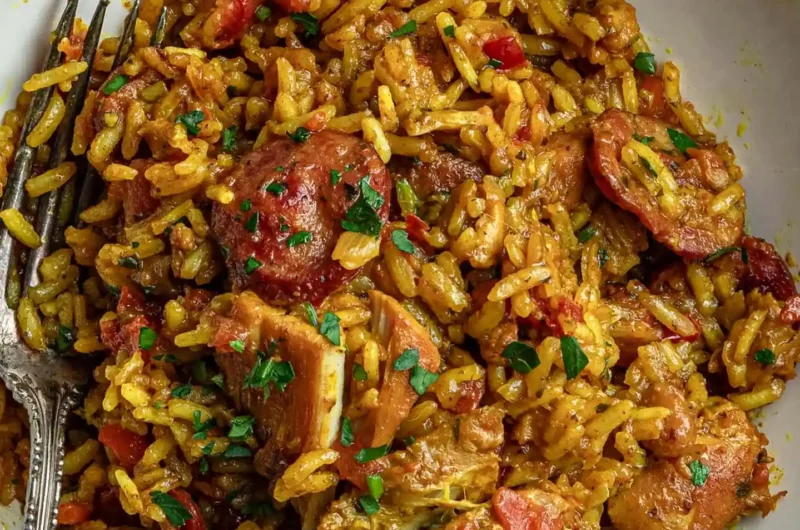
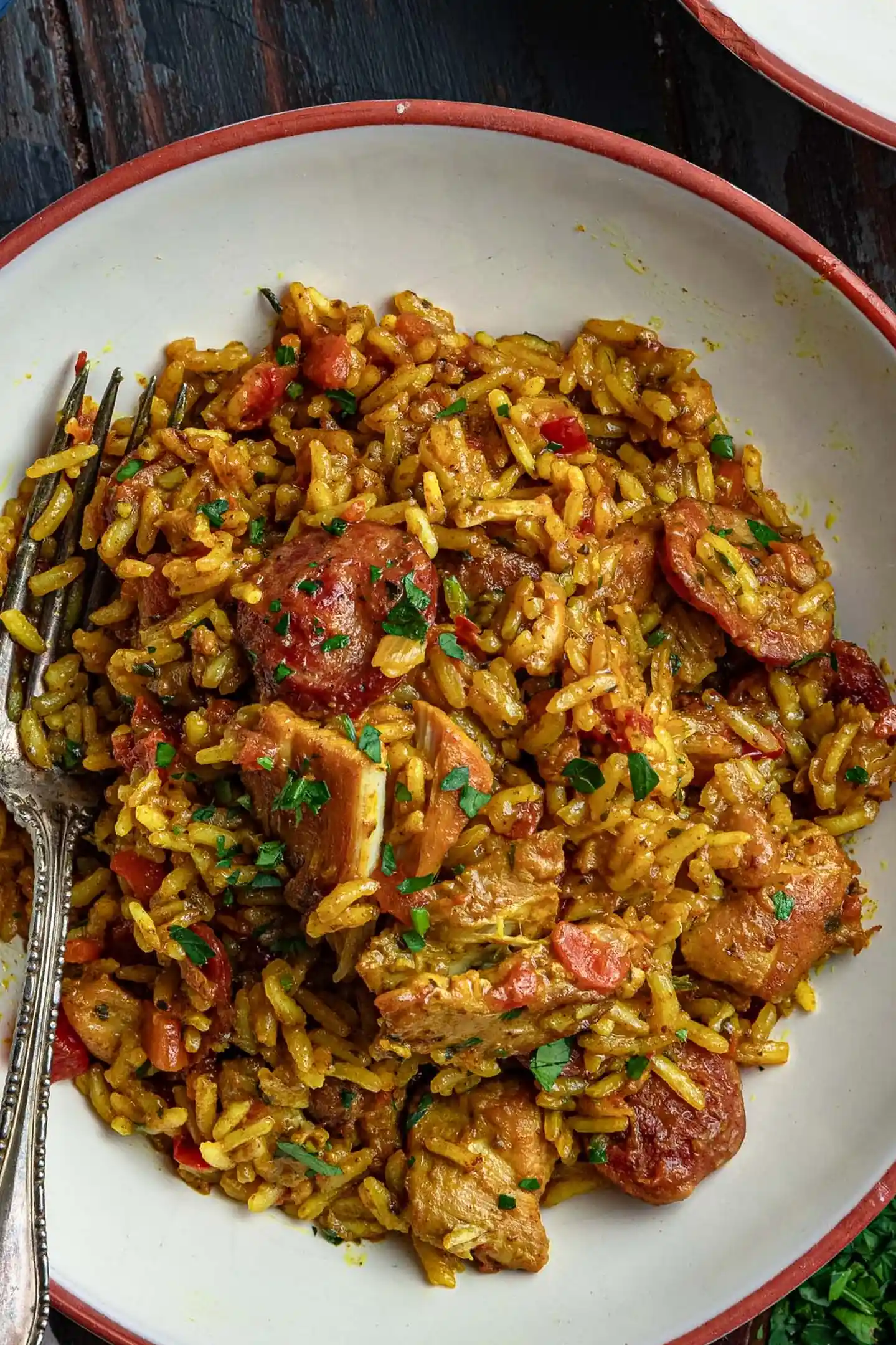
This Brazilian Galinhada is a hearty one-pot meal that combines tender chicken and fragrant rice. It is an efficient, flavor-packed dish perfect for feeding a large group with minimal cleanup.
List of ingredients
- 1 onion, peeled – for the marinade
- 3 garlic cloves, peeled – for the marinade
- ½ cup fresh parsley – for the marinade
- 1 tablespoon ground turmeric – provides the signature yellow color
- 1 tablespoon apple cider vinegar – adds tang to the marinade
- ½ cup olive oil – for the marinade base
- Salt and freshly ground pepper – to taste for the marinade
- 1 ½ pounds skinless, boneless chicken thighs, cut into 1-inch pieces – for succulent meat
- 1 teaspoon olive oil – for searing
- 2 (approx. 4 ounces) beef smoked sausages, sliced – a savory replacement for pork versions
- 1 onion, chopped – for the base aromatics
- 1 large carrot, finely diced – adds sweetness and texture
- ½ cup chicken broth – used as a replacement for white wine to deglaze
- 2 ½ cups chicken broth – the primary cooking liquid
- 1 cup white long-grain rice, rinsed – the heart of the dish
- 2 bay leaves – for aromatic depth
- 2 Roma tomatoes, chopped – adds acidity and moisture
- Salt and freshly ground pepper – to taste for the final cook
- 1/4 cup chopped parsley – for a fresh garnish
step-by-step instructions
- Create the marinade: Use a food processor to combine the peeled onion, garlic, ½ cup parsley, turmeric, apple cider vinegar, ½ cup olive oil, salt, and pepper. Process the mixture until it forms a smooth paste.
- Marinate the chicken: Place the diced chicken thighs in a bowl and toss them with the marinade until every piece is fully coated. Cover the bowl with foil or plastic wrap and refrigerate for at least 2 hours, or ideally overnight, to deepen the flavor.
- Brown the sausage: Heat 1 teaspoon of olive oil in a large pot or Dutch oven over medium heat. Sauté the sliced beef smoked sausages for about 5 minutes until browned on both sides, then remove them with a slotted spoon and set aside.
- Sear the chicken: Remove the chicken from the marinade, ensuring you save the leftover liquid for later. Add the chicken to the same pot and sauté for about 10 minutes until the pieces are lightly browned on all sides, then remove and set aside.
- Sauté the aromatics: Add more oil to the pot if necessary. Sauté the chopped onion and finely diced carrot for about 5 minutes until they begin to caramelize slightly.
- Deglaze the pot: Pour in ½ cup of chicken broth. Use a wooden spoon to scrape all the browned bits from the bottom of the pot to incorporate that concentrated flavor.
- Simmer the meat: Return the browned chicken and sausage to the pot and pour in the 2 ½ cups of chicken broth. Cover the pot and reduce the heat to medium-low, simmering for 15 minutes until the chicken is tender.
- Cook the rice: Stir in the rinsed white rice, chopped tomatoes, the reserved marinade, bay leaves, and a pinch of salt and pepper. Cover and simmer for another 15 minutes, or until the rice is fully cooked.
- Rest and garnish: Turn off the heat and let the dish rest, covered, for 10 minutes to allow the moisture to redistribute. Stir in the 1/4 cup of chopped fresh parsley and serve immediately.
Practical Cooking Tips
Rinsing the Rice for Better Texture
Always rinse your long-grain white rice under cold water until the water runs clear. This removes excess surface starch that would otherwise make the Galinhada gummy or sticky. Rinsing ensures that each grain remains distinct while still absorbing the flavorful broth.
Using a Heavy-Bottomed Pot to Prevent Burning
A Dutch oven or a heavy cast-iron pot is ideal for this recipe because it distributes heat evenly. Since the rice cooks slowly on the bottom, thin pots can cause the bottom layer to burn before the rest is done. A thick base ensures a consistent simmer throughout the process.
Achieving the Perfect Golden Color
The ground turmeric is responsible for the vibrant yellow hue typical of this dish. Ensure your turmeric is fresh and not clumped to get an even color. If you prefer a deeper gold, you can slightly increase the amount of turmeric in the marinade.
Choosing the Right Cut of Chicken
Boneless, skinless chicken thighs are recommended because they remain juicy during the simmering process. Chicken breasts tend to dry out more quickly when cooked in one pot with rice. Thighs provide a richer flavor and a more tender texture.
Managing the Simmer Temperature
Once the rice is added, keep the heat on medium-low and avoid lifting the lid frequently. Opening the pot allows steam to escape, which can lead to undercooked or hard rice grains. Trust the timer and let the steam do the work.
Optimizing the Searing Process
Do not overcrowd the pot when browning the chicken or sausage. If there are too many pieces, the temperature will drop and the meat will steam instead of sear. Brown the meat in batches if necessary to get a deep, caramelized crust.
Ingredient Substitutions
Replacing Pork Sausages with Beef or Poultry
To keep the dish suitable for various dietary needs, replace calabresa or chorizo with a high-quality beef smoked sausage or a smoked turkey sausage. These alternatives provide the same smoky, salty profile without using pork. Ensure the sausage is sliced uniformly for even browning.
Substituting White Wine with Broth
Using chicken broth instead of white wine for deglazing maintains the savory depth of the dish. The liquid still helps lift the fond from the bottom of the pot, which is essential for the overall flavor. You can add a teaspoon of apple cider vinegar to the broth if you miss the acidity of wine.
Using Brown Rice Instead of White
Brown rice can be used for a nuttier flavor and more fiber, but it requires adjustments. You will need to increase the chicken broth by about ½ cup to 1 cup. Additionally, the simmering time for the rice will increase from 15 minutes to approximately 40-45 minutes.
Alternative Vegetable Additions
If you do not have carrots, celery or diced parsnips work as excellent replacements. For the tomatoes, you can use canned diced tomatoes if fresh Roma tomatoes are unavailable. Just be sure to drain the excess liquid from the can to avoid making the rice too watery.
Using Different Herbs for Freshness
While parsley is traditional, fresh cilantro is a common alternative that adds a brighter, more citrusy note. You can use a mix of both or choose based on your flavor preference. Always add the fresh herbs at the very end to preserve their color and taste.
Switching Olive Oil for Other Fats
If you prefer a different flavor profile, avocado oil or grapeseed oil can be used for the searing process. These oils have higher smoke points, which is helpful for browning meat. For the marinade, stick with olive oil to maintain the Mediterranean-inspired richness.
Flavor Variations
Adding Corn and Peas for Color
Stirring in frozen peas and corn during the last 5 minutes of rice cooking adds a pop of color and sweetness. These vegetables complement the turmeric and chicken perfectly. They provide a nice textural contrast to the tender rice and meat.
Incorporating Bell Peppers for Sweetness
Diced red or yellow bell peppers can be sautéed along with the onions and carrots. This adds a subtle sweetness and a more complex aromatic base. Peppers help round out the savory notes of the smoked sausage.
Adding Chili Peppers for Heat
For those who prefer a spicier meal, add diced jalapeños or red chili flakes during the sauté stage. This creates a heat profile similar to a Jambalaya. Adjust the amount of spice based on your personal tolerance.
Using Coconut Milk for Creaminess
Replacing one cup of chicken broth with full-fat coconut milk creates a creamier, slightly tropical version of Galinhada. This variation pairs exceptionally well with the turmeric and ginger if you choose to add some. It transforms the dish into a richer, more indulgent meal.
Adding Olives for Brine
Adding a handful of sliced green olives along with the rice adds a salty, briny element. This is a common addition in some regional Brazilian variations. The olives cut through the richness of the chicken thighs and sausage.
Integrating Sautéed Mushrooms
Adding sliced cremini or button mushrooms during the browning stage adds a deep umami flavor. Mushrooms absorb the marinade and broth, becoming savory flavor bombs throughout the rice. This is a great way to add more bulk to the dish.
Serving Suggestions
Pairing with a Fresh Green Salad
Because Galinhada is a rich and filling dish, a light side salad is the perfect accompaniment. Use a mix of arugula, spinach, and cucumber with a simple lemon vinaigrette. The acidity of the dressing helps cleanse the palate between bites.
Adding Lime Wedges for Acidity
Serving the dish with fresh lime wedges allows guests to squeeze a bit of citrus over their portion. This brightens the flavor of the turmeric and cuts through the fat of the sausage. It is a simple addition that significantly elevates the tasting experience.
Serving with Sautéed Kale or Collard Greens
Sautéed greens with garlic and a touch of vinegar provide a traditional Brazilian side. The slight bitterness of the greens balances the savory, comforting nature of the rice. It also adds an extra layer of nutrients to the meal.
Complementing with Steamed Vegetables
Steamed broccoli or cauliflower can be served on the side or placed on top of the rice. These vegetables soak up the remaining sauce in the pot. They provide a healthy balance to the starch and protein.
Choosing the Right Plate for Presentation
Serve the Galinhada in a wide, shallow bowl to showcase the golden color of the rice. Garnish with extra fresh parsley and a few slices of fresh tomato on top. This makes the rustic one-pot meal look professional and appetizing.
Storage and Reheating
Refrigerating Leftovers Safely
Allow the Galinhada to cool completely before transferring it to an airtight container. Store it in the refrigerator for up to 5 days. Keeping it tightly sealed prevents the rice from absorbing other odors in the fridge.
Freezing for Long-Term Storage
This dish freezes remarkably well for up to 3 months. Use freezer-safe bags or containers and remove as much air as possible to prevent freezer burn. Be aware that the texture of the vegetables may soften slightly upon thawing.
Reheating to Maintain Creaminess
The best way to reheat Galinhada is in a pot over medium-low heat on the stove. Avoid the microwave if possible, as it can dry out the rice grains. Stir occasionally to ensure even heating.
Preventing the Rice from Drying Out
When reheating, add a few splashes of chicken broth or water to the pot. This restores the creamy consistency and prevents the rice from becoming clumpy. Cover the pot while reheating to trap the moisture.
Thawing Frozen Portions
For the best results, thaw frozen Galinhada in the refrigerator overnight. This slow thaw preserves the integrity of the chicken and rice. If you are in a rush, use the defrost setting on your microwave before finishing it on the stove.
Make-Ahead Advice
Overnight Marinading for Depth
While 2 hours is sufficient, marinading the chicken overnight is highly recommended. This allows the turmeric and vinegar to penetrate deeper into the meat. The result is a more tender chicken with a more intense golden color.
Preparing Vegetables in Advance
You can chop the onions, carrots, and tomatoes the day before and store them in separate containers. This reduces the active prep time on the day of cooking. Just ensure the chopped tomatoes are stored in a container with their juices.
Cooking the Base and Finishing Later
You can complete the process up until the point of adding the rice. Store the simmered chicken and broth in the fridge, then simply add the rice and tomatoes when you are ready to serve. This reduces the final cooking time to about 25 minutes.
Preparing the Marinade Paste
The marinade paste can be made a few days in advance and kept in a jar. Since it contains oil and vinegar, it stays fresh in the refrigerator. This makes it easy to quickly prep chicken for a weekday meal.
Troubleshooting Common Issues
Fixing Undercooked Rice
If the rice is still hard after the cooking time, add ¼ cup of hot chicken broth and cover again. Simmer on low for another 5 minutes. Ensure the lid is tight to create the necessary steam environment.
Managing Too Much Liquid
If the dish is too soup-like after the rice is cooked, simmer it uncovered for 5 more minutes. This allows excess moisture to evaporate without overcooking the rice. Stir gently to avoid breaking the grains.
Preventing Burnt Bottoms
If you notice a burning smell, immediately move the rice from the bottom to the top and reduce the heat. Adding a splash of liquid can help lift the scorched bits. In the future, ensure your heat is strictly on medium-low after adding the rice.
Dealing with Overcooked Chicken
If the chicken feels too soft, it may have been simmered too long. To prevent this, ensure you follow the 15-minute simmering window before adding the rice. Using thighs instead of breasts helps mitigate this issue, as they are more forgiving.
Correcting Bland Flavor
If the dish tastes flat, add a pinch more salt or a squeeze of fresh lime juice. The acidity of the lime or salt enhances the existing flavors of the turmeric and sausage. Avoid adding more broth, as this will dilute the taste.
Frequently Asked Questions
Can I use chicken breasts instead of thighs?
Yes, you can use chicken breasts, but be mindful that they cook faster and can become dry. Reduce the initial simmering time by 5 minutes to ensure they remain succulent.
Does the rice need to be a specific type?
Long-grain white rice or Jasmine rice is best for this recipe. Short-grain or Arborio rice will release too much starch, making the dish more like a risotto than a traditional Galinhada.
Can I make this in a slow cooker?
This recipe is designed for a stovetop pot to achieve the necessary searing and steaming. While you can slow-cook the chicken and vegetables, the rice is best added and cooked on the stove to avoid becoming mushy.
How do I store the marinade if I don’t use it all?
Store any leftover marinade in a glass jar in the refrigerator for up to one week. It can be used as a flavorful rub for other roasted meats or mixed into a salad dressing.
Can I make this dish vegan?
Yes, replace the chicken with extra-firm tofu or cauliflower florets and use vegetable broth instead of chicken broth. Replace the beef sausage with a smoked plant-based alternative to maintain the smoky flavor profile.
Print
Authentic Brazilian Chicken and Rice (Galinhada)
- Total Time: 195 minutes
- Yield: 6 servings 1x
- Diet: General
Description
Galinhada is a delicious traditional Brazilian dish of chicken and rice. Hearty and comforting, this dish is easy to make, cooked in one pot and great to feed a crowd!
Ingredients
- 1 onion, peeled
- 3 garlic cloves, peeled
- ½ cup fresh parsley
- 1 tablespoon ground turmeric
- 1 tablespoon apple cider vinegar
- ½ cup olive oil
- Salt and freshly ground pepper, to taste
- 1 ½ pounds skinless, boneless chicken thighs, cut into 1-inch pieces
- 1 teaspoon olive oil
- 2 (aprox. 4 ounces) beef sausages, sliced
- 1 onion, chopped
- 1 large carrot, finely diced
- ½ cup white grape juice mixed with a splash of lemon juice
- 2 ½ cups chicken broth
- 1 cup white long-grain rice, rinsed
- 2 bay leaves
- 2 Roma tomatoes, chopped
- Salt and freshly ground pepper, to taste
- 1/4 cup chopped parsley
Instructions
- Marinade: In a food processor, combine all the marinade ingredients and process until smooth.
- Marinating: In a bowl, combine the chicken and marinade, tossing so every piece is thoroughly coated. Cover with plastic or foil and refrigerate for at least 2 hours (or overnight).
- Sausage: Heat the olive oil in a large pot or Dutch Oven, over medium heat. Brown the beef sausage on both sides, about 5 minutes. Then, remove with a slotted spoon into a plate and reserve.
- Chicken: Remove the chicken from the marinade, reserving the excess marinade for later. Add the chicken to the pot, sautéing until lightly browned on all sides, about 10 minutes. Remove from the pot and reserve.
- Veggies: Add more oil if needed, then sauté the onion and carrot until they begin to caramelize slightly, about 5 minutes.
- Deglazing: Pour in the white grape juice and lemon juice mixture to deglaze the pan, scraping all the browned bits from the bottom of the pot.
- Simmering: Return the chicken and beef sausage to the pot, and pour in the chicken broth. Cover and reduce the heat to medium low. Simmer for 15 minutes.
- Rice: Add the rice, tomatoes, bay leaves, reserved marinade and a pinch of salt and pepper. Stir to combine. Cover and continue cooking for another 15 minutes, or until the rice is cooked.
- Resting: Turn the heat off and let the Galinhada rest, covered, for 10 minutes. Stir in the fresh parsley and serve!
Notes
Storage: Store leftovers in the fridge in an airtight container for up to 5 days. Reheating: Reheat in a pot over medium-low heat; add a few splashes of chicken broth for creaminess. Freezing: Can be frozen for up to 3 months.
- Prep Time: 15 minutes
- Cook Time: 60 minutes
- Category: Main Course
- Method: One-Pot
- Cuisine: Brazilian
Nutrition
- Serving Size: 1 serving
- Calories: 497 kcal
- Sugar: 3 g
- Sodium: 756 mg
- Fat: 27 g
- Saturated Fat: 5 g
- Unsaturated Fat: 21 g
- Trans Fat: 1 g
- Carbohydrates: 33 g
- Fiber: 2 g
- Protein: 27 g
- Cholesterol: 121 mg
Keywords: Brazilian chicken and rice, Galinhada, one pot meal, comfort food, Brazilian cuisine