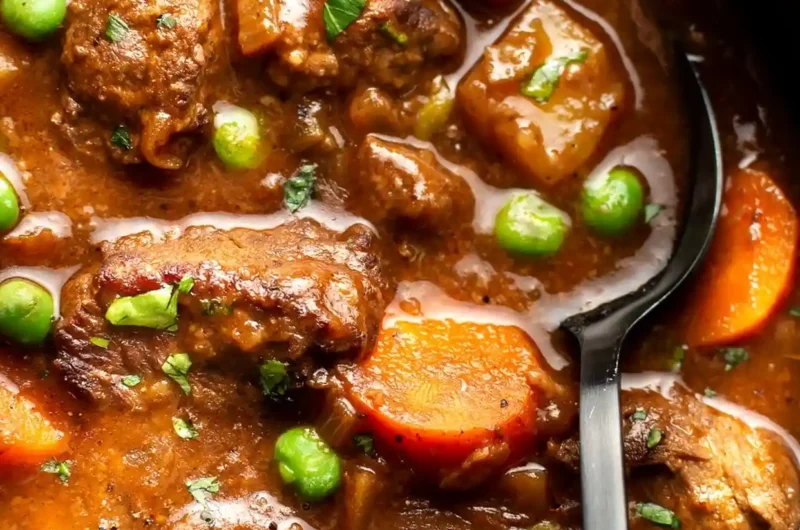
This beef stew is a filling, one-pot meal featuring tender beef, carrots, and potatoes in a rich gravy. It is designed for slow simmering to ensure the meat becomes tender and the flavors meld perfectly.
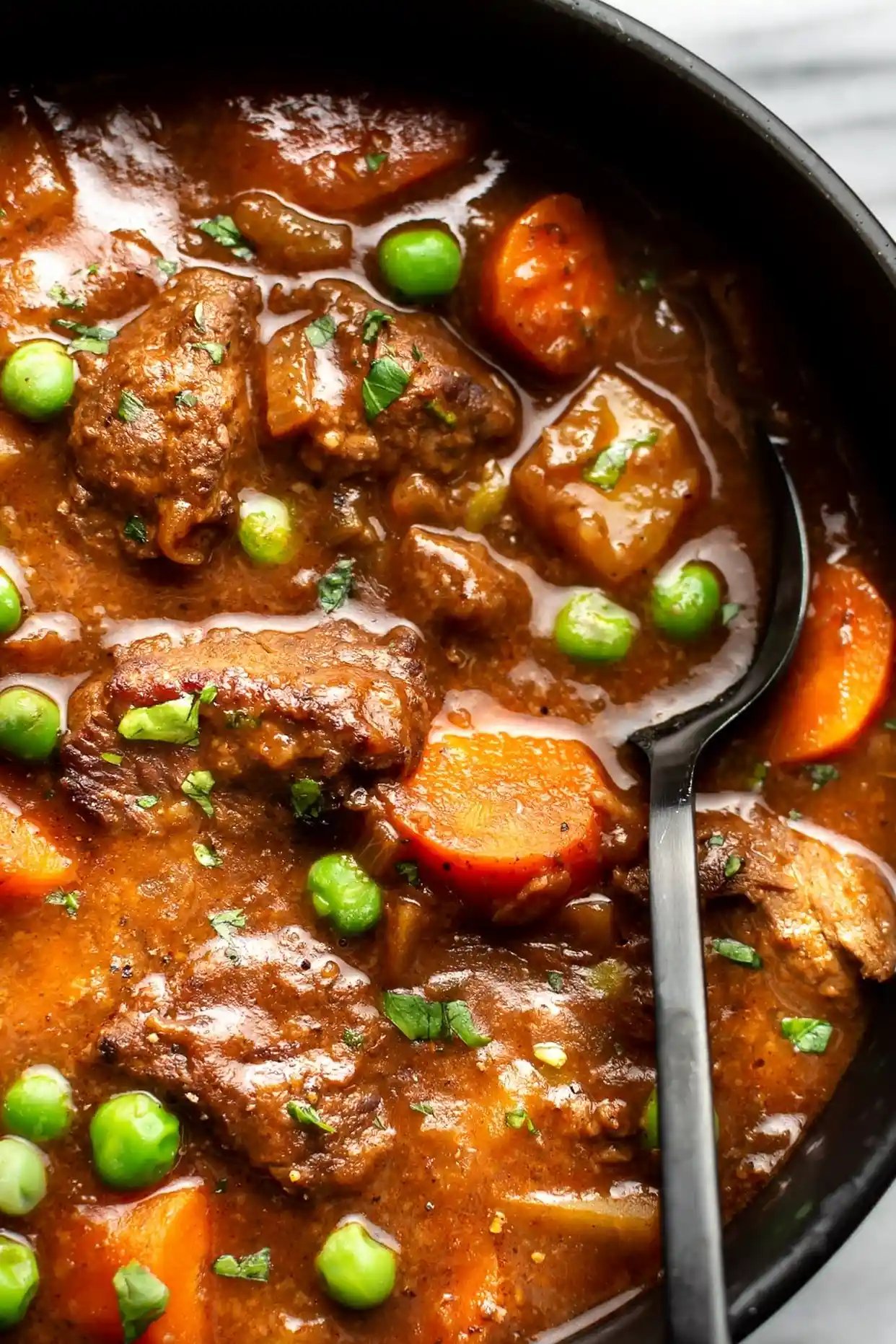
List of ingredients
- 2 pounds cubed beef chuck or beef stewing meat – look for good marbling for tenderness.
- Flour – used for dredging the beef cubes.
- 2 tablespoons olive oil – divided for searing the meat.
- 1 medium onion, chopped – provides a savory base.
- 3 sticks celery, chopped – adds depth to the aromatic base.
- 6 cloves garlic, minced – for a pungent, savory flavor.
- 1 (6 ounce) can tomato paste – thickens and adds richness to the sauce.
- 1 cup beef broth combined with 2 tablespoons balsamic vinegar – used as a flavorful substitute for red wine.
- 3 cups beef broth – the main liquid base for the stew.
- 1 tablespoon Worcestershire sauce – adds a salty, umami depth.
- 1/4 teaspoon Italian seasoning – provides a subtle herbal note.
- 3 bay leaves – added during simmering for aromatic flavor.
- 1 pound Yukon Gold potatoes, peeled and diced – holds shape well during cooking.
- 4 medium carrots, peeled and sliced fairly thick – ensures they don’t overcook.
- 1 cup frozen peas (optional) – added at the end for color and sweetness.
- Salt and pepper – to taste.
step-by-step instructions
- Prepare ingredients: Chop all vegetables. Peel and cut the potatoes and carrots just before they are needed to keep them fresh.
- Coat the beef: Dredge the beef cubes in flour and shake off any excess. This helps thicken the stew later.
- Sear the meat: Heat 1 tablespoon of olive oil in a Dutch oven over medium-high heat. Sear the beef in two batches until browned on all sides; do not crowd the pan or the meat will steam instead of browning. Use tongs to turn the meat and transfer each batch to a plate.
- Sauté aromatics: Add another teaspoon of olive oil if the pot is dry. Sauté the chopped onion and celery for about 5 minutes until softened.
- Cook paste and garlic: Stir in the minced garlic and tomato paste. Cook for 1-2 minutes while stirring often to caramelize the paste.
- Deglaze the pot: Pour in the beef broth mixture (with balsamic vinegar), the additional beef broth, and the Worcestershire sauce. Scrape the bottom of the pot to release the brown bits.
- First simmer: Return the seared beef and its juices to the pot. Add the Italian seasoning and bay leaves. Bring to a gentle boil, then reduce heat, cover, and simmer for 1 hour, stirring occasionally.
- Add root vegetables: Stir in the diced potatoes and sliced carrots. Cover and simmer for another hour or until the beef and vegetables are tender.
- Final touch: Remove the bay leaves. Stir in the frozen peas and let them warm through for a few minutes.
- Season and serve: Adjust the salt and pepper to taste before serving.
Choosing the Best Cut of Beef
The Benefits of Beef Chuck Roast
Beef chuck is the ideal choice for stew because it contains a high amount of connective tissue and collagen. When cooked slowly over low heat, this collagen breaks down into gelatin, resulting in meat that is incredibly tender and a sauce that has a naturally thick body.
Evaluating Pre-cut Stewing Meat
If purchasing pre-cut beef stew cubes, check for marbling, which are the small streaks of white fat within the muscle. Avoid cuts that look too lean, as lean meat tends to become dry, tough, and chewy during the long simmering process.
Using Alternative Cuts
Bottom round or top round can be used as substitutes, though they are leaner than chuck and may require more careful temperature control. Short ribs also work well for a richer flavor, provided they are cut into smaller, uniform pieces to ensure even cooking.
Mastering the Cooking Process
The Importance of Searing in Batches
Searing the meat in batches prevents the temperature of the pot from dropping too low, which would cause the beef to release moisture and boil. Proper browning creates a caramelized crust that adds a deep, savory complexity to the final gravy.
Deglazing for Maximum Flavor
The brown residue left at the bottom of the pot after searing, known as the fond, is concentrated flavor. Adding the broth and vinegar mixture allows you to scrape up these bits, incorporating them back into the stew for a richer taste.
Maintaining a Gentle Simmer
Keep the stew at a low bubble rather than a rolling boil. High heat can cause the muscle fibers in the beef to contract and toughen, whereas a gentle simmer ensures the meat remains tender and the vegetables don’t disintegrate.
Vegetable Selection and Preparation
Selecting the Right Potatoes
Yukon Gold potatoes are recommended because they have a creamy texture but hold their shape well during long cooking times. Red potatoes are a good alternative, while Russet potatoes are more likely to break down and thicken the stew further.
Proper Carrot Sizing
Cut the carrots into thick rounds rather than thin slices. Because they simmer for a full hour, thick cuts prevent them from becoming overly mushy, allowing them to retain a slight bite.
Adding Frozen Peas Correctly
Always add frozen peas at the very end of the cooking process. They only require a few minutes of residual heat to warm through, which preserves their bright green color and prevents them from shriveling.
Liquid and Flavor Enhancements
Replacing Wine with Broth and Vinegar
To achieve the acidity and depth usually provided by red wine, a combination of beef broth and balsamic vinegar is used. The vinegar provides the necessary tang that balances the richness of the beef and tomato paste.
The Role of Tomato Paste
Tomato paste provides both acidity and thickness to the liquid. Cooking it for a few minutes with the garlic before adding the broth removes the raw metallic taste and deepens the color of the stew.
Using Worcestershire Sauce for Depth
Worcestershire sauce adds an umami element that enhances the natural beefiness of the dish. It works in tandem with the salt and pepper to create a well-rounded, savory profile.
Serving and Pairing Ideas
Pairing with Rustic Bread
A thick slice of toasted sourdough or a crusty French baguette is the best accompaniment for beef stew. The bread is perfect for soaking up the rich gravy and ensuring none of the sauce goes to waste.
Adding a Fresh Side Salad
Because beef stew is very rich and heavy, a side salad with a bright vinaigrette provides a necessary contrast. Mixed greens with a lemon or balsamic dressing help cleanse the palate between bites.
Serving Over Mashed Potatoes
While the stew already contains potatoes, serving it over a bed of smooth mashed potatoes increases the comfort level of the meal. This is a great option for those who want an extra-hearty dinner.
Storage, Freezing, and Reheating
Refrigeration Guidelines
Store leftovers in an airtight container in the refrigerator for 3 to 4 days. Ensure the stew is cooled slightly before sealing to prevent excessive condensation from affecting the texture.
Freezing for Long Term Storage
Beef stew freezes well for several months. Thaw the stew in the refrigerator overnight before reheating, but be aware that the texture of the potatoes may become slightly softer or grainier after freezing.
The Best Way to Reheat
Reheat the stew in a covered saucepan over low to medium heat on the stove. Stir occasionally and add a splash of beef broth if the sauce has thickened too much during storage.
Troubleshooting Common Issues
Fixing a Stew that is Too Thin
If the stew is too watery, simmer it uncovered for an additional 20-30 minutes to reduce the liquid. Alternatively, you can mix a small amount of cornstarch with water to create a slurry and stir it in during the final minutes of cooking.
Dealing with Tough Beef
Tough meat is usually a sign that it hasn’t cooked long enough or the heat was too high. Continue simmering the beef on low heat for another 30-60 minutes until the collagen fully breaks down.
Managing Excess Surface Fat
It is common for a layer of fat to rise to the top during the simmering process. Use a wide spoon or a piece of paper towel to skim the excess oil off the surface before serving.
Frequently Asked Questions
Can I use a slow cooker for this recipe?
Yes, you can adapt this for a slow cooker by searing the meat and sautéing the aromatics first, then transferring everything to the crockpot. Cook on low for 7-8 hours or high for 4-5 hours, adding the root vegetables according to the timing of your machine.
How do I prevent the potatoes from falling apart?
Use waxy potatoes like Yukon Gold or red potatoes instead of starchy ones like Russets. Additionally, ensure you add them during the final hour of cooking rather than at the beginning.
Can I add other vegetables to the stew?
Yes, parsnips, turnips, or pearl onions are excellent additions. Add hard root vegetables at the same time as the carrots and potatoes, and add softer vegetables like spinach or kale at the very end.
Print
Hearty Beef Stew with Root Vegetables
- Total Time: 160 minutes
- Yield: 6 servings 1x
- Diet: General
Description
This beef stew recipe is cozy, hearty, and filling with tender beef, carrots, and potatoes simmered in a rich and flavorful sauce.
Ingredients
- 2 pounds cubed beef chuck or beef stewing meat
- Flour for dredging
- 2 tablespoons olive oil
- 1 medium onion, chopped
- 3 sticks celery, chopped
- 6 cloves garlic, minced
- 1 (6 ounce) can tomato paste
- 1 cup beef broth (substitute for wine)
- 2 tablespoons balsamic vinegar (substitute for wine)
- 3 cups beef broth
- 1 tablespoon Worcestershire sauce
- 1/4 teaspoon Italian seasoning
- 3 bay leaves
- 1 pound Yukon Gold potatoes, peeled and diced
- 4 medium carrots, peeled and sliced thick
- 1 cup frozen peas (optional)
- Salt and pepper to taste
Instructions
- Step: Prep ingredients, including peeling and cutting the potatoes and carrots.
- Step: Coat the beef cubes in flour and shake off any excess.
- Step: Sear the beef in two batches in a pot with olive oil over medium-high heat until browned, then transfer the meat to a plate.
- Step: Sauté the chopped onions and celery in the same pot for 5 minutes.
- Step: Stir in the minced garlic and tomato paste and cook for 1-2 minutes.
- Step: Stir in the beef broth, balsamic vinegar, and Worcestershire sauce, scraping up brown bits from the bottom of the pot.
- Step: Add the beef and any juices back to the pot with Italian seasoning and bay leaves; bring to a gentle boil, then cover and simmer for 1 hour.
- Step: Stir in the potatoes and carrots, cover, and continue simmering for another hour or until tender.
- Step: Remove the bay leaves and stir in the frozen peas to warm through.
- Step: Season with salt and pepper as needed and serve.
Notes
Cut up a nicely marbled chuck roast into 1.5 inch cubes for best results. Steps 7 and 8 can also be performed in the oven at 325F.
- Prep Time: 15 minutes
- Cook Time: 145 minutes
- Category: Main Course
- Method: Simmering
- Cuisine: American
Nutrition
- Serving Size: 1 serving
- Calories: 452 kcal
- Sugar: 9 g
- Sodium: 983 mg
- Fat: 13 g
- Saturated Fat: 4 g
- Unsaturated Fat: 8 g
- Trans Fat: 0 g
- Carbohydrates: 35 g
- Fiber: 6 g
- Protein: 41 g
- Cholesterol: 94 mg
Keywords: beef stew, comfort food, hearty dinner, American cuisine