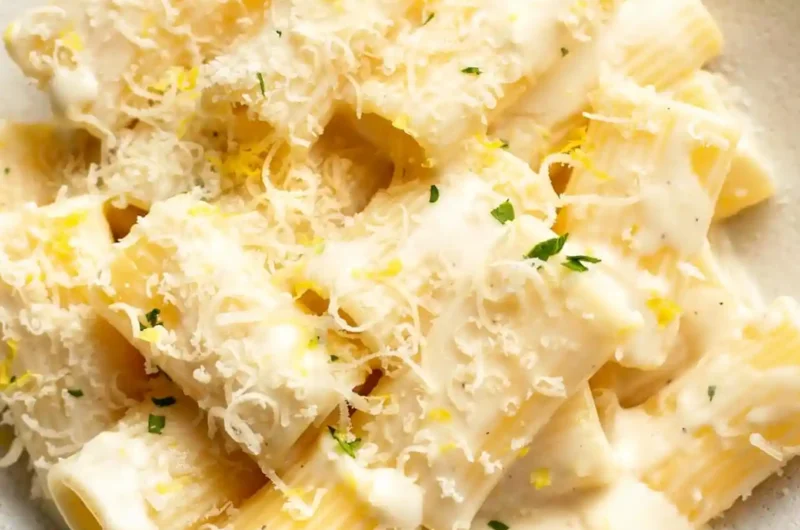
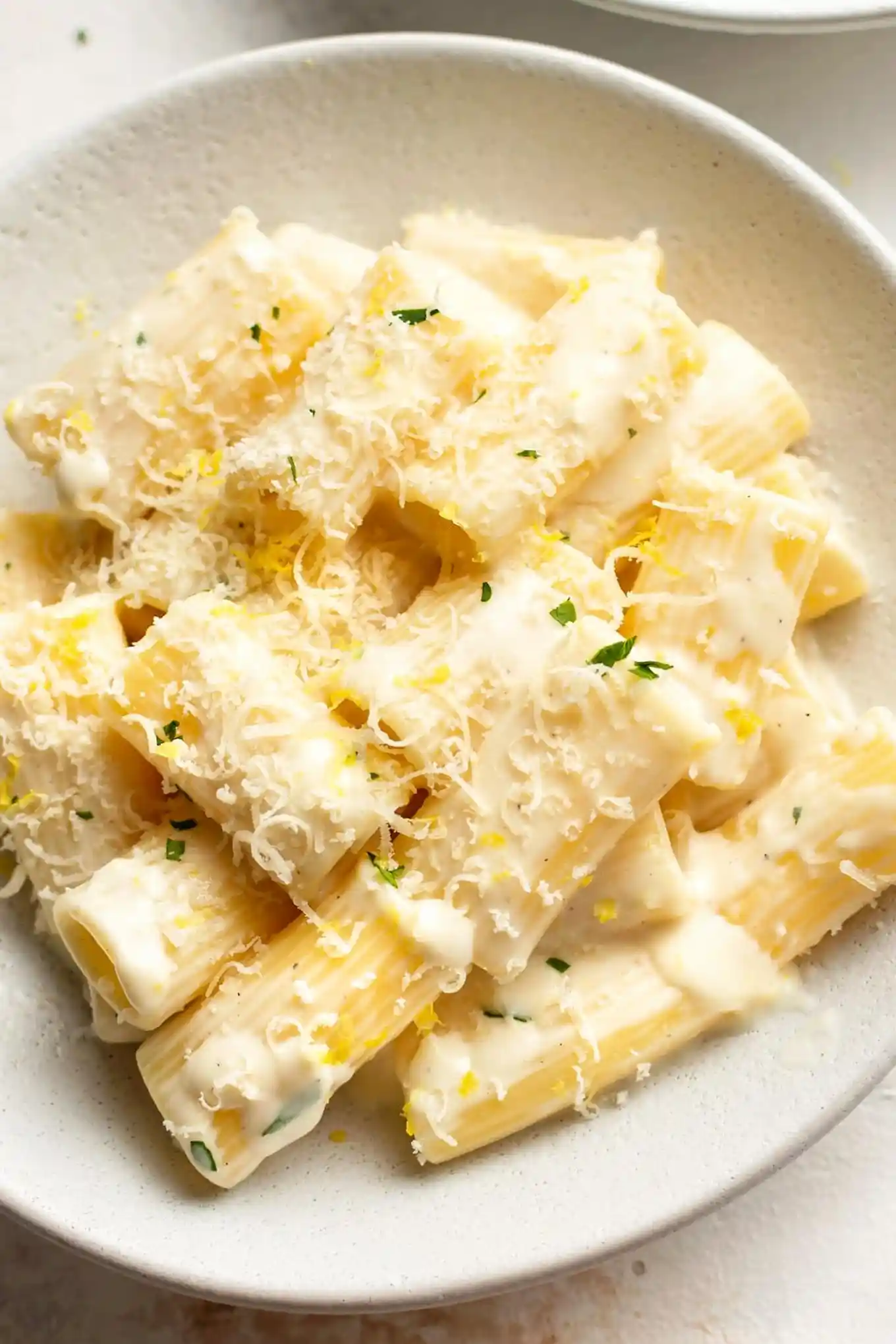
This quick and creamy lemon pasta is a perfect weeknight meal that combines rich textures with bright citrus notes. It uses simple pantry staples to create a decadent sauce in under 30 minutes.
List of ingredients
- 8 ounces uncooked pasta – rigatoni or penne are highly recommended for sauce adhesion.
- 2 tablespoons butter – provides a rich base for the roux.
- 1/2 tablespoon flour – used to thicken the sauce consistency.
- 1 small clove garlic – minced finely for a savory aromatic base.
- 1/4 cup chicken or vegetable broth – adds depth of flavor to the sauce.
- 2 teaspoons lemon juice – provides the essential bright acidity.
- Zest of 1/2 lemon – adds concentrated citrus aroma without extra liquid.
- 1 cup heavy or whipping cream – creates the silky, stable texture.
- 1/3 cup freshly grated parmesan cheese – use a microbial-rennet variety for the best melt.
- Salt and pepper – to taste, be generous to balance the cream.
- Fresh parsley and extra parmesan – optional for garnish and fresh color.
step-by-step instructions
- Cook the Pasta: Boil a large pot of salted water and cook the pasta until it is al dente according to the package instructions.
- Create the Roux: When the pasta is approximately 10 minutes from being finished, melt the butter in a skillet over medium-high heat. Sprinkle in the flour and cook for 1-2 minutes, stirring frequently to avoid burning.
- Add Aromatics and Liquid: Stir in the minced garlic, followed by the broth and the lemon juice and zest. Allow the mixture to bubble for about 1 minute.
- Thicken the Sauce: Whisk in the heavy cream and simmer for several minutes until the sauce reaches your preferred thickness.
- Incorporate Cheese: Stir in the grated parmesan cheese and immediately remove the skillet from the heat. Season with salt and pepper.
- Combine and Serve: Add the drained pasta to the skillet and toss until fully coated. If the sauce is too thick, stir in a tablespoon of reserved pasta water. Garnish with parsley and extra parmesan before serving immediately.
Advanced Cooking Techniques for the Best Result
Selecting the Right Pasta Shape
Rigatoni and penne are the ideal choices because their tubular shape and ridges trap the creamy sauce. This ensures that every bite is saturated with flavor rather than the sauce sliding off the noodle. Avoid very thin pastas like angel hair, as they can easily overcook and break under the weight of a thick cream sauce.
Achieving the Perfect Al Dente Texture
Always start tasting your pasta two minutes before the package directions suggest. Al dente pasta should have a slight firmness in the center, which prevents it from becoming mushy when tossed in the hot sauce. This structural integrity is key for a professional-quality pasta dish.
Properly Preparing a Butter Roux
The roux is the combination of melted butter and flour that acts as the thickening agent. Cook the mixture just long enough to remove the raw flour taste, but do not let it brown. A pale roux ensures the lemon color remains bright and the flavor stays clean.
Integrating the Aromatics
Adding the garlic after the roux is formed prevents the garlic from burning, which would cause a bitter taste. Bubbling the broth and lemon juice for one minute before adding the cream helps to reduce the raw edge of the citrus and concentrates the savory notes of the broth.
Essential Tool Recommendations
Using a Microplane for Lemon Zest
A Microplane or fine zester is essential for getting only the yellow flavedo of the lemon. Avoid grating into the white pith, which is bitter and can ruin the delicate balance of the sauce. Zesting directly into the pan ensures no essential oils are lost.
Choosing a Heavy Bottomed Skillet
A heavy skillet, such as cast iron or stainless steel, distributes heat evenly across the surface. This prevents the cream from scorching in hot spots. It also allows for better temperature control when simmering the sauce to the desired thickness.
The Importance of a Quality Whisk
A whisk is far more effective than a spoon for incorporating the cream and cheese. It breaks up any flour clumps from the roux and emulsifies the fat and liquids. This results in a completely smooth, velvety texture without any grainy remnants.
Adding Protein and Vegetables
Preparing Sautéed Shrimp
To add shrimp, sauté them separately in a small amount of butter and garlic until pink. Add the cooked shrimp and their juices into the pasta at the very last second. This prevents the shrimp from becoming rubbery due to overcooking in the simmering sauce.
Adding Grilled Chicken Breast
Cooked rotisserie chicken or grilled chicken breast works well as a hearty addition. Slice the chicken into bite-sized cubes and toss them in with the pasta. The chicken absorbs the lemon cream sauce, making it a complete one-pan meal.
Incorporating Fresh Baby Spinach
Stir in two handfuls of fresh baby spinach immediately after removing the sauce from the heat. The residual heat of the cream and pasta will wilt the spinach in about 60 seconds. This adds a pop of color and a boost of nutrients without requiring extra cooking time.
Adding Blanched Asparagus Tips
Blanch asparagus tips in the pasta water for the final 2 minutes of boiling. Drain them along with the pasta and toss them into the sauce. The snap of the asparagus complements the richness of the parmesan and cream.
Using Frozen Peas for Color
Frozen peas can be added to the boiling pasta water during the last minute of cooking. They provide a sweet contrast to the zesty lemon and a bright green visual appeal. Drain them with the pasta for a seamless integration into the dish.
Ingredient Substitutions and Alternatives
Substituting the Heavy Cream
It is strongly recommended to stick with heavy or whipping cream due to its high fat content. Lower-fat alternatives like milk or half-and-half are more likely to curdle when they come into contact with the acidic lemon juice. If you must use a substitute, ensure it is a full-fat coconut cream for a dairy-free version.
Using Vegetable Broth Instead of Chicken Broth
Vegetable broth is a perfect one-to-one substitute for chicken broth. It maintains the savory base of the sauce while keeping the dish lighter. Ensure the broth is low-sodium to maintain control over the final seasoning of the pasta.
Alternative Cheese Options
While parmesan is traditional, a Pecorino Romano can be used for a saltier, sharper flavor. If using Pecorino, reduce the additional salt added at the end of the recipe. Ensure any cheese used is made with microbial rennet to keep the ingredients clean.
Swapping the Pasta Type
If rigatoni is unavailable, fusilli or farfalle (bow-tie) are excellent alternatives. Their twists and folds hold onto the cream sauce effectively. Avoid spaghetti or linguine unless you prefer a lighter coating of sauce on each strand.
Serving and Pairing Suggestions
Pairing with a Fresh Arugula Salad
A simple arugula salad with a light lemon-olive oil dressing balances the richness of the cream. The peppery notes of the arugula cut through the decadence of the parmesan. This creates a balanced meal that doesn’t feel overly heavy.
Complementing with Garlic Bread
Serve the pasta with toasted garlic bread or cheesy garlic knots to soak up the excess sauce. Use a baguette sliced lengthwise, brushed with garlic butter, and broiled until golden. This adds a crunchy texture to the meal.
Serving as a Side Dish
This pasta works exceptionally well as a side for pan-seared salmon or lemon-butter chicken. When serving as a side, reduce the pasta portion to 4 ounces per person. This ensures the pasta complements the protein without overshadowing it.
Storage, Reheating, and Make-Ahead Tips
Refrigeration Guidelines
Store leftover pasta in an airtight glass container in the refrigerator for up to 3 to 4 days. Because it is a cream-based sauce, the pasta will absorb some of the liquid as it sits. This is normal and can be corrected during the reheating process.
The Best Way to Reheat Cream Sauce
Reheat the pasta over low heat on the stove rather than in the microwave. Add a tablespoon of water, milk, or broth to the pan to loosen the sauce. Stir gently until heated through to avoid breaking the emulsion and separating the fat.
Why You Should Avoid Freezing
Freezing is not recommended for this recipe because the cream and cheese emulsion typically breaks upon thawing. This results in a grainy texture and a sauce that separates into oil and solids. It is best to make this dish fresh or store it in the fridge.
Troubleshooting Common Issues
Fixing a Broken or Curdled Sauce
If the sauce appears to separate or curdle, it is usually due to excessive heat or too much acidity. Immediately remove the pan from the heat and whisk in a small amount of warm pasta water. This helps re-emulsify the fats and smooth out the texture.
Adjusting Sauce Thickness
If the sauce becomes too thick after adding the cheese, do not add more cream, as this can dilute the lemon flavor. Instead, stir in reserved pasta water one tablespoon at a time. The starch in the water helps thin the sauce while maintaining its glossy appearance.
Balancing Overpowering Lemon Flavor
If the lemon taste is too intense, stir in an extra tablespoon of heavy cream or a pinch more parmesan cheese. The fats in these ingredients neutralize the sharp acidity of the lemon. Add them in small increments until the flavor is balanced.
Frequently Asked Questions
Can I use lemon concentrate?
It is highly recommended to use fresh lemon juice and zest. Concentrates lack the bright, volatile oils found in fresh zest, which are crucial for the aroma and depth of this specific sauce.
Is this recipe suitable for a crowd?
Yes, this recipe can be doubled or tripled. However, when scaling up, ensure you use a larger skillet to maintain enough surface area for the roux to cook evenly and the cream to reduce properly.
How do I prevent the pasta from sticking?
Ensure you use a large pot with plenty of salted water. Stir the pasta frequently during the first few minutes of cooking to prevent the noodles from clumping together before they release their starches.
Print
Creamy Lemon Pasta
- Total Time: 25 minutes
- Yield: 4 servings 1x
- Diet: General
Description
This creamy lemon pasta recipe is simple and fast to make with everyday ingredients! The zesty lemon brightens the decadent parmesan sauce.
Ingredients
- 8 ounces uncooked pasta (rigatoni or penne recommended)
- 2 tablespoons butter
- 1/2 tablespoon flour
- 1 small clove garlic, minced
- 1/4 cup vegetable broth
- 2 teaspoons lemon juice
- Zest of 1/2 lemon
- 1 cup heavy cream
- 1/3 cup freshly grated microbial-rennet parmesan cheese
- Salt and pepper to taste
- Fresh parsley for garnish
Instructions
- Step 1: Boil a salted pot of water for the pasta and cook it al dente according to package directions.
- Step 2: When the pasta is about 10 minutes away from being done, add the butter to a skillet over medium-high heat. Once it melts, sprinkle the flour in and cook for 1-2 minutes, stirring fairly often.
- Step 3: Add in the garlic, followed by the vegetable broth and lemon juice + zest. Let it bubble for 1 minute.
- Step 4: Whisk in the cream and cook it for a few minutes until the sauce has thickened up to your liking.
- Step 5: Stir in the parmesan cheese and take the skillet off the heat. Season with salt & pepper as needed.
- Step 6: Add the drained pasta to the skillet and toss until coated. Garnish with more parmesan and a bit of chopped parsley if desired. Serve immediately.
Notes
If the sauce becomes too thick, stir in a tablespoon of pasta water before draining. Avoid substituting heavy cream with lower-fat alternatives like milk or half-and-half, as the acidity of the lemon may cause the sauce to curdle.
- Prep Time: 5 minutes
- Cook Time: 20 minutes
- Category: Main Course
- Method: Stovetop
- Cuisine: American
Nutrition
- Serving Size: 1 serving
- Calories: 508 kcal
- Sugar: 2 g
- Sodium: 257 mg
- Fat: 31 g
- Saturated Fat: 19 g
- Unsaturated Fat: 12 g
- Trans Fat: 0 g
- Carbohydrates: 46 g
- Fiber: 2 g
- Protein: 12 g
- Cholesterol: 104 mg
Keywords: creamy lemon pasta, parmesan sauce, quick dinner, lemon cream sauce, pasta al limone