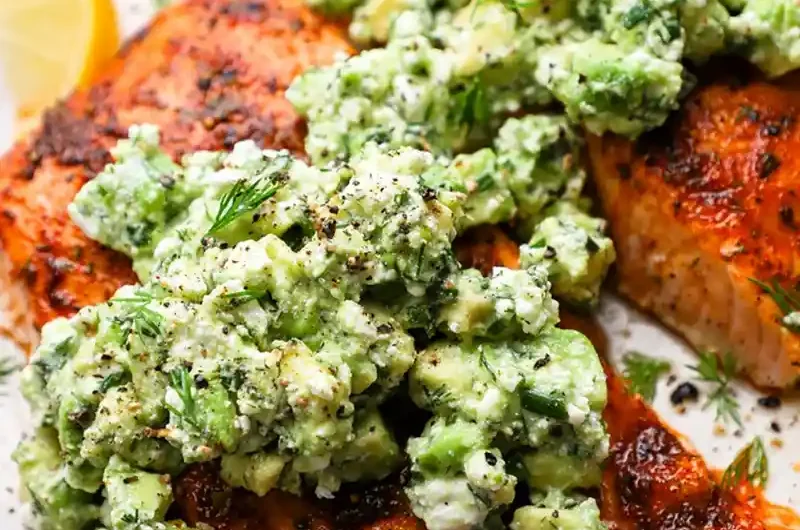
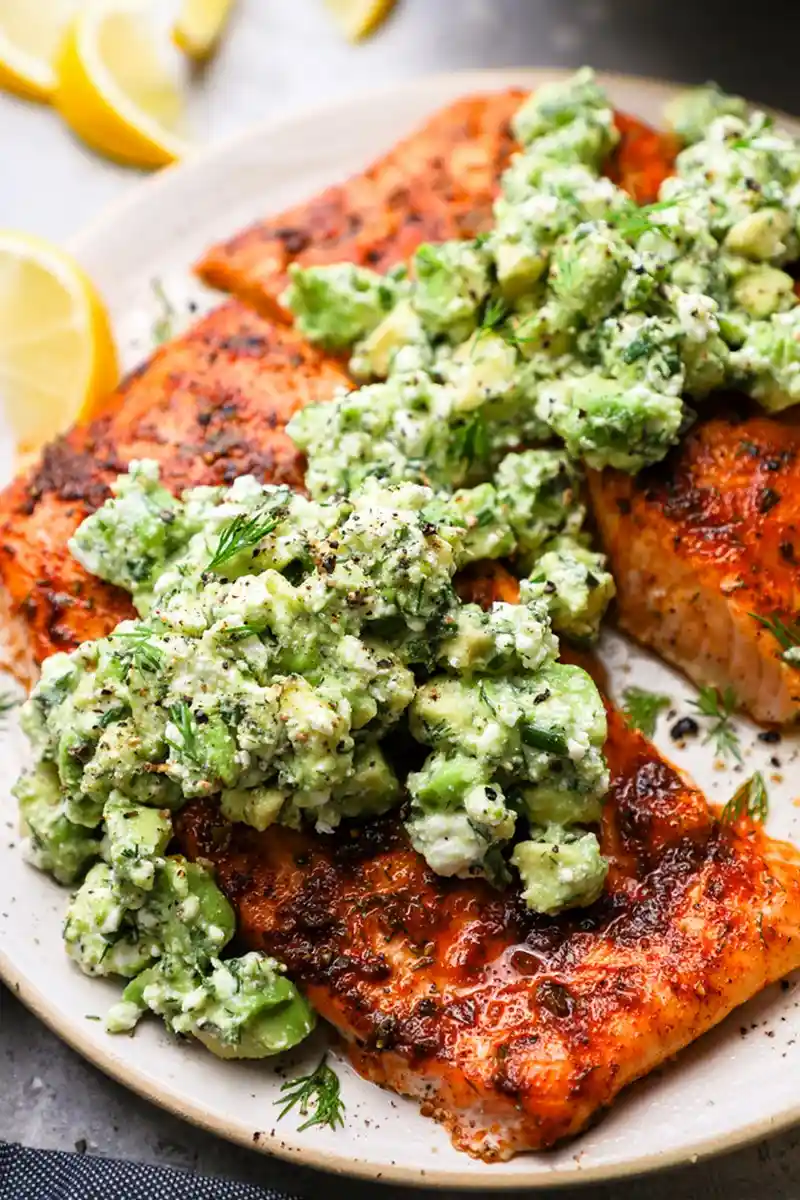
This high-protein baked salmon is a fast and healthy dinner option ready in under 30 minutes. The combination of zesty lemon and a creamy avocado-feta topping creates a refreshing, Mediterranean-style meal.
List of ingredients
- 4 salmon fillets (without skin) – use similar sizes for even cooking
- 2 Tbsp olive oil – keeps the fillets moist during baking
- 2 Tbsp lemon juice – adds bright acidity to the marinade
- 1 tsp lemon zest – provides concentrated citrus aroma
- 1 tsp fresh dill, chopped – for the salmon base flavor
- Salt, to taste – enhances the natural flavor of the fish
- Black pepper, to taste – adds a subtle heat
- Paprika, to taste – adds a warm color and mild flavor
- 1 large avocado, diced – ensures a rich, creamy texture
- 1/3 cup feta cheese, crumbled – adds a salty, tangy contrast
- 1 Tbsp fresh dill, chopped – for the topping mixture
- 1 Tbsp fresh chives, sliced – adds a mild, onion-like zest
- 1/2 of a lemon, juiced – prevents avocado from browning
- Salt, to taste – for seasoning the topping
- Black pepper, to taste – for seasoning the topping
step-by-step instructions
- Preheat and prepare: Set your oven to 400 degrees and lightly coat a baking dish with non-stick cooking spray.
- Create the topping: In a small bowl, combine the diced avocado, crumbled feta, dill, and chives. Squeeze the lemon juice over the mixture and season with salt and pepper, then cover and refrigerate until needed.
- Prepare the fish: Pat the salmon fillets dry with a paper towel to remove excess moisture and place them in the prepared baking dish.
- Season the fillets: Whisk together the olive oil, lemon juice, lemon zest, and dill in a small bowl. Brush this mixture over each fillet and sprinkle with salt, black pepper, and paprika.
- Bake the salmon: Bake for 10-12 minutes or until the salmon is cooked through and flakes easily with a fork.
- Final assembly: Serve the salmon immediately with the chilled avocado-feta topping spooned generously over each fillet.
Optimizing Your Salmon Preparation
Selecting the Ideal Salmon Cut for Even Baking
When purchasing your fillets, aim for pieces that have a consistent thickness from end to end. This ensures that the thinner tail section does not overcook while the thickest part remains raw. If the fillets vary greatly in size, you can gently press the thicker part down with your palm to flatten it slightly before seasoning.
Achieving the Perfect Pat-Dry
Removing surface moisture from the salmon is critical for achieving a better texture. If the fish is too wet, it will steam in the oven rather than roast, which can lead to a mushy exterior. Use a clean paper towel to firmly pat every side of the fillet before applying the oil and lemon mixture.
Managing Internal Temperature
While timing is a good guide, using an instant-read meat thermometer is the most accurate way to prevent overcooking. Salmon is generally safe and most tender when the internal temperature reaches 145 degrees Fahrenheit. Remove the fish from the oven slightly before it hits this mark, as carry-over cooking will finish the process.
Ingredient Substitutions and Modifications
Substituting Fresh Dill with Other Mediterranean Herbs
If fresh dill is unavailable, fresh parsley or cilantro can be used as a suitable replacement. Parsley provides a clean, grassy flavor that complements the feta, while cilantro adds a more bold, citrusy note. Use the same measurements as the original recipe to maintain the flavor balance.
Replacing Feta with Other Salty Cheeses
For a different flavor profile, you can substitute feta with crumbled goat cheese or a salty ricotta salata. Goat cheese offers a creamier, more tart taste, whereas ricotta salata provides a firmer texture and a salty punch similar to feta. Ensure the cheese is crumbled finely to distribute evenly throughout the avocado.
Choosing Alternative Creamy Bases
If you cannot use avocado, a mixture of Greek yogurt and a small amount of mayonnaise can mimic the creamy texture. Stir in a bit of lime juice to replicate the acidity and richness that avocado provides. This alternative keeps the topping light while maintaining the necessary moisture for the dish.
Selecting Different Baking Oils
While olive oil is preferred for its flavor, avocado oil or grapeseed oil are excellent alternatives. These oils have higher smoke points, which is beneficial if you decide to broil the salmon at the end for a charred finish. Avoid using butter for the initial brushing as it may burn at 400 degrees.
Side Dish Pairings for a Balanced Plate
Roasted Root Vegetables for Hearty Texture
Roasted baby potatoes or carrots provide a grounding contrast to the light salmon and zesty topping. Toss them in olive oil, salt, and rosemary, then bake them at 400 degrees for about 20-25 minutes. Since they take longer than the salmon, start them in the oven first and add the fish during the final minutes.
Light Grain Accompaniments for Absorption
Serving this dish over a bed of white rice, quinoa, or farro helps soak up the lemon-olive oil juices from the fish. Brown rice offers a nuttier flavor and more fiber, while quinoa provides an extra boost of protein. To add more flavor, cook your grains in a light vegetable broth instead of water.
Fresh Green Vegetables for Nutritional Balance
Sautéed asparagus or roasted broccoli with onions pair perfectly with the Mediterranean flavors of this recipe. Briefly sauté the vegetables in garlic and olive oil until they are tender-crisp. The snap of the green vegetables balances the richness of the avocado and feta topping.
Bread and Starches for Completeness
A slice of toasted garlic bread or a warm piece of sourdough can complement the creamy elements of the meal. Rub a raw garlic clove on toasted bread for a pungent kick that matches the feta cheese. This addition makes the meal more filling and provides a vehicle for any leftover topping.
Storage and Preservation Guidelines
Refrigerating Leftover Salmon
Store cooked salmon fillets in an airtight container in the refrigerator for up to three days. To prevent the fish from drying out, place a damp paper towel over the fillets before sealing the lid. Ensure the salmon has cooled slightly before storing to prevent condensation from building up inside the container.
Managing the Avocado Topping
Store the avocado-feta topping in a separate airtight container, as it does not reheat well. Press a piece of plastic wrap directly onto the surface of the topping to eliminate air contact, which prevents the avocado from oxidizing. The topping will remain fresh for about 24 to 48 hours.
Safe Storage Times and Quality
While salmon can stay in the fridge for three days, the quality of the avocado topping degrades quickly. For the best taste and color, try to consume the meal within 24 hours. If the avocado turns brown, you can scrape off the top layer, though the flavor will remain largely unchanged.
Best Practices for Reheating
Gentle Oven Reheating
To maintain the moisture of the salmon, reheat fillets in the oven at 275 degrees Fahrenheit for about 10 minutes. This low temperature prevents the fish from becoming rubbery or overcooked. Avoid reheating the avocado topping in the oven, as the heat will make the avocado bitter and mushy.
Using a Microwave for Speed
If using a microwave, use a medium power setting and heat the salmon in 30-second intervals. Add a teaspoon of water or a small pat of butter to the dish and cover it with a microwave-safe lid to trap steam. This helps the fish stay moist and prevents the edges from curling.
Serving Cold as a Salmon Salad
Cold baked salmon is an excellent option for lunches the next day. Flake the chilled salmon with a fork and mix it directly with the remaining avocado-feta topping. Serve this mixture over a bed of mixed greens or inside a whole-grain wrap for a fresh, nutrient-dense meal.
Troubleshooting Common Issues
Preventing Salmon from Drying Out
If your salmon frequently turns out dry, check the oven temperature with a standalone thermometer. An oven that runs too hot will sear the outside and dry the inside quickly. Additionally, ensure you are not overbaking; the fish should still be slightly translucent in the center when you pull it out.
Stopping Avocado Oxidation
To prevent the topping from turning brown, ensure you use enough lemon juice during the mixing process. The citric acid acts as a natural preservative by slowing down the enzymatic browning of the avocado. If you are preparing the topping well in advance, add an extra squeeze of lemon right before serving.
Fixing Over-Salted Toppings
If the feta cheese makes the topping too salty, stir in more diced avocado or a tablespoon of plain Greek yogurt. This adds more bulk and creaminess, which helps dilute the concentration of salt. You can also add a pinch of sugar or honey to balance the saltiness with a hint of sweetness.
Frequently Asked Questions
Can I use frozen salmon fillets?
Yes, you can use frozen salmon, but it must be completely thawed before baking. Thaw the fillets slowly in the refrigerator overnight to maintain the best texture. Pat them extra dry with paper towels, as frozen fish often releases more moisture during the thawing process.
Should I keep the skin on the salmon?
While this recipe uses skinless fillets, you can keep the skin on if you prefer. The skin acts as a protective barrier that helps keep the flesh moist during baking. If you keep the skin, simply season and brush the top of the fillet as usual and serve the topping on top.
What is the best type of feta to use?
Buying a block of feta in brine and crumbling it yourself is recommended for superior flavor and texture. Pre-crumbled feta is often coated in anti-clumping agents that can affect the mouthfeel. Block feta is generally creamier and provides a more authentic salty punch.
Can I make this recipe in an air fryer?
Yes, you can cook the salmon in an air fryer at 380 degrees Fahrenheit for 7 to 10 minutes. Check for doneness at the 7-minute mark, as air fryers cook faster than traditional ovens. Apply the avocado-feta topping only after the salmon has been removed from the air fryer.
Print
Savory Baked Salmon with Creamy Avocado Feta Topping
- Total Time: 25 minutes
- Yield: 4 servings 1x
- Diet: Pescatarian
Description
This baked salmon is perfect for a quick & healthy dinner! It’s tender, loaded with flavor & has the BEST avocado-feta topping! (Ready in less than 30 minutes!)
Ingredients
- 4 salmon fillets (without skin)
- 2 Tbsp olive oil
- 2 Tbsp lemon juice
- 1 tsp lemon zest
- 1 tsp fresh dill, chopped
- Salt, to taste
- Black pepper, to taste
- Paprika, to taste
- 1 large avocado, diced
- ⅓ cup microbial-rennet feta cheese, crumbled
- 1 Tbsp fresh dill, chopped
- 1 Tbsp fresh chives, sliced
- ½ of a lemon, juiced
- Salt, to taste
- Black pepper, to taste
Instructions
- Prep the oven: Turn your oven on to 400 degrees and spray a baking dish with non-stick cooking spray.
- Make the avocado-feta topping: Mix the avocado, crumbled feta, dill and chives together in a small bowl. Squeeze the lemon juice over the top and season with salt and pepper to taste. Cover and refrigerate while you prepare the salmon.
- Prepare the salmon: Pat the salmon fillets with a paper towel to remove any excess moisture and place them in your prepared baking dish. In a small bowl, whisk the olive oil, lemon juice, lemon zest and dill together and brush the mixture over each fillet. Season each fillet with salt, pepper and paprika to your liking.
- Bake: Bake for 10-12 minutes or until the salmon is cooked through and flakes easily with a fork.
- Serve: Serve immediately with your avocado-feta topping spooned over each fillet.
Notes
Sometimes I’ll double the topping recipe depending on what we’re serving with it.
- Prep Time: 15 minutes
- Cook Time: 10 minutes
- Category: Main Course
- Method: Baking
- Cuisine: American
Nutrition
- Serving Size: 1 fillet
- Calories: 530 kcal
- Sugar: 3 g
- Sodium: 600 mg
- Fat: 37 g
- Saturated Fat: 8 g
- Unsaturated Fat: 29 g
- Trans Fat: 0 g
- Carbohydrates: 12 g
- Fiber: 5 g
- Protein: 38 g
- Cholesterol: 90 mg
Keywords: avocado, baked salmon, feta cheese, salmon recipes