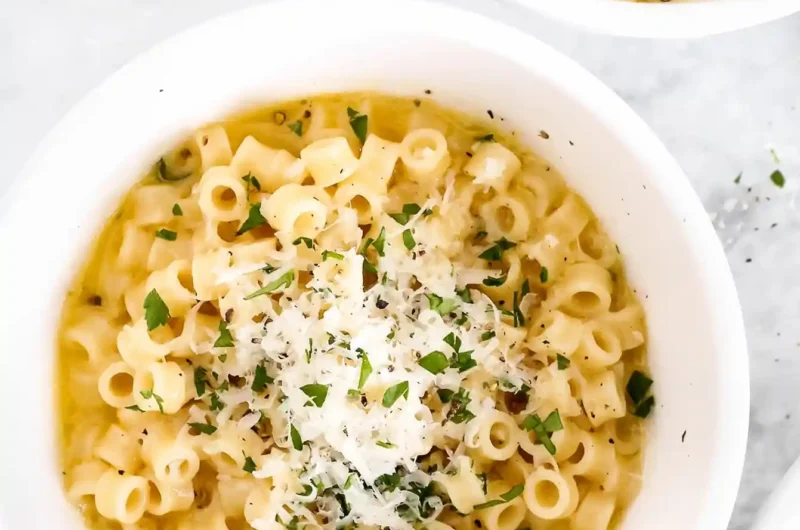
This quick and comforting soup uses a few pantry staples to create a rich, cheesy meal in under 30 minutes. It is an ideal option for a light dinner or a cozy side dish during colder months.
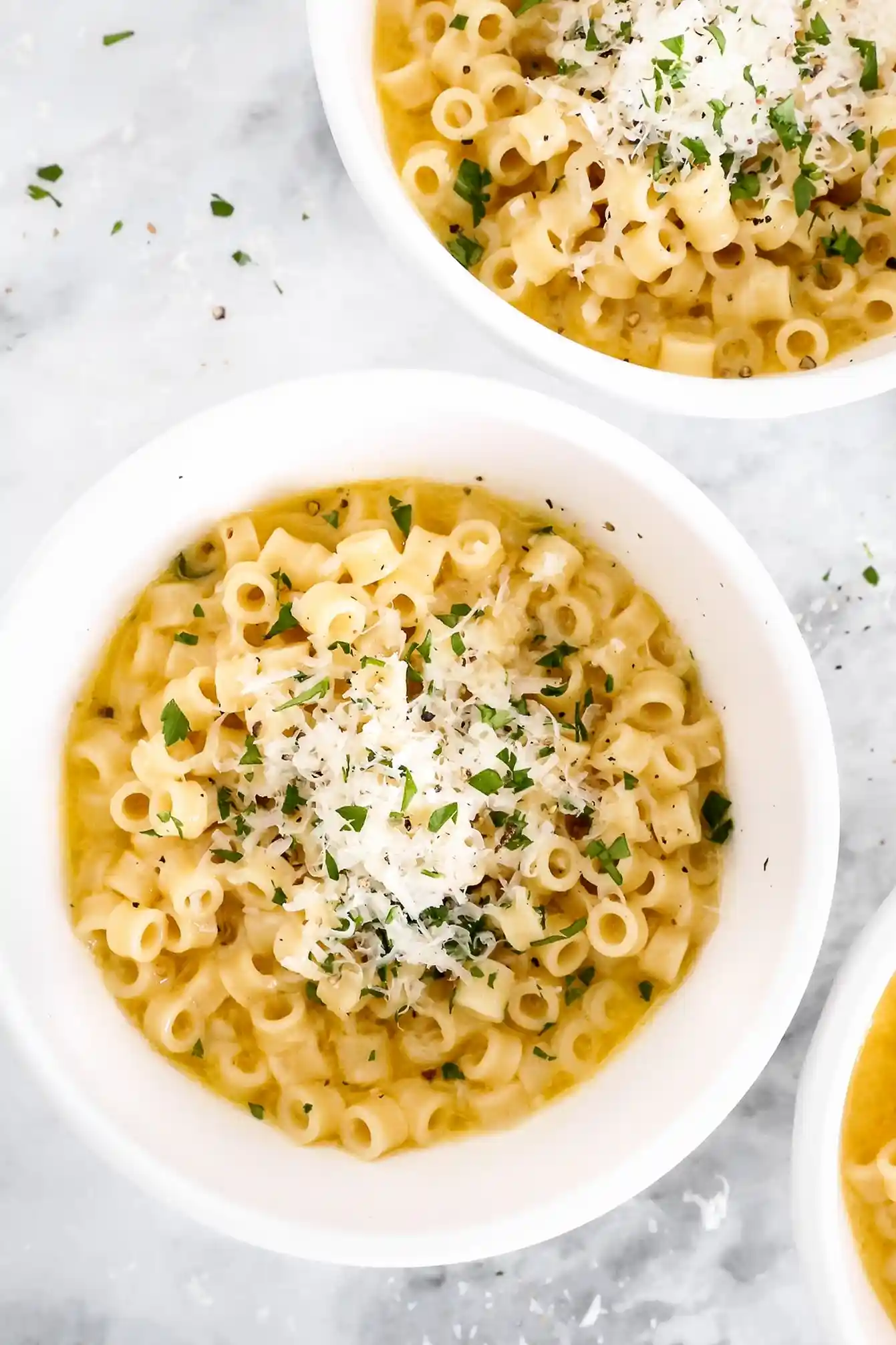
List of ingredients
- 4 Tablespoons Butter – provides a rich and creamy base.
- 5 Garlic Cloves, minced – adds a strong aromatic flavor.
- 32 Ounces Vegetable Broth – the savory liquid foundation.
- 1 & 1/2 Cup Ditalini Pasta – small tubular pasta that fits perfectly in a spoon.
- 1/3 Cup Parmesan, finely grated – used for thickness and salty depth.
- Parsley, chopped & optional – adds a fresh herbal finish.
- Salt, optional & to taste – to enhance overall seasoning.
- Black Pepper, optional & to taste – adds a subtle spicy warmth.
- Parmesan, finely grated – for garnish at the end.
step-by-step instructions
- Melt Butter: Place 4 tablespoons of butter in a large pot over medium heat until fully melted.
- Sauté Garlic: Add 5 minced garlic cloves to the butter and stir constantly for 30-45 seconds until fragrant.
- Boil Broth: Pour 32 ounces of vegetable broth into the pot and increase heat to bring the liquid to a boil.
- Cook Pasta: Lower the heat to a simmer and add 1 & 1/2 cups of ditalini pasta, cooking according to package instructions until al dente.
- Incorporate Cheese: Stir in 1/3 cup of finely grated parmesan cheese until melted and well combined.
- Garnish and Serve: Top each serving with chopped parsley, freshly cracked black pepper, and additional grated parmesan.
Optimizing the Cooking Process
Preventing Garlic from Burning
Garlic can turn bitter if it browns too quickly over high heat. Keep the heat at a steady medium and stir the minced cloves constantly during the 30-45 second sauté window. If the garlic begins to turn dark brown, immediately pour in the broth to stop the cooking process.
Managing Broth Evaporation
Simmering the pasta uncovered allows steam to escape, which can reduce the volume of your broth. If you notice the soup becoming too thick, add a small amount of water or additional vegetable broth to maintain the desired consistency. Using a lid can speed up the boiling process but requires closer monitoring to prevent boiling over.
Achieving Perfect Pasta Texture
Pasta continues to cook even after the heat is turned off due to the residual heat of the broth. To avoid mushy noodles, remove the pot from the burner when the ditalini is just shy of al dente. This ensures the pasta maintains a firm bite when served in the bowl.
Ensuring Smooth Cheese Integration
To prevent the parmesan from clumping, ensure the cheese is finely grated before adding it to the pot. Stir the cheese in quickly and thoroughly over low heat to create a smooth, emulsified texture. Avoid boiling the soup vigorously after adding the cheese to prevent the fats from separating.
Pasta Substitutions and Alternatives
Using Orzo Pasta
Orzo is a rice-shaped pasta that works exceptionally well in this soup for a different mouthfeel. Because orzo is smaller and thinner than ditalini, keep a close eye on the cooking time to prevent overcooking. It creates a slightly creamier consistency as it releases more starch into the broth.
Trying Acini di Pepe
Acini di pepe are tiny, bead-like pasta shapes that are traditional for Italian soups. These are ideal if you prefer a soup that feels more like a thickened broth than a pasta dish. Adjust the cooking time based on the package, as these typically cook faster than ditalini.
Substituting with Stelline
Stelline, or star-shaped pasta, adds a playful visual element to the soup while providing a similar texture to ditalini. They are small enough to be eaten easily with a spoon and absorb the garlic-parmesan flavor efficiently. Ensure you simmer them gently to keep the star shapes intact.
Using Gluten-Free Pasta
You can replace ditalini with a gluten-free alternative made from brown rice or chickpeas. Be aware that gluten-free pastas often release more starch or break down faster than wheat-based versions. Cook them separately or reduce the simmer time to prevent the soup from becoming overly thick.
Broth and Base Variations
Low-Sodium Vegetable Broth
Since parmesan cheese is naturally salty, using a low-sodium vegetable broth helps balance the overall flavor. This allows you to control the salt levels manually at the end of the cooking process. Taste the soup before adding any additional salt to avoid over-seasoning.
Using Olive Oil Instead of Butter
For a lighter flavor profile, you can substitute the 4 tablespoons of butter with an equal amount of extra virgin olive oil. While you lose the creaminess of the butter, you gain a fruity, peppery note that complements the garlic. This also makes the soup naturally dairy-free if paired with a vegan cheese substitute.
Enhancing Flavor with Homemade Broth
Using a homemade vegetable broth made from carrots, celery, and onions adds a deeper layer of complexity. Homemade broths often have more natural gelatin and minerals that enhance the mouthfeel of the soup. Ensure the homemade broth is strained well for a clear, professional look.
Adding a Touch of Cream
For a richer, more indulgent version, stir in two tablespoons of heavy cream or a dollop of crème fraîche at the very end. This transforms the clear broth into a creamy parmesan sauce. Keep the heat low when adding cream to prevent it from curdling.
Nutritional Additions and Mix-ins
Incorporating Fresh Spinach
Stirring in a handful of fresh baby spinach during the last minute of cooking adds color and nutrients. The heat of the soup will wilt the spinach quickly without requiring extra cooking time. This adds a mild earthy flavor that pairs well with the salty parmesan.
Adding Sautéed Carrots and Celery
For a more substantial meal, sauté finely diced carrots and celery in the butter before adding the garlic. This creates a traditional mirepoix base that adds sweetness and texture to the broth. Allow the vegetables to soften for about 5 minutes before proceeding with the garlic step.
Adding Frozen Peas
Adding a half-cup of frozen peas during the final simmering stage adds a pop of sweetness and color. Peas require very little cooking time and can be added directly from the freezer. They provide a nice contrast to the richness of the cheese and butter.
Integrating Fresh Herbs
While parsley is suggested as a garnish, adding dried thyme or oregano during the broth boiling stage adds herbal depth. For a fresh twist, stir in chopped basil leaves just before serving. Fresh herbs should always be added at the end to preserve their bright flavor and color.
Serving and Pairing Ideas
Pairing with Crusty Bread
A toasted baguette or a slice of sourdough bread is the perfect accompaniment to this soup. The crunchy texture of the bread provides a contrast to the soft pasta and liquid broth. Rubbing a raw garlic clove on toasted bread enhances the garlic notes already present in the soup.
Serving with a Side Salad
A crisp green salad with a lemon vinaigrette helps cut through the richness of the butter and parmesan. Use arugula or mixed greens with sliced cucumbers and cherry tomatoes. The acidity of the dressing cleanses the palate between spoonfuls of the cheesy soup.
Adding a Lemon Twist
A squeeze of fresh lemon juice added to the bowl just before eating brightens the entire dish. The citric acid balances the heavy fats from the butter and cheese. You can also add a pinch of lemon zest for a more aromatic citrus experience.
Choosing the Right Bowl
Serve this soup in deep, warmed ceramic bowls to keep the liquid hot for longer. Because the pasta continues to absorb broth, serving in smaller portions helps prevent the soup from turning into a pasta dish before it is finished. Garnish immediately to keep the parsley vibrant.
Storage and Reheating Guidelines
Preventing Pasta Absorption
Pasta continues to absorb liquid even when refrigerated, which often turns the soup into a thick porridge. To prevent this, store the cooked pasta and the broth in separate containers. Combine them only when you are ready to reheat and serve.
Reheating with Extra Liquid
If you store the soup together, you will likely need to add a splash of vegetable broth or water during reheating. Heat the soup slowly over medium-low heat to avoid scorching the bottom. Stir gently to redistribute the melted parmesan throughout the broth.
Maximum Refrigeration Time
This soup is best enjoyed within 3 to 4 days when stored in an airtight container in the refrigerator. Beyond this time, the pasta may lose its structural integrity and become too soft. Always ensure the soup has cooled slightly before sealing the container.
Freezing Recommendations
It is not recommended to freeze this soup because the pasta and the dairy-based cheese do not freeze well. The pasta will become mushy upon thawing, and the cheese may separate from the broth. If you wish to freeze it, freeze only the garlic-broth base and add fresh pasta and cheese upon reheating.
Troubleshooting Common Issues
Fixing an Overly Thick Soup
If the pasta absorbed too much liquid, simply stir in a half-cup of hot vegetable broth or water. Do this while the soup is heating up to ensure the temperature remains consistent. Stir slowly to avoid breaking the ditalini pasta.
Addressing a Bland Taste
If the soup lacks depth, increase the amount of grated parmesan or add a pinch of salt. A small amount of soy sauce or a drop of Worcestershire sauce can also add umami without changing the flavor profile significantly. Always taste and adjust in small increments.
Dealing with Clumping Cheese
If the parmesan forms small clumps, you can use a whisk to vigorously stir the soup over low heat. If the clumps persist, a quick pulse with an immersion blender can smooth out the broth, though this may break some of the pasta. Using a finer grater prevents this issue from the start.
Correcting Overcooked Pasta
If the pasta becomes too soft, there is no way to reverse the texture, but you can balance the dish by adding more fresh garnishes. Adding a sprinkle of toasted breadcrumbs on top can add a needed crunch. In the future, reduce the simmer time by one or two minutes.
Frequently Asked Questions
Can I use a different cheese?
Yes, Pecorino Romano is an excellent alternative as it is also a hard, salty Italian cheese. Grana Padano is another option that offers a slightly milder flavor than Parmesan. Ensure the replacement cheese is finely grated for the best melt.
Why did my pasta absorb all the broth?
This usually happens when the soup is simmered too long or left on high heat for too long after cooking. Pasta is porous and will continue to drink up the liquid as it sits. To avoid this, serve the soup immediately after adding the cheese.
Is this soup freezer-friendly?
No, the pasta and cheese components break down during the freezing and thawing process. For the best results, only freeze the vegetable and garlic broth base. Add the pasta and parmesan fresh during the reheating process.
Can I add other vegetables?
Yes, you can add diced carrots, celery, or peas to make the soup more filling. Sauté these vegetables with the butter before adding the garlic. This adds nutritional value and a variety of textures to the meal.
How do I make this dairy-free?
Replace the butter with olive oil and use nutritional yeast instead of parmesan cheese. Nutritional yeast provides a similar nutty, cheesy flavor while remaining plant-based. You can also use a store-bought vegan parmesan alternative.
Print
Garlic Parmesan Pasta Soup
- Total Time: 25 minutes
- Yield: 3 servings 1x
- Diet: Vegetarian
Description
A cozy and comforting vegetarian Parmesan Pasta Soup made with simple ingredients, perfect for a quick and warm dinner.
Ingredients
- 4 Tablespoons Butter
- 5 Garlic Cloves, minced
- 32 Ounces Vegetable Broth
- 1 1/2 Cup Ditalini Pasta
- 1/3 Cup Parmesan (microbial-rennet), finely grated
- Parsley, chopped & optional
- Salt, optional & to taste
- Black Pepper, optional & to taste
- Parmesan (microbial-rennet), finely grated
Instructions
- Melt: Melt the 4 tablespoons of butter in a large pot over medium heat.
- Sauté: Add the 5 minced garlic cloves and stir until fragrant, about 30-45 seconds.
- Boil: Pour the 32 ounces of vegetable broth into the pot and bring to a boil.
- Simmer: Lower the heat, and pour the 1 1/2 cups ditalini pasta into the pot and cook at a simmer according to the packaging instructions until al dente.
- Mix: Stir in the 1/3 cup parmesan.
- Serve: Serve topped with chopped parsley, a sprinkle of freshly cracked black pepper, and finely grated parmesan.
Notes
Use microbial-rennet parmesan for a vegetarian version. Adding a lid makes the broth boil faster; monitor carefully to avoid overboiling. If the soup boils too vigorously rather than simmering, you may need to add extra broth to compensate for liquid loss.
- Prep Time: 5 minutes
- Cook Time: 20 minutes
- Category: Soup
- Method: Simmering
- Cuisine: Italian-inspired
Nutrition
- Serving Size: 1 bowl
- Calories: 447 kcal
- Sugar: 5 g
- Sodium: 1200 mg
- Fat: 20 g
- Saturated Fat: 7 g
- Unsaturated Fat: 13 g
- Trans Fat: 0 g
- Carbohydrates: 50 g
- Fiber: 3 g
- Protein: 12 g
- Cholesterol: 53 mg
Keywords: parmesan, pasta, soup, vegetarian, winter, easy dinner