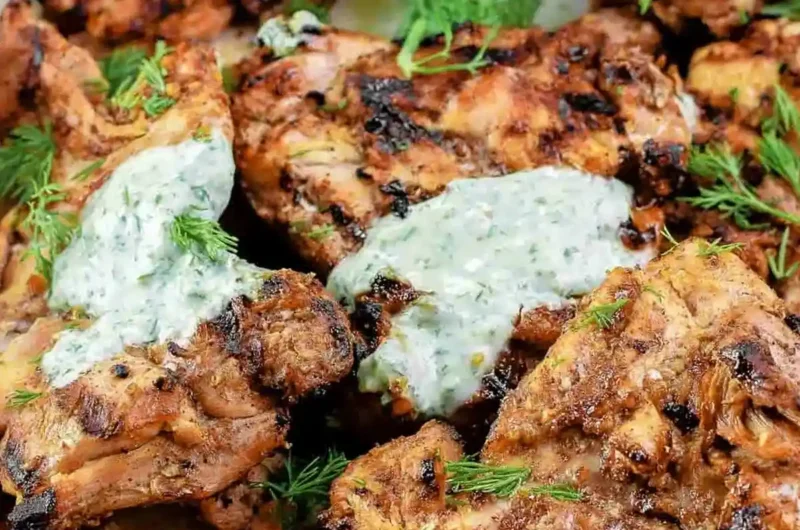
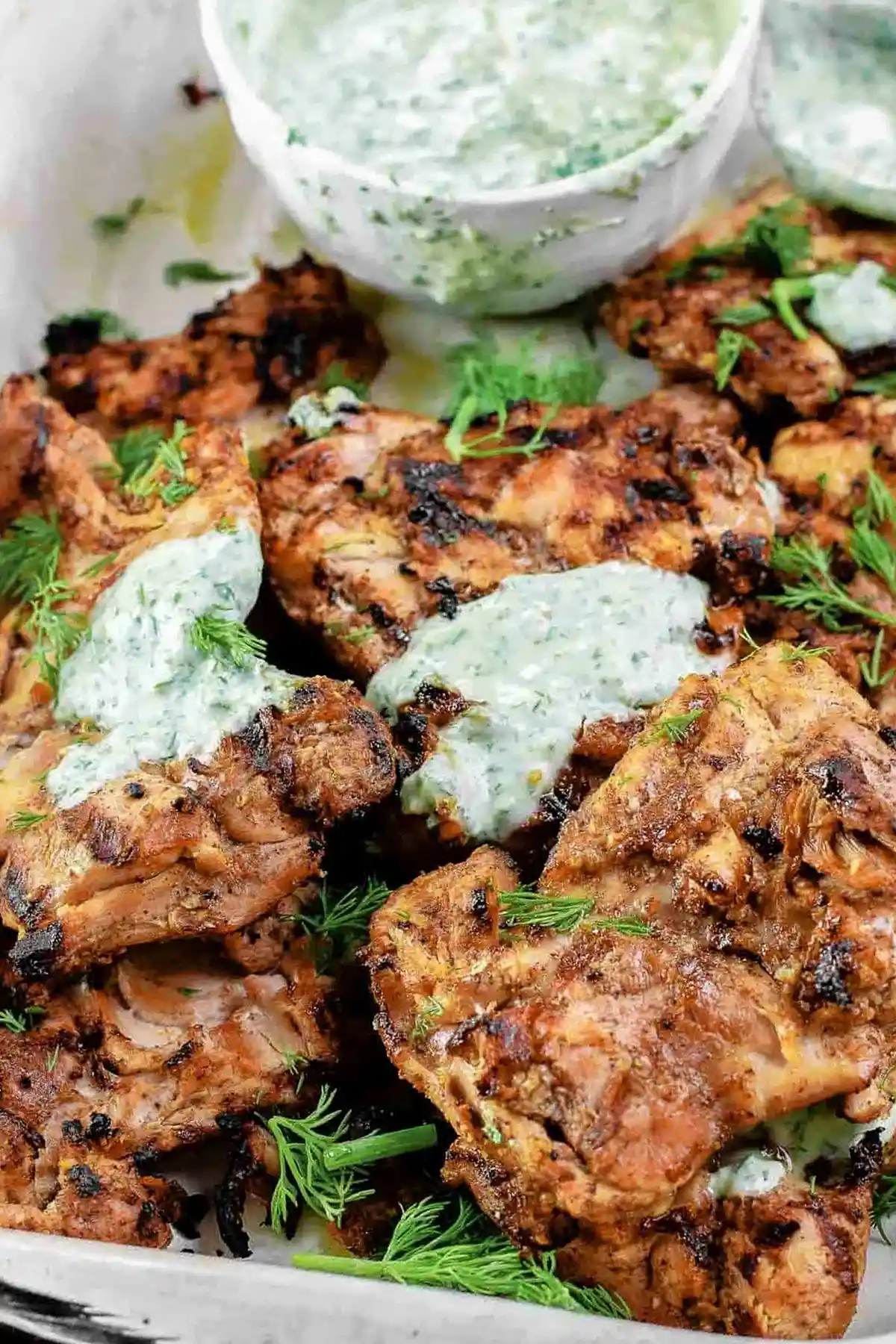
This recipe delivers juicy, flavor-packed chicken thighs paired with a creamy, herby Greek yogurt sauce. It is an ideal choice for outdoor summer cooking or a healthy, protein-rich weekday dinner.
List of ingredients
- 1 garlic clove, minced – for the sauce.
- 1 cup fresh dill, stems removed and chopped – for the sauce.
- 1 1/4 cup Greek yogurt – provides the creamy base for the sauce.
- 1 tbsp Extra virgin olive oil – for the sauce.
- 1/2 lemon or lime, juiced – for the sauce.
- Pinch cayenne pepper (optional) – adds a subtle heat to the sauce.
- Kosher salt – added to the sauce if needed.
- 10 garlic cloves, minced – for the chicken seasoning.
- 1/2 tsp paprika – for warm color and flavor.
- 1/2 tsp allspice – adds a distinct aromatic quality.
- 1/2 tsp ground nutmeg – adds warmth to the rub.
- 1/4 tsp ground green cardamom – for a floral, spicy note.
- Salt and pepper – to taste for seasoning.
- 5 tbsp Extra virgin olive oil, divided – used for both the rub and the marinade.
- 8 boneless skinless chicken thighs – the main protein.
- 1 red onion, halved and thinly sliced – for the marinade base.
- 2 lemons, juiced – for the marinade.
step-by-step instructions
- Prepare the dill Greek yogurt sauce: Combine the minced garlic, fresh dill, yogurt, olive oil, lemon juice, and cayenne pepper in a food processor. Process until the ingredients are well blended and the sauce is smooth and thick. Taste and add salt if necessary, then transfer to a covered container and refrigerate.
- Season the chicken: In a small bowl, mix the 10 minced garlic cloves, paprika, allspice, nutmeg, cardamom, and 3 tbsp of olive oil. Pat the chicken thighs dry with paper towels and rub the garlic-spice mixture evenly onto each piece.
- Create the marinade: In a large dish with sides, combine the sliced red onions, lemon juice, and the remaining olive oil. Place the seasoned chicken thighs on top of the onions and toss to ensure they are fully coated in the liquid.
- Marinate the meat: Cover the dish and refrigerate for 2 to 4 hours to allow flavors to penetrate. If you are short on time, you may let it sit at room temperature for 30 minutes.
- Grill the chicken: Preheat a gas grill to medium-high heat. Place the chicken thighs on the grates, cover, and cook for 5 minutes. Turn the chicken over and grill for another 3 to 5 minutes while covered.
- Rest and check temperature: Remove the chicken from the grill and let it rest for 5 minutes. Use a meat thermometer to ensure the thickest part has reached an internal temperature of 165 degrees Fahrenheit.
- Serve: Plate the grilled chicken and serve it immediately with a side of the chilled dill Greek yogurt dip.
Professional Grilling Techniques
Using an Instant-Read Thermometer
To avoid overcooking the chicken, always rely on a digital thermometer rather than timing alone. Chicken thighs are safe and juicy when they reach 165 degrees Fahrenheit. Removing them slightly early and allowing carry-over cooking during the rest period prevents the meat from becoming tough.
Managing Heat Zones on the Grill
Set up a two-zone fire by keeping one side of the grill at medium-high and the other side lower. If the chicken begins to char too quickly, move the pieces to the cooler zone to finish cooking through. This prevents the exterior from burning before the center is fully cooked.
Preventing Meat from Sticking
Clean the grill grates thoroughly and oil them lightly just before placing the chicken down. This creates a non-stick surface that ensures the spice rub stays on the meat rather than the grate. Avoid moving the chicken too early; it will naturally release from the grill once a proper sear has formed.
The Importance of Resting Meat
Allowing the chicken to rest for 5 to 10 minutes allows the muscle fibers to relax and the juices to redistribute. If you cut into the meat immediately, the juices will run out, leaving the chicken dry. Tenting the meat loosely with aluminum foil helps maintain the internal temperature during this process.
Protein Variations and Adjustments
Cooking Bone-In Chicken Thighs
Bone-in thighs require a longer cooking time because the bone slows down heat penetration. Increase the grilling time to 15 to 25 minutes depending on the size of the thighs. Keep the grill lid closed as much as possible to create an oven-like environment that cooks the meat evenly.
Preparing Boneless Chicken Breasts
Chicken breasts dry out faster than thighs, so they require a different temperature target. Remove breasts from the heat when they hit 155 degrees Fahrenheit, as the temperature will rise to 165 degrees during resting. For best results, pound the breasts to an even thickness before seasoning.
Adapting for Lean Turkey Cutlets
Turkey cutlets can be used as a leaner alternative to chicken. Since turkey has less fat, reduce the grilling time and check the internal temperature more frequently. Ensure they are well-coated in olive oil to prevent the lean meat from sticking to the grates.
Customizing Flavor Profiles
Substituting Fresh Dill for Other Herbs
If you prefer a different herb profile, replace the dill with fresh parsley, mint, or a combination of both. Mint provides a cooling effect that pairs exceptionally well with the warm Mediterranean spices. Ensure the herbs are finely chopped to maintain a smooth sauce consistency.
Replacing Lemon with Other Acidic Ingredients
While lemon is traditional, apple cider vinegar or white wine vinegar can provide the necessary acidity for the marinade. These alternatives offer a slightly different tang that still helps tenderize the meat. Use the same quantity as the lemon juice to maintain the balance of flavors.
Adjusting the Garlic Intensity
For a milder flavor, reduce the amount of garlic in the chicken rub and use garlic powder instead of fresh cloves. Conversely, if you enjoy a pungent profile, add a teaspoon of grated fresh ginger to the marinade. This adds a zesty layer that complements the allspice and nutmeg.
Modifying the Spice Blend
Switching regular paprika for smoked paprika adds a deep, woody flavor that mimics a charcoal grill. You can also increase the amount of cardamom for a more floral, aromatic result. Adjust the cayenne pepper in the sauce based on your personal tolerance for heat.
Recommended Side Dish Pairings
Fresh Mediterranean Salads
Serve the chicken with a Turkish white bean salad or a traditional Greek salad featuring cucumbers, olives, and feta. The acidity of a vinaigrette-based salad cuts through the richness of the yogurt sauce. Use plenty of fresh lemon juice and olive oil for the dressing.
Hearty Grain Accompaniments
A Mediterranean orzo salad with diced vegetables and a lemon-herb dressing is a perfect starchy pair. Alternatively, serve the chicken over a bed of fluffy quinoa or couscous. These grains absorb the excess juices from the chicken and the yogurt sauce.
Roasted and Grilled Vegetables
Zucchini boats or grilled bell peppers add color and nutrition to the plate. Toss vegetables in the same olive oil and lemon mixture used for the chicken to create a cohesive flavor profile. Roast them in the oven at 400 degrees Fahrenheit until caramelized.
Starchy Potato Options
Greek-style baked fries or smashed potatoes with garlic and oregano complement the grilled chicken. Ensure the potatoes are crispy on the outside to provide a texture contrast to the tender meat. Sprinkle with a bit of sea salt and fresh parsley before serving.
Storage and Food Safety
Refrigerating Cooked Chicken
Store leftover grilled chicken in an airtight glass container in the refrigerator for up to 3 to 4 days. Keeping the chicken in a sealed environment prevents it from absorbing other odors in the fridge. Allow the meat to cool slightly before sealing the lid to avoid excess moisture buildup.
Storing the Yogurt Sauce
The dill yogurt sauce can be made up to 24 hours in advance and stored in a tightly closed mason jar. Because the flavors meld over time, the sauce often tastes better the next day. Give it a quick stir before serving to re-incorporate any separated oil or lemon juice.
Safe Freezing Methods
While the sauce does not freeze well due to the yogurt, the grilled chicken can be frozen for up to two months. Wrap the chicken tightly in plastic wrap and then place it in a freezer-safe bag. Thaw the meat in the refrigerator overnight before reheating.
Best Practices for Reheating
To prevent the chicken from drying out during reheating, use a skillet over medium-low heat with a splash of water or broth. Cover the pan with a lid to create steam that re-hydrates the meat. Avoid using the microwave on high power, as this can make the chicken rubbery.
Troubleshooting Common Issues
Fixing a Watery Yogurt Sauce
If your sauce is too thin, strain the Greek yogurt through a cheesecloth for a few hours before blending. Alternatively, add a tablespoon of almond flour or a small amount of cream cheese to thicken the consistency. This ensures the sauce clings to the chicken rather than running off.
Preventing Burnt Garlic
Minced garlic can burn quickly on a hot grill, creating a bitter taste. To prevent this, ensure the garlic is well-integrated into the oil-based rub rather than sitting on the surface. Keep the grill at a consistent medium-high heat and avoid flare-ups.
Managing Over-Marination
Leaving chicken in citrus-based marinades for too long can break down the protein fibers, making the meat mushy. Limit the marinating time to 4 to 6 hours if using high concentrations of lemon juice. For overnight marinating, add the citrus juice only a few hours before grilling.
Frequently Asked Questions
How long can I marinate the chicken?
For the best flavor, marinate the chicken for 2 to 4 hours in the refrigerator. You can marinate it overnight, but you should only add the lemon juice a few hours before cooking to prevent the texture from changing.
Can I use a different type of yogurt?
Plain full-fat yogurt can be used, though it will be thinner than Greek yogurt. If using regular yogurt, you may need to strain it or add more dill and garlic to maintain the bold flavor profile.
Is this recipe suitable for an indoor grill?
Yes, this recipe works well on a stovetop grill pan or an indoor electric grill. Ensure the pan is well-oiled and preheated to medium-high to achieve the same char marks as an outdoor grill.
Can I make the sauce in advance?
Yes, the sauce can be prepared one day ahead of time. Store it in an airtight container in the refrigerator and stir it well before serving to ensure a smooth texture.
Print
Mediterranean Grilled Chicken Thighs with Herby Yogurt Sauce
- Total Time: 22 minutes
- Yield: 8 servings 1x
- Diet: General
Description
Juicy grilled chicken thighs prepared Mediterranean-style with a bold marinade of garlic, lemon juice, and warm spices, served with a creamy and refreshing dill Greek yogurt sauce.
Ingredients
- 1 garlic clove, minced
- 1 cup fresh dill, stems removed, chopped
- 1 1/4 cup Greek yogurt
- 1 tbsp extra virgin olive oil
- 1/2 lemon or lime, juiced
- Pinch cayenne pepper
- Kosher salt, if needed
- 10 garlic cloves, minced
- 1/2 tsp paprika
- 1/2 tsp allspice
- 1/2 tsp ground nutmeg
- 1/4 tsp ground green cardamom
- Salt and pepper
- 5 tbsp extra virgin olive oil, divided
- 8 boneless skinless chicken thighs
- 1 red onion, halved and thinly sliced
- 2 lemons, juiced
Instructions
- Make the sauce: Combine minced garlic, fresh dill, yogurt, olive oil, lemon juice, and cayenne pepper in a food processor; blend until smooth, add salt if needed, and refrigerate.
- Season the chicken: Mix minced garlic, spices, and 3 tbsp olive oil in a small bowl; pat chicken thighs dry and rub each with the garlic-spice mixture.
- Prepare the marinade: In a large dish, combine sliced onions, lemon juice, and the remaining olive oil, then toss the chicken to coat.
- Marinate: Cover and refrigerate the chicken for 2-4 hours if time permits.
- Grill: Heat gas grill to medium-high, place chicken thighs on the grill, cover for 5 minutes, flip and grill for another 3 to 5 minutes covered.
- Rest: Allow the grilled chicken to rest for about 5 minutes until the internal temperature reaches 165 degrees.
- Serve: Serve the grilled chicken with a side of the prepared dill Greek yogurt dip.
Notes
For best flavor, marinate in the fridge for 2 to 4 hours. If marinating overnight, add the lemon juice only 1 to 2 hours before cooking to avoid over-tenderizing the meat.
- Prep Time: 10 minutes
- Cook Time: 12 minutes
- Category: Dinner
- Method: Grilling
- Cuisine: Mediterranean
Nutrition
- Serving Size: 1 serving
- Calories: 271 kcal
- Sugar: 4 g
- Sodium: 263 mg
- Fat: 15.5 g
- Saturated Fat: 2.7 g
- Unsaturated Fat: 12.8 g
- Trans Fat: 0.02 g
- Carbohydrates: 7.4 g
- Fiber: 1.4 g
- Protein: 26 g
- Cholesterol: 109 mg
Keywords: Mediterranean grilled chicken, chicken thighs, Greek yogurt sauce, healthy dinner, grilled chicken marinade