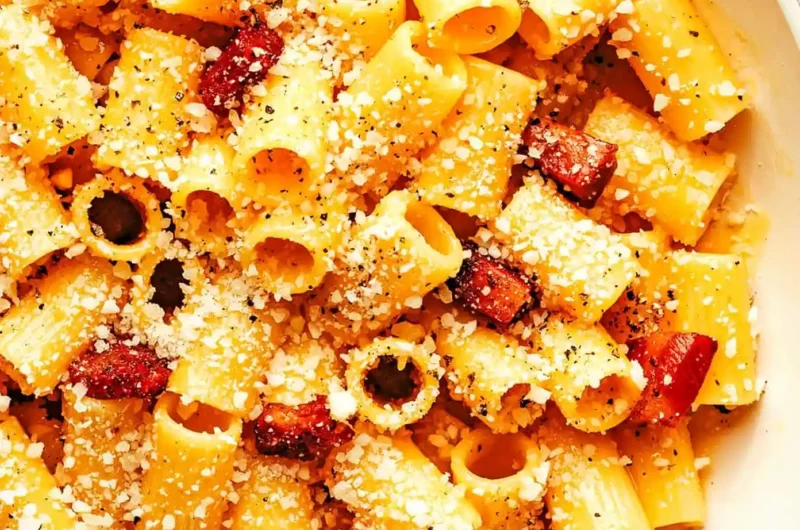
This classic Roman pasta dish creates a rich, velvety sauce using a precise emulsion of eggs and cheese. It delivers a decadent flavor profile without the need for added cream.
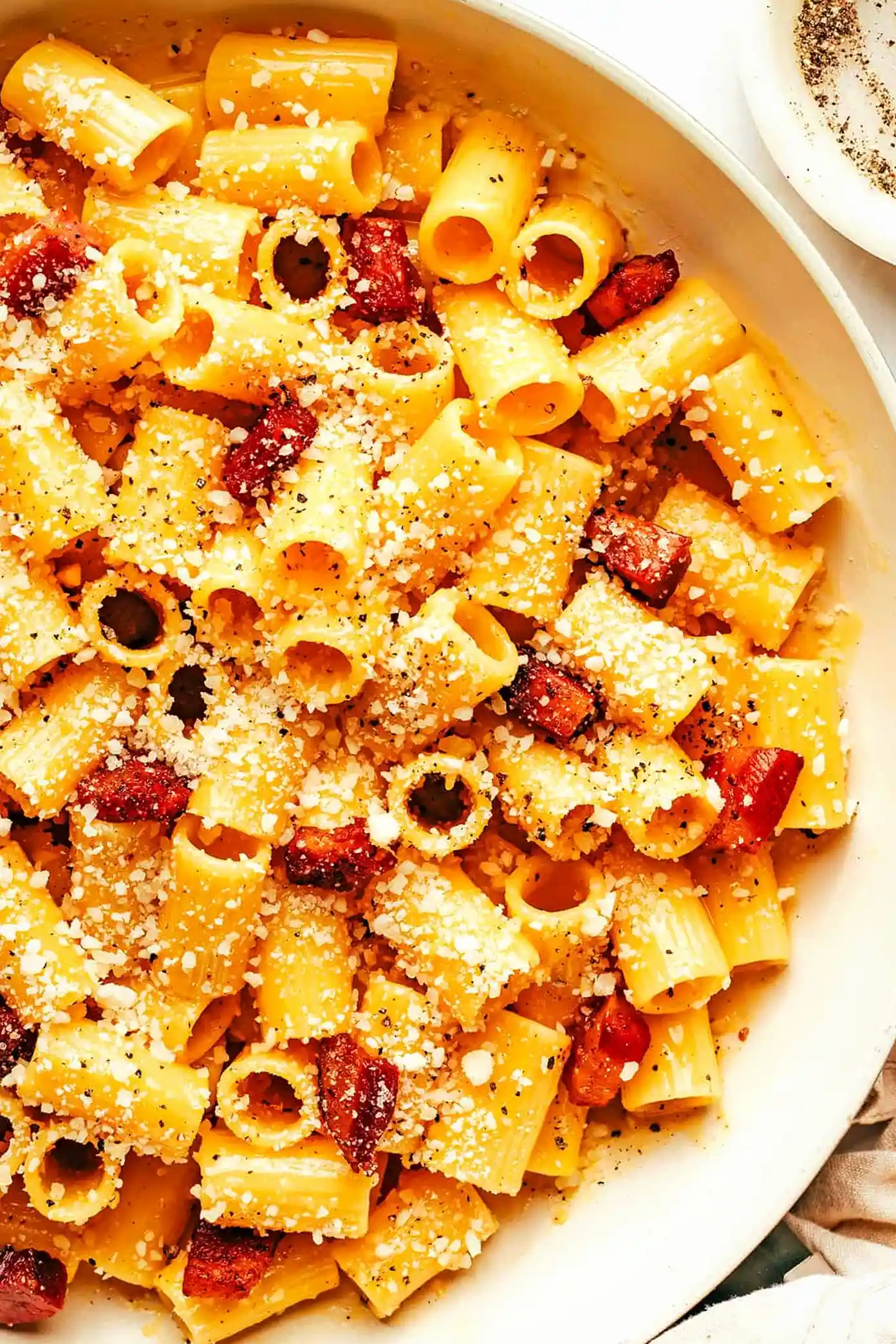
List of ingredients
- 12 ounces (340 grams) uncooked pasta (mezze rigatoni is recommended)
- 2 large eggs – provides structure to the sauce.
- 4 large egg yolks – adds richness and a deep yellow color.
- 2 ounces (60 g) freshly-grated Pecorino Romano cheese, plus extra for garnish – provides a salty, sharp flavor.
- Fine sea salt and freshly-cracked black pepper – essential for seasoning.
- 8 ounces (225 g) beef pancetta or beef bacon, diced into ½-inch cubes – used as a savory, salty base.
step-by-step instructions
- Sauté the beef pancetta: Heat a large nonstick sauté pan over medium-low heat. Add the diced beef pancetta and cook, stirring and flipping occasionally, until the meat is golden brown and crispy, about 10 minutes. Use a slotted spoon to transfer the meat to a clean bowl.
- Toast the black pepper: Add 1 teaspoon of freshly-ground black pepper to the hot rendered fat remaining in the pan, then immediately turn off the heat.
- Boil the pasta: Fill a large stockpot half full (about 3 quarts) with lightly-salted water and bring to a boil. Add the pasta and cook for 8 minutes, stirring occasionally to prevent sticking.
- Prepare the egg mixture: Whisk the whole eggs, egg yolks, and Pecorino Romano together in a large heatproof metal mixing bowl. Gradually pour the hot pepper-infused grease into the bowl while whisking constantly. Once the pasta has cooked for 5 minutes, whisk in ½ cup of the starchy pasta water.
- Combine pasta and sauce: When the pasta is about 1 minute shy of al dente, use tongs or a spider strainer to transfer it directly into the metal bowl. Add the cooked beef pancetta to the bowl and toss the pasta with the egg mixture continuously.
- Thicken via double boiler: Turn off the heat under the stockpot. Place the metal bowl directly on top of the pot so the steam heats the bottom of the bowl. Toss the pasta constantly until the sauce thickens slightly, ensuring the eggs do not scramble.
- Serve: Immediately transfer the hot pasta to serving dishes. Garnish with an extra sprinkle of cheese and a final twist of black pepper.
Professional Cooking Tips
Hand-Grate Your Cheese for Better Melting
Avoid using pre-shredded cheese from the store. Pre-grated options often contain cellulose or other anti-caking agents that prevent the cheese from melting smoothly into the sauce. Use a microplane or a fine grater to create a powder-like consistency that emulsifies instantly.
Concentrate the Starch in Your Pasta Water
Fill your stockpot only halfway with water rather than filling it to the top. This creates a higher concentration of starch in the water as the pasta cooks. This concentrated starchy water is critical for binding the fat and eggs into a glossy sauce.
Time the Pasta Transfer Precisely
Remove the pasta from the boiling water exactly one minute before it reaches the al dente stage. The pasta will continue to cook while it is tossed in the egg mixture and heated over the steam. This prevents the noodles from becoming mushy.
Utilize the Double Boiler Method to Avoid Curdling
Avoid adding the egg mixture to a pan that is still over direct heat. Using a metal bowl over a pot of steaming water provides gentle, indirect heat. This allows the sauce to thicken without reaching the temperature where eggs scramble.
Ingredient Substitutions and Variations
Choosing the Best Pasta Shape
Mezze rigatoni is an excellent choice because its ridges and hollow center trap the thick sauce and bits of meat. If you prefer a different style, thick spaghetti or bucatini are traditional alternatives. Avoid very thin pastas, as they may overcook too quickly during the final emulsification stage.
Using Parmesan Instead of Pecorino Romano
Pecorino Romano is a sheep’s milk cheese with a sharp, salty profile. If you cannot find it, Parmigiano Reggiano is a suitable cow’s milk alternative. Parmesan is slightly nuttier and less salty, so you may need to add a pinch more salt to the dish.
Beef-Based Cured Meat Options
Beef pancetta or beef bacon provides the necessary salty and smoky depth required for this recipe. If these are unavailable, smoked beef brisket diced into small cubes can work. Ensure the meat is rendered until crispy to provide a textural contrast to the creamy sauce.
Serving and Pairing Ideas
Best Side Dish Pairings
Since carbonara is very rich, pair it with a bright, acidic side dish. A simple arugula salad with a lemon vinaigrette helps cut through the heaviness of the eggs and cheese. Roasted asparagus or sautéed spinach with garlic also provide a fresh balance to the meal.
Warming Your Serving Plates
Egg-based sauces can thicken and seize quickly as they cool. Warm your serving bowls in a low oven or by rinsing them with hot water before plating. This keeps the pasta at the optimal temperature and maintains the glossiness of the sauce.
Storage and Reheating Advice
Storing Leftover Carbonara
Place leftovers in an airtight container and refrigerate for up to two days. Note that the emulsion will naturally break during cooling, and the sauce will thicken significantly. Do not freeze this dish, as the egg sauce will separate and become grainy upon thawing.
Reheating Without Scrambling the Eggs
Avoid the microwave, as it heats unevenly and will likely scramble the eggs. Instead, place the pasta in a small skillet over low heat. Add a tablespoon of water or beef broth and toss gently until the sauce loosens and becomes creamy again.
Troubleshooting Common Issues
Fixing a Clumpy or Separated Sauce
If the sauce appears clumpy, it is usually due to a lack of moisture or insufficient tossing. Add a small amount of reserved pasta water one tablespoon at a time. Continue tossing vigorously to re-emulsify the fat and eggs into a smooth consistency.
Preventing the Eggs from Scrambling
Scrambling occurs when the eggs hit a temperature that is too high too quickly. Ensure the pan heat is off before the final mixing process. If the sauce thickens too fast, remove the bowl from the steam immediately to stop the cooking process.
Carbonara FAQ
Can I add cream to my carbonara?
No, traditional Roman carbonara does not use cream. The creaminess comes from the emulsion of egg yolks, cheese, and starchy pasta water. Adding cream alters the flavor profile and masks the taste of the Pecorino and beef pancetta.
How do you pronounce “carbonara”?
The correct Italian pronunciation is “kahr-boh-NAH-rah.” The emphasis is placed on the third syllable.
What does the word “carbonara” mean?
The name is derived from the Italian word “carbonaro,” which means charcoal burner. It is believed to be linked to the workers who prepared simple, hearty meals in the mountains.
Why is my sauce too thin?
A thin sauce usually means the pasta was not tossed long enough over the steam or the heat was too low. Continue tossing the pasta over the double boiler for another 30 to 60 seconds. The sauce should coat the pasta thickly without pooling at the bottom of the bowl.
Print
Authentic Roman Pasta alla Carbonara
- Total Time: 35 minutes
- Yield: 4 servings 1x
- Diet: General
Description
This pasta alla carbonara recipe easy to make with 4 classic ingredients and tastes so decadent and delicious.
Ingredients
- 12 ounces (340 grams) uncooked pasta (mezze rigatoni)
- 2 large eggs
- 4 large egg yolks
- 2 ounces (60 g) freshly-grated Pecorino Romano cheese (plus extra for garnish)
- fine sea salt and freshly-cracked black pepper
- 8 ounces (225 g) smoked beef cubes (diced into ½-inch cubes)
Instructions
- Cook the smoked beef: Heat a large sauté pan (preferably nonstick) over medium-low heat. Add the smoked beef to the pan and cook, stirring and flipping occasionally, until golden brown and crispy and the fat has rendered, about 10 minutes. Using a slotted spoon, transfer the smoked beef to a clean bowl.
- Bloom the black pepper: Add 1 teaspoon freshly-ground black pepper to the pan with the hot grease, then turn off the heat.
- Boil the pasta: Fill a large stockpot about half full of lightly-salted water (roughly 3 quarts) and bring it to a boil. Add the pasta and cook for 8 minutes, stirring occasionally.
- Mix the sauce: Whisk the eggs, egg yolks, and Pecorino together in a large metal mixing bowl. Gradually pour in the black pepper grease while whisking. After the pasta has cooked for 5 minutes, remove ½ cup of the starchy pasta water and gradually pour it into the egg mixture while whisking.
- Quickly transfer the pasta: Once the pasta is about 1 minute shy of al dente, quickly transfer the pasta to the metal bowl, tossing with the egg mixture. Add the cooked smoked beef to the bowl as well.
- Finish the pasta: Turn off the heat under the stockpot. Carefully place the metal bowl with the pasta directly on top of the stockpot, like a double boiler, so the steam heats the bottom. Continuously toss the pasta until the egg sauce begins to slightly thicken. Immediately remove the bowl from the stockpot and transfer to serving dishes.
- Serve: Serve warm, garnished with an extra sprinkle of cheese and a twist of black pepper.
Notes
Recipe updated to include a richer sauce-to-pasta ratio and a double-boiler method for a more reliable, silky egg sauce that avoids scrambling.
- Prep Time: 10 minutes
- Cook Time: 25 minutes
- Category: Main Course
- Method: Double Boiler
- Cuisine: Italian
Nutrition
- Serving Size: 1 serving
- Calories: 680 kcal
- Sugar: 4 g
- Sodium: 1150 mg
- Fat: 34 g
- Saturated Fat: 15 g
- Unsaturated Fat: 19 g
- Trans Fat: 0 g
- Carbohydrates: 52 g
- Fiber: 3 g
- Protein: 38 g
- Cholesterol: 310 mg
Keywords: pasta alla carbonara, Italian pasta, egg sauce, double boiler method