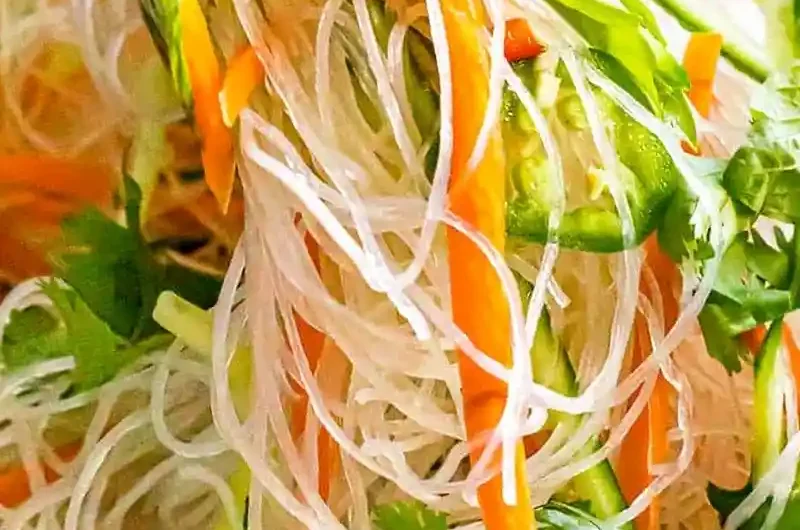
This refreshing Vietnamese noodle salad combines thin rice vermicelli with a crisp mix of julienned vegetables and aromatic herbs. It is a light, cold dish that works well as a standalone meal or a side for grilled proteins.
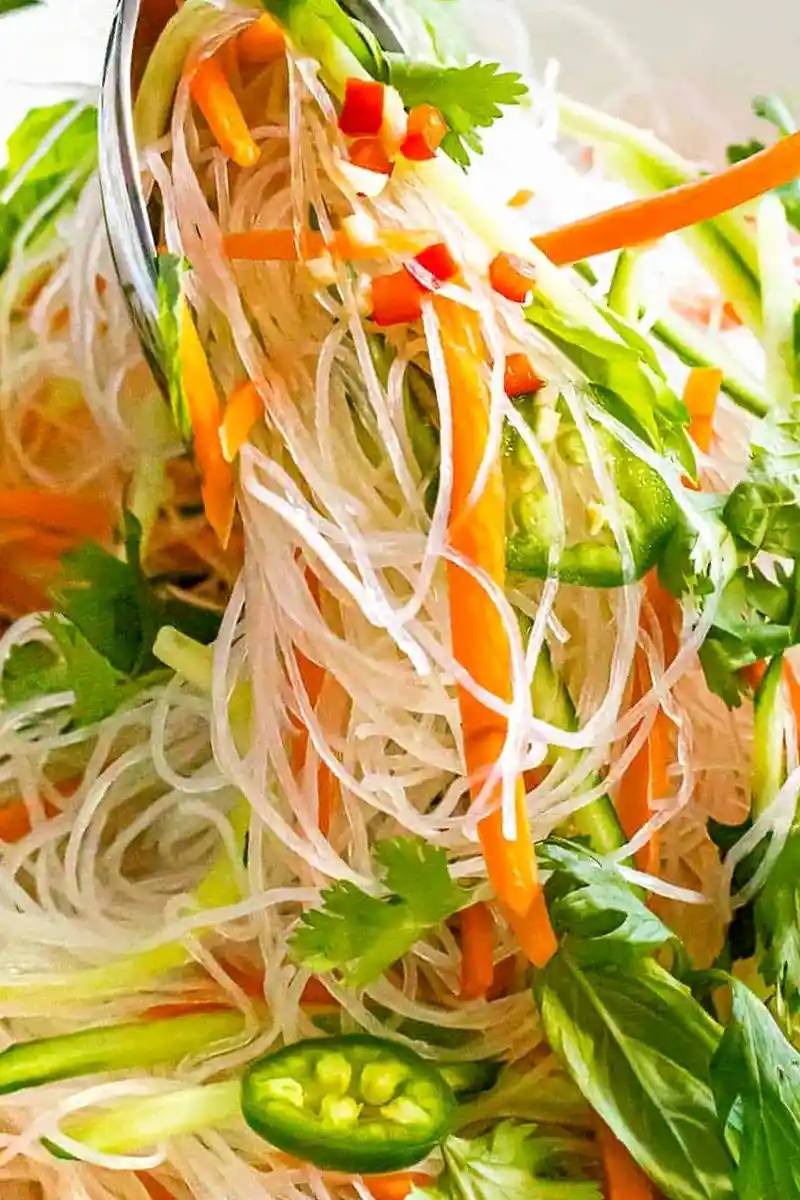
List of ingredients
- 7 oz thin vermicelli rice noodles (dried, approximately 200g) – can be substituted with any thin noodle variety.
- 3 cups cucumber (julienned, about 2 cucumbers) – ensures a crisp texture.
- 3 cups carrots (julienned, about 2 medium carrots) – adds natural sweetness and color.
- 2 ⅓ cups fresh herbs (basil, cilantro, mint, scallions) – packed tightly for maximum flavor.
- 2 jalapeno peppers (optional) – cut into thin rounds for heat.
- Lime wedges (optional) – for serving fresh acidity.
- Crushed peanuts (optional) – for a crunchy garnish.
- ¼ cup fish sauce – use soy sauce as a vegan alternative.
- ¼ cup sugar – balances the acidity of the dressing.
- ⅓ cup water – thins the sauce for better coating.
- 2 Tablespoons lime juice – freshly squeezed from about half a lime.
- 2 teaspoons rice wine vinegar – adds a sharp, clean tang.
- 1 clove garlic – finely minced.
- 1 small Thai chili pepper (optional) – finely diced for extra spice.
step-by-step instructions
- Prepare the noodles: Rehydrate the thin vermicelli rice noodles by soaking them in boiling water for about 3 minutes or until they are completely soft. Drain the noodles thoroughly in a colander to remove all excess water to prevent the salad from becoming soggy. If using thicker noodles, follow the specific cooking directions on the packaging.
- Prep the fresh components: While the noodles drain, julienne the cucumbers and carrots into thin strips. Chop the fresh basil, cilantro, mint, and scallions.
- Mix the dressing: In a medium mixing bowl, combine the fish sauce (or soy sauce), sugar, water, lime juice, rice wine vinegar, minced garlic, and diced Thai chili pepper. Stir the ingredients until the sugar is completely dissolved and the sauce is smooth. Taste the dressing and adjust the proportions to fit your flavor preference.
- Assemble the salad: Place the cooked noodles in a large mixing bowl. Top the noodles with the julienned cucumbers, carrots, and the prepared fresh herbs. Add the sliced jalapenos at this stage if you are using them.
- Combine and serve: Pour the dressing over the noodles and vegetables. Toss everything together gently until all components are evenly coated. Serve immediately as a main dish or a side, and optionally top with crushed peanuts and a squeeze of lime.
Protein Pairing Guide
Marinating and Grilling Shrimp
Clean and devein large shrimp before marinating them in a mixture of lime juice, minced garlic, and a touch of honey. Grill the shrimp over medium-high heat for approximately 2 minutes per side until opaque and slightly charred. Place the warm shrimp directly on top of the chilled noodle salad for a temperature contrast.
Preparing Crispy Baked Tofu
Press extra-firm tofu for 30 minutes to remove excess moisture, then cut into small cubes. Toss the cubes in a mixture of cornstarch, salt, and pepper before baking at 400°F (200°C) for 20-25 minutes. These crispy tofu cubes provide a substantial texture that complements the soft rice noodles.
Searing Lemongrass Chicken
Slice chicken breast or thighs into thin strips and marinate with minced lemongrass, garlic, and a splash of soy sauce. Sear the chicken in a hot pan with a tablespoon of vegetable oil until golden brown and fully cooked. This savory, aromatic protein adds depth to the light, tangy flavors of the salad.
Adding Boiled Eggs for Extra Protein
Hard-boil eggs for 9-12 minutes, then cool them in an ice bath and slice them into quarters. Placing egg quarters on top of the salad adds a creamy element that balances the sharpness of the rice wine vinegar. This is a quick way to make the salad more filling for a main meal.
Vegetable and Texture Variations
Incorporating Shredded Red Cabbage
Thinly slice red cabbage to add a vibrant purple color and an extra layer of crunch to the salad. Cabbage holds its texture longer than cucumber, making it an ideal addition for salads that will be stored. Toss the cabbage in with the carrots and cucumbers during the assembly phase.
Using Fresh Bean Sprouts
Add raw or lightly blanched bean sprouts for a traditional Vietnamese texture. Bean sprouts provide a watery, fresh crunch that pairs exceptionally well with the fish sauce dressing. Add them just before serving to ensure they remain crisp.
Adding Sliced Red Bell Peppers
Julienne red bell peppers to introduce a mild sweetness and bright color to the dish. The pepper strips should be the same thickness as the carrots and cucumbers for a consistent mouthfeel. Mix them in with the other vegetables before adding the dressing.
Using Romaine or Iceberg Lettuce
Shredded romaine or iceberg lettuce can be used as a base to increase the volume of the salad. This makes the dish lighter and more refreshing, especially during hot summer months. Place the lettuce at the bottom of the bowl and layer the noodles on top.
Technical Dressing Adjustments
Adjusting the Saltiness with Soy Sauce
If you prefer a less pungent flavor than fish sauce, use a high-quality soy sauce or tamari. Soy sauce provides a similar salty, umami base but with a different aromatic profile. This substitution also makes the recipe suitable for those avoiding fish products.
Balancing the Sweetness
The amount of sugar can be adjusted based on the ripeness of your lime juice. If the dressing feels too acidic, add sugar one teaspoon at a time until the taste is balanced. For a more complex sweetness, you can substitute white sugar with brown sugar or maple syrup.
Increasing the Acidity
For those who prefer a sharper, tangier salad, increase the amount of rice wine vinegar by one teaspoon. You can also add an extra squeeze of fresh lime juice immediately before serving. This extra acidity helps cut through the starchiness of the rice noodles.
Controlling the Heat Level
The heat in this recipe comes from the Thai chili in the dressing and the jalapeno rounds on top. To reduce the spice, remove the seeds from the chili and jalapenos before adding them. To increase the heat, add a teaspoon of sriracha or more diced Thai chilies to the sauce.
Noodle Preparation Techniques
Working with Rice Vermicelli
Thin rice vermicelli is delicate and can overcook quickly, leading to a mushy texture. Soaking in boiling water is often safer than simmering on a stove. Always check the noodles at the 2-minute mark to ensure they have reached the desired tenderness.
Substituting with Mung Bean Noodles
Glass noodles made from mung bean starch can be used as a substitute for rice vermicelli. These noodles are more transparent and have a slightly different chew. Follow the soaking instructions provided on the package, as mung bean noodles may require a longer soak time.
Cooking Thicker Rice Noodles
If you use thicker rice noodles, you must boil them in a pot of water rather than soaking them. Once cooked, immediately rinse them under cold running water to stop the cooking process. This step is crucial to prevent the noodles from clumping together.
Removing Excess Starch
Rinsing noodles thoroughly under cold water removes the surface starch that causes sticking. Use a colander and rub the noodles gently with your fingers under the stream of water. This ensures that each noodle strand remains separate and absorbs the dressing more effectively.
Storage and Freshness Guidelines
Refrigeration Methods
Store the assembled noodles and vegetables in an airtight container in the refrigerator. To keep the components fresh, store the dressing in a separate jar or bottle. This prevents the vegetables from wilting and the noodles from absorbing too much liquid.
Preventing Herb Oxidation
Fresh herbs like cilantro and mint can bruise and turn brown when exposed to air and acid. Cover the noodle and vegetable mixture tightly with plastic wrap, pressing the wrap directly onto the surface of the herbs. This minimizes air exposure and maintains the bright green color.
Dressing Storage Tips
The prepared dressing can be kept in the refrigerator for up to one week in a sealed glass jar. Because it contains sugar and salt, it stays stable for several days. Shake the jar well before using, as the minced garlic and chili may settle at the bottom.
Reviving Dried Noodles
If stored noodles become too clumped together in the fridge, do not try to pull them apart by force. Instead, toss them with a tablespoon of water or a bit of the dressing to loosen them. Gently stir the noodles before adding the remaining vegetables and sauce.
Troubleshooting Common Issues
Fixing Mushy Noodles
Mushy noodles are usually the result of over-soaking or failing to rinse them in cold water. To fix this in future batches, reduce the soaking time by 30 seconds. If the noodles are already mushy, serve the salad immediately and avoid over-mixing to prevent further breakdown.
Correcting an Overly Salty Sauce
If the fish sauce makes the dressing too salty, dilute it with a tablespoon of water or a bit more lime juice. Adding a small amount of extra sugar can also help neutralize the saltiness. Always taste the sauce with a piece of the noodle to get an accurate sense of the flavor.
Preventing a Watery Salad
A watery salad happens when the cucumbers are not drained or the noodles are not dried properly. After julienning cucumbers, you can lightly salt them and let them sit for 10 minutes, then pat them dry with a paper towel. This removes excess moisture before they are added to the bowl.
Managing Herb Bruising
Avoid chopping herbs too far in advance, as they will lose their potency and wilt. Use a very sharp knife to make clean cuts rather than crushing the leaves. Only toss the herbs into the salad just before adding the dressing to keep them plump.
Frequently Asked Questions
Can I make this in advance?
Yes, you can assemble the noodles and vegetables up to 24 hours in advance. Store them in the refrigerator without the dressing to maintain the crunch of the vegetables. Add the dressing and toss just before serving.
What other noodles can I use?
You can use thin mung bean noodles, rice sticks, or even thin spaghetti if rice noodles are unavailable. If using wheat-based pasta, ensure it is cooked al dente and rinsed thoroughly under cold water to remove excess starch.
How do I store leftovers?
Store leftovers in an airtight container in the fridge for up to two days. Note that the noodles will absorb the dressing over time, which may change the texture. You can add a splash of lime juice or water to refresh the salad before eating.
Can I use a food processor for vegetables?
A food processor with a julienne attachment can save time when preparing large quantities of carrots and cucumbers. However, be careful not to over-process the vegetables, as they can become too thin and lose their structural integrity.
Print
Vietnamese Noodle Salad with Tangy Dressing
- Total Time: 15 minutes
- Yield: 4 servings 1x
- Diet: General
Description
This Vietnamese noodle salad is made with vermicelli rice noodles, fresh herbs and vegetables! It’s tossed with a delicious tangy and savory Vietnamese dressing and can be served cold!
Ingredients
- 7 oz thin vermicelli rice noodles (dried)
- 3 cups julienned cucumber
- 3 cups julienned carrots
- 2 ⅓ cups fresh herbs (basil, cilantro, mint, scallions), packed tightly
- 2 jalapeno peppers, cut into thin rounds
- lime wedges for serving
- crushed peanuts for garnish
- ¼ cup fish sauce
- ¼ cup sugar
- ⅓ cup water
- 2 Tablespoons lime juice, freshly squeezed
- 2 teaspoons rice wine vinegar
- 1 clove garlic, minced
- 1 small Thai chili pepper, finely diced
Instructions
- Step: Rehydrate your noodles by soaking them in boiling water for about 3 minutes or until completely soft. Drain the noodles and set them aside in a colander to drain off excess water.
- Step: Add all the ingredients for the dressing in a bowl and stir to combine. Taste and adjust according to your preferences.
- Step: Place the noodles in a large bowl and top with the cucumbers, carrots, basil, cilantro, and any other fresh herbs. Add the jalapenos at this time if using.
- Step: Add the dressing and toss to combine.
- Step: Serve immediately as a main course or as a side.
Notes
If making ahead, leave out the dressing and store the noodle salad in the fridge to serve cold. As the herbs can bruise and dry out easily, cover tightly with plastic wrap. Add the dressing and toss to combine right before serving.
- Prep Time: 15 minutes
- Cook Time: 0 minutes
- Category: Salad
- Method: Mixing
- Cuisine: Vietnamese
Nutrition
- Serving Size: 1 serving
- Calories: 117 kcal
- Sugar: 19 g
- Sodium: 880 mg
- Fat: 1 g
- Saturated Fat: 1 g
- Unsaturated Fat: 0 g
- Trans Fat: 0 g
- Carbohydrates: 26 g
- Fiber: 4 g
- Protein: 4 g
- Cholesterol: 0 mg
Keywords: Vietnamese noodle salad, Asian cold noodles, vermicelli salad, refreshing salad