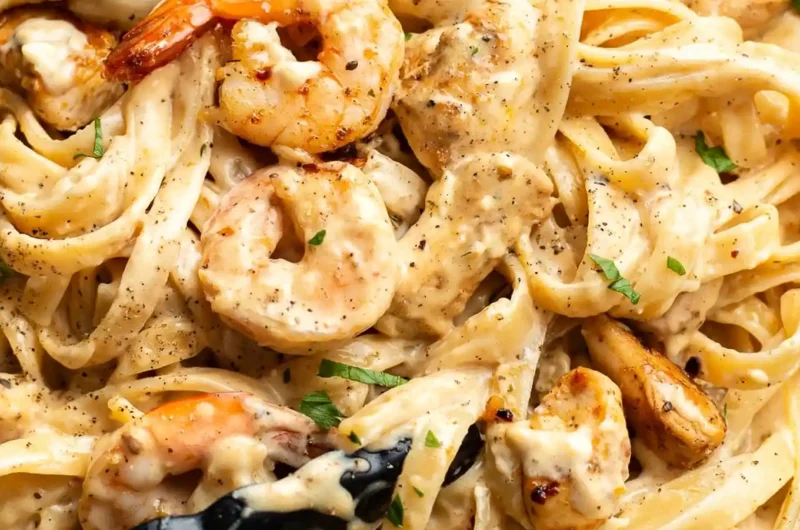
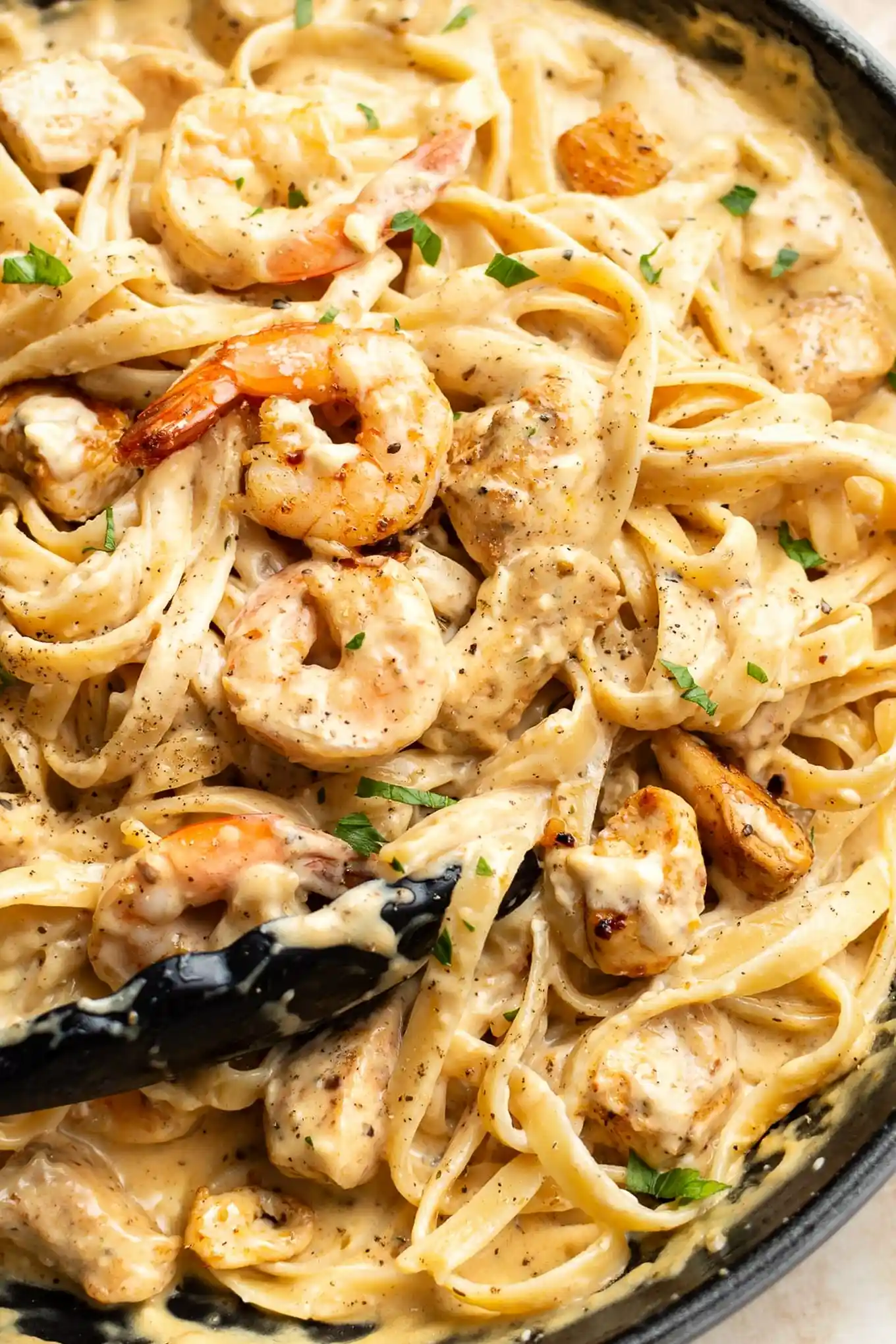
This zesty pasta dish combines tender pan-seared proteins with a rich, spiced parmesan sauce. It provides a restaurant-style experience at home using simple ingredients and a single skillet for the sauce.
List of ingredients
- 8 ounces uncooked fettuccine – use a high-quality durum wheat pasta for the best texture.
- 2 chicken breasts – cut into 1-inch bite-sized pieces for even cooking.
- 1/2 pound shrimp – 31/40 size, thawed and peeled.
- 1/2 teaspoon garlic powder – adds a consistent savory base to the proteins.
- 1 tablespoon Cajun seasoning – split into two 1/2 tablespoon portions; use a low or no-salt variety.
- 2 tablespoons olive oil – for searing the chicken and shrimp.
- 2 tablespoons butter – creates a rich base for the cream sauce.
- 1 cup heavy cream or whipping cream – ensures a thick and velvety consistency.
- 4 ounces cream cheese – use about half a standard block to add stability and tang.
- 2 cloves garlic – finely minced for fresh aromatic flavor.
- 1 cup freshly grated parmesan cheese – grate from a block to avoid anti-clumping agents.
- Salt and pepper – used to taste at the final stage of cooking.
step-by-step instructions
- Prepare the cheese: Remove the cream cheese from the refrigerator at least 30 minutes before cooking. Alternatively, microwave it for 20 to 30 seconds until soft.
- Cook the pasta: Bring a large pot of salted water to a boil. Cook the fettuccine until it reaches an al dente texture, following the package instructions.
- Prep the proteins: Thaw frozen shrimp under cool running water, peel them, and pat them completely dry. Cut the chicken breasts into 1-inch pieces. Toss both the shrimp and chicken with garlic powder and 1/2 tablespoon of the Cajun seasoning.
- Sear the shrimp: Heat olive oil in a deep skillet over medium-high heat. Once the pan is hot, cook shrimp for approximately 3 minutes, flipping once, then move them to a clean plate.
- Brown the chicken: Add chicken pieces to the same skillet. Cook for 5 to 6 minutes or until fully cooked through and lightly browned, then transfer them to the plate with the shrimp.
- Begin the sauce: Remove the skillet from the heat. Stir in the butter, heavy cream, softened cream cheese, the remaining 1/2 tablespoon of Cajun seasoning, and minced garlic.
- Emulsify the sauce: Return the skillet to the stove over medium heat. Stir continuously for a few minutes until the cream cheese is fully melted and incorporated.
- Thicken the base: Allow the sauce to bubble gently for 2 to 3 minutes. This reduction process helps the sauce reach a slightly thicker consistency.
- Combine ingredients: Stir in the grated parmesan cheese. Return the cooked shrimp and chicken to the pan and stir for a couple of minutes to warm through. Season with salt and pepper if needed.
- Final assembly: Optional: stir in one or two tablespoons of hot pasta water before draining the noodles to thin the sauce. Toss the drained fettuccine into the sauce and serve immediately.
Expert Cooking Techniques for Best Results
Ensuring Cream Cheese Integration
Using room temperature cream cheese is critical for a smooth sauce. Cold cream cheese tends to clump, which can lead to an uneven texture in the final Alfredo. If you are short on time, a quick burst in the microwave prevents these lumps.
Managing Cajun Seasoning Salt Levels
Many commercial Cajun blends contain high amounts of salt. Since the parmesan cheese and salted pasta water already contribute sodium, using a low-sodium or no-salt blend prevents the dish from becoming overly salty. Always taste the sauce before adding extra salt at the end.
Preventing Rubbery Shrimp
Shrimp cook very quickly and can become tough if left in the pan too long. Searing them for a total of 3 minutes and removing them immediately ensures they stay plump and juicy. They will finish warming through when added back to the sauce at the end.
Searing Chicken for Flavor
Allow the chicken to brown without stirring too frequently. Creating a golden-brown crust adds a depth of flavor known as the Maillard reaction. Use a deep skillet to ensure the pieces have enough space to sear rather than steam.
Optimal Parmesan Melting
Avoid using pre-shredded parmesan cheese from a bag. These products are coated in cornstarch or cellulose to prevent clumping, which can make the sauce grainy. Freshly grated cheese melts smoothly into the cream and butter.
Controlling Sauce Thickness
The sauce will naturally thicken as it cools and as the cheese melts. If the mixture seems too thick before adding the pasta, whisk in a small amount of the starchy pasta water. This thins the sauce while helping it cling better to the noodles.
Creative Variations and Substitutions
Using Pre-Cooked Rotisserie Chicken
To save time, you can replace raw chicken breasts with shredded rotisserie chicken. Reduce the olive oil to 1 tablespoon since you only need to sear the shrimp. Stir the pre-cooked chicken in at the very end just to warm it through.
Adjusting the Heat Intensity
The standard Cajun seasoning provides a mild kick. For those who prefer more spice, stir in a pinch of cayenne pepper or a half-teaspoon of crushed red pepper flakes during the sauce reduction phase.
Adding Fresh Vegetable Components
Sautéed bell peppers and onions complement the Cajun flavor profile perfectly. Sauté these vegetables after the chicken is removed and before adding the sauce ingredients. This adds color and a slight sweetness to the dish.
Exploring Different Pasta Shapes
While fettuccine is traditional, other shapes work well with this heavy sauce. Penne or rigatoni are excellent choices as they capture the sauce inside the tubes. Bowtie pasta is another visually appealing alternative.
Substituting Heavy Cream
If you prefer a slightly lighter sauce, you can use half-and-half, though the consistency will be thinner. To compensate, allow the sauce to simmer for an extra 2 to 3 minutes to reduce the liquid further.
Serving Suggestions and Pairings
Fresh Green Side Salads
A crisp garden salad with a light vinaigrette balances the richness of the Alfredo sauce. Arugula with lemon and olive oil or a classic Caesar salad provides a refreshing contrast to the creamy pasta.
Garlic Bread Accoutrements
Warm, cheesy garlic bread is a classic accompaniment for soaking up extra sauce. Use a toasted baguette topped with garlic butter and melted mozzarella for a complete comfort meal.
Steamed Vegetable Options
Serving this dish with steamed broccoli or sautéed spinach adds necessary nutrients. The bitterness of the greens cuts through the fat of the cream and parmesan, creating a balanced plate.
Adding Citrus Finishes
A fresh squeeze of lemon juice over the plated pasta brightens the overall flavor. The acidity helps break through the richness of the heavy cream and enhances the taste of the shrimp.
Storage and Reheating Instructions
Refrigeration Guidelines
Store leftover pasta in an airtight container in the refrigerator for up to 2 to 3 days. Because the sauce is cream-based, it may separate or thicken significantly while cold.
Proper Reheating Methods
Avoid using the microwave on high power, as this can cause the sauce to break and the shrimp to overcook. Reheat the pasta slowly in a skillet over low heat, adding a splash of milk or water to loosen the sauce.
Freezing Recommendations
It is not recommended to freeze this dish. The cream and cream cheese often separate upon thawing, resulting in a grainy texture. Additionally, frozen and thawed shrimp can become mushy.
Common Troubleshooting Solutions
Fixing a Broken Sauce
If the sauce separates and looks oily, it is usually due to too much heat. Remove the pan from the stove and whisk in a tablespoon of warm water or cream vigorously to bring the emulsion back together.
Reducing Overpowering Saltiness
If the Cajun seasoning was too salty, add a small amount of unsalted heavy cream or a squeeze of lemon juice. The acidity and extra fat help mask the excess sodium without altering the flavor profile.
Correcting a Thin Sauce
If the sauce is too runny, simmer it for a few more minutes on medium heat before adding the pasta. Alternatively, stir in an extra tablespoon of grated parmesan cheese to thicken the consistency quickly.
Frequently Asked Questions
Can I use a different type of cream?
You can use whipping cream or heavy cream for the best results. If you use a lower-fat milk, the sauce will not thicken naturally and may require a small cornstarch slurry to achieve the desired consistency.
How do I prevent shrimp from getting rubbery?
The key is short cooking times and not overcrowding the pan. Ensure the skillet is very hot before adding the shrimp and remove them the moment they turn opaque and form a C-shape.
Can I make this dish spicy?
Yes, you can increase the heat by adding cayenne pepper or using a ‘Hot’ variety of Cajun seasoning. Adding sliced jalapeños during the sauté phase also provides a fresh spicy element.
What is the best way to peel shrimp quickly?
Using a small paring knife to cut the back of the shell allows you to remove the vein and the shell in one motion. If using frozen shrimp, ensure they are fully thawed to avoid tearing the meat.
Can I use a different cheese instead of parmesan?
Pecorino Romano is a great substitute for parmesan, though it is saltier. If using Pecorino, reduce the amount of added salt and Cajun seasoning to maintain balance.
Essential Kitchen Tools
The Importance of a Large Skillet
A deep, wide skillet is necessary to prevent the chicken and shrimp from crowding. Crowding leads to steaming rather than searing, which prevents the proteins from developing a golden-brown crust.
Benefits of a Microplane Zester
A fine zester allows you to grate parmesan into a light, fluffy powder. This form of cheese melts much faster and more evenly into the hot cream than thick shreds do.
Using a Garlic Press
A garlic press ensures the garlic is minced very finely, allowing it to distribute evenly throughout the sauce. This prevents large chunks of raw garlic from appearing in the final dish.
Utilizing a Meat Thermometer
To ensure the chicken is safe and juicy, use an instant-read thermometer. Chicken breasts are perfectly cooked when they reach an internal temperature of 165 degrees Fahrenheit.
Print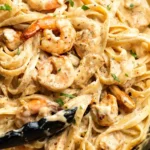
Creamy Cajun Chicken and Shrimp Alfredo
- Total Time: 40 minutes
- Yield: 4 servings 1x
- Diet: General
Description
This chicken and shrimp Alfredo recipe has a flavorful creamy Cajun parmesan sauce that smothers tender pan-fried chicken and shrimp. It’s great with fettuccine!
Ingredients
- 8 ounces uncooked fettuccine
- 2 chicken breasts, cut into 1” pieces
- 1/2 pound shrimp, thawed and peeled
- 1/2 teaspoon garlic powder
- 1 tablespoon Cajun seasoning (divided)
- 2 tablespoons olive oil
- 2 tablespoons butter
- 1 cup heavy cream
- 4 ounces cream cheese
- 2 cloves garlic, minced
- 1 cup freshly grated parmesan cheese
- Salt and pepper, to taste
Instructions
- Step 1: Soften cream cheese for 30+ minutes or microwave for 20-30 seconds.
- Step 2: Boil a salted pot of water and cook pasta al dente according to package directions.
- Step 3: Thaw, peel, and pat shrimp dry. Cut chicken into 1″ pieces. Sprinkle shrimp and chicken with the garlic powder and 1/2 tablespoon of Cajun seasoning.
- Step 4: Heat olive oil in a deep skillet over medium-high heat; cook shrimp for about 3 minutes, then transfer to a plate.
- Step 5: Cook chicken in the same skillet for 5-6 minutes or until cooked through, then transfer to the plate with the shrimp.
- Step 6: Remove skillet from heat; add butter, cream, cream cheese, remaining 1/2 tablespoon of Cajun seasoning, and garlic. Return to medium heat and stir until cream cheese dissolves.
- Step 7: Let the sauce bubble gently for 2-3 minutes until slightly thickened.
- Step 8: Stir in parmesan and return the shrimp and chicken to the pan; warm through and season with salt and pepper.
- Step 9: Toss the drained pasta with the sauce and serve immediately.
Notes
Use a no-salt or low-sodium variety of Cajun seasoning to avoid over-salting the dish.
- Prep Time: 15 minutes
- Cook Time: 25 minutes
- Category: Main Course
- Method: Stovetop
- Cuisine: American
Nutrition
- Serving Size: 1 serving
- Calories: 922 kcal
- Sugar: 4 g
- Sodium: 800 mg
- Fat: 57 g
- Saturated Fat: 29 g
- Unsaturated Fat: 22 g
- Trans Fat: 0.3 g
- Carbohydrates: 48 g
- Fiber: 3 g
- Protein: 55 g
- Cholesterol: 344 mg
Keywords: Cajun Chicken and Shrimp Alfredo, creamy pasta, Cajun seafood, American cuisine