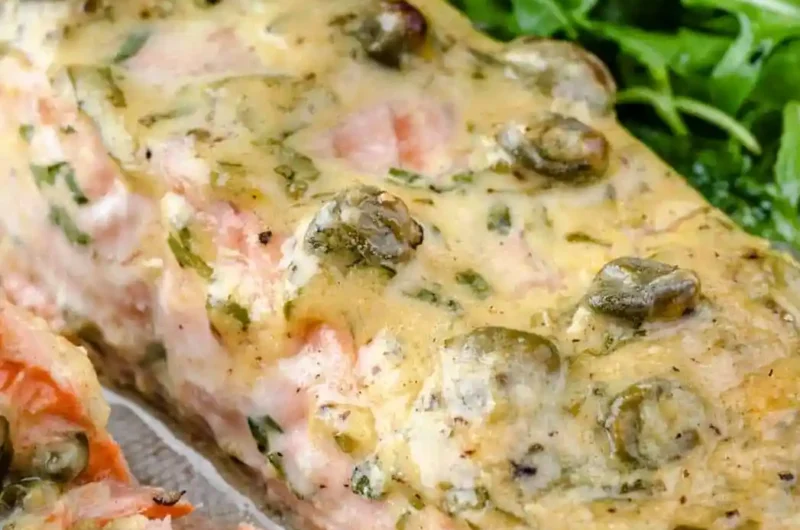
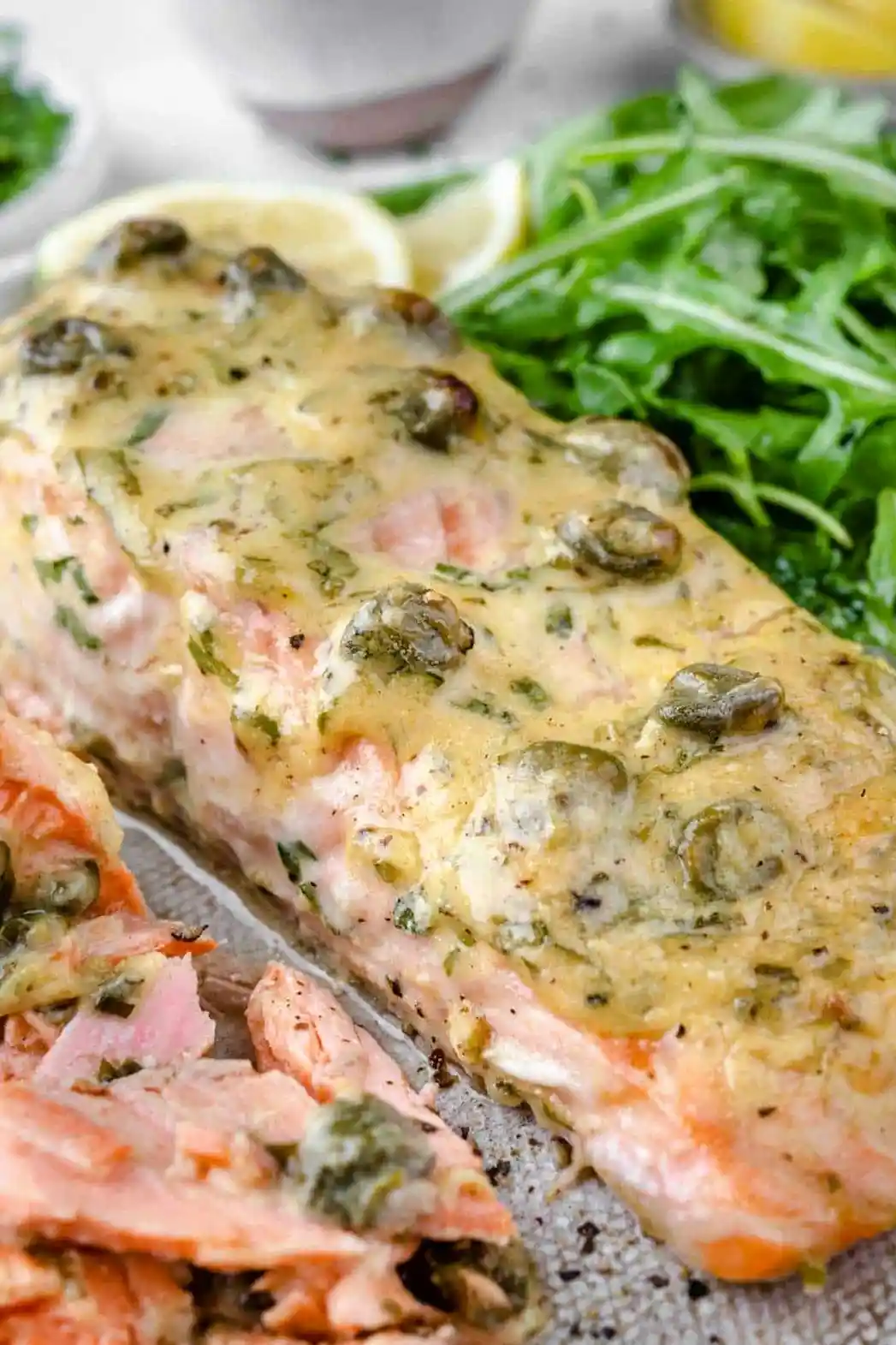
This recipe provides a fast way to prepare healthy salmon with a creamy, tangy glaze. It is ideal for busy weeknights when you need a nutrient-dense meal in under 30 minutes.
List of ingredients
- 1 ½ pounds salmon fillets (King, Sockeye or Coho salmon, skin off or on) – provide the main protein source.
- ¼ cup Dijon mustard – adds a sharp and tangy base to the glaze.
- 3 tablespoons mayonnaise – creates a creamy texture and helps the glaze adhere.
- ¼ cup fresh dill or parsley (finely chopped) – provides a fresh, herbal aromatic quality.
- 3 garlic cloves (minced) – adds pungent depth to the sauce.
- Zest of 1 lemon – contributes bright, citrusy top notes.
- 1 tablespoon lemon juice – adds acidity to balance the richness of the fish.
- 1 tablespoon extra-virgin olive oil – ensures moisture and richness.
- salt and pepper (to taste) – basic seasoning for flavor enhancement.
- 2 tablespoons capers – optional addition for a briny, salty punch.
step-by-step instructions
- Prepare the oven and pan: Preheat your oven to 450 degrees Fahrenheit and line a rimmed baking sheet with either a silicone baking mat (silpat) or parchment paper.
- Position the fish: Place the salmon fillets on the sheet with the skin side facing down.
- Mix the glaze: Combine the mustard, mayonnaise, dill/parsley, garlic, lemon zest, lemon juice, oil, salt, pepper and capers in a small bowl.
- Apply the marinade: Spread the marinade generously over the top and sides of the salmon.
- Bake: Bake at 450°F for 12-15 minutes or until the salmon is just cooked through and easily flakes with a fork. Be careful not to overcook.
- Serve: Remove from the oven and enjoy immediately.
Essential Component Guide
Selecting the Best Salmon Type
King salmon is highly fatty and rich, making it very forgiving during the baking process. Sockeye salmon has a deeper red color and a more intense, robust flavor profile. Coho salmon is a milder option that works well for those who prefer a less fishy taste.
Choosing Between Dijon and Other Mustards
Dijon mustard is recommended for its specific balance of heat and acidity. Regular yellow mustard is a milder substitute but lacks the complex depth of Dijon. Honey mustard can be used if you prefer a sweeter glaze, though it may caramelize faster in the oven.
Fresh Herb Selection
Fresh dill provides a classic, bright flavor that pairs traditionally well with salmon. Parsley is a more neutral alternative that adds a clean taste and vibrant green color. If using dried herbs, reduce the quantity to 1-2 teaspoons because dried herbs are more concentrated.
The Role of Capers in Flavor
Capers add a briny, salty element that cuts through the richness of the mayonnaise and salmon. They provide small bursts of acidity throughout the dish. If you do not have capers, you can omit them without altering the fundamental structure of the recipe.
Using Fresh Lemon Zest and Juice
Fresh lemon zest contains essential oils that provide a powerful aroma without adding extra liquid. The juice provides the necessary acidity to tenderize the fish and brighten the overall flavor. Bottled juice is a backup, but fresh citrus is significantly more aromatic.
Customization and Substitutions
Replacing Mayonnaise for Different Diets
Greek yogurt is a high-protein substitute that maintains the creaminess while adding a slight tang. Mashed avocado can be used for a dairy-free, creamy alternative, although it changes the flavor profile. Sour cream also works well to provide a thick consistency for the glaze.
Alternative Cooking Oils
Extra-virgin olive oil is preferred for its flavor and health benefits. Melted unsalted butter can be used for a richer, more savory taste. Neutral oils like canola or vegetable oil are suitable if you want the mustard and lemon flavors to remain the primary focus.
Adjusting Salt and Pepper Levels
Adjust the salt based on the amount of capers used, as capers are naturally high in sodium. Freshly cracked black pepper provides a sharper bite than pre-ground pepper. Taste the glaze before applying it to the fish to ensure the seasoning is balanced.
Cooking Guidance and Temperature
Determining Internal Temperature
The FDA recommends an internal temperature of 145°F (63°C) for fully cooked salmon. However, many chefs prefer 135°F to 140°F for a medium-rare to medium finish. Use an instant-read meat thermometer in the thickest part of the fillet for accuracy.
Preventing Overcooked Salmon
Salmon continues to cook for a few minutes after being removed from the oven due to carry-over heat. Remove the fish when it is just barely opaque in the center. Overcooked salmon becomes dry, chalky, and loses its natural oils.
Adjusting for Fillet Thickness
Thinner fillets may cook in as little as 10 minutes at 450°F. Very thick center-cut fillets might require the full 15 minutes or slightly more. Always use the fork-flake test to check for doneness regardless of the timer.
Serving Recommendations
Nutritious Vegetable Pairings
Roasted asparagus is an excellent choice as it can be cooked on the same baking sheet at 450°F. Steamed broccoli or roasted Brussels sprouts provide a hearty contrast to the creamy glaze. Sautéed spinach with garlic and parmesan adds a vibrant, nutrient-dense side.
Grain-Based Side Options
Plain jasmine rice or brown rice provides a neutral base that absorbs the extra glaze. Quinoa is a high-protein, gluten-free alternative with a nutty flavor. Fluffy couscous is a fast-cooking option that pairs well with the lemon elements of the dish.
Creating a Salmon Salad
Leftover salmon can be flaked into bite-sized pieces over a bed of mixed greens. Add sliced cucumbers, red onions, and radishes for texture and crunch. Drizzle with a simple lemon vinaigrette to complement the original Dijon flavors.
Building a Salmon Buddha Bowl
Use quinoa or brown rice as the base of the bowl. Add roasted sweet potatoes, steamed broccoli, and sliced avocado for a variety of textures. Place the chilled or reheated salmon on top and finish with a drizzle of tahini or lemon juice.
Storage and Preservation
Optimal Refrigeration Times
Cooked salmon stays fresh in the refrigerator for up to two days. Beyond this window, the texture can become overly dry and the flavor may degrade. Always cool the fish slightly before sealing it in a container.
Using Airtight Containers
Store the salmon in glass airtight containers to prevent the fish from absorbing odors from other foods in the fridge. Glass is preferable over plastic to avoid staining and to maintain a cleaner flavor profile. Ensure the glaze is intact to keep the fish moist during storage.
Reheating Methods
Oven Reheating Technique
Preheat the oven to 275°F (135°C) to avoid overcooking the fish. Place the salmon on a baking sheet and heat for 5-10 minutes until warmed through. This method preserves the texture better than high-heat options.
Using an Air Fryer for Reheating
Set the air fryer to 350°F (175°C) for a quick reheat. Heat the fillets for 3-5 minutes, checking frequently to ensure the edges do not burn. This method helps maintain a slight crispness to the glaze.
Microwave Reheating Tips
Microwaving salmon can often lead to a rubbery texture if overdone. Use a medium power setting and heat in 30-second intervals. Cover the dish with a damp paper towel to trap steam and maintain moisture.
Common Troubleshooting
Dealing with Dry Salmon
If the salmon comes out dry, it was likely in the oven too long. Next time, reduce the baking time by 2 minutes and check the internal temperature. You can add a squeeze of fresh lemon juice or a pat of butter to the finished fish to add moisture.
Fixing a Too-Salty Glaze
If the combination of capers and salt makes the glaze too salty, add an extra tablespoon of mayonnaise. A small amount of honey or maple syrup can also neutralize excess salt. Adding more lemon zest can distract from the saltiness with bright acidity.
Preventing Skin Stickiness
Using parchment paper or a silicone mat is essential to prevent the skin from sticking to the pan. If the skin still sticks, ensure the pan is properly lined and the fillets are placed carefully. Avoid flipping the fish during the baking process.
Frequently Asked Questions
Can I use frozen salmon?
Yes, but it must be fully thawed in the refrigerator before cooking. Pat the thawed fillets dry with paper towels to ensure the glaze adheres properly and the fish doesn’t steam.
Is this recipe keto-friendly?
This recipe is naturally low in carbohydrates and high in healthy fats, making it suitable for a ketogenic diet. Ensure your mayonnaise is made with avocado or olive oil for the best keto results.
Can I use dried herbs instead of fresh?
Yes, you can use dried dill or parsley, but use only 1-2 teaspoons instead of a quarter cup. Dried herbs are more concentrated and can become overpowering if used in the same quantity as fresh.
What is the best type of salmon for baking?
King salmon is often considered the best for baking due to its high fat content, which prevents drying. However, Sockeye is preferred by those who enjoy a stronger, more traditional salmon taste.
Print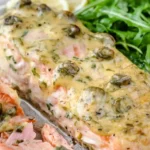
Tangy Baked Dijon Salmon
- Total Time: 22 minutes
- Yield: 4 servings 1x
- Diet: Pescatarian
Description
Baked Dijon Salmon: A flavor-packed and healthy dinner option ready in minutes. Simply irresistible!
Ingredients
- 1 ½ pounds salmon fillets (King, Sockeye or Coho salmon, skin off or on)
- ¼ cup Dijon mustard
- 3 tablespoons mayonnaise
- ¼ cup fresh dill or parsley (finely chopped)
- 3 garlic cloves (minced)
- Zest of 1 lemon
- 1 tablespoon lemon juice
- 1 tablespoon extra-virgin olive oil
- salt and pepper (to taste)
- 2 tablespoons capers
Instructions
- Step: Preheat your oven to 450 degrees Fahrenheit and line a rimmed baking sheet with either a silicone baking mat (silpat) or parchment paper. Place the salmon fillets on the sheet with the skin side facing down.
- Step: Combine the mustard, mayonnaise, dill/parsley, garlic, lemon zest, lemon juice, oil, salt, pepper and capers in a small bowl.
- Step: Spread the marinade generously over the top and sides of the salmon.
- Step: Bake at 450°F for 12-15 minutes or until the salmon is just cooked through and easily flakes with a fork. Be careful not to overcook.
- Step: Enjoy!
Notes
Storage: If you have any leftovers, store them in an airtight glass container and refrigerate them for up to 2 days.
- Prep Time: 10 minutes
- Cook Time: 12 minutes
- Category: Salmon recipes
- Method: Baking
- Cuisine: American
Nutrition
- Serving Size: 1 fillet
- Calories: 369 kcal
- Sugar: 1 g
- Sodium: 485 mg
- Fat: 20 g
- Saturated Fat: 4 g
- Unsaturated Fat: 16 g
- Trans Fat: 0 g
- Carbohydrates: 6 g
- Fiber: 1 g
- Protein: 42 g
- Cholesterol: 39 mg
Keywords: baked salmon, dijon salmon, healthy dinner, quick salmon recipe