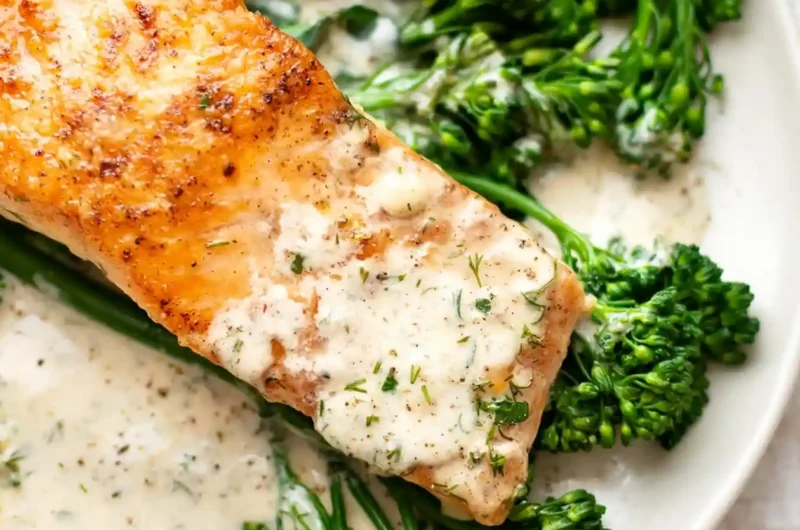
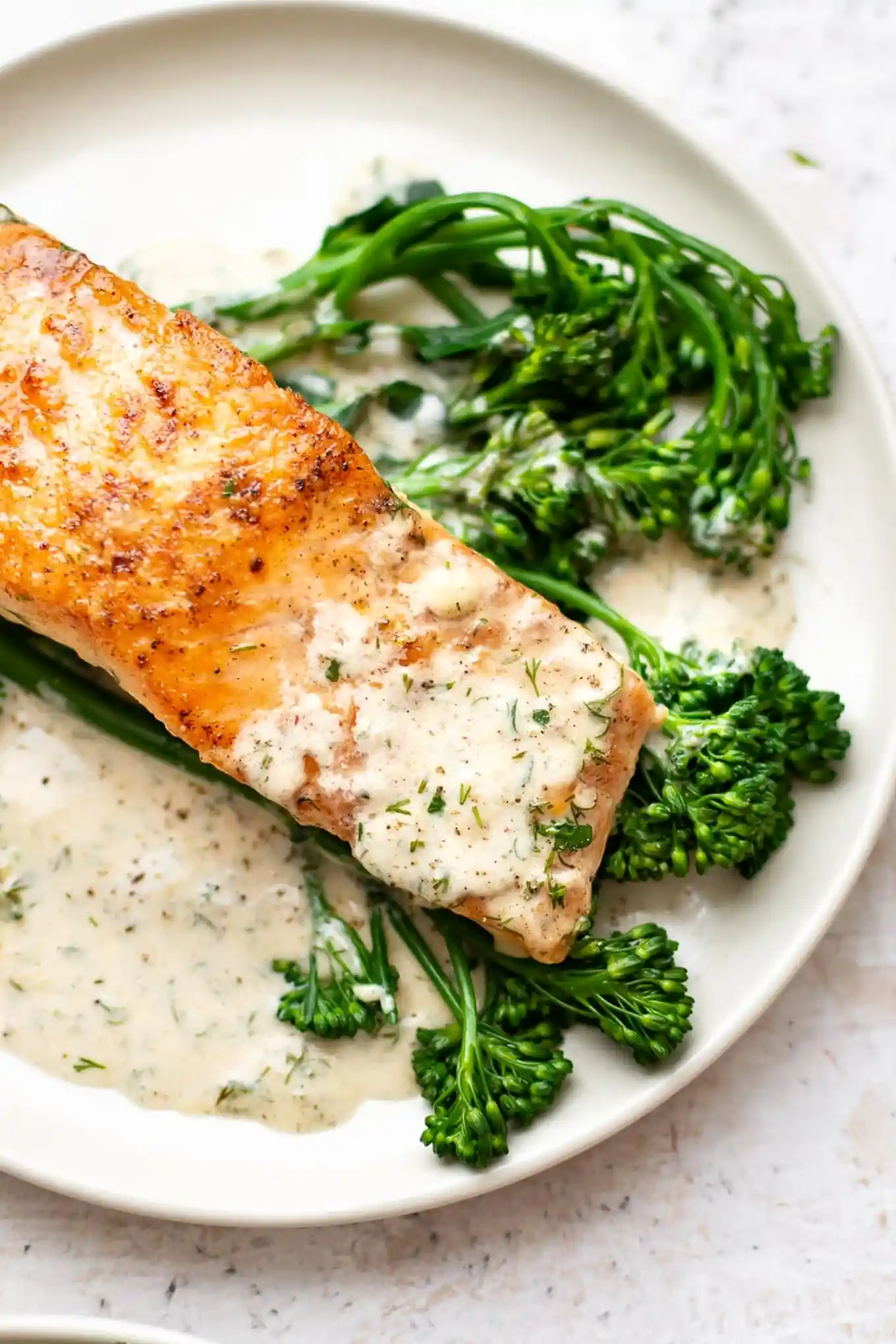
This pan-seared salmon with a bright lemon dill sauce is a fast, restaurant-quality meal. It takes only 30 minutes from start to finish, making it perfect for weeknight dinners.
List of ingredients
- 1 pound fresh salmon, cut into 4 pieces – choose center-cut fillets for even cooking.
- 1/4 teaspoon garlic powder – provides a consistent savory base.
- Salt and pepper to taste – used for primary seasoning.
- Flour for dredging – creates a golden crust and thickens the sauce.
- 1 tablespoon olive oil – prevents sticking and adds heat stability.
- 1 tablespoon butter – adds richness and flavor to the sear.
- 1/2 cup chicken broth – the flavorful liquid base for the sauce.
- 1 teaspoon lemon juice – provides essential acidity to balance the cream.
- 1/2 teaspoon Dijon mustard – acts as a flavor enhancer and emulsifier.
- 1 cup heavy cream or whipping cream – creates the thick, velvety texture.
- 1 tablespoon finely chopped fresh dill – the primary aromatic herb.
step-by-step instructions
- Season and Coat: Cut the salmon into 4 equal pieces. Sprinkle each piece with garlic powder, salt, and pepper, then coat all sides thoroughly with flour.
- Sear the Fish: Heat olive oil and butter in a skillet over medium-high heat. Once hot, add the salmon and cook for 3-4 minutes per side until golden brown. Remove the fish to a plate; it should not be fully cooked yet.
- Deglaze the Pan: Pour the chicken broth, lemon juice, and Dijon mustard into the hot skillet. Stir until the mustard is fully incorporated and let the mixture bubble for 1-2 minutes.
- Prepare the Cream Base: Stir in the heavy cream and chopped fresh dill, ensuring the sauce is well blended.
- Final Simmer: Place the salmon pieces back into the pan. Cook for another 5 minutes until the sauce thickens and the fish is cooked through. Season with extra salt and pepper if needed, and garnish with fresh parsley and lemon juice.
Guide to Selecting and Preparing Salmon
Choosing the Right Cut
Select center-cut fillets to ensure that each piece of salmon is the same thickness. This prevents thinner pieces from overcooking while thicker ones remain raw in the center. Look for a vibrant pink or orange color with no gaps in the flesh.
The Importance of Patting Dry
Before applying seasonings or flour, use a paper towel to pat the salmon fillets completely dry. Removing surface moisture allows the fish to sear properly instead of steaming in the pan. This step is critical for achieving a golden-brown crust.
Handling the Skin
You can prepare this recipe with or without the skin. If you prefer not to eat the skin, you can easily peel it off after the fish is cooked and the proteins have set. The skin helps protect the fish from direct heat during the initial searing phase.
Mastering the Lemon Dill Cream Sauce
Preventing Sauce Curdling
Use full-fat heavy cream or whipping cream to ensure the sauce remains stable. Lower-fat alternatives like milk or half-and-half are more likely to curdle when they come into contact with the acidity of the lemon juice. Heavy cream provides the necessary fat to emulsify the sauce.
Utilizing Dijon Mustard for Texture
The Dijon mustard does more than add a subtle savory note; it acts as an emulsifier. It helps bind the chicken broth and fats together, resulting in a smooth, cohesive sauce that clings to the fish. Ensure it is whisked in thoroughly during the deglazing step.
Controlling the Reduction
Simmer the sauce on medium-low heat once the cream is added to avoid boiling it too vigorously. A gentle simmer allows the sauce to thicken naturally as the water evaporates. If the sauce becomes too thick, stir in a tablespoon of extra broth or cream to loosen it.
Ingredient Alternatives and Customizations
Using Dried Herbs Instead of Fresh
If fresh dill is unavailable, you can use dried dill, but adjust the quantity. Dried herbs are more concentrated, so start with 1 teaspoon and add more only if the flavor is too weak. Fresh dill provides a brighter, more vibrant taste that is characteristic of this dish.
Swapping the Liquid Base
While chicken broth is the standard base, you can use a high-quality vegetable broth for a different flavor profile. Ensure the broth is low-sodium if you are sensitive to salt, as the Dijon mustard and seasonings already contribute significant salinity.
Substituting the Protein
This sauce works exceptionally well with other firm white fish or oily fish like trout or Arctic char. If using a thinner fillet, reduce the initial searing time to 2-3 minutes per side to avoid overcooking the protein before it returns to the sauce.
Perfect Side Dish Pairings
Hearty Starch Options
Serve this salmon with cream cheese mashed potatoes or a buttery risotto to complement the richness of the sauce. Garlic butter noodles are another excellent choice that soak up the excess lemon cream. Plain steamed basmati rice also provides a neutral base that lets the sauce shine.
Balanced Vegetable Sides
Roasted carrots or sautéed broccolini provide a necessary textural contrast to the tender fish. The natural sweetness of roasted root vegetables balances the acidity of the lemon. Steamed asparagus or garlicky sautéed mushrooms also pair well with the herbal notes of the dill.
Adding a Fresh Salad
A light garden salad with a simple vinaigrette can cut through the richness of the heavy cream. Use mixed greens, sliced cucumbers, and a touch of apple cider vinegar. This adds a crisp, refreshing element to the plate that cleanses the palate between bites.
Storage and Reheating Guidelines
Refrigeration Limits
Store leftover salmon and sauce in an airtight container in the refrigerator for 2 to 3 days. Keep the fish and sauce together so the salmon stays moist. Ensure the food is cooled slightly before sealing the container to prevent excessive condensation.
Low-Heat Reheating Method
Reheat the salmon slowly over very low heat in a skillet or in the microwave at 50% power. High heat can cause the salmon to become rubbery and the cream sauce to separate. Adding a teaspoon of water or broth can help restore the sauce’s consistency during warming.
Freezing Precautions
It is not recommended to freeze dishes containing creamy sauces. The emulsion typically breaks during the freezing and thawing process, resulting in a grainy or separated sauce. For the best quality, consume the recipe fresh or refrigerated.
Common Cooking Challenges and Solutions
Fixing a Separated Sauce
If the sauce separates into oil and solids, it is usually due to overheating. Remove the pan from the heat immediately and whisk in a small amount of cold heavy cream. This can help re-emulsify the fats and restore the smooth texture.
Managing Sticking Fish
If the salmon sticks to the pan during the initial sear, do not force it off with a spatula. Wait another 30 to 60 seconds; the fish will naturally release from the pan once a proper crust has formed. Forcing it can tear the delicate flesh.
Correcting Over-Salted Sauce
If the sauce tastes too salty, add an extra squeeze of lemon juice or a splash more heavy cream. The acid from the lemon and the fat from the cream help neutralize the perception of salt. Avoid adding more liquid like broth, which may contain additional sodium.
Frequently Asked Questions
Can I leave the skin on the salmon?
Yes, you can leave the skin on during cooking. It helps protect the fillet from the high heat of the pan. If you do not wish to eat it, the skin can be easily removed after the fish is fully cooked.
Can I use half-and-half instead of heavy cream?
It is not recommended because the lower fat content in half-and-half makes the sauce prone to curdling when combined with lemon juice. Heavy cream is essential for a stable, velvety result.
How do I know when the salmon is perfectly cooked?
Watch for the color to change from translucent pink to an opaque light pink. The color change moves from the outer edges toward the center. The salmon is done when the center is just barely opaque.
What if my salmon fillets are very thick?
If your fillets are thicker than one inch, you may need to increase the final simmering time by 2 to 3 minutes. Lower the heat slightly to ensure the sauce does not reduce too much while the center of the fish finishes cooking.
Print
Creamy Lemon Dill Salmon
- Total Time: 30 minutes
- Yield: 4 servings 1x
- Diet: General
Description
This creamy dill salmon recipe is quick, really simple, and elegant! Tender, flaky pan-fried salmon is coated in the most delicious and bright lemon dill cream sauce.
Ingredients
- 1 pound fresh salmon, cut into 4 pieces
- 1/4 teaspoon garlic powder
- Salt and pepper, to taste
- Flour, for dredging
- 1 tablespoon olive oil
- 1 tablespoon butter
- 1/2 cup chicken broth
- 1 teaspoon lemon juice
- 1/2 teaspoon Dijon mustard
- 1 cup heavy/whipping cream
- 1 tablespoon finely chopped fresh dill
Instructions
- Step: Cut your salmon into 4 pieces. Sprinkle each piece with the garlic powder and season with salt & pepper. Coat each piece in flour on all sides.
- Step: Add the olive oil and butter to a skillet over medium-high heat. When the pan is hot, add the fish. Cook the salmon for 3-4 minutes per side or until it’s nicely browned. Remove the fish to a plate and set it aside.
- Step: Add the chicken broth, lemon juice, and Dijon mustard to the skillet. Stir until the mustard has been incorporated, and let it bubble for 1-2 minutes.
- Step: Add the cream and dill to the pan and give it a good stir.
- Step: Place the salmon back in the pan and let it cook for another 5 minutes or so until the sauce has thickened a bit and the fish has cooked through.
Notes
If you want to use dried dill, start with 1 teaspoon. Salmon thickness varies; the suggested timing is for salmon that is about 1 inch thick. Do not substitute the cream for half-and-half or milk as the lemon juice may curdle the sauce.
- Prep Time: 10 minutes
- Cook Time: 20 minutes
- Category: Main Course
- Method: Pan-frying
- Cuisine: American
Nutrition
- Serving Size: 1 piece of salmon
- Calories: 425 kcal
- Sugar: 1 g
- Sodium: 212 mg
- Fat: 36 g
- Saturated Fat: 17 g
- Unsaturated Fat: 19 g
- Trans Fat: 0 g
- Carbohydrates: 2 g
- Fiber: 0 g
- Protein: 24 g
- Cholesterol: 151 mg
Keywords: creamy dill salmon, lemon dill sauce, pan-fried salmon, elegant salmon dinner