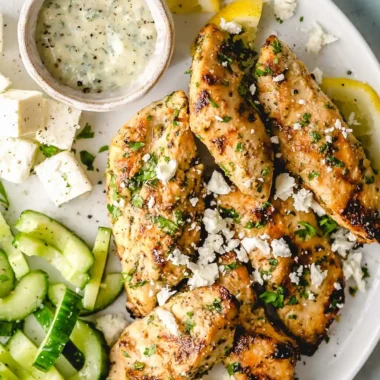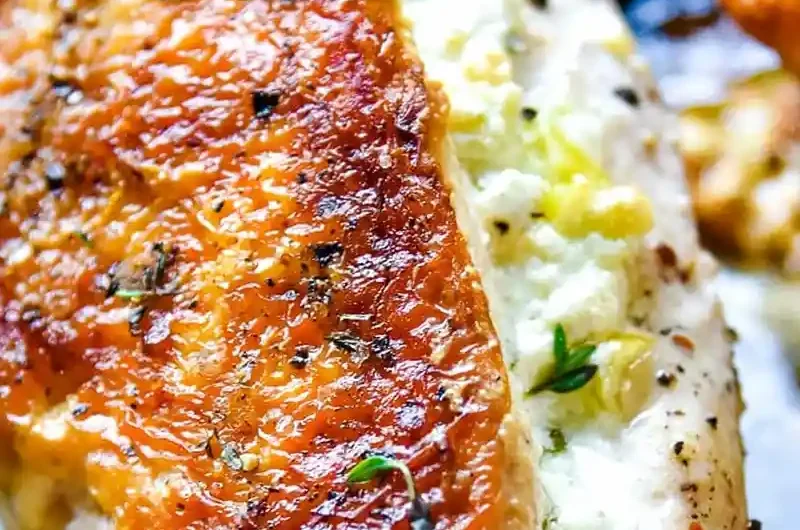
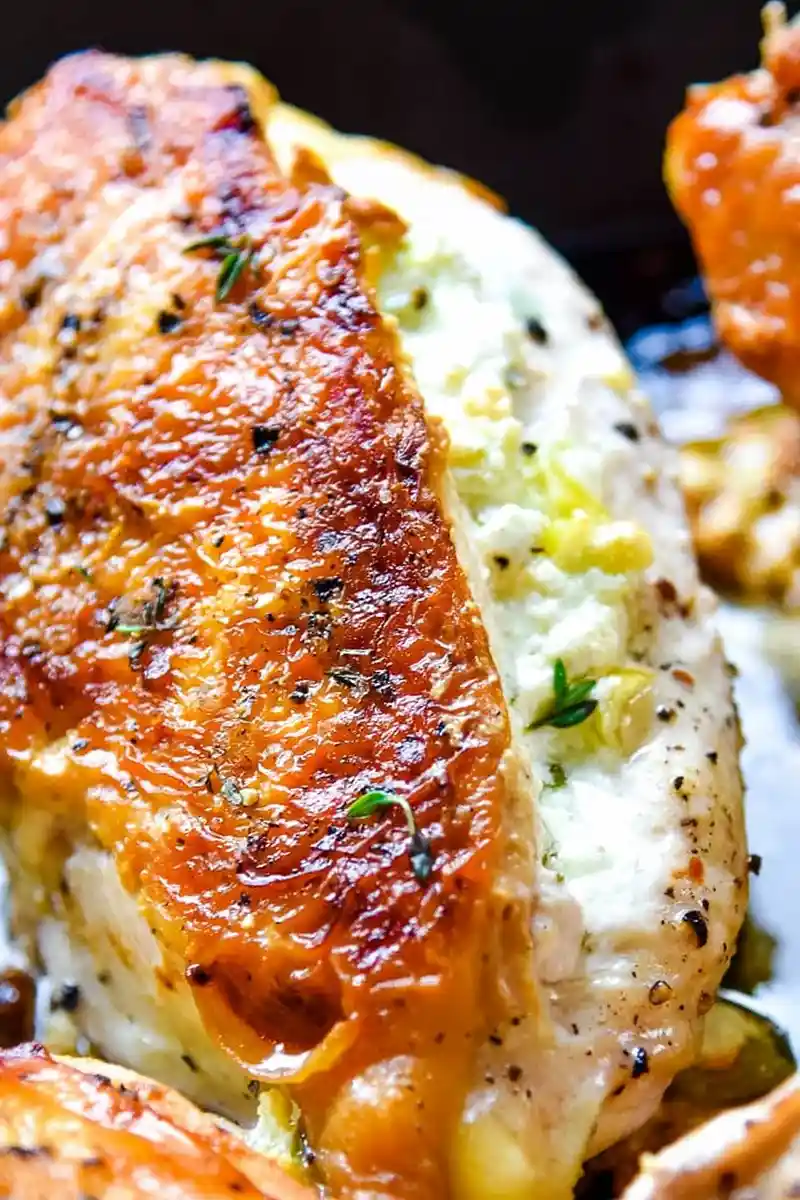
This elegant dinner features juicy chicken breasts filled with a tangy goat cheese and pepperoncini mixture. It is a high-impact meal that requires minimal ingredients and uses a simple sear-and-bake method for a professional finish.
List of ingredients
- 4 ounces goat cheese – use a soft, spreadable variety for easier mixing.
- 1/4 cup pepperoncini – finely chopped to ensure even distribution in the filling.
- 1 1/2 teaspoons fresh thyme leaves – finely chopped for an earthy aroma.
- Salt and ground pepper – used for seasoning both the filling and the chicken exterior.
- 4 bone-in, skin-on chicken breasts – approximately 2 pounds in total for maximum moisture.
step-by-step instructions
- Prepare the oven and pan: Preheat your oven to 425F degrees. Place a cast iron skillet or a heavy-duty oven-safe skillet over medium-high heat to prepare for searing.
- Mix the filling: In a small bowl, mash the goat cheese with a fork until it is smooth. Stir in the finely chopped pepperoncini and thyme, then season the mixture with salt and pepper.
- Create the pockets: Use a paring knife to cut a slit into the thickest side of each chicken breast. Carefully widen the pocket using your fingers or the knife, taking care not to cut completely through to the other side.
- Stuff the chicken: Evenly divide the cheese mixture among the four breasts, placing about 2 tablespoons into each pocket and pressing it in firmly.
- Season the exterior: Pat the chicken breasts dry on all sides with paper towels. Season the skin and meat generously with salt and pepper.
- Sear the skin: Place the chicken breasts skin-side down in the heated skillet. Cook for approximately 5 minutes until the skin is golden and crisp.
- Bake to finish: Carefully transfer the hot skillet into the preheated oven. Bake for 18 to 20 minutes, or until a meat thermometer indicates the chicken is cooked through.
- Rest and serve: Remove the skillet from the oven. Use tongs to flip the chicken breasts over and let them rest in the pan for 3 minutes. Garnish with fresh thyme if desired.
Recommended Side Dish Pairings
Creamy Potato Options
Mashed potatoes are a classic accompaniment that complements the tanginess of the goat cheese. For more texture, try garlic roasted potatoes or twice-baked potatoes. These starchy sides help soak up any flavorful juices left in the skillet after cooking.
Roasted and Steamed Vegetables
Air fryer Brussels sprouts provide a charred, nutty contrast to the creamy filling. Creamed corn or steamed asparagus also work well to add a touch of sweetness and color to the plate. For a heartier vegetable, consider a side of roasted carrots with a hint of honey.
Refreshing Cold Salads
A creamy cucumber salad provides a crisp, cool contrast to the rich, warm chicken. Pea salads with a light vinaigrette or a simple mixed green salad with lemon dressing help cut through the density of the goat cheese. These options add a necessary brightness to the overall meal.
Filling Modifications and Substitutions
Alternative Cheese Bases
If goat cheese is too strong, substitute it with an equal amount of cream cheese for a milder flavor. Mascarpone is another excellent alternative that offers a buttery, sweeter profile. You can also split the recipe by using half cream cheese and half goat cheese to balance the intensity.
Vegetable Mix-ins for Flavor
Replace pepperoncini with chopped olives or pimientos for a Mediterranean twist. Roasted red bell peppers add a smokiness that pairs well with the cheese. For an earthy addition, stir in finely chopped fresh spinach or sautéed mushrooms before stuffing the chicken.
Sweet and Savory Combinations
For a different flavor profile, replace the pepperoncini with dried cranberries and toasted pecans. This creates a sweet and salty contrast that is particularly effective during the autumn and winter months. Apple bits can also be added to the filling for a crisp, fruity element.
Herbal Variations
While fresh thyme is recommended, rosemary or parsley provide excellent alternatives. Rosemary offers a more pungent, pine-like aroma that stands up well to the goat cheese. Parsley provides a clean, fresh finish that lightens the overall taste of the dish.
Pro Cooking Techniques for Best Results
Ensuring Crispy Skin
Patting the chicken skin completely dry before seasoning is the most critical step for achieving a golden crust. Any remaining moisture will create steam in the pan, which prevents the skin from browning properly. Use a heavy cast iron skillet to maintain consistent high heat during the searing process.
Mastering the Stuffing Pocket
When cutting the slit, start at the thickest part of the breast and move slowly toward the center. Using your fingers to gently stretch the pocket ensures the filling is distributed evenly without piercing the back of the meat. Avoid overfilling the pocket to prevent the cheese from leaking out during the bake.
Using a Meat Thermometer
To avoid overcooking the chicken, rely on a digital meat thermometer rather than time alone. The chicken is safely cooked when the internal temperature reaches 165F (74C) at the thickest part of the breast. Removing the chicken exactly at this temperature prevents the meat from becoming dry.
The Importance of Resting
Letting the chicken rest for 3 to 5 minutes allows the juices to redistribute throughout the meat. If you cut into the chicken immediately, the juices will run out onto the plate, leaving the meat drier. Resting also allows the melted cheese filling to set slightly, making it easier to slice.
Storage and Reheating Advice
Refrigeration Guidelines
Store leftover stuffed chicken in an airtight container in the refrigerator for up to 3 days. Ensure the chicken has cooled completely before sealing the lid to prevent condensation from making the skin soggy. Keep the chicken separated with parchment paper if stacking pieces.
Best Reheating Methods
Avoid the microwave for reheating as it will make the skin rubbery and the cheese overly oily. Instead, place the chicken in a 350F oven for 10 to 15 minutes. This method helps maintain the integrity of the crust and gently warms the filling without overcooking the meat.
Freezing Instructions
While this dish is best fresh, you can freeze the cooked chicken for up to two months. Wrap each piece tightly in foil and place them in a freezer-safe bag. Thaw completely in the refrigerator overnight before reheating in the oven.
Common Troubleshooting Solutions
Preventing Cheese Leakage
If the cheese leaks out during cooking, it usually means the pocket was cut too far or the filling was too soft. Try chilling the stuffed chicken breasts in the refrigerator for 30 minutes before searing. This firms up the cheese and helps it stay inside the breast during the initial high-heat phase.
Fixing Dry Chicken Meat
Dryness often occurs when using boneless, skinless breasts without added fat. Using bone-in, skin-on chicken naturally protects the meat and adds flavor. If you must use boneless breasts, add two tablespoons of olive oil to the skillet and reduce the oven time by 5 minutes.
Handling Uneven Cooking
If some breasts are cooking faster than others, it is likely due to differences in size. Arrange the largest breasts in the center of the skillet where heat is most concentrated. Periodically check the internal temperature of each piece to determine the exact moment to remove them from the oven.
Frequently Asked Questions
Can I use boneless, skinless chicken breasts?
Yes, you can use boneless skinless breasts, but you must add 1 to 2 tablespoons of extra virgin olive oil to the skillet before searing. Be aware that they cook faster than bone-in breasts, so monitor the internal temperature closely to avoid drying out the meat.
What is the best way to chop pepperoncini for this recipe?
Drain the pepperoncini thoroughly to remove excess brine before chopping. Use a sharp chef’s knife to mince them into very small pieces so they integrate smoothly with the goat cheese and do not create large holes in the filling.
Can I substitute goat cheese with feta?
Feta is too crumbly to create a smooth stuffing and may leak out of the chicken. If you want a similar salty flavor, blend the feta with a tablespoon of cream cheese or Greek yogurt first to create a spreadable paste.
How do I know when the skin is seared enough?
The skin should release easily from the bottom of the pan without sticking. If it clings to the skillet, it needs another minute of heat. Look for a deep golden-brown color and a visible crispness to the edges.
Which type of goat cheese is best?
Choose a fresh, soft, log-style goat cheese (chevre). This variety is naturally spreadable and melts beautifully inside the chicken, creating a creamy sauce-like consistency when baked.
Print
Creamy Goat Cheese Stuffed Chicken Breast
- Total Time: 36 minutes
- Yield: 4 servings 1x
- Diet: General
Description
This easy Goat Cheese Stuffed Chicken Breast recipe tastes like it’s from a 5-star restaurant! The creamy goat cheese filling adds amazing flavor and moisture to the chicken and that golden skin is irresistible!
Ingredients
- 4 ounces goat cheese
- 1/4 cup pepperoncini (finely chopped)
- 1 1/2 teaspoons fresh thyme leaves (finely chopped)
- salt and ground pepper (to taste)
- 4 bone-in, skin-on chicken breasts (approximately 2 pounds)
Instructions
- Step: Preheat oven to 425F degrees. Place a cast iron skillet or heavy duty oven safe skillet over medium high heat.
- Step: In a small bowl, mash goat cheese with a fork until smooth. Stir in pepperoncini and thyme and season with salt and pepper.
- Step: Use a paring knife to cut a slit in the thick side of each chicken breast. Create a pocket carefully using your fingers or the knife making sure to not cut through the back of the breast. Stuff each pocket with about 2 tablespoons of the goat cheese mixture.
- Step: Divide goat cheese mixture evenly between each of the chicken breasts and press into the pockets. Pat the chicken dry on all sides and season with salt and pepper.
- Step: Place chicken breasts skin side down in the heated skillet and cook for about 5 minutes. Carefully transfer the hot skillet to the preheated oven and bake until chicken is cooked through, about 18 to 20 minutes. Use a meat thermometer to check for doneness.
- Step: Remove the skillet from the oven and carefully, using tongs, flip the chicken breasts over in skillet and let rest for 3 minutes before serving.
- Step: Garnish with fresh thyme if desired.
Notes
If using boneless, skinless chicken breasts, you will need to add 1 to 2 tablespoons of extra virgin olive oil to the skillet before cooking.
- Prep Time: 10 minutes
- Cook Time: 23 minutes
- Category: Dinner
- Method: Pan-searing and Baking
- Cuisine: American
Nutrition
- Serving Size: 1 chicken breast
- Calories: 389 kcal
- Sugar: 1 g
- Sodium: 219 mg
- Fat: 23 g
- Saturated Fat: 9 g
- Unsaturated Fat: 13 g
- Trans Fat: 1 g
- Carbohydrates: 1 g
- Fiber: 1 g
- Protein: 43 g
- Cholesterol: 129 mg
Keywords: stuffed chicken, stuffed chicken breast