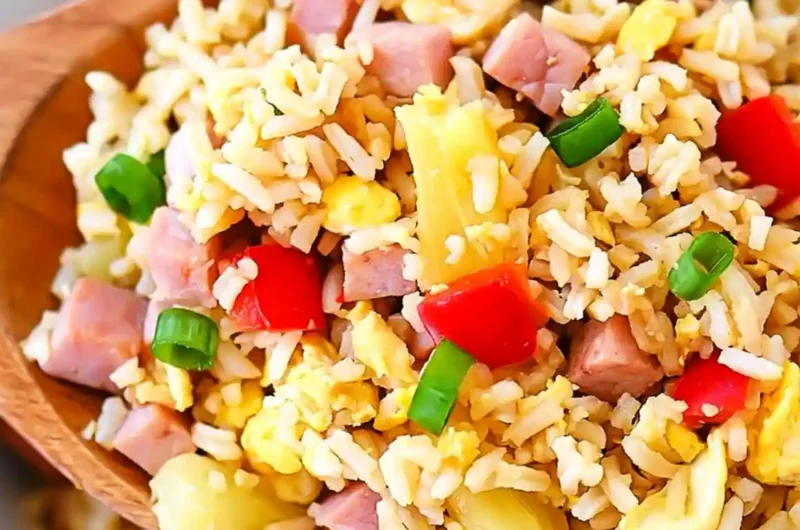
This flavorful fried rice combines savory proteins with the natural sweetness of pineapple for a balanced meal. It is a quick, one-pan dish that works perfectly for weeknight dinners or meal prep.
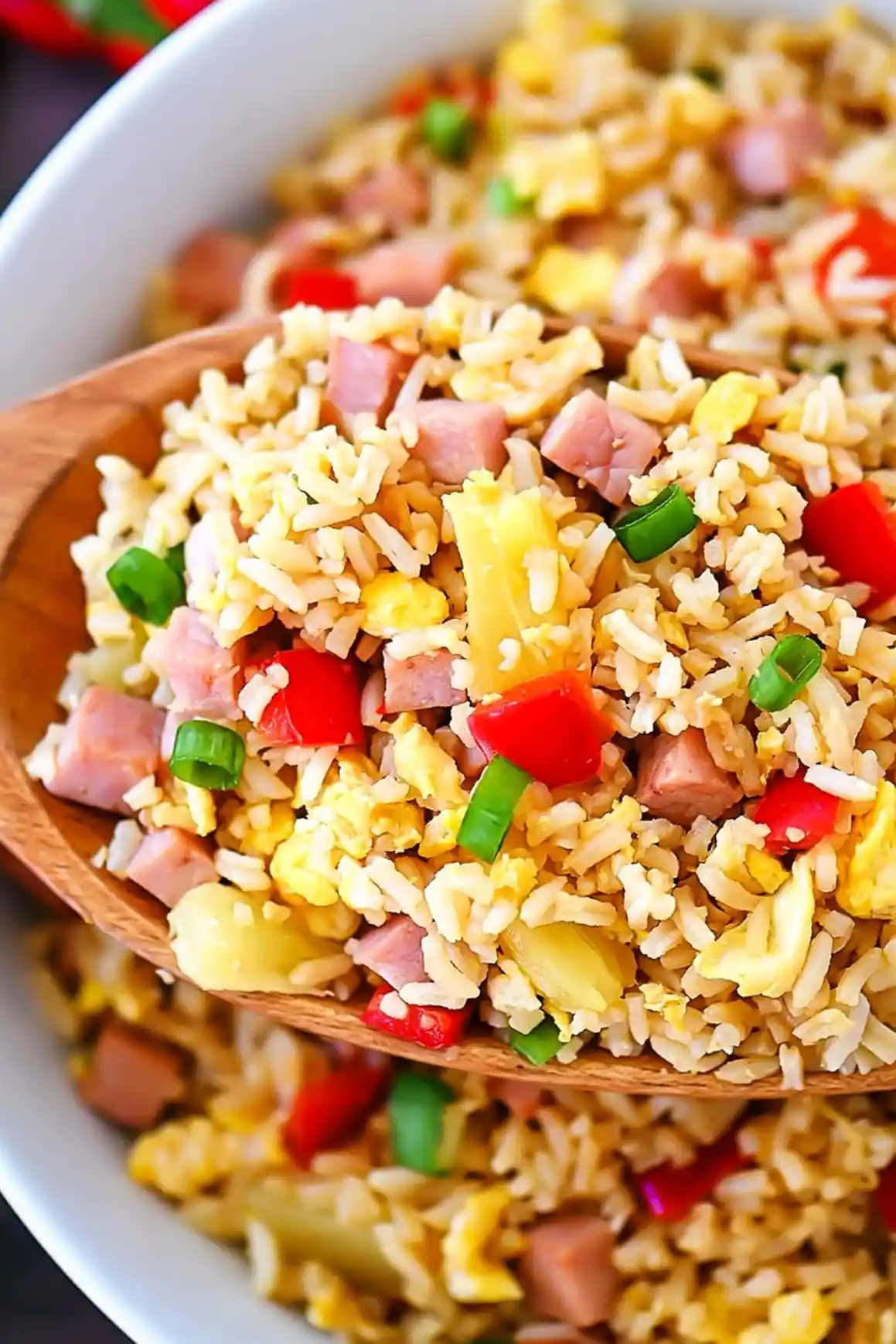
List of ingredients
- 4 Tablespoons low sodium soy sauce – provides the primary savory base.
- 1/2 Tablespoon sesame seed oil – adds a toasted, nutty aroma.
- 1 teaspoon hot sauce – adds a subtle kick of heat.
- 1 Tablespoon vegetable oil – divided for sautéing and frying.
- 1 red bell pepper – diced with ribs and seeds removed for color and crunch.
- 2 cups diced cooked chicken breast – a lean protein substitute for ham.
- 2 green onions – diced, keeping the white and green parts separate.
- 3 cloves garlic – minced finely for aromatic flavor.
- 5 cups cold, cooked white rice – chilled overnight for the best texture.
- 3 large eggs – beaten and scrambled into the rice.
- 1 cup pineapple pieces – adds a sweet, tropical contrast.
step-by-step instructions
- Prepare the Sauce: In a small bowl, whisk together the low sodium soy sauce, sesame seed oil, and hot sauce. Set this mixture aside for later use.
- Sauté Aromatics and Protein: Heat 1/2 Tablespoon of vegetable oil in a large non-stick skillet over medium-high heat. Add the diced red bell pepper and sauté for 5 to 7 minutes until crisp-tender.
- Brown the Chicken: Add the diced cooked chicken breast and the white parts of the green onions to the skillet. Cook and stir until the chicken is slightly browned. Stir in the minced garlic and cook for one additional minute. Transfer this entire mixture to a bowl and set aside.
- Fry the Rice: Heat the remaining vegetable oil in the same skillet until hot. Add the cold, cooked white rice, stirring and breaking up any large clumps. Continue to cook for about 8 minutes until the rice is thoroughly heated.
- Incorporate Eggs: Push the heated rice to one side of the skillet. Crack the eggs onto the empty side and stir until they are lightly scrambled and set.
- Combine and Finish: Stir the scrambled eggs and the reserved chicken and pepper mixture back into the rice. Pour the soy sauce mixture over the rice and stir continuously until everything is well combined and hot.
- Final Fold: Turn off the heat. Stir in the pineapple pieces and the green parts of the onions. Serve immediately.
Optimizing Your Rice Texture
Using Day-Old Chilled Rice
The most critical factor for successful fried rice is using rice that has been refrigerated for at least 12 to 24 hours. Freshly cooked rice contains too much moisture and surface starch, which leads to a mushy or gummy consistency. Chilling the rice allows the grains to dry out and firm up, ensuring they stay separate during frying.
Fast-Chilling Fresh Rice
If you do not have overnight rice, spread freshly cooked rice in a thin layer on a baking sheet. Place the sheet in the freezer for 15 to 30 minutes to rapidly remove surface moisture. This method mimics the drying effect of the refrigerator and prevents the grains from clumping together in the pan.
Selecting the Right Grain Variety
Long-grain white rice, such as Jasmine or Basmati, is ideal for this recipe because these varieties are less sticky than short-grain options. The elongated shape and lower amylopectin content help the grains slide against each other. Avoid using sushi rice or Arborio rice, as their high starch content will result in a thick, porridge-like texture.
Protein and Vegetable Variations
Substituting Other Lean Proteins
While cooked chicken breast is a great choice, you can use diced shrimp or firm tofu for a different flavor profile. If using raw shrimp, sauté them quickly in the first step until pink and then remove them from the pan. For tofu, use extra-firm varieties and press them to remove excess water before searing.
Incorporating Additional Vegetables
To increase the nutritional value, add diced carrots or frozen peas to the sauté process. Add carrots at the same time as the bell peppers since they take longer to soften. Frozen peas should be added at the very end with the pineapple to maintain their bright green color and snap.
Choosing the Best Pineapple
Fresh pineapple provides the best acidity and a crisp texture that balances the salty soy sauce. If using canned pineapple, choose pieces packed in natural juice rather than heavy syrup to avoid over-sweetening the dish. Drain the canned pieces thoroughly and pat them dry with a paper towel to prevent extra liquid from steaming the rice.
Professional Cooking Techniques
Managing Pan Temperature
Keep the skillet on medium-high heat to ensure the rice fries rather than steams. If the heat is too low, the rice will absorb the oil and become greasy. If the heat is too high, the garlic and soy sauce may burn, creating a bitter taste. Adjust the flame if you notice the ingredients are releasing too much liquid.
Simulating Wok Hei in a Skillet
Wok hei, or the breath of the wok, is achieved through high-heat searing and constant movement. To mimic this in a non-stick skillet, cook the rice in smaller batches if necessary to avoid overcrowding the pan. Overcrowding lowers the temperature and prevents the rice from developing those characteristic toasted brown edges.
The Importance of Oil Selection
Using a combination of vegetable oil and sesame oil provides both a high smoke point and a deep flavor. Vegetable oil handles the high heat of the frying process without burning. Sesame oil is added via the sauce because it has a lower smoke point and provides the essential nutty aroma that defines Asian-style fried rice.
Flavor Balancing and Seasoning
Adjusting the Salt Levels
Because soy sauce varies in saltiness, always taste the rice before adding additional seasoning. If the dish is too salty, add a small amount of unsalted cooked rice or a squeeze of fresh lime juice. The acidity in lime juice helps neutralize excess salt and brightens the tropical flavors of the pineapple.
Increasing the Heat Profile
If the recipe is not spicy enough, replace the standard hot sauce with Sriracha or add a pinch of crushed red pepper flakes during the garlic sauté. For a more complex heat, stir in a small amount of chili garlic sauce. These additions complement the sweetness of the pineapple without overpowering the other ingredients.
Enhancing Umami Depth
For a deeper, more savory flavor, you can add a teaspoon of oyster sauce or mushroom sauce to the soy sauce mixture. These additions provide a rich, caramelized undertone that pairs well with the chicken. Ensure you slightly reduce the amount of soy sauce if adding these concentrated seasonings to maintain a balanced salt level.
Serving and Presentation
Adding Finishing Garnishes
To make the dish visually appealing, garnish with toasted sesame seeds or thinly sliced red chilies. A sprinkle of fresh cilantro leaves adds a herbaceous note that cuts through the richness of the fried rice. These small additions provide a professional look and a contrast in textures.
Complementary Side Dishes
Serve this tropical fried rice with a side of steamed bok choy or a crisp cucumber salad. A light, vinegary salad helps cleanse the palate between bites of the savory rice. For a fuller meal, consider pairing it with grilled chicken skewers or spring rolls.
Plating for Temperature Retention
Warm your serving bowls in the oven or with hot water before plating the rice. Fried rice loses heat quickly due to its high surface area, and pre-warmed bowls keep the meal hot longer. This ensures the sesame oil aroma remains potent as the dish reaches the table.
Storage and Reheating Guidance
Proper Refrigerator Storage
Store leftovers in an airtight container in the refrigerator for up to three to four days. Ensure the rice has cooled completely before sealing the lid to prevent condensation from forming inside the container. Excess moisture in the fridge can lead to the rice becoming soggy upon reheating.
Reheating for Optimal Texture
The best way to reheat fried rice is in a skillet over medium heat with a teaspoon of oil. Stir-fry the rice for 3 to 5 minutes until it is steaming and the grains are separated again. If using a microwave, add a tablespoon of water and cover the dish with a damp paper towel to steam the rice without drying it out.
Freezing Fried Rice
This recipe freezes well for up to two months if stored in freezer-safe bags with the air pressed out. Thaw the rice in the refrigerator overnight before reheating it on the stove. Avoid microwaving directly from frozen, as this often results in uneven heating and a mushy texture.
Troubleshooting Common Issues
What to do if the rice is clumping?
Clumping usually occurs because the rice was not cold enough or was packed too tightly in the pan. Use a silicone spatula to gently press and break apart the clumps while the rice is frying. In the future, ensure you use a larger pan to give the rice more room to move.
How to fix overly oily rice?
If the rice feels greasy, it is likely because too much oil was used or the temperature was too low. You can fix this by stirring in a few finely diced raw vegetables, like celery or carrots, which can absorb some of the excess oil. Alternatively, a squeeze of lemon juice can help cut through the heaviness of the oil.
Why did the eggs become rubbery?
Rubbery eggs are a result of overcooking or cooking on too high a heat for too long. Cook the eggs quickly and remove them from the heat the moment they are set but still slightly moist. They will continue to cook slightly when mixed back into the hot rice.
Frequently Asked Questions
Can I use brown rice instead of white rice?
Yes, brown rice can be used, but it will have a nuttier flavor and a chewier texture. Because brown rice is denser, it may require an extra minute or two of frying to heat through. Ensure the brown rice is also chilled overnight to prevent sticking.
Can this recipe be made vegan?
To make this vegan, replace the chicken with extra-firm tofu and the eggs with a tofu scramble or simply omit them. Use a vegan-certified soy sauce and ensure the vegetable oil is plant-based. Increase the amount of vegetables to maintain the heartiness of the dish.
How can I make the rice more colorful?
Adding finely diced carrots, frozen peas, and corn will create a vibrant, multicolored dish. You can also use a variety of bell peppers, such as yellow or orange, alongside the red one. These additions provide a visually appealing contrast to the white rice and golden pineapple.
Why is my rice steaming instead of frying?
Steaming happens when there are too many ingredients in the pan at once, which drops the temperature and traps moisture. To prevent this, cook in smaller batches or use a larger wok. Ensure the oil is shimmering and hot before adding the rice to the pan.
Print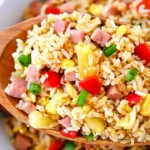
Tropical Chicken Fried Rice
- Total Time: 35 minutes
- Yield: 4 servings 1x
- Diet: General
Description
Hawaiian Fried Rice is a delicious and easy-to-prepare dish packed with diced turkey ham, red bell pepper, and pineapple, adding a heavenly sweetness to every bite.
Ingredients
- 4 Tablespoons low sodium soy sauce
- 1/2 Tablespoon sesame seed oil
- 1 teaspoon hot sauce
- 1 Tablespoon vegetable oil (divided)
- 1 red bell pepper (diced)
- 2 cups diced turkey ham
- 2 green onions (diced, divided)
- 3 cloves garlic (minced)
- 5 cups cold, cooked white rice
- 3 large eggs
- 1 cup pineapple pieces
Instructions
- Step: In a small bowl, stir together the soy sauce, sesame oil and hot sauce; set aside.
- Step: Heat 1/2 Tablespoon of the vegetable oil in a large, non-stick skillet over medium-high heat, sauté diced red bell pepper for 5 to 7 minutes until crisp-tender, then add the turkey ham and white parts of the green onions, cooking until ham is slightly browned, and stir in the garlic for one minute before removing the mixture to a bowl.
- Step: Heat the remaining vegetable oil in the same skillet and add the cold rice, stirring and breaking up clumps for about 8 minutes until thoroughly heated.
- Step: Push the rice to one side of the skillet, crack the eggs onto the other side and stir until lightly scrambled and set, then stir the eggs and the turkey ham mixture into the rice, pouring in the soy sauce mixture and cooking until combined and hot.
- Step: Turn off the heat, stir in the pineapple and green parts of the onions, and serve.
Notes
For perfect texture, use day-old cold rice. Freshly cooked rice can make the dish mushy.
- Prep Time: 15 minutes
- Cook Time: 20 minutes
- Category: Main Course
- Method: Stir-frying
- Cuisine: Hawaiian-style
Nutrition
- Serving Size: 1.25 cups
- Calories: 520 kcal
- Sugar: 12 g
- Sodium: 980 mg
- Fat: 18 g
- Saturated Fat: 6 g
- Unsaturated Fat: 12 g
- Trans Fat: 0 g
- Carbohydrates: 58 g
- Fiber: 4 g
- Protein: 28 g
- Cholesterol: 165 mg
Keywords: Hawaiian fried rice, pineapple fried rice, turkey ham, tropical dinner, quick stir-fry