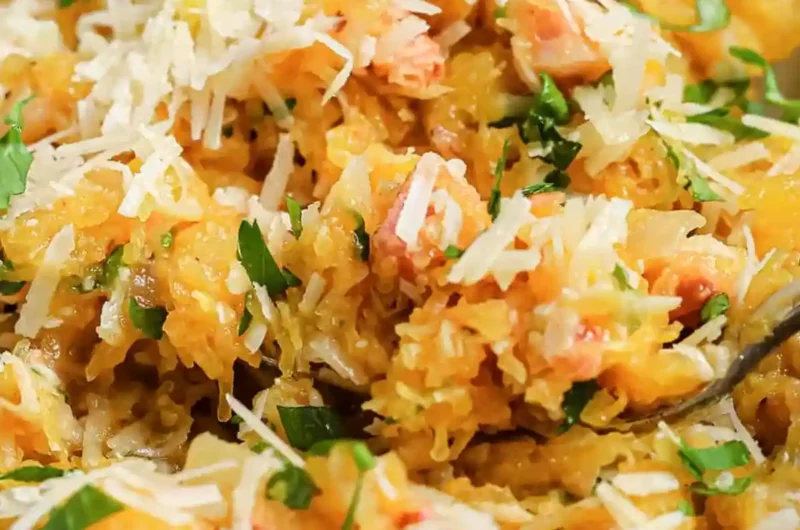
Enjoy a nutrient-dense twist on a classic Italian dish using roasted spaghetti squash as a low-carb base. This recipe combines creamy eggs and savory cured meat for a satisfying dinner that fits into a ketogenic diet.
List of ingredients
- 1 large spaghetti squash – select a firm one with a deep yellow skin.
- 1 tablespoon olive oil – used for roasting the squash.
- sea salt and black pepper – for seasoning the vegetable.
- 8 ounces turkey pancetta, diced – a pork-free salty alternative.
- 1 small onion, diced – adds a savory aromatic base.
- 3 cloves garlic, minced – provides depth of flavor.
- 2 large eggs – creates the rich, creamy sauce.
- 1 tablespoon chopped fresh flat-leaf parsley – adds a fresh herbal note.
- ½ cup finely grated Parmesan cheese – use a microbial-rennet variety.
- 1 teaspoon sea salt – for seasoning the sauce, adjust to taste.
- ¼ teaspoon black pepper – adds a subtle spicy kick.
- ½ cup shredded Parmesan cheese – used for the final garnish.
step-by-step instructions
- Prepare the Oven: Preheat your oven to 400°F and line a rimmed baking sheet with parchment paper to ensure easy cleanup.
- Prepare the Squash: Cut the spaghetti squash in half crosswise to create longer, noodle-like shreds, then scrape out the seeds.
- Season and Roast: Drizzle the squash halves with olive oil and sprinkle with sea salt and black pepper, then place them cut-side down on the baking sheet.
- Bake: Roast for 45 minutes or until the squash is fork tender and the shreds pull away from the skin easily.
- Sauté the Meat: While the squash is roasting, heat a large skillet over medium heat and cook the turkey pancetta until it becomes crispy.
- Cook Aromatics: Add the diced onion and minced garlic to the skillet and sauté until they are soft and translucent.
- Prepare Squash Shreds: Use a fork to scrape the roasted squash into shreds, using paper towels to dab away any excess moisture.
- Combine in Skillet: Add the squash shreds to the skillet and toss thoroughly with the meat and aromatics to ensure the squash is very hot.
- Mix the Sauce: In a large mixing bowl, whisk together the eggs, parsley, grated Parmesan, sea salt, and black pepper.
- Emulsify: Add the hot squash mixture to the mixing bowl and toss quickly so the residual heat cooks the eggs into a creamy coating without scrambling them.
- Garnish and Serve: Top the dish with shredded Parmesan and fresh parsley before serving immediately.
Cooking Tips for Best Results
Remove Excess Moisture from the Squash
Spaghetti squash can release a significant amount of water during roasting. Use clean paper towels to pat the shreds dry before adding them to the skillet to prevent the carbonara sauce from becoming watery.
Prevent the Eggs from Scrambling
The goal is a creamy emulsion, not scrambled eggs. Ensure you move the squash into the egg mixture quickly and toss constantly so the heat is distributed evenly and the eggs thicken slowly.
Choose a Firm Squash
When shopping, pick a squash that feels heavy for its size and has a consistent yellow color. Avoid any specimens with soft spots or cracks in the outer shell to ensure the best texture.
Use a Crosswise Cut
Cutting the squash crosswise rather than lengthwise results in longer, more continuous strands. This mimics the appearance and mouthfeel of traditional spaghetti more closely.
Ingredient Substitutions
Alternative Salty Meat Options
If turkey pancetta is unavailable, you can use smoked beef strips or beef salami diced into small cubes. For a vegetarian version, use smoked tofu or sun-dried tomatoes to provide the necessary saltiness.
Different Cheese Varieties
While Parmesan is traditional, Pecorino Romano is a great alternative for a sharper, saltier flavor. Always check the label to ensure the cheese uses microbial rennet for dietary preferences.
Substituting Fresh Parsley
If fresh flat-leaf parsley is not on hand, fresh basil or chives can be used. These herbs provide a similar brightness that cuts through the richness of the egg and cheese sauce.
Replacing Olive Oil
Avocado oil is an excellent substitute for olive oil due to its high smoke point. Ghee or melted butter can also be used for roasting the squash if you prefer a richer flavor.
Creative Flavor Variations
Adding Heavy Cream for Richness
While a traditional carbonara relies on eggs for creaminess, adding two tablespoons of heavy cream to the egg mixture creates a velvetier sauce. This is especially helpful if you prefer a thicker consistency.
Incorporating Extra Vegetables
Sautéed baby spinach or sliced mushrooms can be added to the skillet along with the onions. These additions increase the nutrient density and add a variety of textures to the dish.
Introducing Spicy Elements
Add a pinch of crushed red pepper flakes to the skillet while cooking the turkey pancetta. This adds a subtle heat that complements the salty cheese and smoky meat.
Boosting Protein Content
For a more filling meal, mix in shredded rotisserie chicken or sautéed shrimp. Add these proteins to the skillet just before adding the spaghetti squash to keep them tender.
Serving and Presentation Suggestions
Pairing with Fresh Side Salads
Serve this dish with a side of arugula tossed in lemon juice and olive oil. The bitterness of the greens balances the creamy richness of the carbonara sauce.
Complementary Vegetable Sides
Roasted asparagus or steamed broccoli with a squeeze of lime are excellent accompaniments. These vegetables add a crunch that contrasts well with the soft squash shreds.
Plating in the Squash Shell
For an impressive presentation, scoop the finished carbonara back into the roasted squash halves. This allows the shell to act as a natural serving bowl.
Adding a Final Garnish
A sprinkle of freshly cracked black pepper and an extra dusting of Parmesan cheese right before serving enhances the visual appeal. A small sprig of whole parsley on top adds a professional touch.
Storage and Reheating Guide
Proper Refrigeration
Store any leftovers in an airtight container in the refrigerator for up to four days. Keep the garnish separate to prevent the parsley from wilting.
Stovetop Reheating Method
Reheat the dish in a pan over medium-low heat. Add a small splash of water or a teaspoon of cream to loosen the sauce and restore the creamy texture.
Avoiding Microwave Overcooking
If using a microwave, heat the dish in short 30-second intervals and stir in between. This prevents the eggs from overcooking and becoming rubbery.
Managing Sauce Separation
It is normal for the sauce to thicken significantly in the fridge. Stirring in a small amount of warm water while reheating will help the emulsion reform.
Meal Prep and Planning
Roasting Squash in Advance
You can roast the spaghetti squash a day ahead of time and store the shreds in the fridge. Simply reheat the shreds in the skillet before tossing them with the egg mixture.
Preparing the Sauce Base
Whisk the eggs, grated cheese, and seasonings in a jar and keep it chilled. This saves time during the final assembly of the meal.
Pre-Dicing the Aromatics
Dice the onion and mince the garlic during your weekly prep. Store them in a small container to reduce the actual cooking time to a few minutes.
Freezing Considerations
This dish is not recommended for freezing due to the egg-based sauce and the high water content of the squash. Freezing will cause the sauce to separate and the squash to become mushy.
Troubleshooting Common Issues
The Sauce is Too Thin
If the sauce feels watery, it is usually due to excess moisture in the squash. Stir in an extra tablespoon of finely grated Parmesan cheese to thicken the emulsion.
Eggs Scrambled Instead of Creamy
This happens if the squash is too hot or the pan is still on the burner. Let the squash cool for one minute before adding it to the egg mixture and always mix in a separate bowl.
Squash is Too Mushy
Mushy squash often results from over-roasting or using a squash that was too old. Ensure you check for tenderness at the 400°F mark and remove it as soon as the shreds pull away easily.
Lack of Saltiness
Since you are using turkey pancetta instead of traditional pork, the salt level may be lower. Taste the final dish and add an extra pinch of sea salt if the flavors aren’t popping.
Frequently Asked Questions
How do I know when the squash is done?
The squash is ready when a fork easily pierces the skin and the interior shreds pull away from the shell with minimal resistance.
Can I use a different kind of squash?
Butternut or acorn squash are not suitable because they do not shred into noodle-like strands. Stick to spaghetti squash for the correct texture.
Is this dish gluten-free?
Yes, this recipe is naturally gluten-free because the roasted spaghetti squash completely replaces the traditional wheat-based pasta noodles.
Can I make this without eggs?
To make it egg-free, you can substitute the eggs with a mixture of cream cheese and a splash of heavy cream, though the flavor will be more like an Alfredo than a Carbonara.
Print
Low Carb Spaghetti Squash Carbonara
- Total Time: 75 minutes
- Yield: 6 servings 1x
- Diet: Keto
Description
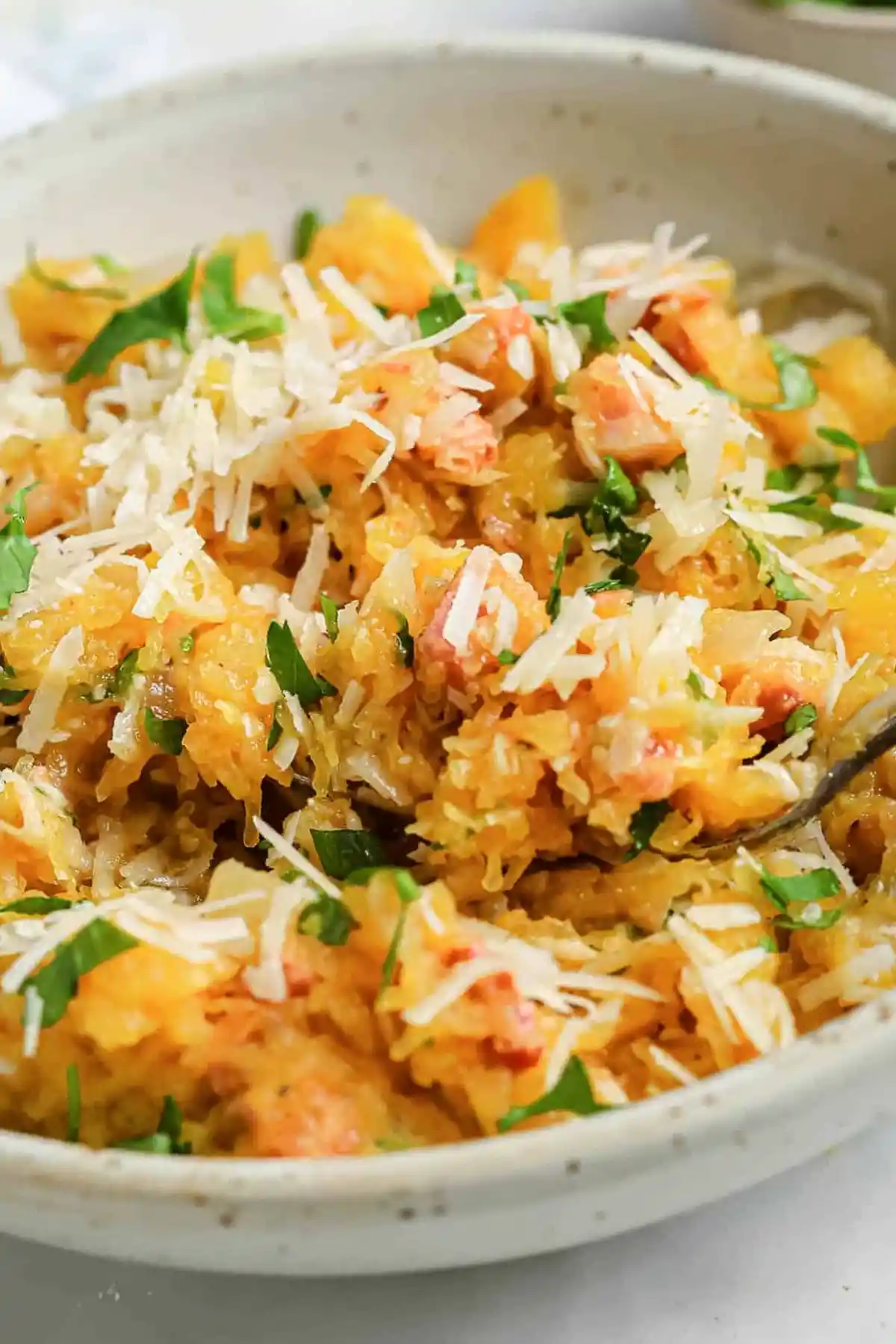
This Low Carb Spaghetti Squash Carbonara has all the delicious flavors of a traditional pasta based carbonara, but in a low carb, keto-friendly version. Perfectly roasted spaghetti squash, with smoky beef bacon, onions, garlic, and a creamy sauce, topped with lots of grated parmesan cheese and fresh parsley.
Ingredients
- 1 large spaghetti squash
- 1 tablespoon olive oil
- sea salt and black pepper
- 8 ounces smoked beef bacon, diced
- 1 small onion, diced
- 3 cloves garlic, minced
- 2 large eggs
- 1 tablespoon chopped fresh flat-leaf parsley, extra for garnish
- ½ cup finely grated Parmesan cheese
- 1 teaspoon sea salt, more to taste
- ¼ teaspoon black pepper
- ½ cup shredded Parmesan cheese
Instructions
- Step 1: Preheat oven to 400°F. Line a rimmed baking sheet with parchment paper.
- Step 2: Cut spaghetti squash in half crosswise, scrape out the seeds, drizzle with olive oil, sprinkle with sea salt and black pepper, and bake cut side down for 45 minutes.
- Step 3: While the squash is roasting, heat a large skillet over medium heat, cook beef bacon until crispy, then add onion and garlic and cook until translucent and soft.
- Step 4: Scrape out the shreds of squash, dab excess moisture with paper towels, and toss the squash into the skillet with the beef bacon, onion and garlic.
- Step 5: In a large mixing bowl, whisk together eggs, parsley, grated Parmesan, sea salt and black pepper, then toss in the squash mixture.
- Step 6: Top with shredded Parmesan and garnish with parsley before serving.
Notes
Dry the spaghetti squash as much as possible to avoid watering down the sauce. Store leftovers in the refrigerator for up to 4 days and reheat in a pan on the stovetop.
- Prep Time: 15 minutes
- Cook Time: 60 minutes
- Category: Pasta Recipes
- Method: Baking
- Cuisine: Italian
Nutrition
- Serving Size: 1 serving
- Calories: 340 kcal
- Sugar: 6 g
- Sodium: 820 mg
- Fat: 19 g
- Saturated Fat: 7 g
- Unsaturated Fat: 12 g
- Trans Fat: 0 g
- Carbohydrates: 15 g
- Fiber: 5 g
- Protein: 13 g
- Cholesterol: 115 mg
Keywords: low carb, keto, gluten free, spaghetti squash, carbonara, Italian