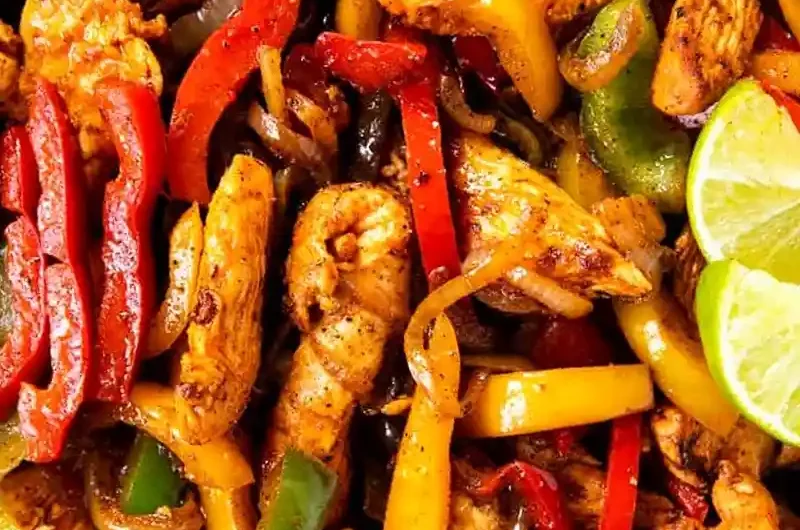
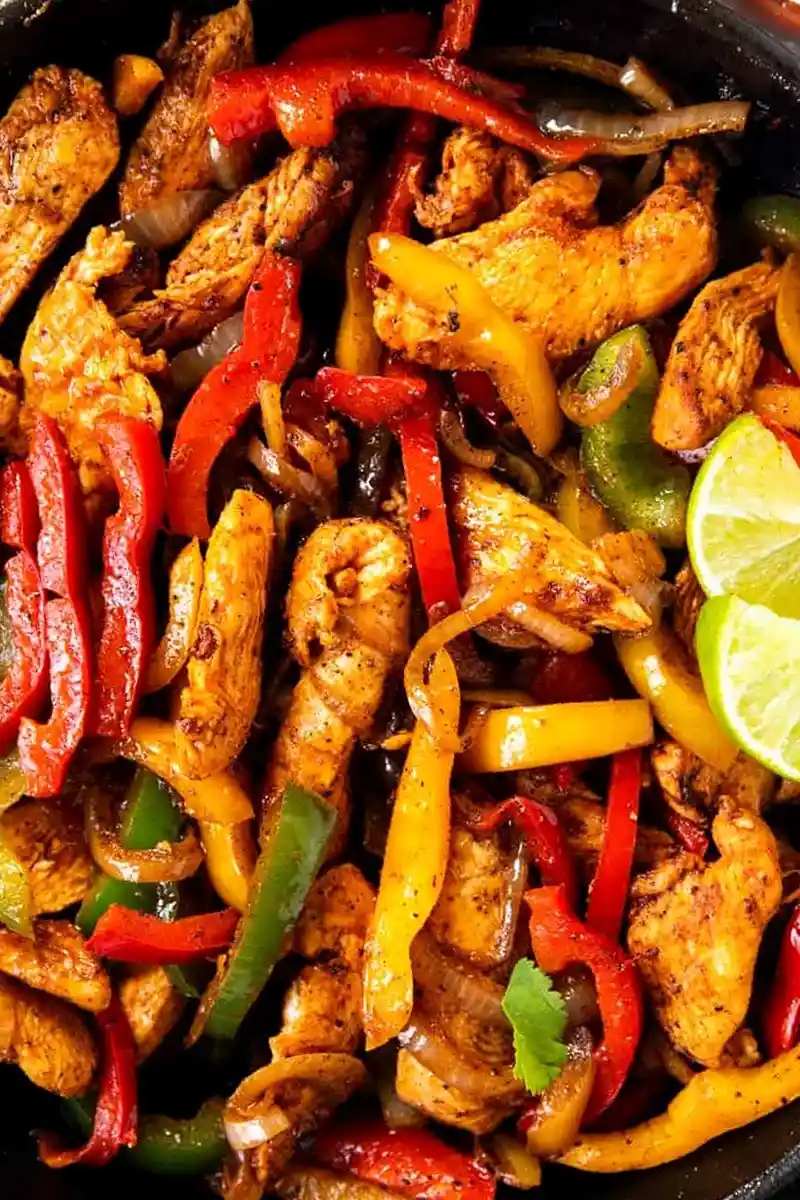
These easy chicken fajitas are a fast and flavorful weeknight meal that comes together in under 30 minutes. They are prepared in a single skillet and served with customizable toppings for a family-friendly dinner experience.
List of ingredients
- 1 pound boneless, skinless chicken breasts – cut into strips for fast cooking.
- 4 tablespoons olive oil – plus extra for frying in the skillet.
- 2 tablespoons lime juice – provides acidity to tenderize the meat.
- 1 ½ tablespoon Fajita seasoning – a blend of spices for authentic flavor.
- 3 medium bell peppers – cored and sliced into strips.
- 1 large onion – peeled, halved and thinly sliced.
- 8 medium flour tortillas – warmed before serving.
- toppings of choice – such as salsa, sour cream and guacamole.
step-by-step instructions
- Season the meat: Toss chicken with 1 tablespoon olive oil, lime juice and Fajita seasoning.
- Sear the chicken: Heat a large skillet over medium-high heat. Add 1 tablespoon olive oil, then cook chicken in two batches until cooked through on the inside and lightly charred on the outside, about 2-3 minutes per side. Remove from skillet and set aside on a plate.
- Sauté the onions: Place onions in skillet and cook over medium-high heat until fully softened and lightly browned, about 4-5 minutes. Remove and set aside on a plate.
- Cook the peppers: Place peppers in skillet and cook over medium-high heat until cooked to your liking.
- Combine and heat: Once peppers are done, place chicken and onions back in skillet and toss for 30-60 seconds over medium-high heat, until heated through.
- Serve: Serve chicken filling immediately with warmed flour tortillas, and your favorite toppings.
Optimizing the Searing Process
Using Cast Iron for Better Char
A cast iron skillet is the best choice for this recipe because it retains heat exceptionally well. This allows the chicken and vegetables to sear quickly without dropping the pan temperature, creating the characteristic charred edges. If using stainless steel, ensure the pan is fully preheated before adding oil.
Avoiding Pan Overcrowding
Cooking the chicken and peppers in batches is essential to prevent steaming. When too much meat is added at once, the temperature drops and moisture releases, which boils the meat instead of searing it. Working in smaller batches ensures a golden-brown crust on every piece.
Monitoring Internal Meat Temperature
Use a digital meat thermometer to ensure the chicken breasts reach an internal temperature of 165°F. Because chicken strips are thin, they can overcook and become dry in a matter of seconds. Removing them precisely when they hit the target temperature preserves the moisture.
Vegetable Preparation and Texture
Consistency in Slicing
Cut the chicken, onions, and bell peppers into uniform strips of similar thickness. This ensures that all components cook at the same rate, preventing some pieces from burning while others remain raw. A sharp chef’s knife or a mandoline can help achieve this consistency.
Managing Onion Texture
Slicing the onion thinly allows it to soften more quickly and integrate better with the other ingredients. Thinly sliced onions caramelize faster over medium-high heat, providing a sweet contrast to the acidity of the lime juice. Avoid chopping them into cubes, as strips are traditional for fajitas.
Controlling Pepper Softness
The cooking time for bell peppers should be adjusted based on your preference for texture. For a crisp-tender result, cook them for only 3-4 minutes. For a fully softened, sweeter pepper, allow them to sauté longer until they show slight brown spots.
Tortilla Preparation Techniques
Stovetop Charring for Flour Tortillas
For the best flavor, warm flour tortillas in a dry skillet over medium heat for about 30 seconds per side. This creates small toasted bubbles and softens the gluten, making the tortilla more pliable. This method adds a toasted aroma that complements the grilled filling.
Oven Warming for Large Groups
If serving a large group, wrap a stack of tortillas in aluminum foil and place them in a 350°F oven for 10-15 minutes. This keeps the tortillas warm and soft throughout the entire meal. This prevents the tortillas from getting cold while the filling is being assembled.
Folding Strategies for Easier Eating
To prevent the filling from falling out, fold the bottom of the tortilla up slightly before folding the sides. This creates a small pocket that catches juices and sauces. This method is particularly useful when using wetter toppings like salsa or guacamole.
Customizing Your Seasoning and Flavors
Homemade Fajita Seasoning Blend
If you do not have a pre-made mix, combine chili powder, cumin, paprika, garlic powder, onion powder, salt, and black pepper. This allows you to control the sodium levels and adjust the smokiness by adding smoked paprika. Store the extra blend in an airtight container for future use.
Adjusting the Acidity Levels
Adding an extra tablespoon of fresh lime juice to the pan right before serving brightens the overall flavor profile. The acid cuts through the richness of the olive oil and the saltiness of the seasoning. Freshly squeezed lime provides a more vibrant taste than bottled concentrate.
Substituting Bell Pepper Varieties
While a mix of red, yellow, and green peppers is visually appealing, you can adjust the colors based on taste. Red and yellow peppers are generally sweeter, while green peppers have a more bitter, earthy flavor. Use only red and orange if you prefer a sweeter vegetable base.
Topping and Side Dish Pairings
Creating a Balanced Topping Station
Offer a variety of textures and temperatures by providing cold sour cream, creamy guacamole, and chunky salsa. The contrast between the hot skillet filling and the chilled toppings is a key part of the fajita experience. Set these out in individual bowls for a self-serve style.
Adding Protein-Rich Sides
Pair the fajitas with a side of refried beans or black beans simmered with cumin and garlic. Beans provide additional fiber and protein, making the meal more satiating. You can warm the beans in a small pot while the chicken is searing.
Incorporating Fresh Herbs
Freshly chopped cilantro added at the very end provides a burst of freshness that balances the cooked spices. Mix the cilantro into the guacamole or sprinkle it directly onto the assembled fajitas. Ensure the cilantro is patted dry after washing to avoid adding excess water to the dish.
Storage and Preservation
Refrigerating Leftover Filling
Store leftover chicken, onions, and peppers in an airtight container in the refrigerator for up to three days. Keep the tortillas and toppings in separate containers to maintain their texture. This prevents the tortillas from becoming soggy from the vegetable juices.
Freezing Cooked Fajita Meat
The cooked chicken and vegetable mixture can be frozen for up to two months. Allow the filling to cool completely before transferring it to a freezer-safe bag. Squeeze out as much air as possible to prevent freezer burn on the vegetables.
Preparing Ingredients in Advance
You can slice the chicken and vegetables up to 24 hours before cooking. Store them in separate containers or toss the chicken in the marinade early to deepen the flavor. This reduces the active prep time on the night of the meal.
Reheating Best Practices
Skillet Reheating for Texture
The best way to reheat fajitas is to place the filling back into a skillet over medium heat with a teaspoon of oil. This restores the sear on the meat and prevents the vegetables from becoming mushy. Heat until steaming and then toss with a fresh squeeze of lime.
Microwave Reheating Tips
If using a microwave, place the filling in a microwave-safe dish and cover it with a damp paper towel. Heat in 30-second intervals, stirring in between, to ensure even heating. Be careful not to overheat, as the chicken can quickly become rubbery.
Softening Cold Tortillas
Avoid microwaving tortillas for too long, as they can become hard or chewy. Instead, wrap them in a damp cloth and microwave for 15-20 seconds, or quickly pass them over an open gas flame using tongs. This restores the necessary flexibility.
Troubleshooting Common Issues
Preventing Soggy Vegetables
Sogginess usually occurs when the pan is not hot enough or is overcrowded. Ensure the oil is shimmering before adding the vegetables and cook them in batches if necessary. High heat evaporates the moisture quickly, allowing the vegetables to brown rather than steam.
Fixing Over-Seasoned Meat
If the fajita seasoning is too salty or intense, add a dollop of sour cream or extra guacamole to the final assembly. The fats in these toppings neutralize the intensity of the salt and spices. You can also add more unseasoned sautéed peppers to balance the ratio.
Managing High Heat Smoke
If the olive oil begins to smoke excessively, reduce the heat slightly or use an oil with a higher smoke point, such as avocado oil. Ensure your kitchen is well-ventilated by turning on the exhaust fan. Cooking at high heat is necessary for the char, but the oil should not reach its burning point.
Frequently Asked Questions
Can I use chicken thighs instead of breasts?
Yes, boneless skinless chicken thighs can be used and are often more juicy than breasts. They are more resistant to overcooking and have a richer flavor. Follow the same slicing and searing instructions as provided for the breasts.
What can I use instead of flour tortillas?
Corn tortillas are a great alternative for those who prefer a different taste or a gluten-free option. Corn tortillas must be warmed more thoroughly than flour tortillas to prevent them from cracking when folded. You can lightly fry them in oil for a softer texture.
How do I prevent the chicken from sticking to the pan?
Ensure the pan is fully preheated and the oil is hot before adding the meat. Do not move the chicken immediately after placing it in the pan; let it sear undisturbed for 2 minutes. This allows a crust to form, which naturally releases the meat from the surface.
Can I make this recipe in a slow cooker?
While this is a skillet recipe, you can slow-cook the chicken and vegetables, but you will lose the charred texture. To get the best of both worlds, slow-cook the meat and then quickly sear it in a hot pan before serving. This adds the necessary flavor and color.
Is it possible to make this dairy-free?
Yes, this recipe is easily made dairy-free by omitting the sour cream. You can substitute sour cream with a cashew-based cream or simply use extra guacamole for creaminess. The chicken and vegetable filling contains no dairy ingredients.
Print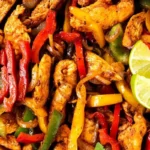
Quick and Flavorful Chicken Fajitas
- Total Time: 30 minutes
- Yield: 8 Fajitas 1x
- Diet: General
Description
Make these easy chicken fajitas your new go-to weeknight dinner! They cook up quickly in a skillet & everyone can serve themselves their favorite toppings.
Ingredients
- 1 pound boneless, skinless chicken breasts (cut into strips)
- 4 tablespoons olive oil (plus extra for frying)
- 2 tablespoons lime juice
- 1 ½ tablespoon Fajita seasoning
- 3 medium bell peppers (cored and sliced)
- 1 large onion (peeled, halved and thinly sliced)
- 8 medium flour tortillas
- toppings of choice (salsa, sour cream and guacamole)
Instructions
- Step: Toss chicken with 1 tablespoon olive oil, lime juice and Fajita seasoning.
- Step: Heat a large skillet over medium-high heat. Add 1 tablespoon olive oil, then cook chicken in two batches until cooked through on the inside and lightly charred on the outside, about 2-3 minutes per side. Remove from skillet and set aside on a plate.
- Step: Place onions in skillet and cook over medium-high heat until fully softened and lightly browned, about 4-5 minutes. Remove and set aside on a plate.
- Step: Place peppers in skillet and cook over medium-high heat until cooked to your liking.
- Step: Once peppers are done, place chicken and onions back in skillet and toss for 30-60 seconds over medium-high heat, until heated through. Serve chicken filling immediately with warmed flour tortillas, and your favorite toppings.
Notes
Use three different colors of bell peppers for a pretty presentation. White or yellow onions work well. Slice chicken, onion, and peppers evenly to ensure uniform cooking. If using a small skillet, cook peppers and the final mixture in batches.
- Prep Time: 15 minutes
- Cook Time: 15 minutes
- Category: Main Course
- Method: Skillet
- Cuisine: Mexican, Tex-Mex
Nutrition
- Serving Size: 1 Fajita
- Calories: 238 kcal
- Sugar: 4 g
- Sodium: 312 mg
- Fat: 11 g
- Saturated Fat: 2 g
- Unsaturated Fat: 8 g
- Trans Fat: 1 g
- Carbohydrates: 20 g
- Fiber: 2 g
- Protein: 15 g
- Cholesterol: 36 mg
Keywords: Chicken Fajitas, Skillet Recipe, Mexican, Tex-Mex, Weeknight Dinner