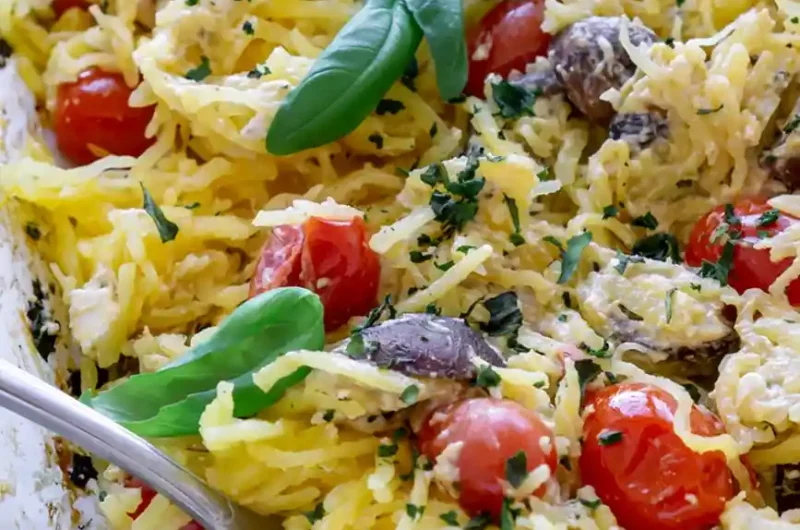
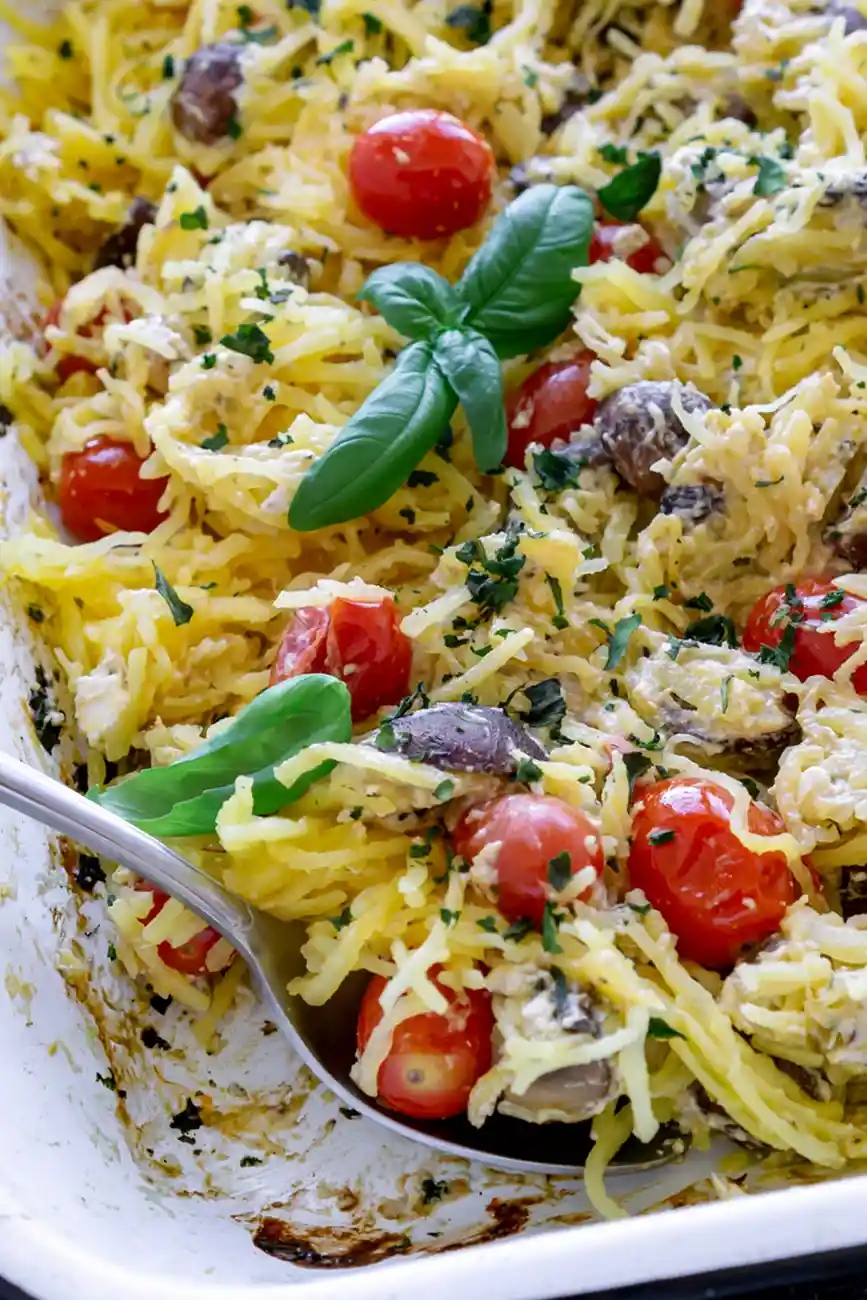
This nutrient-dense meal replaces traditional pasta with tender roasted spaghetti squash and a creamy feta cheese sauce. It is a simple, low-carb dinner option that is perfect for busy weeknights.
List of ingredients
- 1 large spaghetti squash, (or two small ones) – the base of the dish
- 2 cups grape tomatoes – for sweetness and acidity
- 8 ounces baby bella mushrooms, (halved or quartered) – for earthy flavor
- 1/4 cup fresh chopped basil – for brightness and aroma
- 4 cloves garlic, (roughly chopped) – for a savory depth
- 1 tablespoon olive oil – used for roasting
- 1/4 teaspoon red pepper flakes – for a hint of heat
- 1/2 teaspoon fresh cracked black pepper – for basic seasoning
- 8 ounces feta cheese – creates the creamy sauce
- 1/2 lemon, (juice) – to brighten the final flavor
step-by-step instructions
- Prepare the squash: Preheat oven to 375 F. Poke holes in spaghetti squash with a knife and microwave for 5 minutes, then slice in half horizontally (the short way) and remove the seeds.
- Roast the squash: Place the spaghetti squash, cut side down on a rimmed baking sheet with 2 tablespoons of water. Roast spaghetti squash on top rack for 20-30 minutes or until strands are just cooked enough to pull from the shell.
- Assemble the vegetables: While the squash is roasting, place the feta cheese in the middle of an 8X12 baking dish. Arrange the tomatoes, mushrooms and garlic around the cheese.
- Season the dish: Drizzle with olive oil and season with red pepper flakes, black pepper, and half the fresh basil.
- Bake the sauce: Place the baking dish on the bottom rack of the oven and roast for 20-30 minutes, or until the tomatoes are bursting and the feta is golden on top. Add the remaining basil and mix.
- Combine and finish: When the squash is finished, pull the strands with a fork and place them in the baking dish with the feta cheese and vegetables. Mix until fully combined. Add a squeeze of lemon juice and garnish with more fresh basil if you like.
Perfecting the Squash Texture
Preventing Mushy Strands with Salting
After roasting the squash, scrape out the strands and toss them with a small pinch of salt. Let them sit for about 10 minutes to draw out excess moisture. Pat them dry with a paper towel before mixing them with the feta sauce to ensure the sauce adheres better to the squash.
Checking for Ideal Doneness
To determine if the squash is ready, use a fork to gently pull at the edges. The strands should separate easily from the shell without any resistance. If the squash still feels firm or resists the fork, return it to the oven for an additional 5 minutes.
Avoiding Overcooked Squash
Watch for the color of the squash to transition from a light yellow to a deep orange. Overcooking causes the vegetable to lose its noodle-like structure and turn into a puree. Remove the squash from the oven immediately once the strands are tender but still distinct.
Optimizing Oven Rack Placement
Position the squash on the top rack to expose it to more direct heat. This helps the edges brown while the interior steams. Using a rimmed baking sheet prevents the water from leaking and ensures the squash is steamed evenly.
Ingredient Substitutions and Swaps
Alternative Creamy Cheeses
If feta is too salty for your preference, try using goat cheese for a tangier, softer flavor. Boursin cheese is another excellent substitute that offers a built-in garlic and herb profile. These cheeses melt similarly to feta and provide the same creamy consistency.
Using Different Mushroom Varieties
While baby bellas are standard, shiitake mushrooms can add a smokier depth to the dish. Oyster mushrooms provide a softer texture that blends seamlessly with the squash strands. Ensure you keep the chop size consistent so all mushrooms cook at the same rate.
Replacing Grape Tomatoes
Cherry tomatoes are an ideal substitute if grape tomatoes are unavailable. If using larger cherry tomatoes, slice them in half to ensure they burst during the roasting process. This releases the essential juices that create the base of the sauce.
Adjusting the Spice Level
Red pepper flakes provide a mild kick, but you can increase the amount for more heat. If you prefer a dish with no spice, replace the flakes with a pinch of smoked paprika. This maintains the visual appeal without adding any pungency.
Ways to Enhance the Dish
Incorporating Lean Proteins
Stir in grilled chicken breast or roasted turkey to increase the protein content. Shrimp can be added to the vegetable baking dish during the final 5 minutes of roasting. This transforms the recipe from a side dish into a hearty main meal.
Adding Leafy Greens
Fresh spinach or kale can be stirred in at the very end of the cooking process. The residual heat from the squash and feta will wilt the greens perfectly. This adds more vitamins and a vibrant green color to the presentation.
Incorporating Whole Grains
Mix in a half-cup of cooked quinoa or farro for extra fiber and a chewy texture. This is a great option for those who are not strictly following a low-carb diet. Grains help make the meal more filling for larger appetites.
Adding Extra Aromatics
Fresh thyme or rosemary can be added to the vegetable mix before roasting. These herbs complement the earthiness of the mushrooms and the saltiness of the feta. Use them sparingly so they do not overpower the delicate flavor of the squash.
Serving and Pairing Ideas
Complementary Side Salads
Serve this dish with a simple arugula salad tossed in a light lemon vinaigrette. The peppery notes of the arugula contrast well with the creamy, rich feta sauce. Keep the dressing light to avoid overwhelming the main components.
Selecting the Right Bread
Toasted garlic bread is an excellent accompaniment for scooping up the remaining cheese sauce. A crusty sourdough baguette toasted with olive oil is also a great choice. This adds a satisfying crunch to the meal.
Refreshing Beverage Pairings
Pair this meal with a sparkling water infused with fresh cucumber and mint. The coolness of the drink cleanses the palate between bites of salty cheese. A chilled iced tea with lemon is another refreshing, non-alcoholic option.
Plating for Presentation
Serve the dish in a wide shallow bowl to showcase the colors of the tomatoes and basil. Garnish with a few whole grape tomatoes and a sprig of fresh basil on top. This makes the healthy meal look professional and inviting.
Storage and Reheating Guidelines
Refrigerator Storage Life
Store any leftovers in an airtight glass container for up to four days in the refrigerator. The flavors of the garlic and basil often meld and improve after a day of chilling. Ensure the container is sealed tightly to prevent the squash from absorbing other fridge odors.
Best Reheating Techniques
Reheat the dish in a 350 F oven until the cheese is bubbly and the squash is hot. If using a microwave, heat the portion in 30-second intervals and stir in between. The oven method is preferred as it better preserves the texture of the squash.
Restoring Moisture During Reheating
Add a teaspoon of water or a drizzle of olive oil to the leftovers before reheating. This restores the moisture lost during the initial cooling process. It prevents the feta sauce from becoming too thick or grainy when heated.
Freezing the Components
Spaghetti squash does not freeze well because it tends to become watery upon thawing. It is highly recommended to enjoy this dish fresh or from the refrigerator. Avoid freezing the assembled dish to maintain the quality of the vegetables.
Meal Planning and Prep Advice
Pre-Cooking the Squash
You can roast the spaghetti squash a day in advance and store it in the fridge. When you are ready to eat, simply scrape the strands and mix them into the hot cheese and vegetable base. This reduces the active cooking time on the night of the meal.
Advanced Vegetable Preparation
Chop the garlic, mushrooms, and basil a day early. Store them in separate containers or pre-assemble them in the baking dish and cover with foil. This streamlines the process and makes the recipe much faster to execute.
The Cold-Assembly Method
Place the feta and vegetables in the baking dish and refrigerate them until you are ready to roast. This allows the flavors to marinate slightly before they hit the oven. It is a great way to organize your kitchen before guests arrive.
Batch Cooking for the Week
Prepare two large squashes at once to have multiple meals ready for the week. Divide the finished dish into individual portion containers. This makes for an easy, healthy lunch that only requires minimal reheating.
Cooking Troubleshooting
Fixing a Watery Sauce
If the sauce appears too thin, roast the vegetables for an extra 5 to 10 minutes. You can also drain the cooked squash in a colander before mixing it into the dish. This removes the excess water that often thins out the cheese.
Balancing Bland Flavors
If the dish tastes bland, add a pinch of sea salt or an extra squeeze of fresh lemon juice. The acidity of the lemon enhances the inherent saltiness of the feta. Always taste the final mix before serving to ensure a balanced profile.
Preventing Burnt Cheese
If the feta begins to brown too quickly, cover the baking dish loosely with aluminum foil. You can also lower the oven temperature by 25 degrees for the final minutes of cooking. This allows the tomatoes to burst without scorching the cheese.
Dealing with Tough Squash
If the squash is still tough after the recommended time, add a tablespoon of water to the baking sheet and cover it with foil. This creates a steam chamber that softens the fibers more quickly. Roast for another 5 to 10 minutes.
Common Questions
Can you use a microwave for the squash?
Yes, you can microwave the squash for 10 to 12 minutes instead of roasting it. Flip the squash halfway through the process to ensure it heats evenly. Once the strands are tender, scrape them out and proceed with the recipe.
Is spaghetti squash healthier than pasta?
Spaghetti squash is significantly lower in calories and carbohydrates than traditional wheat pasta. It provides more fiber and essential vitamins, particularly Vitamin A and Vitamin C. This makes it a nutrient-dense alternative for low-carb diets.
What is the best type of feta to buy?
Use a block of feta stored in brine for the creamiest result when roasting. Pre-crumbled feta is often coated in anti-clumping agents and may not melt as smoothly. Brined feta maintains more moisture and flavor during the baking process.
How do you store the squash shell?
Save the roasted squash shells for other recipes like stuffed squash or as bowls for soup. You can store empty, cleaned shells in the freezer for later use. Simply thaw and fill them with your desired ingredients.
Print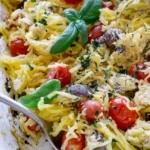
Roasted Tomato Feta Spaghetti Squash
- Total Time: 40 minutes
- Yield: 4 servings 1x
- Diet: Vegetarian, Low-Carb
Description
A low-carb spin to the viral TikTok Feta Tomato Pasta; and it’s so good. This Baked Spaghetti Squash Recipe will be your new weeknight go-to!
Ingredients
- 1 large spaghetti squash (or two small ones)
- 2 cups grape tomatoes
- 8 ounces baby bella mushrooms, halved or quartered
- 1/4 cup fresh chopped basil
- 4 cloves garlic, roughly chopped
- 1 tablespoon olive oil
- 1/4 teaspoon red pepper flakes
- 1/2 teaspoon fresh cracked black pepper
- 8 ounces feta cheese (microbial-rennet)
- 1/2 lemon, juice
Instructions
- Step 1: Preheat oven to 375 F. Poke holes in spaghetti squash with a knife and microwave for 5 minutes, then slice in half horizontally (the short way) and remove the seeds. Place the spaghetti squash, cut side down on a rimmed baking sheet with 2 tablespoons of water. Roast spaghetti squash on top rack for 20-30 minutes or until strands are just cooked enough to pull from the shell.
- Step 2: While the squash is roasting, place the feta cheese in the middle of an 8X12 baking dish. Arrange the tomatoes, mushrooms and garlic around the cheese. Drizzle with olive oil and season with red pepper flakes, black pepper, and half the fresh basil. Place the baking dish on the bottom rack of the oven and roast for 20-30 minutes, or until the tomatoes are bursting and the feta is golden on top. Add the remaining basil and mix.
- Step 3: When the squash is finished, pull the strands with a fork and place them in the baking dish with the feta cheese and vegetables. Mix until fully combined. Add a squeeze of lemon juice and garnish with more fresh basil if you like.
Notes
To prevent mushy noodles, you can salt your spaghetti squash to draw out excess moisture before roasting.
- Prep Time: 10 minutes
- Cook Time: 30 minutes
- Category: Main Course
- Method: Baking
- Cuisine: American
Nutrition
- Serving Size: 1 serving
- Calories: 288 kcal
- Sugar: 12 g
- Sodium: 684 mg
- Fat: 17 g
- Saturated Fat: 9 g
- Unsaturated Fat: 8 g
- Trans Fat: 0 g
- Carbohydrates: 26 g
- Fiber: 5 g
- Protein: 12 g
- Cholesterol: 50 mg
Keywords: low-carb, vegetarian, baked spaghetti squash, feta, tomato, healthy dinner