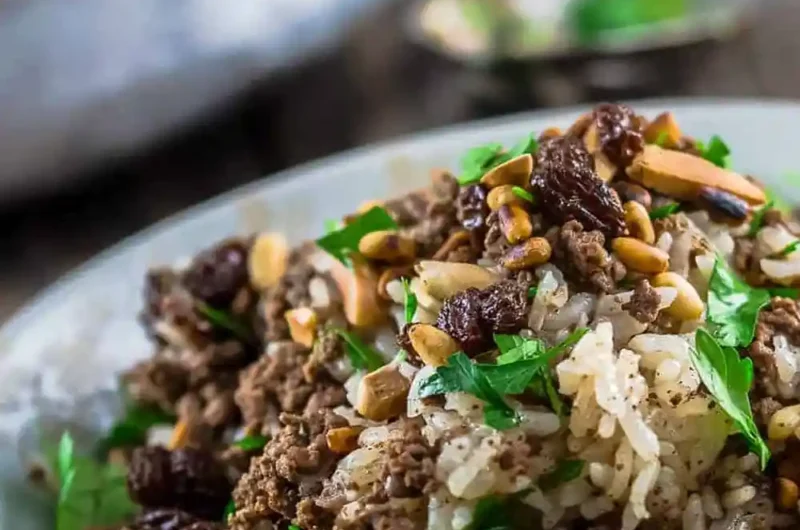
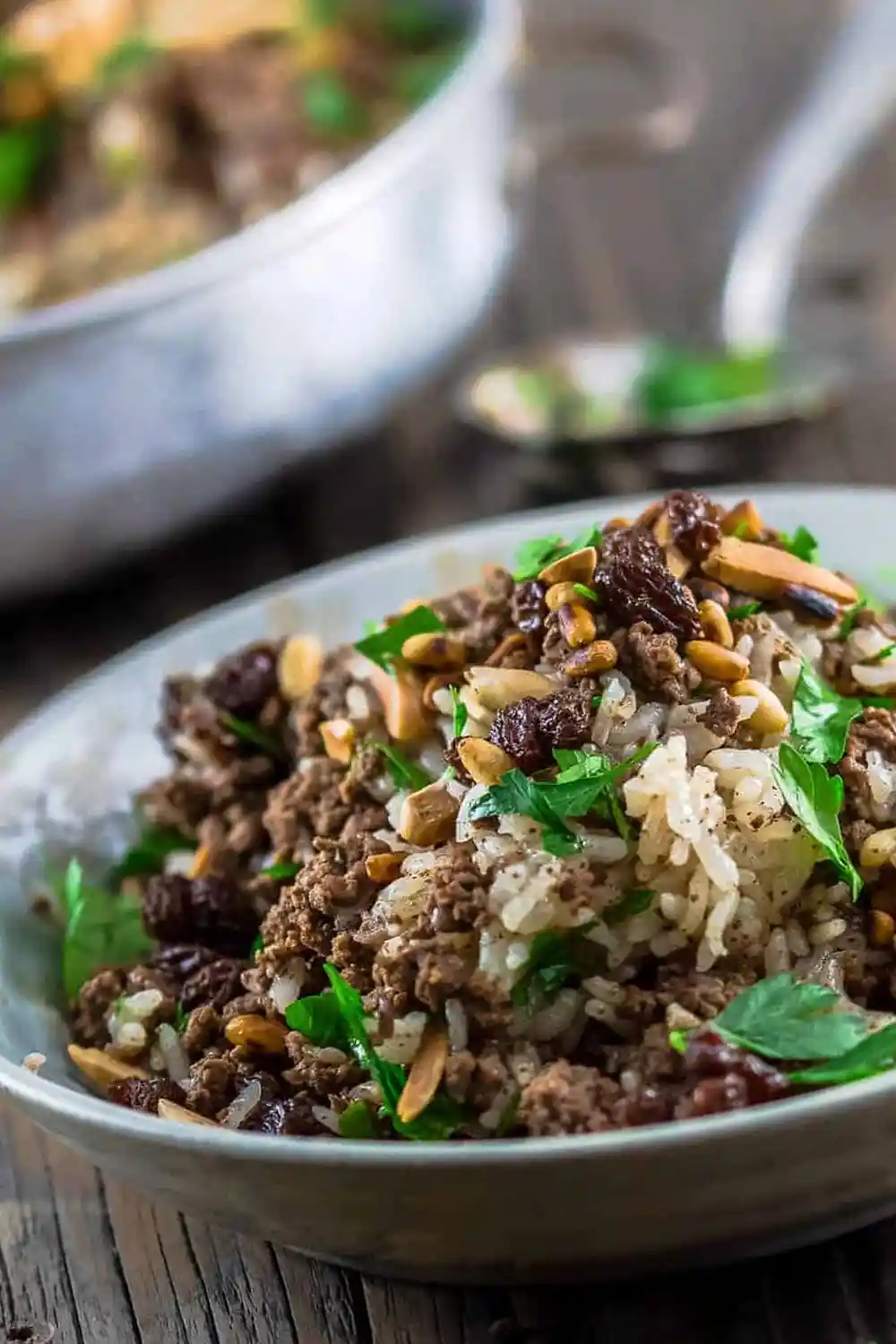
This Lebanese beef and rice pilaf is a hearty dish featuring warm aromatic spices, toasted nuts, and raisins. It serves as a versatile meal that works equally well as a main course or a festive side dish.
List of ingredients
- 1 1/2 cups medium grain rice – rinse and soak for best results.
- Olive oil – used for sautéing and adding richness.
- 1 small red onion, finely chopped – provides a sweet aromatic base.
- 1 lb lean ground beef or lean ground lamb – the primary protein.
- 1 3/4 tsp ground allspice, divided – adds a warm, complex flavor.
- 1/2 tsp minced garlic – for sharp, aromatic depth.
- 3/4 tsp ground cloves, divided – adds a distinct, spicy note.
- 3/4 tsp ground cinnamon, divided – provides a classic Middle Eastern warmth.
- salt and pepper – to taste for seasoning.
- 1/2 cup fresh parsley leaves, roughly chopped – for a fresh, herbal finish.
- 1/3 to 1/2 cup pine nuts, toasted – adds crunch and a buttery flavor.
- 1/3 to 1/2 cup slivered almonds, toasted – adds additional texture.
- 1/2 cup dark raisins – provides small bursts of sweetness.
step-by-step instructions
- Prepare the rice: Soak the rice in cold water for 15 minutes or until a grain can be easily broken between your thumb and index finger. Drain the rice thoroughly before using.
- Sauté the aromatics: Heat 1 tbsp of olive oil in a heavy cooking pot over medium-high heat. Add the finely chopped red onions and cook briefly until softened.
- Brown the meat: Add the ground beef or lamb to the pot. Season with 1 1/4 tsp allspice, minced garlic, 1/2 tsp ground cloves, 1/2 tsp ground cinnamon, salt, and pepper. Stir well and cook until the meat is fully browned, which takes about 8-10 minutes, then drain any excess fat.
- Layer the rice: Spread the drained rice evenly over the browned meat. Season the rice with a pinch of salt and the remaining allspice, ground cloves, and cinnamon.
- Add liquid: Pour 2 1/2 cups of water and 1 tbsp of olive oil over the rice. Turn the heat to high and bring the liquid to a rolling boil.
- Reduce the liquid: Continue boiling until the water level has significantly reduced and is mostly absorbed into the rice.
- Steam the rice: Lower the heat to low, cover the pot with a tight lid, and cook for 20 minutes. Ensure the moisture is completely absorbed and the rice is tender but not sticky.
- Rest the dish: Remove the pot from the heat and let it sit, covered and undisturbed, for 10 minutes. This allows the steam to redistribute for a better texture.
- Platter presentation: Place a large round serving platter over the opening of the pot. Carefully flip the pot contents onto the platter so the meat layer is on top.
- Final garnish: Garnish the top with fresh parsley, toasted pine nuts, slivered almonds, and dark raisins.
Optimal Rice Preparation Techniques
The Importance of Rinsing and Soaking
Rinsing the rice removes excess surface starch that can lead to a gummy or sticky texture. Soaking for 15 minutes allows the grains to hydrate evenly, which ensures they cook at the same rate. This process also reduces the amount of cooking water needed and produces distinct, separate grains.
Selecting the Right Rice Grain
Medium grain rice is traditional for this dish because it holds its shape while remaining tender. Long-grain varieties like Basmati can be used for a fluffier result, though they may require slightly more water. Avoid short-grain sushi rice as it contains too much starch and will become too sticky for a pilaf.
Managing the Boiling and Simmering Phases
The initial high-heat boil is crucial for creating the right steam pressure within the pot. Once the water reduces, switching to a low simmer prevents the bottom from burning while the grains absorb the remaining moisture. Using a heavy-bottomed pot helps distribute heat evenly and prevents hot spots.
Protein and Spice Modifications
Choosing Between Beef and Lamb
Lean ground beef provides a mild, classic flavor that lets the spices shine. Lean ground lamb offers a richer, more gamey taste that is highly traditional in Lebanese cuisine. If using lamb, ensure it is lean to avoid excessive grease in the final rice layer.
Adjusting the Warm Spice Blend
The combination of allspice, cinnamon, and cloves creates the signature Hashweh flavor. If you prefer a more cinnamon-forward taste, you can increase the cinnamon by a quarter teaspoon. For a more pungent profile, slightly increase the cloves, but be cautious as they can easily overpower other ingredients.
Substituting the Nuts for Budget or Taste
Pine nuts are traditional but can be expensive; toasted walnuts or cashews are excellent alternatives. Toasted sunflower seeds can provide a similar crunch for a more affordable option. Always toast the nuts in a dry pan over medium heat until golden brown to maximize their aroma.
Alternative Dried Fruit Options
Dark raisins are used for their concentrated sweetness and chewy texture. Dried currants or chopped dried apricots provide a similar flavor profile with a slightly different tartness. Ensure the fruit is added at the end as a garnish to prevent them from becoming too mushy during the steaming process.
Serving and Pairing Suggestions
Complementary Fresh Salads
Pair this dish with a Fattoush salad, which contains toasted pita bread and sumac for a tangy contrast. A simple chickpea salad with lemon, olive oil, and parsley also balances the richness of the beef. The acidity in these salads cuts through the fat of the meat and the sweetness of the raisins.
Creamy Dip Accompaniments
Roasted garlic hummus or a traditional Baba Ganoush adds a creamy element to the meal. A side of plain Greek yogurt or a garlic-cucumber yogurt sauce (Tzatziki style) provides a cooling effect. These dips help moisten the rice and complement the warm spices.
Creating a Complete Dinner Bowl
To turn this into a modern dinner bowl, place a scoop of Hashweh in the center of a wide bowl. Surround it with fresh sliced cucumbers, cherry tomatoes, and pickled turnips. Add a dollop of hummus and a sprinkle of extra parsley for a visually appealing and nutritionally balanced meal.
Storage and Preservation Guide
Refrigeration Best Practices
Store leftover Hashweh in an airtight glass or plastic container in the refrigerator. It will remain fresh and safe to eat for up to 3 to 4 days. Keep the garnish nuts separate if possible to maintain their crunch until the time of serving.
Freezing Instructions
This dish freezes well for up to two months. Portion the rice into freezer-safe bags or containers, pressing out as much air as possible to prevent freezer burn. Allow the rice to thaw completely in the refrigerator overnight before reheating.
Maintaining Texture During Storage
Rice tends to dry out in the refrigerator as the grains continue to absorb moisture. To prevent this, ensure the container is truly airtight. When reheating, adding a small splash of water or beef broth helps restore the original moist texture.
Effective Reheating Methods
Stovetop Reheating Technique
Place the rice in a small pot over low heat with a tablespoon of water or beef broth. Cover the pot with a lid to create steam, which gently re-hydrates the grains. Stir occasionally to ensure the beef and rice are heated through without scorching the bottom.
Microwave Reheating Tips
Place a portion of the rice in a microwave-safe dish and sprinkle a teaspoon of water over the top. Cover the dish with a damp paper towel to trap the steam. Heat on medium power in 30-second intervals, stirring in between, until the dish is steaming hot.
Oven Warming Method
Transfer the rice to an oven-safe baking dish and cover tightly with aluminum foil to seal in moisture. Heat at 300 degrees Fahrenheit (150 degrees Celsius) for about 15 to 20 minutes. This method is ideal for reheating larger portions while maintaining a consistent temperature.
Troubleshooting Common Issues
Solving Mushy Rice Texture
Mushy rice usually occurs due to too much water or over-stirring during the simmering phase. If the rice is too wet, continue cooking it uncovered on low heat to allow excess moisture to evaporate. In the future, strictly adhere to the soaking and draining steps to remove excess starch.
Fixing Undercooked or Hard Grains
If the rice is still hard after the cooking time, add two to three tablespoons of boiling water. Cover the pot immediately and simmer on the lowest heat setting for another 5 minutes. The added steam will help soften the core of the grains without overcooking the exterior.
Preventing the Bottom from Burning
Burning often happens if the heat is too high during the 20-minute simmering stage. Use a heavy-bottomed pot or a heat diffuser to ensure the heat is distributed evenly. If you notice a burnt smell, immediately remove the top layer of rice and discard the bottom scorched layer.
Frequently Asked Questions
Can I use long-grain rice instead of medium grain?
Yes, you can use long-grain rice or Basmati. You may need to increase the water slightly, and the texture will be fluffier and less cohesive than the traditional medium-grain version.
How do I toast nuts without burning them?
Place the nuts in a skillet over medium heat without any oil. Stir them constantly for 2 to 5 minutes until they smell fragrant and turn golden. Remove them from the pan immediately, as they continue to cook for a short time after being removed from the heat.
Is this dish gluten-free?
Yes, this recipe is naturally gluten-free as it uses rice, meat, and spices. Just ensure that any store-bought broth or seasonings used are certified gluten-free.
Can I make this recipe with ground turkey?
Yes, ground turkey is a suitable alternative to beef or lamb. Since turkey is leaner, you may need to add an extra tablespoon of olive oil to prevent the meat from becoming too dry during the browning process.
Why do I need to let the rice rest for 10 minutes?
Resting allows the remaining steam to redistribute evenly through the pot. This ensures that the rice grains are fully cooked and separate, and it makes the final flipping process much easier and cleaner.
Print
Loaded Lebanese Rice: Hashweh
- Total Time: 50 minutes
- Yield: 6 servings 1x
- Diet: Dairy-Free
Description
A fragrant Lebanese rice pilaf known as hashweh, loaded with lean ground beef or lamb, toasted nuts, and sweet raisins, seasoned with warm Middle Eastern spices.
Ingredients
- 1 1/2 cups medium grain rice
- 2 tbsp olive oil, divided
- 1 small red onion, finely chopped
- 1 lb lean ground beef or lean ground lamb
- 1 3/4 tsp ground allspice, divided
- 1/2 tsp minced garlic
- 3/4 tsp ground cloves, divided
- 3/4 tsp ground cinnamon, divided
- salt and pepper, to taste
- 1/2 cup fresh parsley leaves, roughly chopped
- 1/3 to 1/2 cup pine nuts, toasted
- 1/3 to 1/2 cup slivered almonds, toasted
- 1/2 cup dark raisins
Instructions
- Soak: Soak the rice in cold water for 15 minutes or until you are easily able to break one grain of rice between your thumb and index fingers, then drain well.
- Brown Meat: Heat 1 tbsp of olive oil in a heavy cooking pot. Add chopped red onions, cook on medium-high heat briefly, then add the ground beef. Season the meat mixture with 1 1/4 tsp allspice, minced garlic, 1/2 tsp ground cloves, 1/2 tsp ground cinnamon, salt and pepper. Cook until the meat is fully browned (8-10 minutes) and drain.
- Combine: Top the meat with rice. Season the rice with a little salt and the remainder of the allspice, ground cloves and cinnamon. Add 2 1/2 cups of water and 1 tbsp of olive oil to cover the rice.
- Boil: Turn heat to high and bring the liquid to a rolling boil. Let boil until the liquid has significantly reduced.
- Simmer: Turn heat to low and cover; let cook for 20 minutes or until moisture has completely been absorbed and the rice is no longer hard nor sticky. Remove from heat and set aside for 10 minutes.
- Plate: Uncover the rice pot and place a large round serving platter on the opening of the rice pot. Carefully flip the pot contents onto the platter so that the meat layer now tops the rice.
- Garnish: Garnish with parsley, toasted pine nuts, almonds and raisins.
Notes
Rinse and soak the rice well before cooking to ensure it is not sticky and cooks evenly. After cooking, leave the pot covered and undisturbed for a few minutes before serving to optimize texture and flavor.
- Prep Time: 20 minutes
- Cook Time: 30 minutes
- Category: Side dish/entree
- Method: Stovetop
- Cuisine: Lebanese
Nutrition
- Serving Size: 1 serving
- Calories: 500 kcal
- Sugar: 10 g
- Sodium: 580 mg
- Fat: 20 g
- Saturated Fat: 6 g
- Unsaturated Fat: 14 g
- Trans Fat: 0 g
- Carbohydrates: 45 g
- Fiber: 4 g
- Protein: 25 g
- Cholesterol: 60 mg
Keywords: hashweh, lebanese rice, rice pilaf, middle eastern rice, beef and rice, side dish