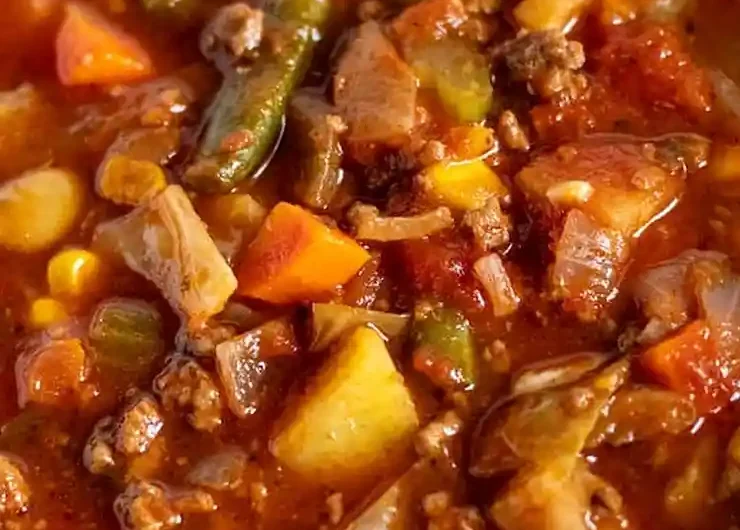
This nutritious vegetable beef soup combines savory ground beef with a wide array of root vegetables in a rich tomato base. It is a filling one-pot meal that provides a comforting and balanced dinner for the whole family.
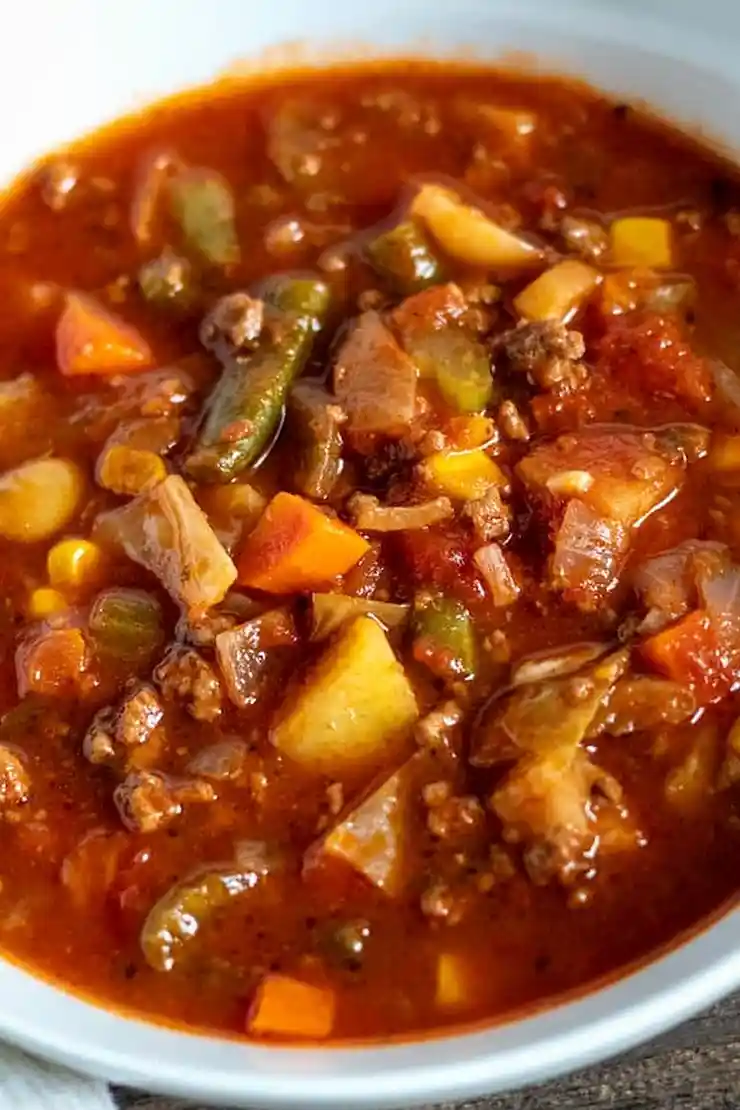
List of ingredients
- 2 yellow onions, diced – provides a sweet aromatic base.
- 2 tablespoons butter – used for sautéing the onions.
- 1½ pound ground beef (ground sirloin preferred) – the primary protein source.
- 2-3 cloves garlic, finely chopped – adds pungent flavor.
- 1 cup potatoes, peeled and cubed (about 2 Yukon Gold) – adds heartiness and thickness.
- 1 cup celery, sliced (about 2 ribs) – contributes a salty, earthy note.
- 1 cup fresh green beans, cut into 1-inch pieces – adds color and snap.
- 1 cup carrots, peeled and diced (about 2 medium) – adds natural sweetness.
- 1 cup parsnips, peeled and diced (about 2 medium) – adds a peppery, root-like flavor.
- 1/2 head small green cabbage, roughly chopped in bite-size pieces – adds bulk and texture.
- 2 tablespoons fresh parsley, chopped – provides a fresh herbal finish.
- ½ teaspoon basil – adds a sweet, peppery aroma.
- ½ teaspoon thyme – adds an earthy, woody scent.
- 3 cups beef broth or stock (preferably unsalted) – the liquid base for the soup.
- 1 cup alcohol-free red wine substitute (such as unsweetened pomegranate juice) – adds depth and acidity.
- 2 (29-ounce) cans whole tomatoes and their juices, crushed by hand (San Marzanos preferred) – creates a rich, thick broth.
- Kosher salt and pepper, to taste – used for seasoning.
- Optional: canned and drained corn, peas or lima beans, about ½ – ¾ cup each – for extra variety.
step-by-step instructions
- Sauté Aromatics: In a large dutch oven, melt 2 tablespoons of butter. Add the diced onions and a pinch of salt, cooking for about 5 minutes until they become translucent.
- Brown the Meat: Stir in the chopped garlic and cook for 1 minute until fragrant. Add the ground beef and use a wooden spoon to break it into small pieces, cooking until the meat is no longer pink.
- Build the Broth: Pour in the crushed tomatoes, beef broth, and the alcohol-free red wine substitute. Stir the mixture well, then add the parsley, basil, and thyme. Season with salt and pepper to taste.
- Combine Vegetables: Stir in the potatoes, celery, green beans, carrots, parsnips, and cabbage, along with any optional vegetables like corn or peas. Stir everything to combine and bring the liquid to a boil.
- Simmer: Reduce the heat to low and cover the pot with a lid. Simmer for 1½ hours, stirring occasionally, until all vegetables are tender and the flavors have fully melded.
Vegetable Preparation Techniques
Cutting Vegetables into Uniform Pieces
Ensure all root vegetables, such as carrots and potatoes, are cut into similar bite-sized cubes. This ensures that every piece cooks at the same rate and prevents some vegetables from turning to mush while others remain hard.
Preparing Parsnips and Carrots
Peel the parsnips and carrots thoroughly before dicing to remove the tough outer skin. Cutting these into 1-inch chunks allows them to hold their shape during the long simmering process.
Chopping Cabbage for the Right Texture
Cut the cabbage into rough, bite-sized pieces rather than thin shreds. Larger pieces of cabbage maintain a better texture and do not dissolve into the broth during the 90-minute cook time.
Meat Selection and Handling
Using Ground Sirloin for Less Grease
Choosing ground sirloin or a leaner blend of beef reduces the amount of excess fat in the final soup. This results in a cleaner flavor profile and a broth that is less oily on the surface.
Breaking Up Meat for Even Distribution
Use a sturdy wooden spoon or a potato masher to break the ground beef into very small crumbles while browning. Small crumbles ensure that every spoonful of soup contains a bit of protein rather than large chunks of meat.
Skimming Fat from the Surface
If you notice a layer of fat floating on top of the soup after simmering, use a wide spoon or a piece of paper towel to skim it off. This lightens the dish and allows the tomato and herb flavors to shine through.
Enhancing the Flavor Profile
Adjusting the Acidity Levels
The use of tomatoes and the alcohol-free red wine substitute provides a necessary acidity to balance the richness of the beef. If the soup tastes too acidic, a small pinch of sugar can neutralize the sharpness.
Adding Umami with Cheese Rinds
If you have a leftover rind from a piece of Parmesan cheese, drop it into the pot during the simmering phase. The rind releases salty, savory notes into the broth, adding a professional depth of flavor.
Optimizing Herb Usage
Adding the dried basil and thyme at the beginning allows the heat to release their essential oils. Fresh parsley is added early here, but for a brighter color, you can save half of the parsley to stir in just before serving.
Ingredient Substitutions and Variations
Swapping Fresh Green Beans for Frozen
If fresh green beans are unavailable, you can use frozen cut beans. Since frozen beans are often blanched, add them during the last 30 minutes of cooking to prevent them from overcooking.
Potato Varieties for Different Textures
Yukon Gold potatoes are ideal because they hold their shape but have a creamy texture. If you prefer a thicker soup, use Russet potatoes, as they break down more easily and naturally thicken the broth.
Incorporating Additional Legumes
Adding canned lima beans or peas increases the protein and fiber content of the dish. Always drain and rinse canned legumes before adding them to the pot to avoid altering the color of the broth.
Cooking and Simmering Guidance
Controlling the Heat to Avoid Burning
Once the soup reaches a boil, it is critical to drop the heat to low immediately. A rapid boil can cause the vegetables to break apart and may lead to the bottom of the pot scorching.
Managing Liquid Levels
The vegetables will absorb some of the liquid during the 1½ hour simmer. If the soup becomes too thick or the vegetables are not fully submerged, add an additional cup of beef broth or water.
Recognizing When Vegetables are Perfectly Tender
Test the hardest vegetable, usually the carrots or parsnips, with a fork. When the fork slides in easily with no resistance, the soup is ready to be served.
Serving and Pairing Ideas
Ideal Side Dishes for Beef Soup
Serve this soup with a side of steamed greens or a crisp garden salad to add a fresh contrast. A light side dish prevents the meal from feeling overly heavy.
Adding Fresh Garnishes Before Serving
Top each bowl with a sprinkle of fresh chopped parsley or a few slices of green onion. A dollop of sour cream or a sprinkle of microbial-rennet cheese can also add a creamy element.
Pairing with Crusty Breads
A toasted baguette or a warm piece of sourdough bread is perfect for dipping into the rich tomato broth. Garlic bread is another excellent option that complements the garlic used in the base.
Storage and Preservation
Cooling and Refrigeration Guidelines
Allow the soup to cool to room temperature before transferring it to airtight containers. Store the soup in the refrigerator for up to 4 days to maintain freshness and safety.
Freezing the Soup for Later Use
This soup freezes well for up to 3 months. However, be aware that potatoes may change texture slightly upon thawing, becoming softer than they were originally.
Preventing Potato Oxidation in Storage
Store the soup in containers with as little air space as possible. This prevents the potatoes and other vegetables from oxidizing, which can lead to a duller color over time.
Reheating Best Practices
Stovetop Reheating Methods
Reheat the soup slowly over medium-low heat in a pot. Stir occasionally to ensure the bottom does not burn and to redistribute the ingredients evenly.
Microwave Reheating Tips
Place the soup in a microwave-safe bowl and cover it with a lid or damp paper towel. Heat in short bursts of 2 minutes, stirring in between to avoid cold spots.
Adjusting Consistency After Reheating
Soup often thickens in the refrigerator as the potatoes release starches. Add a splash of water or beef broth during the reheating process to restore the original consistency.
Common Troubleshooting Questions
Why is my soup too thin?
If the broth is too watery, simmer the soup without the lid for the last 20 minutes of cooking. This allows the liquid to reduce and the flavors to concentrate, naturally thickening the base.
How do I prevent the vegetables from becoming mushy?
Ensure you are simmering on low heat rather than a rolling boil. Additionally, avoid over-stirring the pot, as frequent agitation can break down the soft edges of the vegetables.
What is a good substitute for a Dutch oven?
A heavy-bottomed stockpot or a large slow cooker can be used instead. If using a slow cooker, brown the meat and onions in a pan first, then transfer everything to the crockpot and cook on low for 6-8 hours.
Print
Hearty Vegetable Beef Soup
- Total Time: 2 hours
- Yield: 10 servings 1x
- Diet: General
Description
Hearty homemade soup with ground beef and lots of veggies in a savory tomato and beef broth.
Ingredients
- 2 yellow onions, diced
- 2 tablespoons butter
- 1½ pound ground beef
- 2–3 cloves garlic, finely chopped
- 1 cup potatoes, peeled and cubed
- 1 cup celery, sliced
- 1 cup fresh green beans, cut into 1-inch pieces
- 1 cup carrots, peeled and diced
- 1 cup parsnips, peeled and diced
- 1/2 head small green cabbage, roughly chopped in bite-size pieces
- 2 tablespoons fresh parsley, chopped
- ½ teaspoon basil
- ½ teaspoon thyme
- 3 cups beef broth
- 1 cup beef broth mixed with 1 tablespoon balsamic vinegar
- 2 (29-ounce) cans whole tomatoes and their juices, crushed by hand
- Kosher salt and pepper, to taste
- Optional: canned and drained corn, peas or lima beans, about ½ – ¾ cup each
Instructions
- Sauté: In a large dutch oven, melt 2 tablespoons butter. Add chopped onions, a pinch of salt, and cook until translucent, about 5 minutes.
- Brown: Add garlic, cook 1 minute until fragrant and then add the ground beef. Break up beef with wooden spoon and cook until no longer pink.
- Combine: Add the tomatoes, beef broth and beef broth with balsamic vinegar. Stir well and then add the parsley, basil and thyme. Season with salt and pepper.
- Simmer: Add the vegetables: potatoes, celery, green beans, carrots, parsnips and cabbage (and any other optional veggies). Stir well to combine and bring to a boil. Reduce heat to low, cover and simmer for 1½ hours, stirring occasionally, until the vegetables are all tender and the soup broth has fully developed.
Notes
Cut vegetables in uniform bite-size pieces. If soup seems too thick, thin it with some beef broth. Depending on the fat content of the beef, skim any excess fat or foam from the surface if needed.
- Prep Time: 15 minutes
- Cook Time: 1 hour 45 minutes
- Category: Soup
- Method: Simmering
- Cuisine: American
Nutrition
- Serving Size: 1 serving
- Calories: 266 kcal
- Sugar: 4 g
- Sodium: 362 mg
- Fat: 13 g
- Saturated Fat: 6 g
- Unsaturated Fat: 6 g
- Trans Fat: 1 g
- Carbohydrates: 18 g
- Fiber: 4 g
- Protein: 16 g
- Cholesterol: 52 mg
Keywords: vegetable beef soup, ground beef soup, hearty soup, comfort food