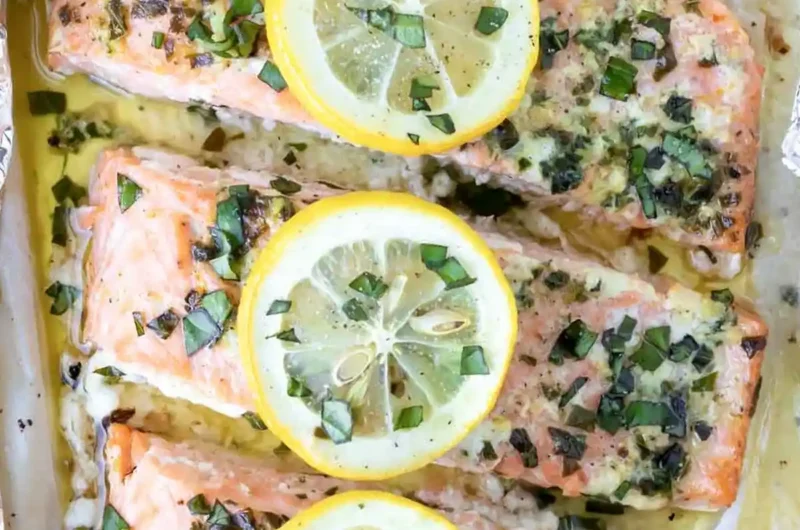
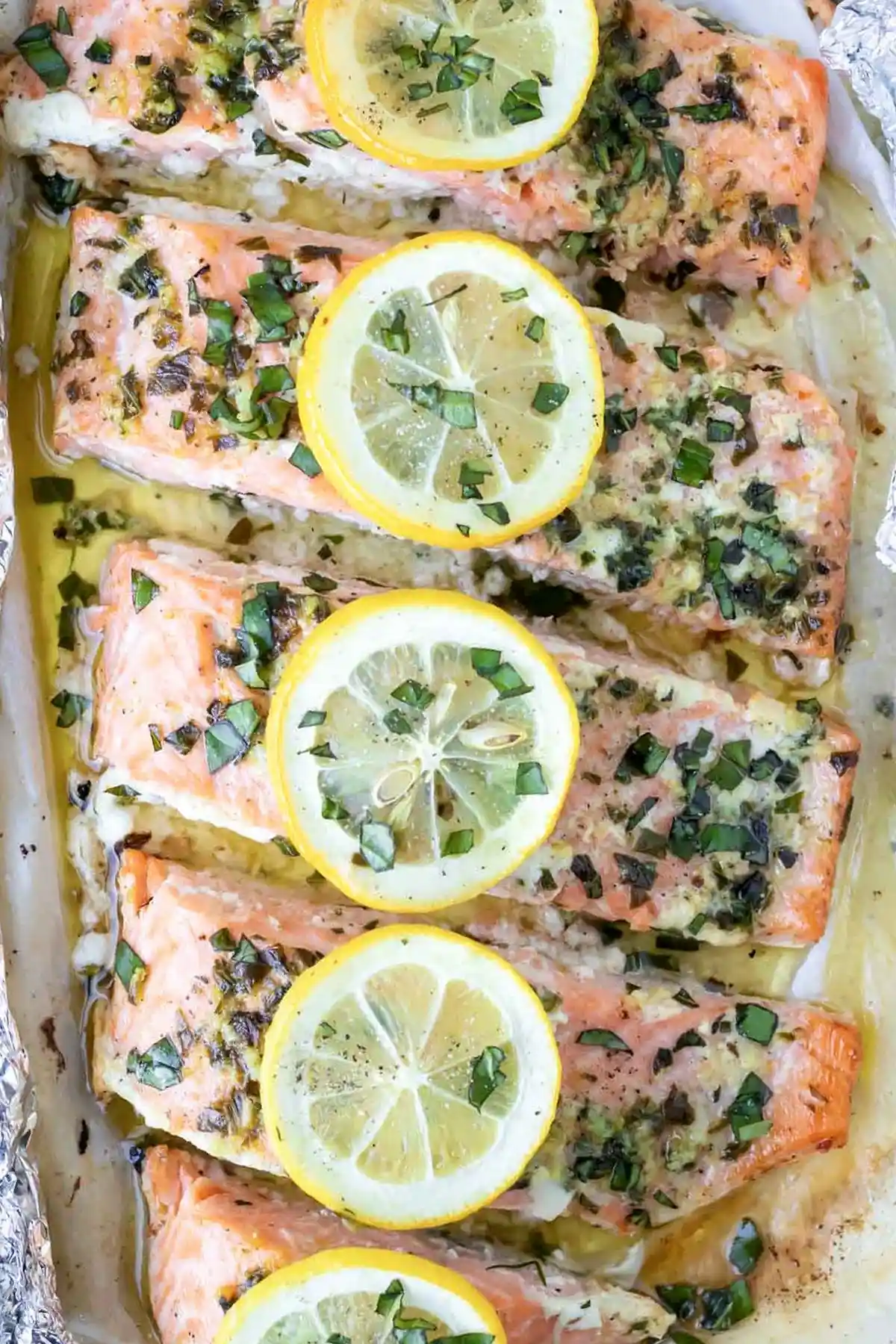
This lemon garlic baked salmon is a quick and healthy meal ready in under 30 minutes. Using the foil packet method ensures the fillets stay moist and tender while infusing with citrus and garlic flavors.
List of ingredients
- 1 ¼ pounds salmon (skin on, cut into 5 fillets) – center cut recommended for even cooking.
- 5 tablespoons salted butter (melted) – provides a rich base for the sauce.
- 2 garlic cloves (finely minced) – use a press for better distribution.
- 2 tablespoons finely chopped fresh basil – adds a bright, peppery note.
- 2 tablespoons lemon juice (divided) – use fresh juice for the best acidity.
- ¾ teaspoon salt – enhances all the natural flavors.
- ¼ teaspoon pepper – provides a subtle warmth.
- 5 lemon slices – used for topping and aromatic steaming.
step-by-step instructions
- Preheat: Set your oven to 375ºF.
- Prepare Sauce: In a small mixing bowl, whisk together the melted salted butter, minced garlic, chopped fresh basil, lemon juice, salt, and pepper until well combined.
- Set Up Baking Sheet: Place a large piece of aluminum foil on a large baking sheet. Lay a piece of parchment paper, slightly smaller than the foil, on top of the foil. Arrange the five salmon fillets on the parchment paper, leaving a small gap between each piece.
- Season Fillets: Pour half of the prepared lemon-basil butter sauce over the salmon fillets. Reserve the remaining half of the sauce for the final step. Place one lemon slice on top of each fillet.
- Bake in Packet: Fold the parchment paper and aluminum foil over the salmon and seal the edges tightly to create a closed packet. Bake for 14-16 minutes without opening the packet.
- Broil for Finish: Carefully open the foil packet. Pour the remaining lemon-basil sauce over the fillets. Fold back the foil edges to keep the butter contained, ensuring any protruding parchment paper is folded down to prevent burning. Place the pan under a high broiler for 5-7 minutes.
- Serve: Watch the fish closely during the broiling phase. Once the top begins to brown slightly, remove from the oven. Serve immediately with extra fresh lemon juice and basil if desired.
Selecting the Best Salmon
Wild-Caught Salmon Selection
Wild-caught salmon typically has a deeper red color and a more robust, intense flavor. Because it is leaner than farmed salmon, it benefits significantly from the butter sauce used in this foil packet method, which prevents the meat from drying out.
Farm-Raised Salmon Characteristics
Farm-raised salmon usually has a lighter pink hue and a higher fat content. This extra fat makes the fillets more forgiving during the baking process, resulting in a very buttery and tender texture that flakes easily with a fork.
Using Center-Cut Fillets
When purchasing a whole side of salmon, choose a center-cut piece. This ensures that each of the five fillets is roughly the same thickness, which prevents the thinner tail pieces from overcooking while the thicker center remains raw.
Thawing Frozen Salmon Properly
If using frozen fillets, thaw them completely in the refrigerator overnight. Once thawed, pat the salmon dry with paper towels to remove excess moisture; this ensures the butter sauce adheres better to the fish and prevents the packet from becoming too watery.
Ingredient Optimization Tips
Selecting Fresh Lemon Juice
Always use freshly squeezed lemon juice rather than bottled concentrates. Bottled juices often contain preservatives and have a harsh, metallic tartness that can overpower the delicate flavor of the salmon and fresh basil.
Using Fresh Basil Leaves
Fresh basil is essential for the aromatic quality of this dish. Avoid using dried basil, as it lacks the brightness and peppery sweetness required to balance the richness of the melted butter and garlic.
Mincing Garlic for Even Flavor
Use a garlic press or a very sharp knife to mince the garlic cloves finely. This prevents large chunks of garlic from clustering on a single fillet, ensuring that the garlic flavor is distributed evenly across all five portions.
Selecting High-Quality Butter
Using a high-fat, grass-fed butter can elevate the richness of the sauce. Salted butter is called for in the recipe, but if you use unsalted butter, add an extra pinch of salt to the sauce to maintain the flavor balance.
Dairy-Free Butter Alternatives
For those avoiding dairy, plant-based buttery sticks or a mixture of olive oil and a small amount of nutritional yeast can be used. This maintains the fat content needed for the basting process while keeping the dish plant-based.
Perfecting the Cooking Technique
The Purpose of Foil Packets
Baking in a foil packet creates a steam chamber that traps moisture and aromatic vapors. This process effectively bastes the salmon in the lemon-garlic butter, ensuring the fish remains succulent even at high oven temperatures.
Layering with Parchment Paper
Adding a layer of parchment paper between the fish and the foil prevents the salmon skin from sticking to the aluminum. It also provides an extra barrier that helps the fish cook more evenly by distributing heat gently.
Managing Oven Temperatures
Maintaining the oven at exactly 375ºF is important for the initial bake. If the oven is too hot, the outside of the salmon may overcook before the center reaches the safe internal temperature.
Testing for Doneness with a Fork
The salmon is done when the flesh changes from a translucent raw pink to an opaque light pink. A fork should easily slide between the flakes of the fish with very little resistance.
Using a Meat Thermometer
For maximum precision, use an instant-read thermometer. The salmon is perfectly cooked when the thickest part of the fillet reaches an internal temperature of 145ºF, which is the USDA recommended safety standard.
Handling the Broiler Safely
The broiler adds a caramelized finish to the butter sauce, but it can burn quickly. Keep the oven door slightly cracked if necessary and watch the fillets constantly during the final 5-7 minutes to prevent scorching.
Recipe Variations and Customs
Adding Low-Starch Vegetables
You can turn this into a complete meal by adding vegetables directly into the foil packet. Thinly sliced asparagus, zucchini rounds, or cherry tomatoes work well, as they cook in the same 14-16 minute window as the salmon.
Substituting Different Fresh Herbs
While basil is the primary herb, you can swap it for fresh dill or parsley for a more traditional seafood flavor. Rosemary or thyme can also be used, though they are stronger and should be used in slightly smaller quantities.
Adding Heat with Chili Flakes
To add a spicy element, mix a pinch of crushed red pepper flakes into the melted butter sauce. Alternatively, a small drizzle of sriracha over the fillets before broiling provides a sweet and spicy glaze.
Incorporating Lemon Zest
For an even more intense citrus punch, grate the zest of one lemon into the butter mixture. The zest contains essential oils that provide a deeper lemon aroma than the juice alone.
Meal Pairing Ideas
Pairing with Roasted Cruciferous Veggies
Roasted cauliflower or honey-glazed broccoli complement the acidity of the lemon salmon. These vegetables provide a charred contrast to the tender, steamed texture of the fish.
Serving with Root Vegetables
Hearty sides like roasted sweet potato cubes or boiled carrots balance the lightness of the seafood. The natural sweetness of these vegetables pairs well with the savory garlic butter sauce.
Quick Air Fryer Side Options
If you are short on time, use an air fryer to prepare Brussels sprouts or asparagus. These quick-cooking sides maintain a crisp texture that contrasts nicely with the flaky salmon.
Storage and Reheating
Refrigeration and Container Choice
Store leftover salmon in an airtight glass container to prevent the fish from absorbing other odors in the fridge. Properly sealed salmon will remain fresh and safe to eat for up to three days.
Freezing Guidelines for Salmon
Leftover cooked salmon can be frozen for up to three months. Wrap the fillets tightly in plastic wrap and then place them in a heavy-duty freezer bag to prevent freezer burn.
Gentle Oven Reheating
To avoid drying out the fish, reheat salmon in a 300ºF oven for 5-7 minutes. This low temperature warms the fish through without overcooking the delicate proteins.
Stovetop Reheating Methods
You can also reheat the fillets in a covered skillet over medium-low heat. Add a teaspoon of water or butter to the pan to create a small amount of steam, which keeps the fish moist.
Frequently Asked Questions
Why bake salmon in foil?
Baking in foil locks in the natural juices and the added butter sauce, preventing the salmon from drying out. It also makes cleanup nearly effortless since the baking sheet stays clean.
How do I know when salmon is fully cooked?
Salmon is fully cooked when it reaches an internal temperature of 145ºF or when the meat flakes easily with a fork and the color is opaque throughout.
Can I use frozen salmon?
Yes, but it must be completely thawed in the refrigerator before cooking. Cooking salmon directly from frozen can lead to uneven cooking and excess water in the foil packet.
Can I bake this salmon without foil?
You can use a covered baking dish instead of foil packets. However, you will need to baste the fillets with the butter sauce halfway through the cooking time to prevent the top from drying out.
Print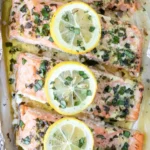
Lemon Garlic Baked Salmon in Foil
- Total Time: 25 minutes
- Yield: 6 servings 1x
- Diet: General
Description
Simple ingredients yield delicious results in this easy Lemon Garlic Baked Salmon recipe, which can be made in 30 minutes or less! Salmon fillets are drizzled with a citrusy garlic butter, topped with fresh lemon slices, wrapped in a foil packet, and oven baked until tender and flaky.
Ingredients
- 1 ¼ pounds salmon (skin on, cut into 5 fillets)
- 5 tablespoons salted butter (melted)
- 2 garlic cloves (finely minced)
- 2 tablespoons finely chopped fresh basil
- 2 tablespoons lemon juice (divided)
- ¾ teaspoon salt
- ¼ teaspoon pepper
- 5 lemon slices
Instructions
- Step 1: Preheat the oven to 375℉.
- Step 2: Whisk melted butter, garlic, basil, lemon juice, salt, and pepper in a small bowl.
- Step 3: Place a large sheet of aluminum foil on a large baking sheet. Layer a piece of parchment paper that is slightly smaller than the foil on top. Place salmon fillets on the paper with a slight gab between each one.
- Step 4: Pour half of the lemon-basil sauce over salmon fillets. Reserve the remaining sauce for later. Top each fillet with one lemon slice.
- Step 5: Close paper and aluminum foil around salmon to make a packet. Bake salmon for 14-16 minutes without undoing the foil packet.
- Step 6: Open the foil packet, pour the remaining lemon-basil sauce over fillets and return salmon to oven under a High broil for 5-7 minutes. (Make sure you tear off or fold down any parchment paper that might be sticking up so it doesn’t burn!)
- Step 7: Watch salmon closely while broiling. Once it starts to brown slightly, remove from the oven and serve immediately with additional fresh lemon juice and basil, if desired.
Notes
For the best flavor and texture, completely thaw previously frozen salmon in the refrigerator overnight and pat dry before seasoning.
- Prep Time: 5 minutes
- Cook Time: 20 minutes
- Category: Main Course
- Method: Baking
- Cuisine: Seafood
Nutrition
- Serving Size: 1 fillet
- Calories: 226 kcal
- Sugar: 1 g
- Sodium: 369 mg
- Fat: 16 g
- Saturated Fat: 7 g
- Unsaturated Fat: 9 g
- Trans Fat: 0 g
- Carbohydrates: 1 g
- Fiber: 1 g
- Protein: 19 g
- Cholesterol: 78 mg
Keywords: lemon baked salmon, foil packet salmon, garlic butter salmon, healthy seafood dinner