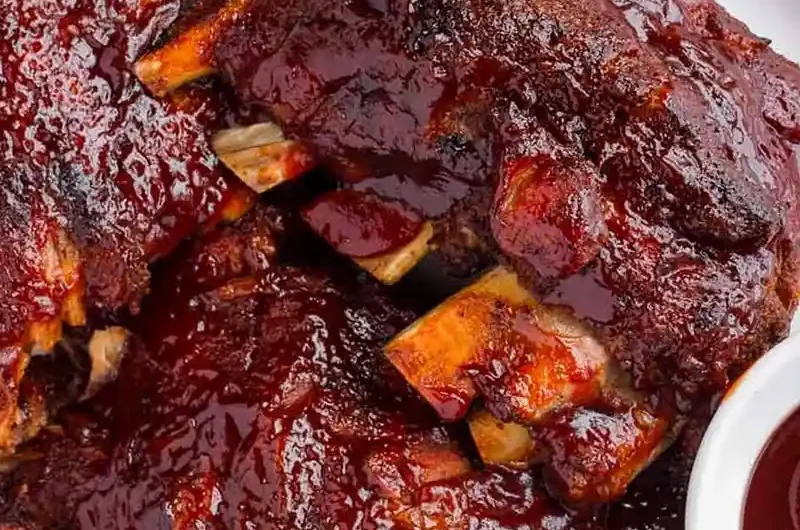
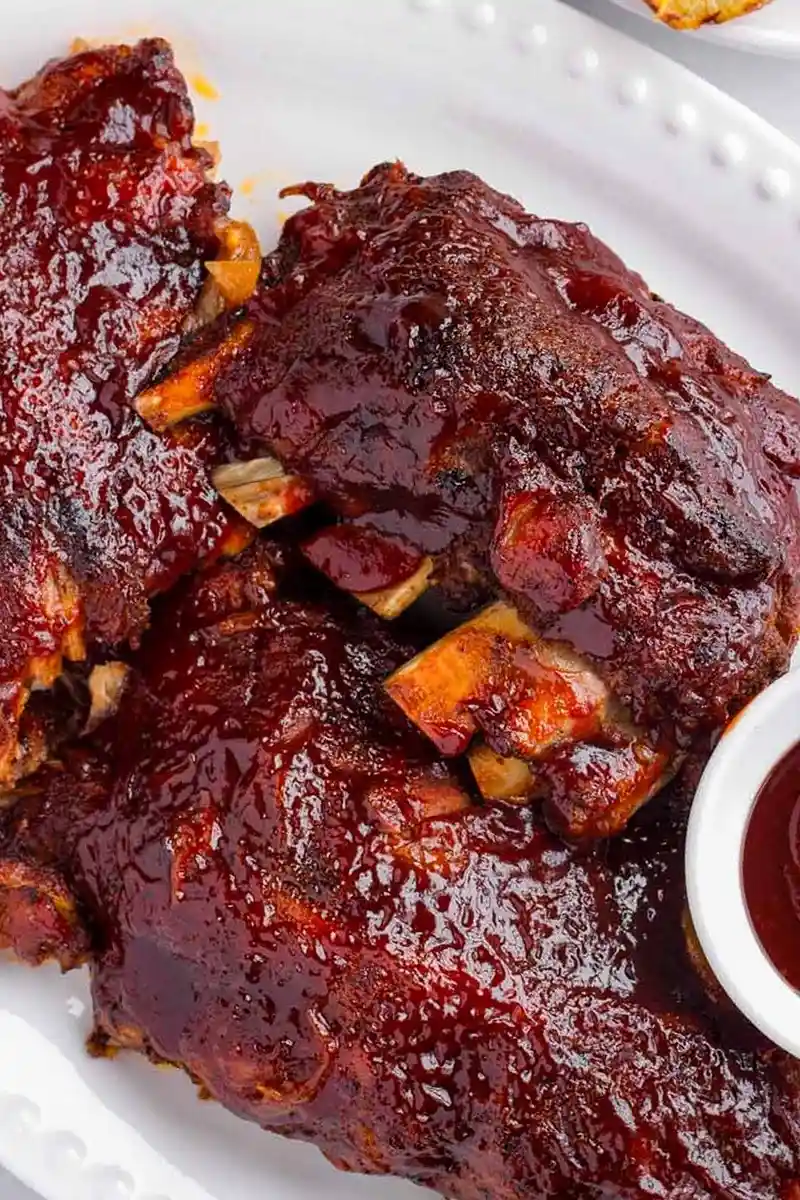
These slow cooker BBQ beef ribs are incredibly tender and fall off the bone with ease. This method utilizes a savory dry rub and a final broil to achieve a professional caramelized finish. It is a low-maintenance approach to creating a rich, hearty meal for your family.
List of ingredients
- 3 pounds baby back beef ribs – provides a rich, meaty texture.
- 1/2 yellow onion, sliced – creates an aromatic base for the braise.
- 2 cloves garlic, minced – adds depth and savory notes.
- 1/2 cup water – ensures enough moisture for the slow cooking process.
- 1 cup favorite BBQ sauce – used for the final glazing and serving.
- 1 teaspoon brown sugar – helps the rub caramelize and adds sweetness.
- 1 teaspoon smoked paprika – provides a distinct woody, smoky flavor.
- 1 teaspoon chili powder – introduces a mild, warm spice.
- 1 teaspoon ground cumin – adds an earthy undertone.
- 1 teaspoon garlic powder – reinforces the savory garlic profile.
- 1 teaspoon onion powder – complements the fresh sliced onions.
- 2 teaspoons Kosher salt – balances the flavors and seasons the meat.
- 1 teaspoon ground black pepper – adds a classic sharp finish.
step-by-step instructions
- Remove the membrane: On one end of the ribs, run a paring knife through the outer membrane layer until it begins to loosen. Carefully peel the membrane away from the bone all the way to the other side.
- Apply the dry rub: Pat the ribs dry with paper towels to ensure the seasoning sticks. In a bowl, combine all the dry rub ingredients and distribute them evenly over both sides of the ribs.
- Arrange in slow cooker: Place the ribs in a large slow cooker, either lining them up or curling them against the walls of the pot. Pour the sliced onions, minced garlic, and water into the center of the cooker.
- Slow cook: Cover the pot with a tight-fitting lid. Cook on the LOW setting for 6 hours, or 6.5 hours if using a 4-pound rack, until the meat is tender.
- Transfer to pan: Carefully lift the ribs from the cooker and place them on a large sheet pan. If the ribs are too large to move, cut them into two or three pieces before lifting with a spatula.
- Broil and glaze: Brush the ribs generously with your favorite BBQ sauce. Place them on the middle oven rack and broil for 2 to 4 minutes until the sauce is bubbly and caramelized.
- Serve: Plate the ribs and apply additional BBQ sauce if desired. You may also serve the tender slow-cooked onions from the pot as a side.
Slow Cooker Equipment Guide
Selecting a 6-Quart Capacity Pot
A 6-quart slow cooker is the ideal size for a standard 3 to 4 pound rack of beef ribs. This size allows the meat to fit without being overly crowded, which helps the heat circulate. Ensure your pot is large enough to accommodate the ribs without preventing the lid from closing fully.
Choosing Between Round and Oval Shapes
Both round and oval slow cookers work well for this recipe. Oval cookers often make it easier to lay the ribs flat, while round cookers are better for curling the ribs around the edges. The curling method is preferred as it keeps the meat from sitting directly in the water.
Importance of a Tight Lid Seal
A secure lid is essential to keep the moisture and heat trapped inside the vessel. If the lid does not seal properly, the liquid will evaporate too quickly, potentially leaving the meat tough. Avoid tilting the lid or using foil covers that may let steam escape.
Beef Rib Selection and Preparation
Identifying Quality Beef Ribs
Choose baby back beef ribs or short ribs with a good balance of meat and fat. Look for cuts that have consistent thickness to ensure they cook evenly throughout the 6-hour window. Meaty ribs will produce a more succulent result that holds its shape during the broiling phase.
Removing the Silverskin Membrane
The membrane on the back of the ribs is a tough connective tissue that does not break down during cooking. Removing it allows the dry rub to penetrate the meat and ensures a more tender bite. Use a sharp knife to create a pocket and pull the layer away in one piece.
Effective Drying Techniques
Using paper towels to pat the meat completely dry before seasoning is a critical step. Moisture on the surface of the beef can create a barrier that prevents the dry rub from adhering. A dry surface ensures the spices form a crust that enhances the flavor profile.
Customizing the Dry Rub
Adjusting Sweetness for Different Tastes
If you prefer a more savory rib, you can reduce the brown sugar to a half teaspoon. For those who enjoy a candy-like glaze, increasing the sugar slightly will enhance the caramelization. The sugar interacts with the heat of the broiler to create a sticky, sweet exterior.
Enhancing the Smoky Profile
To increase the campfire flavor, you can swap the smoked paprika for a chipotle powder. Adding a small amount of liquid smoke to the water in the slow cooker is another way to deepen the aroma. This is particularly useful if you do not have access to a grill.
Managing Salt and Sodium Levels
Kosher salt is recommended for its coarse grains, which distribute more evenly on the meat. If you are using a very salty store-bought BBQ sauce, consider reducing the salt in the dry rub. This prevents the final dish from becoming overly salty after the glazing process.
Optimizing the Slow Cooking Process
Preventing Meat from Shredding
Cooking ribs for too long can cause the connective tissues to break down completely, turning the ribs into pulled beef. Stick strictly to the 6 to 6.5 hour window on the LOW setting. The goal is a texture that is tender but still clings to the bone.
Ensuring Uniform Heat Distribution
Curling the ribs along the sides of the slow cooker prevents the meat from being submerged in the braising liquid. This allows the ribs to steam rather than boil, resulting in a better texture. If you must cut the ribs to fit, try to keep the pieces equal in size.
Managing Liquid Levels
Half a cup of water is sufficient to create the necessary steam for tenderizing beef ribs. Adding too much liquid will essentially boil the meat and can wash away the dry rub. The combination of water and the juices released by the onions provides the perfect moisture level.
The Art of the Final Glaze
Achieving a Sticky Caramelized Finish
The broiler is essential for transforming slow-cooked meat into traditional BBQ ribs. Brushing the sauce on just before broiling prevents the sugar in the sauce from burning during the long cook. The high heat quickly thickens the sauce into a glossy, sticky coating.
Strategic Oven Rack Placement
Position your oven rack in the middle position to avoid burning the sauce. Placing the ribs too close to the top heating element can cause the sugar to char in seconds. This placement allows for a steady caramelization without sacrificing the meat’s moisture.
Timing the Broiling Phase
Keep a close eye on the ribs during the 2 to 4 minute broiling window. Different ovens vary in intensity, and the sauce can go from caramelized to burnt very quickly. Remove the pan as soon as the sauce begins to bubble and darken slightly.
Serving and Pairing Ideas
Best Starch Accompaniments
Hearty starches like loaded baked potato skins or white cheddar macaroni and cheese complement the richness of beef ribs. A creamy potato salad or a simple pile of corn on the cob also works well. These sides balance the intense flavor of the BBQ glaze.
Refreshing Vegetable Side Options
A crisp coleslaw or a vinegar-based cucumber salad provides a necessary acidic contrast to the heavy meat. Steamed broccoli or grilled asparagus can add a fresh, healthy element to the plate. These lighter options cleanse the palate between bites of the rich beef.
Effective Sauce Application
While the ribs are broiled with sauce, serving an extra bowl of warm BBQ sauce on the side is recommended. This allows guests to customize the amount of glaze on their portions. You can also mix a bit of the slow cooker juices into the extra sauce for added depth.
Storage and Reheating Guidelines
Safe Refrigeration Practices
Store leftover ribs in an airtight container in the refrigerator for up to three days. Ensure the meat has cooled slightly before sealing the container to prevent excess condensation. Keep the ribs separated with parchment paper to maintain the glaze integrity.
Freezing for Long-Term Storage
Cooked beef ribs can be frozen for up to three months if wrapped tightly in foil and placed in a freezer bag. To prevent freezer burn, squeeze out as much air as possible from the packaging. Label the bag with the date and the amount of meat inside.
Optimal Reheating Methods
The best way to reheat ribs is in the oven at 300 degrees Fahrenheit until warmed through. Using a microwave can make the meat rubbery and ruin the caramelized glaze. Cover the ribs with foil during reheating to keep them moist.
Troubleshooting Common Issues
Addressing Tough or Chewy Meat
If the ribs remain tough after 6 hours, they may need an additional 30 to 60 minutes of cooking. This often happens with larger cuts of beef or when the slow cooker is under-filled. Check the internal temperature to ensure the connective tissue has fully melted.
Fixing Meat That Falls Apart Too Much
If the meat separates from the bone too easily, it was likely overcooked. To prevent this in the future, reduce the cooking time by 30 minutes. When handling overcooked ribs, move them very gently to the sheet pan to avoid shredding them.
Preventing Sauce from Burning
If the BBQ sauce burns before it caramelizes, lower the oven rack or reduce the broiler temperature. You can also apply the sauce in thinner layers, broiling for one minute and then adding more sauce. This builds a layered glaze that is less likely to char.
Frequently Asked Questions
Can I use a different cut of beef?
Yes, you can use beef short ribs or spare beef ribs. However, these cuts are often thicker and may require an additional hour of cooking time to become tender.
Do I have to broil the ribs?
Broiling is optional but highly recommended for the texture. Without it, the ribs will be tender but will lack the classic sticky, charred exterior associated with BBQ.
Can I make these in a pressure cooker?
You can, but you must significantly reduce the cooking time to approximately 60 to 90 minutes. The texture will be different, and the curling method used in slow cookers will not be possible.
How do I store the leftover braising liquid?
The liquid in the pot is a concentrated beef stock. You can strain it and freeze it in ice cube trays to use as a flavor base for future stews or gravies.
Print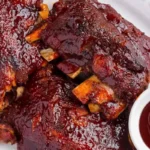
Slow Cooker BBQ Beef Ribs
- Total Time: 6 hours 15 minutes
- Yield: 3 servings 1x
- Diet: General
Description
These slow cooker BBQ beef ribs are seriously delicious and so tender! They fall off the bone beautifully and melt in your mouth. They are seasoned with a homemade dry rub, slow cooked for 6 hours until tender, and broiled with your favorite BBQ sauce.
Ingredients
- 3 pounds baby back beef ribs
- ½ a yellow onion, sliced
- 2 cloves garlic, minced
- ½ cup water
- 1 cup BBQ sauce
- 1 teaspoon brown sugar
- 1 teaspoon smoked paprika
- 1 teaspoon chili powder
- 1 teaspoon ground cumin
- 1 teaspoon garlic powder
- 1 teaspoon onion powder
- 2 teaspoons Kosher salt
- 1 teaspoon ground black pepper
Instructions
- Step 1: Remove the outer membrane from the back side of the rack of ribs. On one end of the ribs, run a paring knife through the outer membrane layer until the layer starts to loosen and separate, then carefully peel off the membrane all the way to the other side.
- Step 2: Pat dry ribs with paper towel. In a bowl, mix all the dry rub ingredients. Evenly distribute and rub the seasoning all over the ribs, on both sides.
- Step 3: Place the ribs in a large slow cooker, lined up or curled up against the sides of the pot. Add onions, garlic, and water in the center. Cover with the lid, making sure it closes completely.
- Step 4: Cook on LOW for 6 hours until the meat is tender.
- Step 5: Remove from the slow cooker carefully and transfer to a large sheet pan, being careful not to break apart the meat.
- Step 6: Brush ribs with your favorite BBQ sauce. Broil for 2-4 minutes until caramelized.
- Step 7: Serve with more BBQ sauce if needed. If desired, serve with some of the onions from the slow cooker.
Notes
Use a 6-quart slow cooker or larger. If ribs do not fit, cut into 2-3 pieces. For 4-pound ribs, increase cook time to 6.5 hours. The dry rub can be prepared up to 1 month in advance.
- Prep Time: 15 minutes
- Cook Time: 6 hours
- Category: Main Course
- Method: Slow Cooking
- Cuisine: American
Nutrition
- Serving Size: 1 serving
- Calories: 833 kcal
- Sugar: 34 g
- Sodium: 2795 mg
- Fat: 48 g
- Saturated Fat: 17 g
- Unsaturated Fat: 28 g
- Trans Fat: 1 g
- Carbohydrates: 45 g
- Fiber: 2 g
- Protein: 56 g
- Cholesterol: 197 mg
Keywords: slow cooker ribs, bbq beef ribs, tender ribs, baby back beef ribs, crockpot bbq