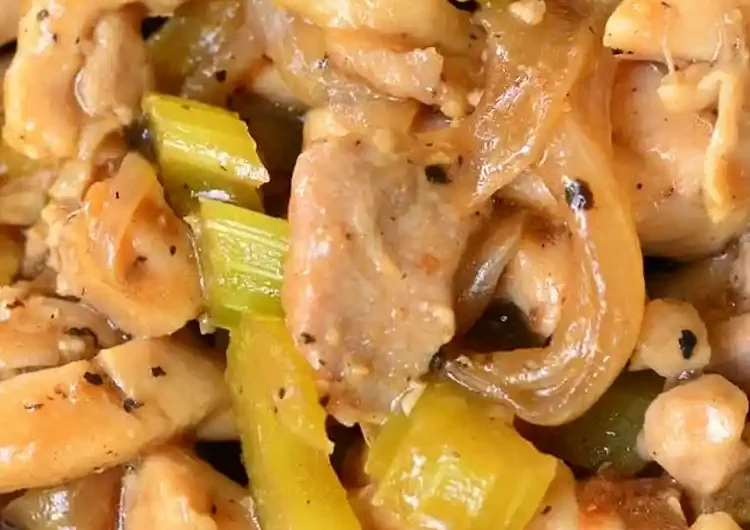
This fast pepper chicken recipe creates a bold, savory meal using simple ingredients. It is an efficient 30-minute dinner option that mimics a restaurant-style stir-fry with a peppery glaze.
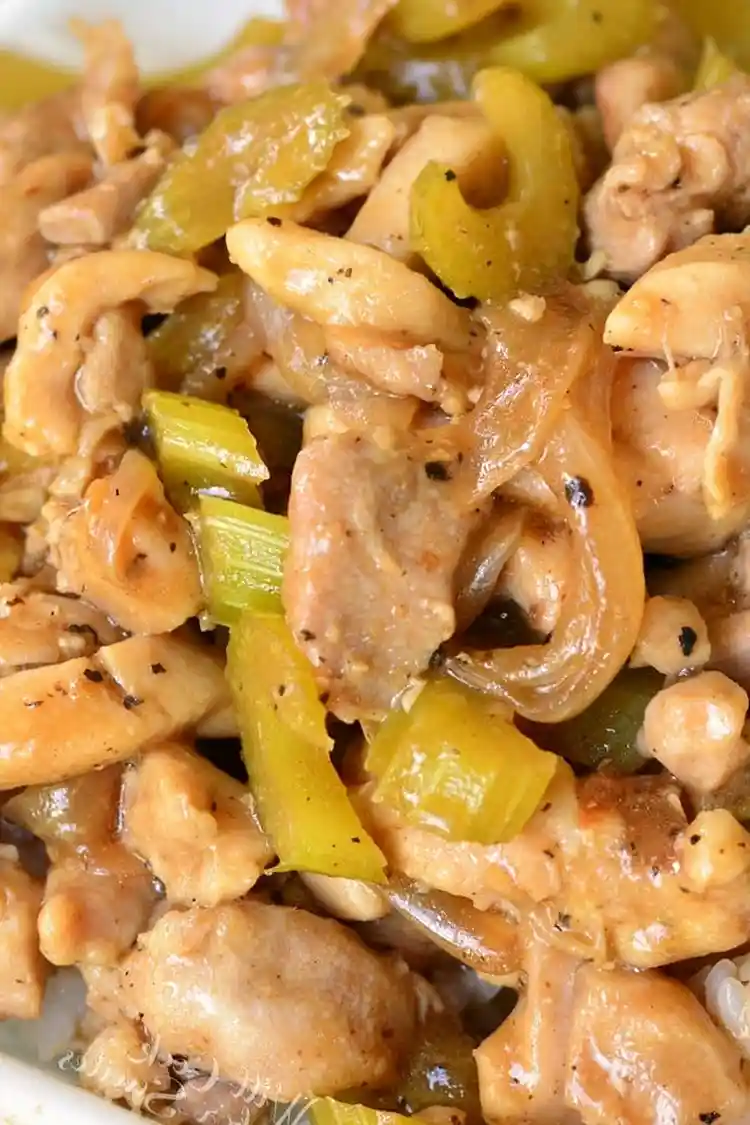
List of ingredients
- 2 lbs boneless, skinless chicken thigh meat – cut into small pieces
- 1/2 tbsp corn starch – for coating the chicken
- 2 tsp fresh cracked black pepper – for seasoning the meat
- salt – to taste
- 1 yellow onion – diced
- 2 cups chopped celery – for texture and flavor
- 3/4 cup chicken stock – as the sauce base
- 1/4 cup soy sauce – for salt and color
- 3 tbsp white vinegar – for a tangy balance
- 2 tbsp olive oil – for sautéing
- 1/2 tbsp corn starch – for thickening the sauce
- 1/2 tbsp fresh cracked black pepper – for the sauce glaze
- 1 1/2 cups uncooked Jasmine rice – yields about 4 1/2 cups cooked
step-by-step instructions
- Cook the rice: Prepare the Jasmine rice according to the package instructions and set it aside.
- Heat the pan: Set a cooking pan over medium-high heat and add a few tablespoons of oil.
- Prepare the meat: Chop the chicken thigh meat into small pieces and place them in a mixing bowl.
- Season the chicken: Mix in 1/2 tbsp of corn starch, 1 tsp of black pepper, and some salt until the meat is evenly coated.
- Sauté the vegetables: Dice the onion and celery and sauté them in the pan for several minutes until they soften.
- Brown the chicken: Add the seasoned chicken to the pan and sauté until the meat is approximately halfway cooked.
- Prepare the sauce: While the chicken is cooking, whisk together the chicken stock, soy sauce, white vinegar, olive oil, 1/2 tbsp corn starch, and 1/2 tbsp black pepper in a small bowl.
- Combine and simmer: Pour the sauce into the pan with the chicken and stir well. Bring the mixture to a simmer and reduce the heat to medium-low.
- Finish cooking: Continue stirring and cooking until the chicken is fully cooked through, then remove the pan from the heat.
- Serve: Spoon the pepper chicken over a bed of cooked Jasmine rice.
Cooking Tips for Better Results
Use Chicken Thighs for Texture
Chicken thighs contain more fat than breasts, which prevents them from drying out during high-heat sautéing. This ensures the meat remains tender even after the sauce simmers. Thighs are more forgiving and maintain a better consistency in stir-fries.
Achieve a Proper Sear
Ensure the oil is shimmering and the pan is hot before adding the chicken. This creates a sear on the outside of the meat, which locks in moisture. If the pan is too cool, the chicken will steam in its own juices instead of browning.
Ensure Even Cornstarch Coating
Toss the chicken pieces thoroughly in the cornstarch mixture to ensure every piece is covered. This coating helps the sauce adhere to the meat more effectively. It also adds a slight thickness to the overall glaze during the final cooking stage.
Avoid Overcooking the Vegetables
Sauté the onions and celery only until they are translucent and slightly softened. If they cook too long before the chicken is added, they may become mushy. Maintaining a slight crunch in the celery provides a necessary texture contrast to the tender meat.
Ingredient Substitutions
Low-Sodium Soy Sauce Alternatives
To reduce the salt content, use a low-sodium soy sauce. If the flavor feels too muted, add a small pinch of extra salt or a dash of fish sauce. This allows you to control the salinity while keeping the deep umami flavor.
Different Rice Options
While Jasmine rice is standard, you can use brown rice for more fiber or basmati rice for a nuttier flavor. For a low-carb alternative, cauliflower rice works well. Simply steam the cauliflower rice separately and serve the chicken on top.
Replacing Celery with Other Veggies
If you do not have celery, sliced carrots or red bell peppers are good substitutes. Carrots provide a similar sweetness and crunch. Bell peppers add a brighter color and a slightly different flavor profile that still complements the pepper sauce.
Vinegar Variations
White vinegar provides a sharp tang, but rice vinegar is a milder alternative. Apple cider vinegar can also be used for a slightly fruitier acidity. The goal is to balance the saltiness of the soy sauce with a clean acid.
Recipe Variations
Adding Extra Vegetables
You can add snap peas, water chestnuts, or broccoli florets to the pan. Sauté these along with the celery and onion. This increases the nutrient density of the meal and adds more variety in texture.
Adjusting the Heat Level
For those who prefer a spicier dish, add a teaspoon of red pepper flakes or a drizzle of Sriracha to the sauce. You can also increase the amount of fresh cracked black pepper. Be careful not to overdo it, as too much pepper can become bitter.
Creating a Low-Carb Version
Skip the rice entirely and serve the chicken over steamed spinach or sautéed zucchini noodles. This reduces the overall carbohydrate count significantly. The savory sauce provides enough flavor to make the dish satisfying without a grain base.
Serving and Pairing Ideas
Complementary Side Dishes
Serve this dish with a side of steamed bok choy or garlic-sauteed kale. A simple cucumber salad with rice vinegar and sesame oil also provides a refreshing contrast. These sides add freshness to the rich, peppery glaze.
Garnish for Presentation
Top the finished dish with sliced green onions or toasted sesame seeds. This adds a professional look and a subtle layer of flavor. A sprinkle of fresh parsley can also provide a pop of color.
Pairing with Beverages
Pair this meal with a chilled glass of sparkling water with lemon. An iced green tea is also a great accompaniment as it cleanses the palate between bites. Avoid overly sweet drinks that might clash with the savory soy and vinegar notes.
Storage and Reheating
Refrigeration and Shelf Life
Store leftovers in an airtight container in the refrigerator for up to three to four days. Keep the chicken and the rice in separate containers to prevent the rice from absorbing all the sauce. This maintains the texture of both components.
Freezing Instructions
The chicken and sauce can be frozen for up to two months. However, the celery may lose its crispness upon thawing. Thaw the mixture in the refrigerator overnight before reheating for the best quality.
Effective Reheating Methods
Reheat the chicken in a skillet over medium heat with a splash of water or chicken stock to loosen the sauce. If using a microwave, cover the dish with a damp paper towel to keep the meat moist. Heat in short bursts, stirring in between.
Make-Ahead Advice
Preparing the Sauce in Advance
You can whisk the sauce ingredients together and store them in a sealed jar for up to a week. Shake the jar well before using to redistribute the cornstarch. This saves time during the actual cooking process.
Pre-cutting Ingredients
Dice the onions and celery and chop the chicken several hours before cooking. Store them in separate airtight containers in the fridge. This streamlines the process, making it a true 20-minute active cook time.
Troubleshooting Common Issues
Fixing a Thin Sauce
If the sauce does not thicken enough, mix one teaspoon of cornstarch with a tablespoon of cold water. Stir this slurry into the simmering sauce for one minute. The heat will activate the starch and thicken the glaze quickly.
Preventing Tough Chicken
Tough chicken usually results from overcooking or using lean breasts instead of thighs. Use a meat thermometer to ensure the internal temperature reaches 165 degrees Fahrenheit. Remove the pan from the heat immediately once the meat is cooked.
Managing Excess Saltiness
If the sauce tastes too salty, add a teaspoon of brown sugar or honey to balance the flavor. You can also stir in a tablespoon of extra chicken stock. This dilutes the salt concentration without ruining the consistency.
Frequently Asked Questions
Can I use chicken breast instead of thighs?
Yes, but you must be careful not to overcook them. Chicken breasts cook faster and dry out more quickly than thighs. Reduce the sautéing time and consider slicing the breast into slightly larger pieces.
Is cornstarch necessary for this recipe?
Cornstarch serves two purposes: coating the meat for texture and thickening the sauce. Without it, the sauce will be thin and watery. You can use arrowroot powder as a gluten-free alternative.
How do I stop the black pepper from being overwhelming?
Use a medium-grind pepper rather than a very fine powder. Ensure you are balancing the pepper with the acidity of the vinegar. If it is too spicy, add a bit more chicken stock to mellow the flavor.
Can I make this in a slow cooker?
This recipe is designed for a fast sear and simmer, which a slow cooker cannot provide. To use a slow cooker, cook the chicken and vegetables on low for 4-6 hours, then stir in a cornstarch slurry at the end to thicken the liquid. However, the texture will be more like a stew than a stir-fry.
Print
Homemade Pepper Chicken and Rice
- Total Time: 30 minutes
- Yield: 4 servings 1x
- Diet: Gluten-Free
Description
Juicy, tender chicken thigh meat is sauteed with onions and celery and cooked in black pepper soy sauce. Serve it with rice, quinoa, farro, or cauliflower rice.
Ingredients
- 2 lbs boneless, skinless chicken thigh meat
- 1/2 tbsp corn starch
- 2 tsp fresh cracked black pepper
- salt
- 1 yellow onion
- 2 cups chopped celery
- 3/4 cup chicken stock
- 1/4 cup soy sauce
- 3 tbsp white vinegar
- 2 tbsp olive oil
- 1/2 tbsp corn starch
- 1/2 tbsp fresh cracked black pepper
- 1 1/2 cups uncooked Jasmine rice
Instructions
- Step: Cook rice according to the package instructions and set aside.
- Step: Preheat a cooking pan over medium-high heat and add a couple of tablespoons of oil for cooking.
- Step: Chop chicken thigh meat into small pieces and place them in a small mixing bowl.
- Step: Add 1/2 tbsp of corn starch, 1 tsp black pepper, and some salt. Mix very well so that the chicken is coated in corn starch, salt, and pepper evenly. Set aside.
- Step: Dice onion and celery and saute for a few minutes.
- Step: Once veggies are softened, add chicken and mix well. Saute chicken until about half way cooked.
- Step: While chicken is cooking, whisk ingredients for the sauce in a small bowl.
- Step: Add sauce into the pan with the chicken, stir well. Bring the sauce to simmer and lower the heat to medium-low.
- Step: Stir and cook chicken and veggies until chicken is completely cooked. Take off heat.
Notes
Jasmine rice can be swapped out for brown rice, quinoa, or steamed veggies.
- Prep Time: 10 minutes
- Cook Time: 20 minutes
- Category: Main Course
- Method: Stir-fry
- Cuisine: American
Nutrition
- Serving Size: 1 serving
- Calories: 634 kcal
- Sugar: 2 g
- Sodium: 1071 mg
- Fat: 17 g
- Saturated Fat: 4 g
- Unsaturated Fat: 13 g
- Trans Fat: 0 g
- Carbohydrates: 64 g
- Fiber: 3 g
- Protein: 52 g
- Cholesterol: 215 mg
Keywords: copycat pepper chicken, Panda Express, chicken thighs, easy chicken dinner, gluten free